Why Do Power Plant Condensate Polishing Systems Prefer 60-Inch High-Flow Filter Cartridges?
Rapid Answer
Power plant condensate polishing systems often prefer ultra-long high-flow filter cartridges such as 60-inch cartridges because they provide:
- larger filtration area
- higher flow capacity
- lower differential pressure
- longer service life
- fewer cartridge changeouts
- improved operational stability
In high-flow condensate systems, reducing maintenance frequency and stabilizing pressure behavior are critical for protecting downstream equipment and maintaining continuous plant operation.
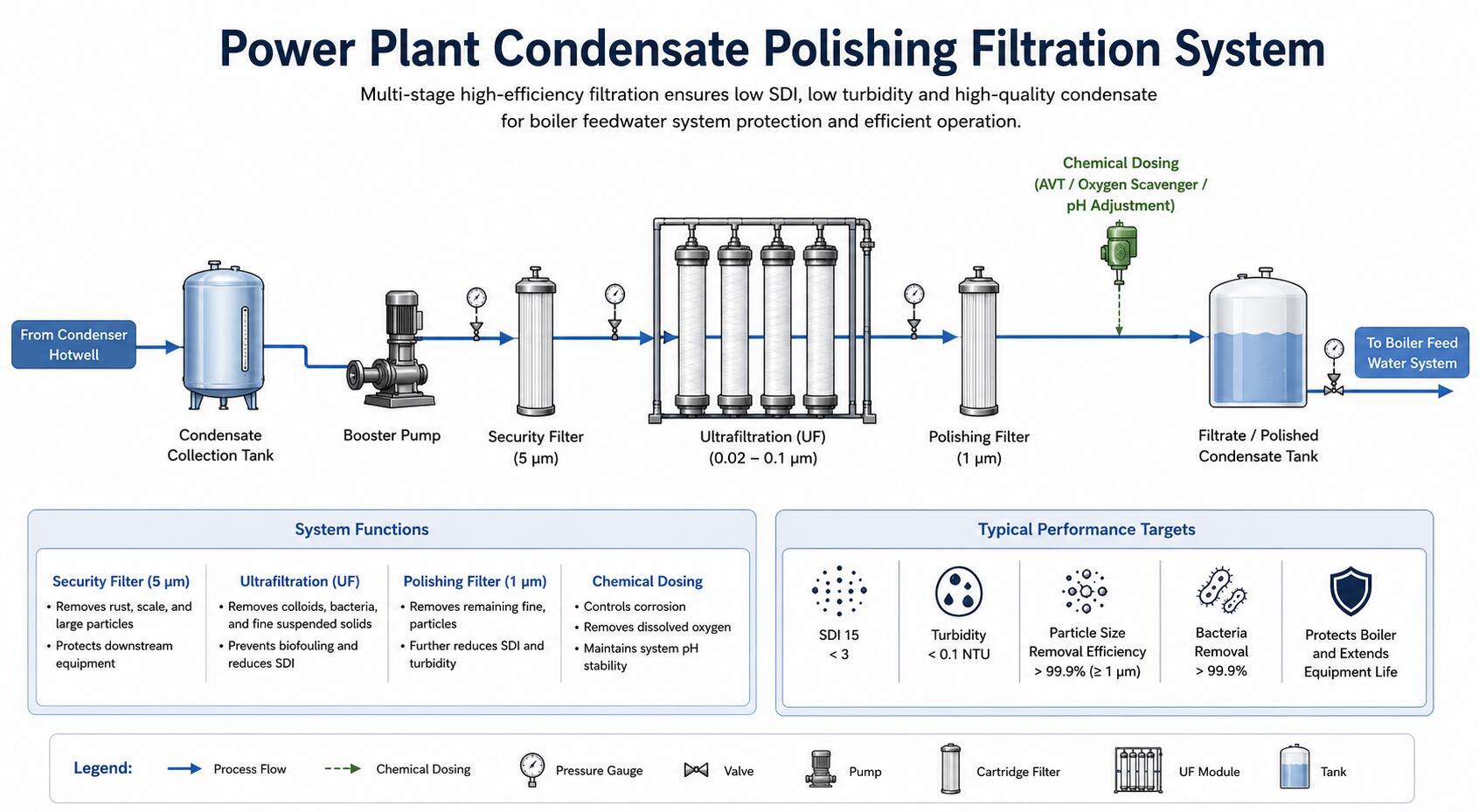
What Is a Condensate Polishing System?
Condensate polishing systems are used in power plants to remove:
- corrosion products
- iron oxides
- suspended solids
- resin fines
- particulate contamination
from condensate water before it re-enters the boiler system.
These systems are critical because even small contaminant levels may cause:
- turbine damage
- boiler scaling
- heat transfer efficiency loss
- corrosion problems
Condensate polishing systems help maintain ultra-clean water quality in high-pressure steam cycles.
Why Are 60-Inch Filter Cartridges Commonly Used?
Power plant systems usually operate under:
- large flow rates
- continuous operation
- high temperature conditions
- strict pressure stability requirements
Under these conditions, standard cartridge sizes may create:
- excessive pressure drop
- frequent replacement cycles
- unstable flow distribution
Ultra-long cartridges help reduce these operational limitations.
Larger Filtration Area Improves Operational Stability
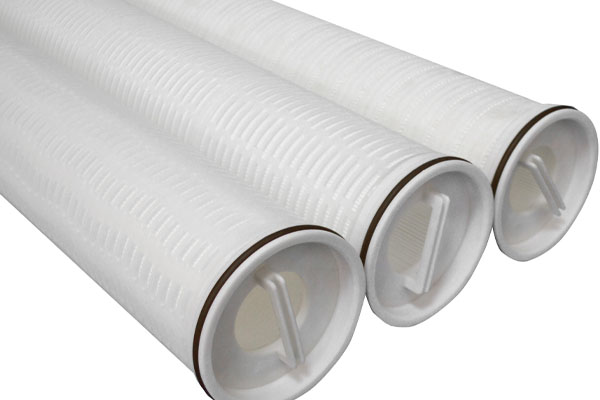
One of the biggest advantages of 60-inch cartridges is the significantly larger filtration surface area.
Compared with shorter cartridges:
- contaminant loading distributes more evenly
- localized fouling decreases
- pressure rise becomes slower
Larger filtration area usually results in slower differential pressure increase.
This becomes especially important in:
- high-flow condensate loops
- continuous turbine operation
- critical uptime applications
 "60-Inch High Flow Filter Cartridge Structure")
Lower Differential Pressure Reduces Energy Loss
Power plant systems are highly sensitive to pressure stability.
Excessive differential pressure may:
- reduce flow efficiency
- increase pump load
- destabilize system operation
- increase operational energy consumption
Because 60-inch cartridges provide:
- larger media area
- lower flow velocity per unit area
- improved flow distribution
they often generate lower initial differential pressure compared with smaller cartridge configurations.
Longer Service Life Reduces Shutdown Frequency
Frequent cartridge replacement in power plants creates:
- maintenance downtime
- labor cost
- operational interruption
- contamination risk during replacement
Longer cartridges typically provide:
- higher dirt holding capacity
- slower fouling behavior
- extended replacement intervals
This helps improve:
- operational continuity
- maintenance efficiency
- total filtration operating cost
In power generation systems, reducing maintenance frequency is often more important than minimizing cartridge unit cost.
Why High-Flow Design Matters in Condensate Systems
Condensate polishing systems often operate with:
- high circulation flow
- low particulate concentration
- continuous filtration demand
High-flow cartridge designs help:
- handle large flow rates
- reduce vessel quantity
- simplify housing configuration
- stabilize flow behavior
In many systems, fewer large cartridges are operationally preferred over many smaller cartridges.
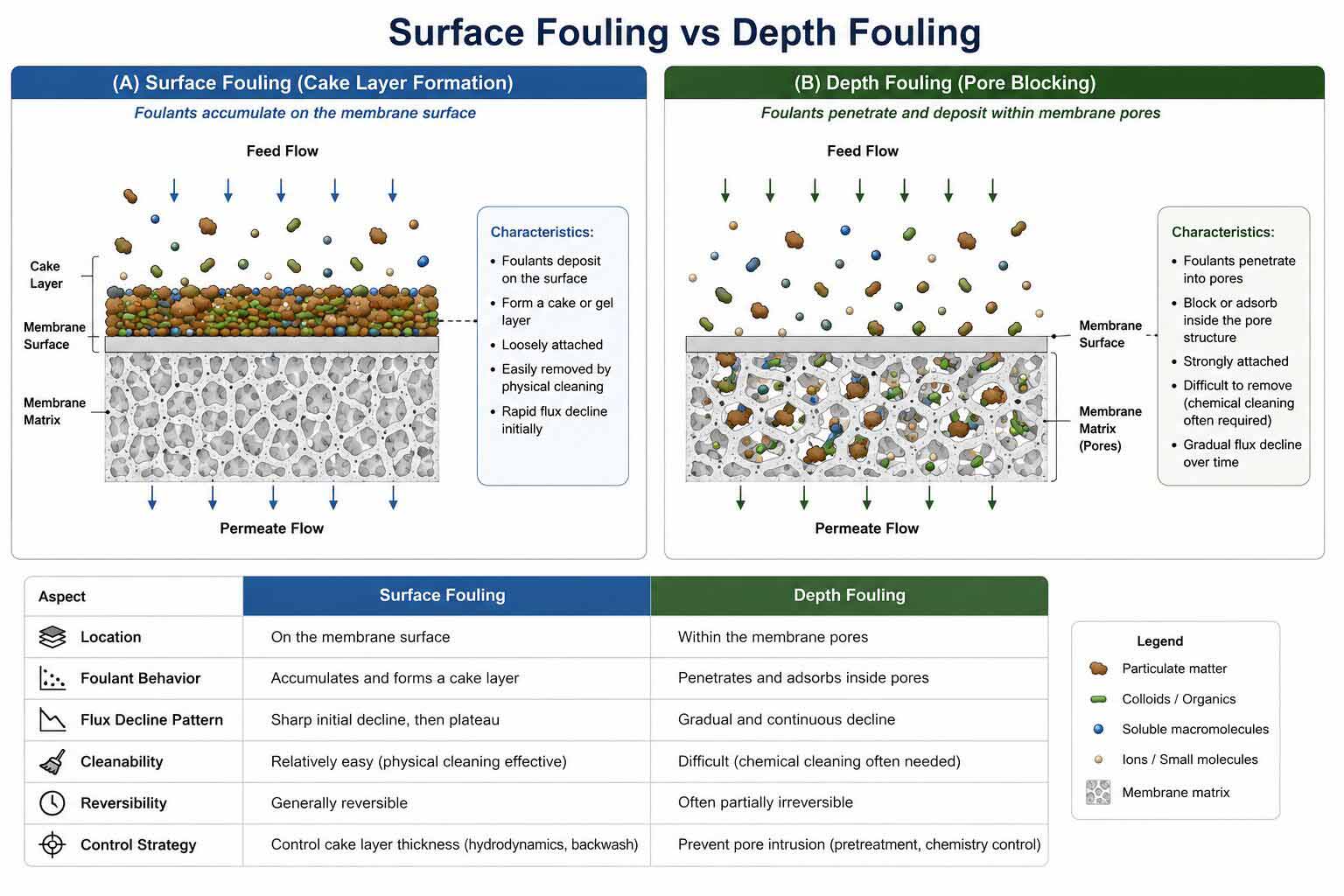
Surface Fouling vs Depth Loading
Different contaminant types behave differently in condensate systems.
Surface Fouling
Typical contaminants:
- iron oxide agglomerates
- resin fines
- corrosion debris
Characteristics:
- rapid outer-layer blockage
- faster DP increase
- localized fouling
Depth Loading
Typical contaminants:
- ultrafine corrosion particles
- fine suspended solids
- colloidal contaminants
Characteristics:
- gradual contaminant penetration
- slower DP increase
- improved dirt holding behavior
How Filter Structure Affects Condensate Filtration
Not all high-flow cartridges perform equally in condensate polishing systems.
Filter structure strongly affects:
- pressure stability
- contaminant distribution
- dirt holding capacity
- service life
Gradient Density Media
Gradient-density media structures help:
- distribute contaminants through media depth
- reduce premature surface blinding
- stabilize pressure increase
This is especially important in:
- high-flow condensate loops
- low-solids continuous filtration systems
Reinforced Structural Stability
Long cartridges require strong structural support.
Reinforced outer cages help:
- maintain flow channels
- reduce pleat deformation
- improve operational reliability under high flow conditions
Optimized Pleat Geometry
Stable pleat structures help:
- improve usable filtration area
- reduce localized contaminant loading
- improve flow consistency
Recommended Filtration Strategy for Condensate Systems
To improve condensate polishing performance:
- reduce unstable particulate loading
- monitor differential pressure trends
- use high dirt holding structures
- optimize cartridge replacement intervals
- improve flow distribution stability
- select structurally stable high-flow cartridges
Stable filtration behavior is critical in continuous power plant operation.
FAQ
Why do power plants use 60-inch filter cartridges?
Because they provide larger filtration area, lower pressure drop, and longer operational life under high-flow conditions.
Do longer cartridges reduce differential pressure?
In many systems, yes. Larger surface area helps reduce flow velocity and improve pressure stability.
Why is low pressure drop important in condensate systems?
Stable differential pressure helps improve flow efficiency and reduce pump energy consumption.
Are 60-inch cartridges better than multiple shorter cartridges?
In many high-flow systems, fewer large cartridges simplify maintenance and improve operational stability.
Why is structural strength important for long cartridges?
Because high-flow systems may generate significant hydraulic stress during continuous operation.
Conclusion
Power plant condensate polishing systems prefer 60-inch high-flow filter cartridges because they provide:
- larger filtration area
- lower pressure drop
- higher dirt holding capacity
- improved operational stability
- reduced maintenance frequency
In continuous high-flow power plant systems, stable filtration performance is essential for protecting turbines, boilers, and long-term system reliability.