
High Flow Filter Cartridges for Industrial Water Treatment Systems
Ecofiltrone supplies high flow water filter cartridges and high flow filter elements for RO pretreatment, desalination, cooling water, power plant, refinery and wastewater treatment systems.
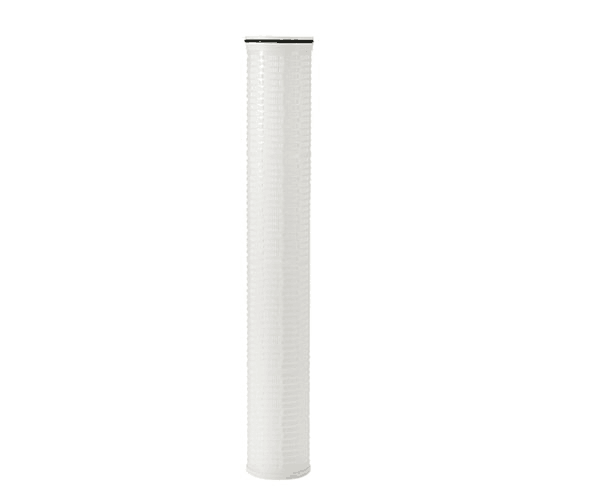
Product Overview
A cartridge must match the process, not only the housing
Filtration structure, micron rating, sealing arrangement, mechanical support and chemical compatibility all have to match the operating condition. ECOFILTRONE evaluates the complete condition rather than selecting from dimensions alone.
Consequences of incorrect selection
- Rapid differential pressure increase
- Short cartridge replacement intervals
- Unstable downstream water quality
- Excessive contaminant loading per cartridge
- Cartridge deformation or breakage
- Seal leakage or bypass
- Premature RO membrane fouling
- Replacement compatibility problems
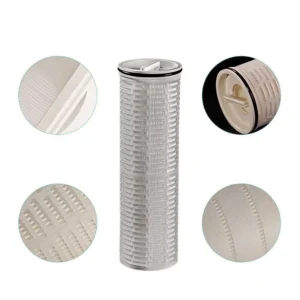
Consequences of incorrect selection
- Rapid differential pressure increase
- Short cartridge replacement intervals
- Unstable downstream water quality
- Excessive contaminant loading per cartridge
- Cartridge deformation or breakage
- Seal leakage or bypass
- Premature RO membrane fouling
- Replacement compatibility problems
Stable filtration
Predictable pressure development across the full operating cycle.
Downstream protection
Retention selected against the sensitivity of RO, UF and process equipment.
Improved service life
Dirt-holding capacity matched to the actual contaminant loading.
Reduced maintenance risk
Sealing, support and flow direction verified before supply.
High Flow Filtration Technology
Media structure decides efficiency, dirt-holding and pressure behaviour
Depending on the application, the solution may use pleated media, depth filtration media, or a gradient depth structure. Selection depends on contaminant characteristics, required retention, flow demand, housing capacity and allowable differential pressure.
Depth & gradient depth filtration
Depth filtration captures contaminants within the thickness of the media rather than relying on surface retention alone — relevant where the feed carries a broad particle-size distribution or high loading that blocks a surface quickly. Gradient structures distribute capture across layers.
- Particle size & concentration
- Contaminant compressibility
- Suspended solids loading
- Organic / biological contamination
- Corrosion product loading
- Required filtration efficiency
- Chemical compatibility
- Existing cartridge construction
Contaminant loading & differential pressure
A low initial pressure drop alone does not confirm correct selection. Differential pressure should be evaluated as a trend, not only as a change-out value.
Rapid ΔP growth may indicate
- Excessive suspended solids
- High iron oxide / corrosion loading
- Seasonal algae or biology
- Poor upstream pretreatment
- Incorrect micron selection
- Insufficient cartridge quantity
- Excessive flow per cartridge
- Inadequate dirt-holding capacity
Technical Specifications
Configured to the application and the existing housing
Final specifications must be confirmed through technical review. Published dimensions or similar product appearance should not be used as the sole basis for replacement.
| Item | Value |
|---|---|
| Product Type | High flow filter cartridge |
| Filtration Structure | Pleated high-flow cartridge |
| Media Options | PP, glass fiber, polyester, customized media |
| Length Options | 20", 40", 60" or customized |
| Micron Ratings | 1, 3, 5, 10, 20, 40, 50, 70, 100 micron |
| Seal Options | EPDM, Silicone, NBR, Viton |
| End Connection | Handle, O-ring seal, single open end, customized |
| Flow Direction | Inside-to-outside or outside-to-inside, depending on design |
| Recommended Use | High-flow water and process filtration |
| Application Fluids | Water, seawater, condensate, cooling water, chemicals, process liquids |
| Custom Options | Media, length, seal, end cap, dimensions and replacement configuration |
Application Solutions
Five process positions, five different selection logics
01 / Membrane Systems
RO Pretreatment
Challenge
RO systems are sensitive to suspended solids and unstable feed-water quality, increasing membrane fouling tendency and cleaning frequency.
Requirement
Reliable particle retention without excessive pressure loss or short operating cycles. Review turbidity, SDI, total flow, cartridge quantity and change-out ΔP together.
Solution direction
High flow configuration with micron rating and media structure selected for the actual contaminant distribution.
02 / Desalination
SWRO Desalination
Challenge
Suspended solids, seasonal algae, biological contamination and variable pretreatment performance cause rapid ΔP increase and short cartridge life.
Requirement
Support SDI control, reduce suspended-solid loading and protect downstream RO membranes while maintaining stable flow.
Solution direction
Evaluate high flow or pleated structures, gradient depth media, cartridge quantity, initial and final ΔP, customized sealing. For complete system-level filtration considerations, refer to our SWRO Pretreatment Filtration Solution.
03 / Water Reuse
Industrial Wastewater Reuse
Challenge
Variable suspended solids, organic particles, biological material and residual chemicals make cartridge life unpredictable.
Requirement
Handle fluctuating contamination while protecting downstream RO, UF or process equipment.
Solution direction
Review TSS, particle characteristics, required efficiency and target cycle. Consider high dirt-holding depth structures.
04 / Power Generation
Power Plant Condensate
Challenge
ron oxides, corrosion products and metal particles; high startup loading produces rapid ΔP growth. Reverse pressure shock can break cartridges.
Requirement
Fine particle retention, low pressure drop, mechanical strength and stable efficiency.
Solution direction
Long-length high flow cartridges, reinforced internal support, depth filtration media.
05 / Oil & Gas
Amine Filtration
Challenge
Rich amine service may carry iron sulfide, corrosion particles and hydrocarbon contamination — rapid pressure rise and frequent replacement.
Requirement
Reliable removal, sufficient dirt-holding capacity, controlled ΔP growth and amine chemical compatibility.
Solution direction
Depth filtration structure, media compatibility, low-pressure-drop design, compatibility with the existing system.
Not listed?
General process filtration review
Send the process fluid, flow rate, contaminant type and existing cartridge details. We return a configuration assessment.
Engineering Problems Solved
Six failure patterns and how they are diagnosed
Rapid pressure growth is not always a cartridge-quality problem. Diagnosis starts with identifying the limiting mechanism, then selecting against it.
1
Rapid Differential Pressure Increase
May result from high solids loading, a change in particle characteristics, biological contamination, unsuitable micron rating, excessive flow per cartridge, or poor upstream treatment.
- Initial and final ΔP
- Time to change-out
- Process-fluid condition
- Flow per cartridge
- Cartridge quantity
- Seasonal / startup variation
For detailed cartridge selection methodology, see our Filter Cartridge Selection Guide.
2
Short Cartridge Service Life
Occurs when contaminant loading concentrates at the media surface, or the cartridge is undersized for the actual flow and solids load.
- Surface blockage
- Depth-media saturation
- Organic / biological fouling
- Corrosion-product release
- Excessive hydraulic loading
- Seal or structural failure
3
High Contamination Loading
Iron sulfide, iron oxides, corrosion products, algae and organic particles require sufficient loading capacity. Used-cartridge analysis and ΔP records show whether contamination sits at the surface, through the media, or relates to abnormal process events.
4
Sealing Failure and Bypass Risk
An incorrect seal diameter, position, material or compression can allow bypass or prevent installation. Replacements should not be approved from nominal length and micron rating alone.
- Seal configuration
- Sealing position
- Interface dimensions
- Compression condition
- Fluid compatibility
- Housing condition
5
Cartridge Breakage
Associated with reverse pressure shock, inadequate internal support, hydraulic transients or installation stress. Review covers support structure, operating ΔP, flow direction, startup procedure and the failure mode.
Learn more about filter cartridge failure mechanisms and troubleshooting.
6
Replacement Compatibility Issues
Products with the same nominal length or micron rating may not be interchangeable. End geometry, seal position, outside dimensions, internal support and flow direction all create installation or performance risk.
Compatible Replacement
Replacement solutions, subject to engineering verification
Direct compatibility is not assumed from a model reference, photograph or nominal specification.
1⃣️
OEM Compatibility Review
These evaluations commonly involve replacement projects for established high flow filtration systems such as Pall HFU series, 3M High Flow systems, Parker ParMax series, and Pentair high flow configurations.
2⃣️
Dimension Verification
Overall length, outside diameter, sealing diameter and location, end geometry, support interface, installation clearance, housing seating. A sample, drawing or verified measurement record may be required.
3⃣️
Seal Verification
Configuration, location, compression and process compatibility. Seal selection must account for the filtered fluid and operating conditions.
4⃣️
End Connection Review
The connection must engage correctly with the housing and maintain the intended flow path. Open-end, closed-end and adapter details documented from the installation rather than assumed.
5⃣️
Operating Condition Evaluation
- Normal & maximum flow
- Flow per cartridge
- Operating & change-out ΔP
- Process temperature
- Fluid chemistry
- Contaminant type & concentration
- Startup / shutdown conditions
- Reverse-pressure risk
- Required efficiency & target cycle
Application Case Study · Indonesia
SWRO Security Filtration Replacement
Application
RO pretreatment security filtration for a seawater desalination system.
Problem
The customer required a replacement for existing high flow cartridges while maintaining high flow capacity, reliable sealing, stable differential pressure performance and protection of downstream RO membranes.
Analysis
ECOFILTRONE reviewed the existing cartridge dimensions, sealing configuration, flow direction, filtration efficiency requirement, internal support and operating conditions.
Result
The replacement configuration was matched to the existing design requirements to support reliable installation and stable RO pretreatment.
No unverified operating-life or performance improvement is claimed.
Documented Configuration
60 inches
Customized cartridge length
5 μm
Micron rating
Radial seal
Sealing configuration
Multiple
Internal support structures
View Full Case→
Selection Guide
Eight steps to a verified high flow cartridge specification
1⃣️
Confirm System Flow Rate
Total operating flow, peak flow, number of cartridges and calculated flow per cartridge. Excessive loading raises ΔP and shortens life.
2⃣️
Define the Filtration Objective
RO membrane protection, suspended-solids removal, corrosion-product removal, equipment protection, polishing, or security filtration before a critical process.
3⃣️
Select the Micron Rating
Based on particle distribution, required efficiency, upstream treatment and downstream sensitivity. A finer rating without loading analysis causes rapid pressure rise.
4⃣️
Characterize the Contamination
Suspended solids, iron oxides, iron sulfide, corrosion and metal particles, organics, biology, algae, hydrocarbons. Concentration, shape, compressibility and agglomeration all affect loading.
5⃣️
Review Differential Pressure
Initial pressure drop, growth trend, final change-out ΔP and cycle length. Sudden increases should be correlated with process events or feed changes.
6⃣️
Select the Media Structure
Pleated, depth, gradient depth, or reinforced internal support — weighed against efficiency, dirt-holding capacity, chemical and mechanical requirements.
7⃣️
Verify Operating Conditions
Flow, pressure, temperature, fluid chemistry, contaminant loading, startup and shutdown behaviour, and any reverse-pressure exposure.
8⃣️
Verify Housing Compatibility
Dimensions, flow direction, end connection, sealing position and installation method — established from verified drawings, measurements or sample evaluation.
ECOFILTRONE Engineering Support
From application review to long-term supply control
Application Review
Filtration objective, system position, feed condition, downstream equipment, operating cycle and existing performance problems.
Technical Recommendation
Developed from flow, contaminant characteristics, micron rating, ΔP behaviour, media structure, mechanical strength and chemical compatibility.
Sample Testing
Where dimensions, sealing or performance cannot be confirmed from documentation, an existing sample can be evaluated before wider supply.
Customized Configuration
Dimensions, micron rating, media structure, internal support, sealing and housing interface — all subject to technical confirmation.
Frequently Asked Questions
High flow filter cartridge — technical questions
What is a high flow filter cartridge?
An industrial cartridge designed to process high liquid flow within a high-capacity filtration system. Commonly used for RO pretreatment, desalination, wastewater reuse, condensate polishing and process filtration.
How should a high flow filter cartridge be selected?
Selection should consider total flow, flow per cartridge, micron rating, required efficiency, contaminant type, differential pressure, media structure, chemical compatibility, housing dimensions, sealing, and operating conditions.
Why does differential pressure increase rapidly?
Common causes include high suspended-solids loading, algae or biological contamination, corrosion-product release, incorrect micron selection, insufficient dirt-holding capacity, excessive flow per cartridge, and poor upstream pretreatment.
Can a finer micron rating improve filtration?
A finer rating may improve particle retention, but it can also increase loading and shorten cartridge life if it is not matched to the feed condition. Micron rating should be selected according to the filtration objective and contaminant distribution.
What causes high flow cartridge breakage?
Possible causes include reverse pressure shock, insufficient internal support, hydraulic transients, excessive mechanical stress, and incorrect installation. Failure analysis should include the damaged cartridge and operating history.
Are high flow cartridges suitable for SWRO systems?
They are commonly used as security filtration before SWRO membranes. Selection should account for feed-water quality, turbidity, SDI, algae or biological loading, total flow, cartridge quantity, and differential pressure limits.
How can cartridge service life be improved?
Service life may be improved by correcting flow per cartridge, selecting an appropriate depth or gradient media structure, increasing contaminant-loading capacity, optimizing micron rating, and addressing upstream process instability.
Are ECOFILTRONE cartridges direct replacements for other high flow cartridges?
Replacement solutions are available, but direct compatibility is not assumed. Dimensions, seal configuration, end connection, flow direction, support structure, and operating conditions must be verified.
What information is required for replacement evaluation?
Provide the existing cartridge model, technical drawing or sample, overall dimensions, seal details, end configuration, flow direction, micron rating, process fluid, flow rate, operating pressure, temperature, and differential pressure history.
Why is seal configuration important?
The seal prevents unfiltered liquid from bypassing the media. An incorrect seal position, diameter, compression, or material can cause leakage, installation problems, or unreliable filtration.
Can high flow cartridges be used in amine filtration?
They can be evaluated for rich amine filtration involving iron sulfide, corrosion particles, and hydrocarbon contamination. Media selection must consider chemical compatibility, filtration efficiency, dirt-holding capacity, and pressure-drop development.
What should be checked when replacing a60-inch cartridge?
Verify the actual overall length, outside diameter, seal diameter and position, end geometry, flow direction, internal support, housing interface, micron rating, and operating conditions. A nominal60-inch designation alone does not establish compatibility.
4 . Cross Reference Lookup
Not Sure Which Model You Need?
Send us any part number, we will help you find the right replacement.
| Existing Brand | Example Part Number |
|---|---|
| Pall | HFU640UY020J |
| 3M | HF40PP005A01 |
| Parker | ParMax 1000 |
| Pentair | Pentek HF |
| Others | Any High Flow Cartridge |
Selection Guides
High Flow vs Standard Filter Cartridge
High Flow vs Pleated Filter Cartridge
How to Select a High Flow Filter Cartridge
What Micron Filter Should I Choose?
Troubleshooting Resources
Case Studies
Power Plant Condensate Pre-filtration Case
SWRO Pretreatment Cartridge Filter Case
Cooling Water Filter Upgrade Case