Introduction
Seawater reverse osmosis (SWRO) desalination is one of the most demanding applications of membrane filtration technology. SWRO membranes operate at 55–80 bar (800–1,160 psi) to overcome the osmotic pressure of seawater (28 bar for 35,000 ppm TDS) and produce freshwater. These thin-film composite polyamide membranes have pore sizes on the order of 0.0001 µm (1 angstrom) — small enough to reject dissolved salts but also small enough to foul rapidly from particles, colloids, microorganisms, organics, and scaling precipitates that pass through inadequate pretreatment (cited, ResearchGate: RO membrane fouling review).
Fouling reduces membrane permeability, increases differential pressure across the membrane elements, shortens membrane life (from 5–7 years to 2–3 years), and increases energy consumption and chemical cleaning frequency. In severe cases, fouling leads to irreversible membrane damage, requiring complete module replacement at costs of $300–1,000 per membrane element (typical). Effective pretreatment and filtration are not optional — they are the foundation of reliable, cost-effective SWRO operation (cited, PMC: Fouling in RO membranes).
Seawater contains suspended solids (silt, clay, algae, plankton), dissolved organics (humic substances, algal exudates, transparent exopolymer particles or TEP), microorganisms (bacteria, phytoplankton, diatoms), and scaling precursors (calcium, magnesium, barium, silica). Intake water turbidity can range from 0.5 NTU (open ocean) to 50+ NTU (coastal areas with sediment resuspension, river discharge, or algal blooms) (typical). Raw seawater cannot be fed directly to RO membranes — it must be pretreated to achieve Silt Density Index (SDI₁₅) <3 (ideally <2.5) and turbidity <1 NTU before entering the RO feed (regulatory, membrane manufacturer requirement cited by Brother Filtration: SWRO desalination).
This guide explains the four fouling mechanisms in SWRO (particulate, biofouling, organic/colloidal, scaling), the role of pretreatment (coagulation, dual-media filtration, ultrafiltration), cartridge filter selection for final RO protection (5 µm vs 1 µm, absolute vs nominal), SDI and turbidity monitoring, and chlorine damage prevention. Whether you are designing a new SWRO plant, troubleshooting existing membrane fouling, or evaluating ultrafiltration (UF) vs conventional pretreatment, this guide provides the technical foundation for membrane protection and long-term performance.
Key Takeaways
- SWRO membranes require SDI₁₅ <3 (ideally <2.5) and turbidity <1 NTU to avoid rapid fouling (regulatory, membrane manufacturer requirement). SDI (Silt Density Index) measures the rate at which colloidal and particulate material plugs a 0.45 µm test membrane — higher SDI means faster fouling. Turbidity measures bulk suspended solids but does not capture colloids — low turbidity does not guarantee low SDI.
- Four fouling mechanisms threaten SWRO membranes: (1) Particulate fouling (silt, clay, sand, corrosion products block feed channels); (2) Biofouling (bacteria, algae, diatoms form biofilm on membrane surface); (3) Organic/colloidal fouling (humic acids, TEP, algal exudates deposit on membrane); (4) Scaling (CaCO₃, CaSO₄, BaSO₄, SiO₂ precipitate as concentrate exceeds solubility limits) (cited, ResearchGate: Scaling and fouling review).
- Pretreatment systems use three stages: (1) Coagulation/flocculation (ferric chloride or aluminum sulfate aggregates colloids and organics into flocs); (2) Dual-media or sand filtration (removes flocs and particles >10–25 µm, reduces turbidity to <2 NTU); (3) Cartridge filtration (final barrier removes 1–10 µm particles, protects RO from media carryover and upsets, achieves SDI <3).
- Ultrafiltration (UF) pretreatment is replacing conventional pretreatment in modern SWRO plants. UF membranes (0.01–0.1 µm) remove all particles, colloids, bacteria, and most viruses, delivering consistent turbidity <0.1 NTU and SDI <2 regardless of raw seawater quality (cited, MDPI: Coagulation with UF vs sand filtration for SWRO). UF eliminates the need for dual-media filters and reduces cartridge filter loading, but requires higher capital investment.
- Cartridge filters are the last defense before RO membranes. Standard specification: 5 µm absolute polypropylene melt-blown or pleated cartridges in horizontal multi-cartridge housings (typical, Complete Water: SWRO cartridge filters). Fine plants use 1 µm absolute for tighter protection. Cartridges protect RO from filter media breakthrough, upsets, and residual particulate after dual-media or UF failure.
- Chlorine damages polyamide RO membranes irreversibly — exposure to >0.1 ppm free chlorine for hours causes oxidation of the membrane’s polyamide layer, increasing salt passage and reducing rejection (cited, ResearchGate: Chlorination disadvantages). If chlorine is used for biofouling control at intake, it must be removed by sodium bisulfite (SBS) injection or activated carbon filters before RO. Online residual chlorine analyzers (<0.05 ppm detection limit) and SBS dosing control loops are mandatory.
- Biofouling is the dominant fouling mechanism in SWRO, accounting for 45–65% of membrane fouling incidents (cited, ResearchGate: Biofouling of SWRO membranes). Bacteria colonize the membrane surface within 24–72 hours, forming biofilm that reduces permeability and increases pressure drop. Control strategies: intake chlorination + dechlorination, low-pressure UV disinfection (no residual), UF pretreatment (physical barrier), and frequent RO membrane cleaning (every 3–6 months).
Quick Reference: SWRO Pretreatment Technology Comparison
| Technology | Turbidity removal | SDI reduction | Biofouling control | Organic removal | Footprint | Capital cost | Operating cost | Typical for |
|---|---|---|---|---|---|---|---|---|
| Dual-media filtration + coagulation | Good (to <2 NTU) | Moderate (SDI 3–5) | Poor (requires separate chlorination) | Moderate (with coagulation) | Large | Low | Moderate | Small-to-medium plants, budget-constrained projects |
| Ultrafiltration (UF) + coagulation | Excellent (to <0.1 NTU) | Excellent (SDI <2) | Good (physical barrier, 0.01–0.1 µm) | Good (with coagulation) | Compact | High | Moderate-to-high (membrane replacement, cleaning) | Large modern plants, high-quality feed requirement, variable seawater |
| Dissolved air flotation (DAF) + dual-media | Excellent for algae/oil (to <1 NTU) | Moderate (SDI 3–5) | Poor | Moderate | Large | Moderate | Moderate | Plants with algal blooms, oil/grease contamination |
| Cartridge filtration only (no upstream pretreatment) | Poor | Poor | None | None | Very small | Very low | Very high (rapid cartridge blinding) | Not recommended — cartridges alone cannot handle raw seawater |
All systems require final cartridge filtration (5 µm or 1 µm absolute) immediately before RO as backup protection.
1. SWRO Membrane Feed Water Quality Requirements
1.1 Silt Density Index (SDI)
Definition: SDI measures the rate at which particulate and colloidal material plugs a 0.45 µm membrane filter under 30 psi (2.07 bar) pressure. It is an indirect measure of colloidal fouling potential.
Test procedure (SDI₁₅):
- Filter water through a 0.47 mm (47 mm diameter) 0.45 µm membrane at 30 psi
- Measure time to collect 500 mL initially (t₀)
- Continue filtration for 15 minutes total elapsed time
- Measure time to collect another 500 mL at 15 minutes (t₁₅)
- Calculate: SDI₁₅ = (1 – t₀/t₁₅) × (100 / 15)
Interpretation:
- SDI <3: Acceptable for most SWRO membranes (regulatory, typical manufacturer limit)
- SDI <2.5: Excellent — target for long membrane life (5–7 years)
- SDI 3–5: Marginal — membranes will foul faster, requiring cleaning every 2–3 months instead of 6 months
- SDI >5: Unacceptable — rapid fouling, membrane life <2 years, frequent cleaning, high operating cost
Problem with SDI: It only measures material that plugs a 0.45 µm membrane. Dissolved organics, small colloids (<0.1 µm), and bacteria (which pass through 0.45 µm during the short test) are not captured but still foul RO membranes. SDI is a necessary but not sufficient indicator — low SDI does not guarantee no fouling.
1.2 Turbidity
Definition: Turbidity measures light scattering by suspended particles. Reported in Nephelometric Turbidity Units (NTU).
RO feed requirement: <1 NTU (typical membrane manufacturer specification). Some plants target <0.5 NTU or <0.2 NTU for premium operation.
Limitation: Turbidity measures bulk suspended solids (>1 µm) but does not capture fine colloids (0.01–1 µm) or dissolved organics. A water sample can have low turbidity (0.5 NTU) but high SDI (4–5) due to colloidal silica, humic acids, or algal exudates.
1.3 Other Feed Water Parameters
| Parameter | Target range | Why it matters |
|---|---|---|
| Free chlorine | <0.05 ppm (zero preferred) | Oxidizes polyamide RO membrane, causes irreversible damage and salt passage increase |
| Iron (Fe) | <0.05 ppm | Precipitates as ferric hydroxide, fouls membranes and causes brown staining |
| Manganese (Mn) | <0.05 ppm | Oxidizes to MnO₂, fouls membranes (black deposits) |
| Aluminum (Al) | <0.05 ppm | Coagulant carryover from pretreatment, precipitates on membranes |
| Silica (SiO₂) | <20 ppm (depends on pH, temperature, scaling indices) | Forms colloidal or crystalline silica scale on membranes if solubility exceeded in concentrate |
| Hydrogen sulfide (H₂S) | <0.1 ppm | Fouls membranes, causes odor, reduces membrane life |
| Oil & grease | <0.1 ppm | Coats membranes, irreversible organic fouling |
| TOC (Total Organic Carbon) | <2 ppm (lower preferred) | Organic fouling precursor — humic/fulvic acids, algal exudates deposit on membranes |
| Temperature | 15–30 °C | Higher temp increases permeability but also biological growth rate; lower temp reduces permeability |
All limits (typical, cited from membrane manufacturer guidelines and SWRO industry practice).
2. Fouling Mechanisms in SWRO Membranes
2.1 Particulate Fouling
Mechanism: Suspended solids (silt, clay, sand, corrosion products, filter media carryover) accumulate in the feed channels of spiral-wound RO elements, blocking flow and increasing pressure drop. Particles >10 µm can physically wedge into the 0.8 mm (28–34 mil) feed spacer channels (cited, ResearchGate: Particulate fouling and pretreatment).
Symptoms:
- Rapid increase in differential pressure (DP) across RO elements (stage 1 > stage 2 > stage 3 — fouling concentrates in the lead elements)
- Decrease in permeate flow
- Minimal change in salt passage (particles don’t damage the membrane, just block flow)
Prevention:
- Maintain turbidity <1 NTU before RO
- Use 5 µm or 1 µm absolute cartridge filters as final barrier
- Monitor DP across cartridge filters — replace when DP reaches 15–20 psi (indicates particles are being captured)
- Flush RO feed channels periodically (low-pressure flush at end of day)
Cleaning: Mechanical cleaning with alkaline detergent + dispersant. Acids do not remove particulate fouling.
2.2 Biofouling
Mechanism: Bacteria, algae, diatoms, and other microorganisms attach to the RO membrane surface and feed spacer, forming a biofilm. Biofilm is a slimy matrix of cells + extracellular polymeric substances (EPS) that bacteria secrete. Biofilm reduces membrane permeability, increases DP, and shields bacteria from disinfectants (cited, ResearchGate: Biofouling of SWRO membranes).
Why SWRO is highly susceptible to biofouling:
- Seawater has high bacterial counts: 10⁵–10⁶ CFU/mL (typical open ocean), 10⁶–10⁷ CFU/mL (coastal areas).
- Nutrients (dissolved organics, nitrogen, phosphorus) support bacterial growth.
- Warm seawater (>20 °C) accelerates biofilm formation.
- RO feed channels (0.8 mm thickness, dead zones behind spacer filaments) provide sheltered attachment sites.
Symptoms:
- Gradual increase in DP over weeks to months (slower than particulate fouling)
- Decrease in permeate flow
- Increase in salt passage (biofilm damages membrane surface)
- Foul odor when opening RO vessels for inspection
- Slimy deposits visible on lead element feed side
Prevention:
- Chlorination at intake (0.5–2 ppm free chlorine for 30–60 minutes contact time) kills planktonic bacteria. Chlorine must be removed by sodium bisulfite (SBS) injection or activated carbon before RO.
- Ultrafiltration (UF) pretreatment physically removes bacteria (0.01–0.1 µm UF pores retain bacteria which are 0.5–3 µm).
- Low-pressure UV disinfection (40–60 mJ/cm² at RO feed) inactivates bacteria without residual chemicals. No dechlorination needed.
- Limit assimilable organic carbon (AOC) in RO feed — bacteria need carbon to grow. Coagulation + UF removes organics.
- Frequent RO membrane cleaning (every 3–6 months) with alkaline + biocide cleaners removes established biofilm before it becomes irreversible.
Cleaning: Alkaline cleaning (pH 11–12) + enzymatic detergent + biocide (DBNPA, isothiazolinone). Biofilm is organic, so acid cleaners are ineffective.
2.3 Organic and Colloidal Fouling
Mechanism: Dissolved and colloidal organic matter (humic/fulvic acids from terrestrial runoff, algal exudates, transparent exopolymer particles or TEP from phytoplankton, proteins, polysaccharides) adsorb onto the RO membrane surface, forming a conditioning film that reduces permeability and promotes further fouling (cited, MDPI: Comparison of UF and sand filtration for DOM removal).
Key organic foulants in seawater:
- Humic substances (from river discharge, terrestrial runoff) — molecular weight 500–10,000 Da
- Algal exudates (polysaccharides, proteins secreted by phytoplankton during blooms)
- TEP (Transparent Exopolymer Particles) — sticky colloidal organics (0.4–200 µm) produced by diatoms and algae
Symptoms:
- Gradual decrease in permeate flow over months
- Minimal increase in DP initially (organic foulants are compressible)
- Increased salt passage (organic layer compacts under pressure, damages membrane)
- Fouling accelerates during algal bloom seasons (spring, summer)
Prevention:
- Coagulation/flocculation (ferric chloride 2–10 ppm or alum 5–20 ppm) at intake aggregates dissolved organics into flocs that can be removed by dual-media filtration or UF.
- Ultrafiltration removes colloidal organics (0.01–0.1 µm cutoff retains most humic acids and TEP).
- Activated carbon filtration (if used for dechlorination) also removes dissolved organics by adsorption.
- Avoid intake during algal blooms if possible, or increase coagulant dose during bloom periods.
Cleaning: Alkaline cleaning (pH 11–12, high pH hydrolyzes organic foulants) + surfactant + EDTA (chelates metal ions that complex with organics).
2.4 Scaling
Mechanism: As RO membranes concentrate seawater (75–85% rejection, 40–50% recovery), dissolved salts (Ca²⁺, Mg²⁺, Ba²⁺, SO₄²⁻, CO₃²⁻, SiO₂) increase in concentration in the concentrate stream. When solubility limits are exceeded, salts precipitate as crystalline scale on the membrane surface, blocking pores and reducing permeability (cited, ResearchGate: Scaling and fouling review).
Common SWRO scales:
- Calcium carbonate (CaCO₃): Precipitates when Ca²⁺ and CO₃²⁻ (from bicarbonate at high pH) exceed solubility. Controlled by acid injection (lowers pH, converts CO₃²⁻ to HCO₃⁻).
- Calcium sulfate (CaSO₄): Precipitates at high recovery. Controlled by antiscalant (threshold inhibitors delay nucleation).
- Barium sulfate (BaSO₄): Very low solubility, precipitates even at low recovery. Controlled by antiscalant.
- Silica (SiO₂): Amorphous silica polymerizes above 120–150 ppm (depends on pH and temperature). Difficult to remove once formed. Controlled by limiting recovery or using silica-specific antiscalants.
Prevention:
- Antiscalant injection (2–5 ppm) at RO feed — polymeric dispersants delay scale nucleation and growth. Standard antiscalants control CaCO₃, CaSO₄, BaSO₄. Silica-specific antiscalants (higher dose, 5–10 ppm) required for high-silica seawater.
- Acid injection (H₂SO₄ or HCl) to lower pH from ~8 to 6.5–7.0 — reduces carbonate scaling.
- Limit recovery to 40–50% for SWRO (lower than brackish RO’s 75–85%) to keep concentrate below saturation.
Cleaning: Acid cleaning (pH 2–3, citric acid or HCl) dissolves most scales. Silica scale requires hot alkaline cleaning (pH 11–12 at 40 °C) or specialized silica removers.
3. Pretreatment Technologies
3.1 Coagulation and Flocculation
Purpose: Aggregate fine particles, colloids, and dissolved organics into larger flocs (10–100 µm) that can be removed by downstream filtration (dual-media or ultrafiltration).
Coagulants:
- Ferric chloride (FeCl₃): 2–10 ppm (as Fe³⁺). Effective at pH 5–9, works in seawater salinity. Forms ferric hydroxide flocs that adsorb organics and neutralize negatively charged colloids.
- Aluminum sulfate (alum, Al₂(SO₄)₃): 5–20 ppm (as Al³⁺). Slightly less effective in seawater than ferric (precipitates as Al(OH)₃ at pH 6–8).
- Polyaluminum chloride (PACl): Pre-polymerized aluminum coagulant, more stable than alum in seawater, 3–15 ppm.
Flocculants (optional):
- Anionic or cationic polyelectrolytes (polymers): 0.1–1 ppm. Added after coagulant to bridge flocs into larger, stronger aggregates. Improves settling and filtration.
Dosing control: Jar testing at the site to determine optimum coagulant dose. Overdosing increases residual aluminum or iron in filtered water (fouls RO membranes). Underdosing leaves colloids and organics in suspension.
Flocculation: Gentle mixing (30–60 rpm, 15–30 minutes retention time) in a flocculation tank allows flocs to grow by collision and aggregation without breaking apart.
3.2 Dual-Media Filtration
Design: Gravity or pressure filters containing two layers of media:
- Top layer: Coarse anthracite coal (0.8–2 mm) — captures large flocs, provides depth filtration, low headloss
- Bottom layer: Fine sand (0.4–0.8 mm) — captures smaller particles, polishes water to <2 NTU
Filter depth: 1–1.5 m total media depth (typical).
Filtration rate: 5–15 m/h (2–6 gpm/ft²) (typical for SWRO pretreatment). Higher rates (up to 20 m/h) possible with coagulation, but turbidity and SDI removal degrade.
Performance:
- Turbidity reduction: from 5–50 NTU (raw seawater) to <2 NTU (filtered) (typical)
- SDI reduction: from 8–15 (raw) to 3–5 (filtered) — not sufficient for direct RO feed without cartridge backup
- Backwash frequency: Every 24–48 hours or when headloss reaches 2–3 m (depends on influent turbidity and filtration rate)
Advantages:
- Proven technology, low capital cost
- Simple operation, tolerates upsets (algal blooms, high turbidity events)
- Long media life (10–15 years before replacement)
Disadvantages:
- Large footprint (filter tanks, backwash water storage, waste handling)
- Variable effluent quality (turbidity spikes after backwash, during upsets)
- Does not reliably achieve SDI <3 without downstream cartridge filtration
- Backwash water (5–10% of filtered water) must be treated and discharged
3.3 Ultrafiltration (UF) Membrane Pretreatment
Design: Low-pressure (0.5–2 bar) hollow-fiber or tubular membranes with 0.01–0.1 µm pore size. Feed water flows through the membranes; particles, colloids, bacteria, and most viruses are retained and removed by periodic backwash.
Module types:
- Hollow-fiber (outside-in or inside-out): Most common for SWRO. Fibers are 0.5–2 mm OD, packed into modules. Outside-in flow (feed on shell side, permeate through fiber lumen) is standard for seawater.
- Tubular or capillary: Larger diameter (5–25 mm), used for high-fouling feeds but less common in SWRO.
Performance:
- Turbidity: <0.1 NTU consistently (cited, Desalination: UF performance in SWRO)
- SDI₁₅: <2, often <1.5 (cited)
- Bacteria removal: >6 log (99.9999%) — UF is a physical barrier
- Virus removal: 4–6 log (depending on pore size — 0.01 µm removes most viruses)
Advantages:
- Consistent high-quality effluent regardless of raw seawater turbidity (up to 50 NTU handled without performance loss) (cited, Desalination: UF performance during algal bloom)
- Compact footprint (50–70% smaller than dual-media systems)
- Automated operation (backwash, chemical cleaning cycles controlled by PLC)
- Eliminates need for large clarifiers and dual-media filters
Disadvantages:
- Higher capital cost (2–3× dual-media filtration for equivalent capacity)
- Membrane replacement every 5–10 years (significant operating cost)
- Requires chemical cleaning (alkaline + acid cleaning every 1–3 months to maintain flux)
- Backwash and cleaning wastewater must be treated
Typical SWRO UF pretreatment flow:
- Coagulation (ferric chloride 2–5 ppm) inline before UF — improves organic removal and reduces UF fouling
- UF filtration (dead-end or cross-flow mode)
- Backwash every 20–60 minutes (reverse flow + air scour removes retained particles)
- Chemical cleaning (CIP) every 1–3 months (alkaline to remove organics, acid to remove scaling)
- UF permeate → cartridge filter (5 µm) → RO
3.4 Dissolved Air Flotation (DAF)
Purpose: Remove low-density particles (algae, oil/grease, organic flocs) that do not settle well in clarifiers or clog dual-media filters.
Mechanism: Air is dissolved in water at 4–6 bar pressure, then released at atmospheric pressure in a flotation tank. Microbubbles (10–100 µm) form, attach to particles and flocs, and float them to the surface where they are skimmed off.
Use case: SWRO plants near refineries (oil contamination), river estuaries (high organics), or areas with frequent algal blooms. DAF is not a standalone pretreatment — it is used upstream of dual-media filtration or UF.
4. Cartridge Filtration for SWRO
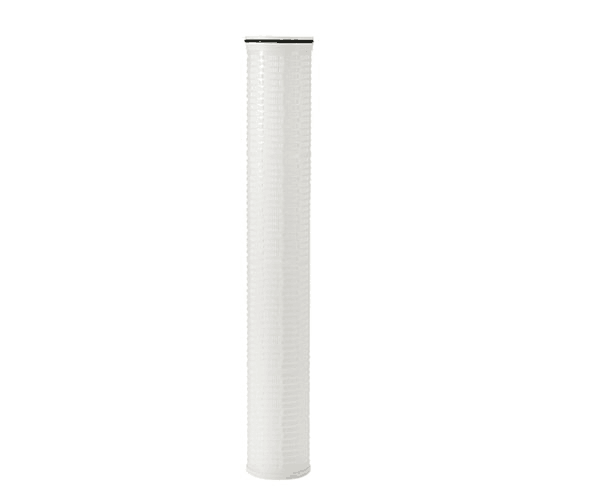
4.1 Why Cartridge Filters Are Required
Cartridge filters are the last line of defense before RO membranes. Even with dual-media filtration or UF pretreatment, cartridges are mandatory to protect RO from:
- Filter media carryover (sand, anthracite particles from dual-media breakthrough or upset)
- UF membrane fiber breaks (rare but catastrophic if not caught — UF fiber failure allows particles >0.1 µm to pass)
- Pretreatment system upsets (turbidity spike, chemical feed failure, algal bloom)
- Corrosion products from piping, pumps, valves (iron oxide particles)
Cartridges capture these contaminants and protect the RO membranes, which cost $300–1,000 per element and take weeks to replace.
4.2 Cartridge Specifications
Standard SWRO cartridge:
- Micron rating: 5 µm absolute (most common) or 1 µm absolute (for tighter protection) (typical, Complete Water: SWRO cartridge filters)
- Media: Melt-blown polypropylene depth filter or pleated polypropylene membrane (for 1 µm absolute)
- Length: 40 inches (1016 mm) standard — maximize surface area per element
- End caps: DOE (double open end) with 222 or 226 O-ring seals
- Housing: Horizontal multi-cartridge vessels (6, 12, 18, 24, or more cartridges per vessel) in stainless steel 316L
Why 5 µm?
- RO feed spacer thickness is 0.8 mm (800 µm). Particles >10 µm can wedge into spacer channels and block flow. A 5 µm cartridge provides 2× safety margin.
- Colloidal material (0.01–5 µm) is the primary SDI contributor. A 5 µm absolute cartridge removes particles down to 5 µm with >99.9% efficiency, capturing the tail of the colloidal distribution.
Why 1 µm (when specified)?
- Tighter protection for premium RO systems where maximum membrane life (7+ years) is the priority
- Backup when UF pretreatment is used (UF effluent is already <0.1 µm, so 1 µm cartridge is a safety layer for UF fiber breaks)
- High-silica or high-iron seawater where colloidal silica or iron oxide <5 µm is present
Depth vs pleated membrane cartridges:
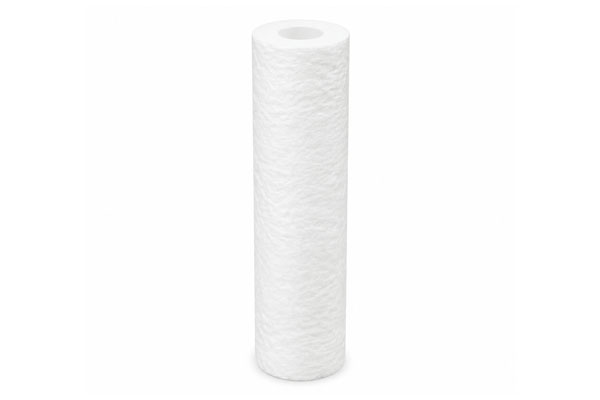
- Melt-blown depth (5 µm nominal-to-absolute): Lower cost ($15–40 per 40" cartridge), higher dirt-holding capacity, standard for most SWRO plants.
- Pleated membrane (1 µm absolute): Higher cost ($40–80 per 40" cartridge), higher surface area (15–20 ft² vs 2–5 ft² for depth), longer service life in low-solids applications, used in premium plants or UF-equipped plants.
4.3 Housing Configuration
Horizontal multi-cartridge housings are standard for SWRO (not vertical housings). Why horizontal?
- Easier installation and maintenance in tight spaces (RO skids are compact)
- Better flow distribution across multiple cartridges
- Lower headloss than vertical housings (gravity assists flow in horizontal orientation)
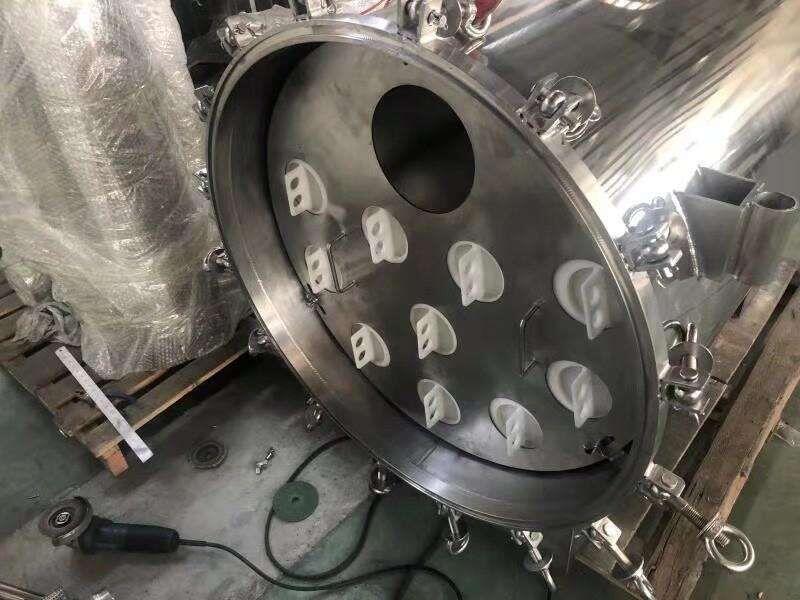
Vessel material: Stainless steel 316L (seawater corrosion resistance). FRP (fiberglass reinforced plastic) is used in smaller systems or where cost is critical.
Cartridge count: Sized for RO feed flow at acceptable clean DP (<5 psi). Example: 1,000 m³/h (4,400 gpm) RO feed, 40 gpm per 40" cartridge at 3 psi clean DP → 110 cartridges required. Typically installed in 6–10 parallel vessels of 12–24 cartridges each.
Redundancy: Some plants install duplex housings (two parallel vessels with diverter valves) to allow cartridge changeout without shutting down the RO. One vessel services, one on standby or being changed out.
4.4 Cartridge Changeout and Monitoring
Changeout trigger: When differential pressure (DP) across cartridge housing reaches 15–20 psi (1–1.4 bar), replace cartridges (typical). High DP indicates cartridges are loaded and at risk of bypass or media unloading (depth cartridges can unload captured particles if DP exceeds their structural limit).
Service life:
- With dual-media pretreatment (turbidity 1–2 NTU): 3–12 months (typical)
- With UF pretreatment (turbidity <0.1 NTU): 6–24 months (typical) — cartridges last much longer because UF delivers consistently low particulate load
- Direct intake (no pretreatment, turbidity >5 NTU): Days to weeks — not viable, cartridges blind immediately
Monitoring:
- Install DP transmitters on cartridge housing inlet and outlet
- Monitor DP trend — gradual rise over weeks to months is normal; sudden spike indicates pretreatment upset or media breakthrough
- Monitor turbidity before and after cartridge filters — no increase means cartridges are working; increase after filters means cartridge bypass or failure
- Monitor SDI₁₅ after cartridge filters — should be <3 consistently; >3 indicates cartridges are undersized or bypassing
5. Chlorine Control and Dechlorination
5.1 Why Chlorine Is Used (and Why It Must Be Removed)
Chlorination at intake:
- Controls biofouling by killing planktonic bacteria and preventing biofilm formation in pretreatment piping, tanks, and RO feed
- Dose: 0.5–2 ppm free chlorine, 30–60 minutes contact time before filtration
- Effective against bacteria, algae, and some viruses
Problem: Polyamide RO membranes are irreversibly damaged by free chlorine. Exposure to >0.1 ppm for hours oxidizes the membrane’s aromatic polyamide layer, breaking amide bonds and increasing pore size. Result: salt passage increases from 0.5–1% (new membrane) to 5–15% (damaged membrane), and rejection drops (cited, ResearchGate: Chlorination disadvantages).
Tolerance: Polyamide membranes can tolerate <1,000 ppm-hours of chlorine exposure over their lifetime (e.g., 0.1 ppm for 10,000 hours = 1,000 ppm-hours). Conservative design targets <0.05 ppm free chlorine at RO feed, ideally zero.
5.2 Dechlorination with Sodium Bisulfite (SBS)
Mechanism: Sodium bisulfite (NaHSO₃) or sodium metabisulfite (Na₂S₂O₅) reduces free chlorine to chloride ion:
NaHSO₃ + HOCl → NaCl + H₂SO₄
Dose: Stoichiometric ratio is 1.34 kg SBS per 1 kg Cl₂. In practice, dose 2–3 ppm SBS per 1 ppm free chlorine to ensure complete reaction and provide safety margin (typical).
Dosing point: After dual-media filtration or UF, before cartridge filters and RO. Allow 30–60 seconds contact time in piping before RO feed.
Control: Online ORP (oxidation-reduction potential) or free chlorine analyzer with feedback control loop adjusts SBS pump speed to maintain <0.05 ppm residual chlorine at RO feed. This is mandatory — manual dosing is unreliable and risks chlorine breakthrough.
Problems with overdosing SBS:
- Excess bisulfite (HSO₃⁻) lowers pH (forms sulfuric acid)
- Bisulfite can reduce sulfate scale inhibitor effectiveness (some antiscalants are sensitive to reducing agents)
- Overdose >>3× stoichiometric is wasteful and increases operating cost
5.3 Activated Carbon Dechlorination
Alternative to SBS: Activated carbon adsorbs chlorine and removes dissolved organics (dual benefit for RO pretreatment).
Design: Granular activated carbon (GAC) contactors (2–3 m deep beds, 10–20 minutes empty bed contact time at design flow) or activated carbon cartridges (if flow is low).
Advantages:
- No chemical dosing (eliminates SBS pump, storage, and control loop)
- Removes dissolved organics (TOC reduction 30–60%), reducing organic fouling
- No pH depression or sulfate issues
Disadvantages:
- Bacteria colonize GAC beds (biofilm forms), which can release bacteria into RO feed if not controlled
- Requires periodic backwash and disinfection (or replacement for cartridge systems)
- GAC replacement every 2–5 years (higher operating cost than SBS in large plants)
- Carbon fines can escape and foul RO (requires post-carbon cartridge filtration)
Use case: Smaller plants (<5,000 m³/d) or plants where SBS control complexity is a concern. Large SWRO plants (>50,000 m³/d) typically use SBS due to lower operating cost.
6. ECOFILTRONE SWRO Filtration Products
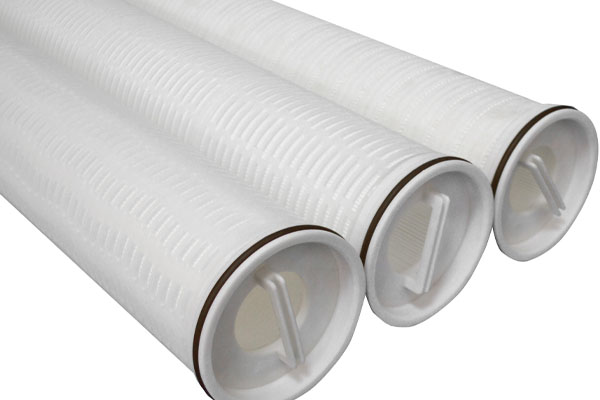
ECOFILTRONE High-Flow SWRO Cartridge Filters (5 µm Absolute)
Melt-blown polypropylene depth media, thermally bonded (no adhesives), graded density for high dirt-holding capacity. 40 inches length × 2.75 inches OD, DOE end caps with 222/226 O-ring seals. Absolute rating: 5 µm (beta ratio ≥1000 by ISO 16889). FDA 21 CFR 177.1520 compliant for food-contact (if used in potable water post-treatment). For SWRO RO feed protection, removes filter media carryover, corrosion products, and residual particulate after dual-media or UF pretreatment.
→ View specifications and flow-vs-DP dataECOFILTRONE Pleated Membrane Cartridge (1 µm Absolute, SWRO-Rated)
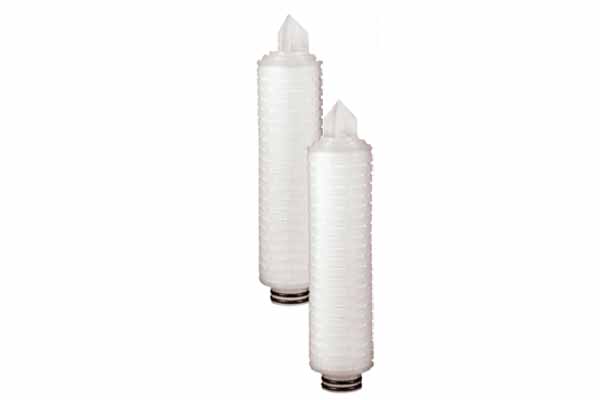
Pleated polypropylene membrane, 1 µm absolute (>99.9% retention), 40 inches × 2.75 inches, DOE end caps, 15–18 ft² surface area per cartridge. For premium SWRO plants with UF pretreatment or high-silica/high-iron seawater. Longer service life than depth cartridges (6–24 months typical). Bubble point and integrity testing data available.
→ View specificationsECOFILTRONE SWRO Pre-Filter Housings (Horizontal Multi-Cartridge)
Stainless steel 316L horizontal vessels for 6, 12, 18, or 24 cartridges (40 inches length). Side-port inlet/outlet (ANSI 150# flanges), top-access cartridge loading, 150 psi (10 bar) rated. Includes DP ports for monitoring. For SWRO RO feed protection systems. Custom cartridge counts and flange sizes available for large desalination plants.
→ View specifications
ECOFILTRONE provides complete SWRO pretreatment and cartridge filtration packages including sizing calculations (cartridge count for flow rate and allowable DP), cartridge selection (5 µm vs 1 µm depth vs pleated), housing configuration, and integration with dual-media or UF pretreatment systems. Beta ratio test reports, flow-vs-DP curves, and dirt-holding capacity data available for all SWRO cartridge products.
7. Common SWRO Filtration Problems
Problem 1: SDI remains >3 despite dual-media filtration showing <1 NTU turbidity
Causes:
- Colloidal material (0.01–5 µm) passes through dual-media filters but is not measured by turbidity (which only captures >1 µm particles)
- Insufficient coagulation dose (colloids not aggregated)
- Algal exudates or TEP (transparent exopolymer particles) from phytoplankton bloom — not removed by filtration alone
Solutions:
- Increase coagulant dose (ferric chloride +2 ppm) and verify with jar testing
- Add polymer flocculant (0.5 ppm) to improve floc strength
- Consider UF pretreatment — physical barrier removes all colloids <0.1 µm
- Monitor TOC (total organic carbon) — if >2 ppm, organics are contributing to SDI; increase coagulation
Problem 2: Cartridge filters blind rapidly (days instead of months)
Causes:
- Pretreatment failure (dual-media filter upset, media breakthrough, UF fiber break)
- High turbidity or SDI entering cartridges (>5 NTU, SDI >10)
- Undersized cartridge system (too few cartridges for flow rate)
Solutions:
- Monitor turbidity and SDI upstream of cartridge filters — if >2 NTU or SDI >5, pretreatment is failing; troubleshoot dual-media backwash or UF cleaning
- Increase cartridge count (reduce flow per cartridge from 40 gpm to 20 gpm)
- Switch from 5 µm to 10 µm or 25 µm if particulate is very high (but this increases RO fouling risk — better to fix pretreatment)
Problem 3: RO salt passage increases gradually over months (chlorine damage suspected)
Causes:
- Chlorine breakthrough due to SBS underdose or control system failure
- ORP or free chlorine analyzer fouled or miscalibrated
- Chlorine spike during pretreatment upset (higher chlorine dose at intake not matched by SBS increase)
Solutions:
- Verify free chlorine analyzer calibration weekly (use DPD colorimetric test as backup)
- Check SBS dosing pump operation (stroke rate, chemical tank level)
- Install redundant chlorine analyzers (one pre-SBS, one post-SBS at RO feed) with alarm at >0.1 ppm
- If damage is confirmed (salt passage >2× original), affected RO elements must be replaced — chlorine damage is irreversible
Problem 4: Biofouling recurs every 3–4 months despite frequent RO cleaning
Causes:
- Insufficient biofouling control at pretreatment (bacteria load entering RO is too high)
- Chlorination contact time too short (<30 minutes)
- Warm seawater (>25 °C) accelerates biofilm growth
- Cleaning frequency too low (biofilm becomes established before next cleaning)
Solutions:
- Increase chlorine dose at intake (from 1 ppm to 2 ppm) and verify 30–60 minutes contact time
- Install UV disinfection (40–60 mJ/cm²) at RO feed as additional barrier
- Increase RO cleaning frequency (from every 6 months to every 3 months)
- Use alkaline + enzymatic + biocide cleaning (not just alkaline alone)
8. Frequently Asked Questions
What is the difference between turbidity and SDI?
Turbidity measures bulk suspended solids (>1 µm) by light scattering. SDI measures the fouling potential of colloidal and fine particulate material (0.01–10 µm) by its ability to plug a 0.45 µm membrane. A water sample can have low turbidity (0.5 NTU) but high SDI (4–5) if it contains fine colloids (colloidal silica, iron hydroxide, algal exudates) that do not scatter light but rapidly foul membranes. Both must be measured — turbidity <1 NTU does not guarantee SDI <3.
Do I need cartridge filters if I have ultrafiltration (UF) pretreatment?
Yes, absolutely. UF delivers excellent water quality (turbidity <0.1 NTU, SDI <2), but UF membranes can fail (fiber breaks, seal leaks) without immediate detection. A single broken UF fiber can allow particles >0.1 µm to pass, fouling RO membranes within hours. Cartridge filters (5 µm or 1 µm) are the safety backup — they catch UF fiber breaks and protect the RO investment. Cartridges in UF-equipped plants last much longer (12–24 months vs 3–6 months with dual-media) because UF delivers such low particulate load.
Should I use 5 µm or 1 µm cartridge filters for SWRO?
5 µm absolute is standard for most SWRO plants. It provides adequate protection (removes particles >5 µm with >99.9% efficiency), balances cost and performance, and has proven track record.
Use 1 µm absolute if:
- UF pretreatment is installed (UF effluent is already <0.1 µm, so 1 µm is a safety net for UF failure)
- Seawater has high colloidal silica or iron oxide <5 µm
- Maximum RO membrane life (7+ years) is the priority and budget allows
Do not use nominal-rated cartridges (5 µm nominal) — they allow 10–40% of particles >5 µm to pass. SWRO requires absolute-rated cartridges.
How often should I replace SWRO cartridge filters?
Depends on pretreatment quality:
- Dual-media pretreatment (turbidity 1–2 NTU, SDI 3–5): 3–12 months (typical)
- UF pretreatment (turbidity <0.1 NTU, SDI <2): 6–24 months (typical)
Monitor differential pressure (DP) across cartridge housing. Replace when DP reaches 15–20 psi (1–1.4 bar). If DP rises faster than expected (reaches 20 psi in <3 months), investigate pretreatment upset or undersized cartridge system.
Can I use the same cartridge filters for SWRO and brackish water RO (BWRO)?
Materials yes, sizing no. The cartridge media (polypropylene, 5 µm absolute) is the same, but SWRO flow rates and solids loading are higher than BWRO. SWRO plants are larger (10,000–500,000 m³/d vs 100–10,000 m³/d for BWRO), and seawater has higher particulate and organic content than brackish water. Size the cartridge system for SWRO flow and solids load — do not reuse BWRO cartridge sizing.
How do I know if chlorine is damaging my RO membranes?
Symptoms of chlorine damage:
- Gradual increase in salt passage (from 0.5–1% to 2–5% or higher) over months
- Increase in permeate conductivity (from 200–400 µS/cm to 800–1,500 µS/cm for 35,000 ppm seawater feed)
- Minimal change in permeate flow or DP initially (damage is chemical, not physical fouling)
Diagnosis:
- Check historical data: salt passage trending up over 6–12 months?
- Review free chlorine analyzer logs: any periods where chlorine >0.1 ppm at RO feed?
- Perform autopsy on lead RO element: chlorine-damaged membranes show increased salt passage, oxidation of polyamide layer (visible under FTIR or XPS analysis)
If confirmed: Replace affected elements (typically first stage, first 2–3 elements). Fix chlorine control system (calibrate analyzers, verify SBS dosing). Chlorine damage is irreversible — cleaning does not restore membrane performance.
What is the difference between conventional pretreatment (dual-media) and UF pretreatment?
| Feature | Dual-media filtration | Ultrafiltration (UF) |
|---|---|---|
| Turbidity removal | <2 NTU (varies with upsets) | <0.1 NTU (consistent) |
| SDI | 3–5 (marginal) | <2 (excellent) |
| Footprint | Large (filter tanks, backwash tanks) | Compact (50–70% smaller) |
| Capital cost | Low | High (2–3× dual-media) |
| Operating cost | Moderate | Moderate-to-high (membrane replacement) |
| Reliability | Variable (quality degrades during upsets) | High (consistent quality) |
| Use case | Small-to-medium plants, budget-constrained | Large modern plants, high-quality requirement |
Trend: New large SWRO plants (>50,000 m³/d) increasingly use UF pretreatment for consistent quality and compact footprint. Existing plants with dual-media often retrofit with UF when expanding or upgrading.
9. Conclusion
Seawater reverse osmosis (SWRO) desalination depends on effective pretreatment and filtration to protect polyamide RO membranes from particulate, biological, organic, and scaling fouling. SWRO membranes require feed water with SDI₁₅ <3 (ideally <2.5) and turbidity <1 NTU — standards that raw seawater cannot meet without multi-stage pretreatment. Dual-media filtration combined with coagulation delivers acceptable performance (SDI 3–5, turbidity <2 NTU) for small-to-medium plants, while ultrafiltration (UF) pretreatment provides superior, consistent quality (SDI <2, turbidity <0.1 NTU) increasingly adopted in large modern SWRO facilities.
Cartridge filtration (5 µm or 1 µm absolute polypropylene) is the mandatory final defense before RO membranes, protecting against filter media breakthrough, pretreatment upsets, and UF fiber failures. Cartridges are sized for flow rate and monitored by differential pressure — changeout at 15–20 psi prevents bypass and ensures continuous RO protection. Service life ranges from 3–12 months with dual-media pretreatment to 6–24 months with UF pretreatment.
Chlorine control is critical: chlorination at intake controls biofouling, but residual chlorine must be removed by sodium bisulfite injection (with online analyzer and feedback control) or activated carbon filtration before RO. Polyamide membranes tolerate <1,000 ppm-hours of chlorine exposure over their lifetime — exceeding this causes irreversible oxidation damage, increasing salt passage and requiring membrane replacement. Biofouling remains the dominant fouling mechanism (45–65% of incidents), controlled by chlorination, UF physical barrier, UV disinfection, and frequent RO membrane cleaning (every 3–6 months).
Successful SWRO operation requires understanding the four fouling mechanisms (particulate, biofouling, organic/colloidal, scaling), matching pretreatment technology to raw seawater characteristics and plant scale, specifying cartridge filters correctly, and maintaining rigorous water quality monitoring (turbidity, SDI, free chlorine, DP) to detect and correct problems before they damage expensive RO membranes.
Need Help Designing SWRO Pretreatment or Selecting Cartridge Filters?
If you are designing a seawater RO desalination plant, troubleshooting membrane fouling, or evaluating pretreatment options, share your raw seawater quality (turbidity, SDI, TDS, temperature), RO capacity (m³/h or m³/d), and existing pretreatment configuration (dual-media, UF, or direct filtration).
ECOFILTRONE will provide cartridge filter sizing (count and configuration for flow rate), micron rating recommendation (5 µm vs 1 µm), housing specifications, and pretreatment system integration guidance for your SWRO application.
WhatsApp: +86 131 8896 2285
Sources: ResearchGate: RO membrane fouling mechanisms review · PMC: Fouling in RO membranes · ResearchGate: Biofouling of SWRO membranes · ResearchGate: Chlorination disadvantages · ResearchGate: Scaling and fouling review · MDPI: Coagulation with UF vs sand filtration for SWRO · Desalination: UF performance in SWRO demonstration plant · Brother Filtration: SWRO desalination filtration · Complete Water: SWRO cartridge filters · MDPI: Hybrid adsorption-microfiltration SWRO pretreatment