Data grading: (rated) = manufacturer specification · (typical) = commonly observed industry range · (cited) = published standard or reference · (regulatory) = regulatory requirement or guidance
Introduction
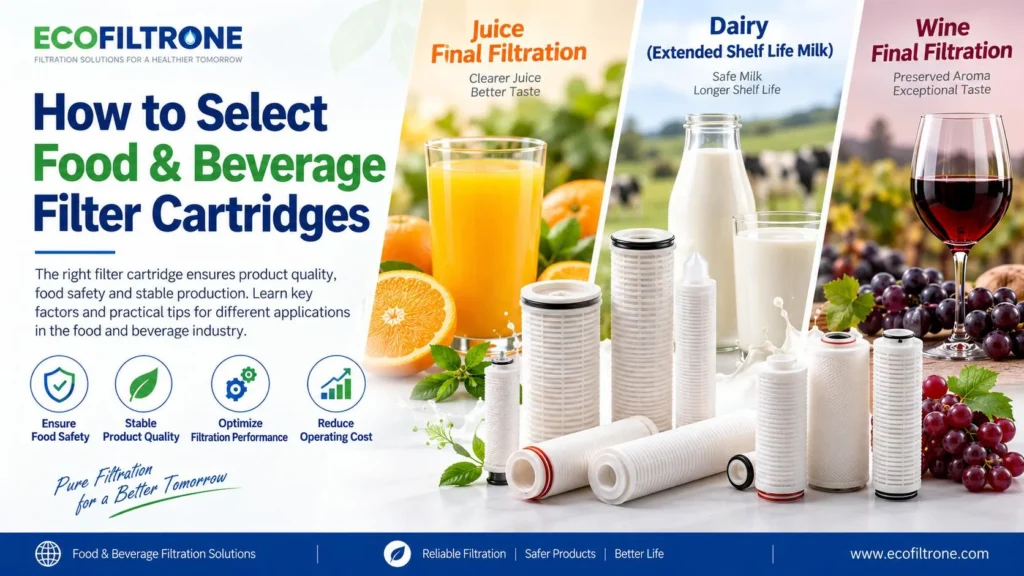
Filter cartridge selection in food and beverage processing is fundamentally different from industrial water treatment or chemical processing. The filter must not only remove particles or microorganisms — it must do so while meeting stringent regulatory requirements for food contact materials, preserving organoleptic properties (taste, color, aroma), maintaining validated microbial retention, and operating within sanitary design standards that facilitate cleaning and prevent contamination.
A filter that works perfectly in a pharmaceutical water system may be completely inappropriate for wine filtration if the membrane material leaches extractables that alter flavor. A 0.2 µm absolute-rated cartridge validated for bacterial retention in water may blind rapidly in beer or juice due to colloidal haze formers. Materials approved for general industrial use may not carry the certifications (FDA 21 CFR 177, EU 1935/2004, 3-A Sanitary Standards) required for direct food contact (regulatory, FDA 21 CFR Part 110).
This guide explains the regulatory framework for food-contact filter cartridges, the difference between clarification and sterile filtration, how to select micron ratings for yeast and bacteria removal in beer, wine, juice and dairy, which membrane materials (PES, PVDF, nylon, PTFE) are appropriate for each beverage type, and how to validate microbial retention and integrity testing for final membrane filtration.
Key Takeaways
- FDA 21 CFR 177 compliance is mandatory for food-contact filter materials in the United States (regulatory). PES (polyethersulfone), PVDF, nylon and PTFE membranes are generally compliant; confirm each manufacturer’s certification. Materials must also meet EU 1935/2004 for European markets.
- Sterile filtration requires absolute-rated membranes validated for microbial retention. A 0.45 µm membrane validated against Saccharomyces cerevisiae (yeast) is standard for wine and beer final filtration. A 0.2 µm membrane validated against Brevundimonas diminuta (bacteria) is required for cold-fill beverages, juice and dairy where bacterial spoilage is the primary concern.
- PES (polyethersulfone) is the dominant membrane material for beverage sterile filtration — low extractables, broad pH compatibility, high flow rate, validated retention. Used in wine, beer, juice, soft drinks and dairy final filtration (cited, Pall food-contact PES declaration).
- 0.45 µm is the standard for wine and beer; 0.2 µm is the standard for juice and dairy. The micron rating is set by the target organism size and validation data, not by a universal "finer is better" rule.
- Clarification (upstream) and sterile filtration (final) are sequential stages, not alternatives. Depth pre-filtration removes bulk solids and haze; membrane final filtration provides microbial stability. Attempting to use a 0.45 µm membrane without pre-filtration results in rapid blinding.
- Integrity testing (bubble point or diffusion test) is required to verify membrane integrity before and after use in critical sterile applications. A membrane that passes integrity testing confirms no pinholes, tears or bypass paths exist.
- Sanitary design matters as much as material certification. Housings must be 3-A certified or designed for clean-in-place (CIP) and steam-in-place (SIP) where applicable. Dead legs, crevices and non-drainable geometries harbor contamination regardless of filter performance.
Quick Reference: Micron Rating by Application
| Beverage | Clarification / pre-filtration | Final filtration (sterile) | Target organism | Membrane material |
|---|---|---|---|---|
| Wine (white, rosé) | 0.65–3 µm depth or membrane | 0.45 µm absolute, PES | Saccharomyces, Brettanomyces | PES |
| Wine (red) | 1–5 µm depth | 0.65 µm absolute, PES (or 0.45 µm if tighter stability needed) | Yeast, lactic acid bacteria | PES |
| Beer (lager, ale) | 0.65–3 µm depth or diatomaceous earth | 0.45 µm absolute, PES | Yeast, Pediococcus, Lactobacillus | PES |
| Cider, mead | 1–5 µm depth | 0.45 µm absolute, PES | Yeast, lactic acid bacteria | PES |
| Juice (cold-fill, shelf-stable) | 1–10 µm depth | 0.2–0.45 µm absolute, PES or PVDF | Yeast, mold, bacteria | PES, PVDF |
| Soft drinks, carbonated beverages | 0.5–5 µm depth or carbon | 0.2–0.45 µm absolute, PES | Bacteria, yeast | PES |
| Dairy (milk, cream) | 1–10 µm depth (post-pasteurization) | 0.2 µm absolute, PES or PVDF | Bacteria (Bacillus, Pseudomonas) | PES, PVDF |
| Bottled water | 1–10 µm depth or carbon | 0.2 µm absolute (if sterile fill); or none if ozone/UV treated | Bacteria, Pseudomonas | PES, PVDF |
| Syrups, concentrates | 5–25 µm depth | 0.45–1 µm absolute (if unheated fill) | Yeast, osmotolerant organisms | PES |
| Cooking oil, edible oils | 1–10 µm depth or press aid | 0.5–5 µm absolute or nominal | Particulate, not microbial | Nylon, PTFE (hydrophobic) |
All absolute ratings (cited, typical manufacturer validation data for beverage applications). Confirm validation against the specific spoilage organisms in your product.
1. Regulatory Framework for Food-Contact Filters
1.1 United States: FDA 21 CFR
Filter cartridges used in direct contact with food or beverages must comply with FDA 21 CFR Part 177 (indirect food additives: polymers) (regulatory, FDA CFR Title 21). This regulation specifies which polymer resins and additives are permitted for food contact use, under what conditions (temperature, food type, contact time), and with what migration limits.
Common food-contact filter materials and their CFR classifications:
- Polypropylene (PP): 21 CFR 177.1520 — approved for aqueous, acidic, alcoholic and fatty foods, up to specific temperature limits (regulatory).
- Polyethersulfone (PES): Generally recognized as compliant under 21 CFR 177 regulations; manufacturers provide declarations of compliance for specific product lines (cited, Pall PES food-contact declaration).
- PVDF (polyvinylidene fluoride): 21 CFR 177.2510 — approved for repeated food contact (regulatory).
- Nylon (polyamide): 21 CFR 177.1500 — approved with conditions (regulatory).
- PTFE (polytetrafluoroethylene): 21 CFR 177.1550 — approved for food contact (regulatory).
Critical point: Material compliance is not universal — it depends on extraction conditions, food type and temperature. A PES membrane approved for aqueous beverages at 40 °C may not be approved for fatty foods at 80 °C. Always request the manufacturer’s declaration of compliance specific to your product and process conditions.
1.2 European Union: EC 1935/2004 and EU 10/2011
In the EU, food-contact materials must comply with EC Regulation 1935/2004 (framework regulation) and EU Regulation 10/2011 (plastics in contact with food) (regulatory). EU 10/2011 specifies authorized monomers, additives and migration limits.
Filters intended for EU markets must carry a declaration of compliance (DoC) stating conformity with EU 10/2011 and migration testing results. Many global manufacturers provide dual FDA/EU compliance documentation.
1.3 Other Certifications
NSF/ANSI 61 (drinking water system components): Applicable if the filter is in potable water service before beverage processing. Not directly required for final beverage filtration but may be specified by some plants.
3-A Sanitary Standards: Design standards for dairy and food processing equipment, covering materials, surface finish, drainability and cleanability. Housings (not cartridges themselves) are typically 3-A certified.
Halal and Kosher certification: Some beverage processors require filters manufactured without animal-derived materials or in certified facilities. PES, PVDF and PTFE membranes are generally acceptable; gelatin-based or animal-derived binders are not. Request certification if required.
2. Clarification vs Sterile Filtration
Beverage filtration is typically a two-stage process: clarification followed by final sterile filtration. Understanding the difference is critical to avoid mis-specifying the filter.
2.1 Clarification (Pre-filtration)
Purpose: Remove suspended solids, haze formers, colloidal material, and reduce the microbial load before final filtration. Not intended to be sterile — some yeast and bacteria pass through.
Micron rating: 0.65–10 µm, depending on beverage type and upstream processing (typical).
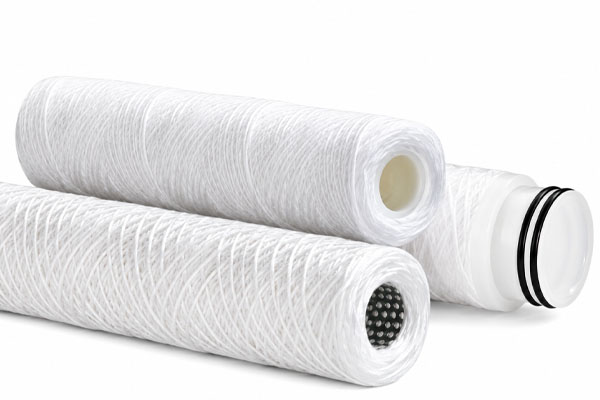
Media type: Depth filters (cellulose, diatomaceous earth, polypropylene), lenticular modules, or coarse pleated membranes.
Typical applications:
- Wine: After fining and racking, before bottling. Removes tartrate crystals, protein haze, dead yeast.
- Beer: After fermentation and conditioning, before final filtration. Removes yeast, hop particles, chill haze.
- Juice: After pressing or centrifugation. Removes pulp, pectin, suspended solids.
Performance measure: Turbidity reduction (NTU), not sterility. A clarified beverage is clear but not microbiologically stable.
2.2 Sterile Filtration (Final Membrane Filtration)
Purpose: Remove all viable microorganisms (yeast, bacteria, mold) to achieve microbiological stability without heat pasteurization. This is the final barrier before filling.
Micron rating: 0.2–0.65 µm absolute, depending on target organism (typical, validated).
Media type: Pleated membrane cartridges — PES, PVDF, nylon — with validated microbial retention (beta ratio ≥ 10,000 or log reduction value LRV ≥ 4).
Typical applications:
- Wine, beer: 0.45 µm or 0.65 µm final filtration before bottling (cold sterile fill, no pasteurization).
- Juice, soft drinks: 0.2 µm or 0.45 µm final filtration for shelf-stable cold-fill products.
- Dairy: 0.2 µm final filtration post-pasteurization for extended shelf life.
Performance measure: Microbial retention validated by challenge testing with specific organisms (Saccharomyces cerevisiae at ≥10⁷ CFU/cm² for 0.45 µm wine filters; Brevundimonas diminuta at ≥10⁷ CFU/cm² for 0.2 µm sterile filters) (cited, typical validation protocol).
Critical difference: A 0.45 µm nominal polypropylene depth cartridge used for RO pretreatment is not a sterile filter. A 0.45 µm absolute PES membrane cartridge validated for yeast retention is a sterile filter. The micron number alone does not determine sterility — validation does.
3. Membrane Materials for Food & Beverage
3.1 PES (Polyethersulfone)
Characteristics:
- Hydrophilic — wets spontaneously with aqueous beverages, no pre-wetting required
- Broad pH compatibility: pH 2–12 (rated, typical PES membrane)
- Low protein binding and extractables
- High mechanical strength and flow rate
- FDA 21 CFR compliant and EU 10/2011 compliant (regulatory, manufacturer declarations)
Temperature limit: 80 °C (176 °F) continuous; short-term hot water sanitization to 90 °C (rated).
Typical applications:
- Wine final filtration: 0.45 µm or 0.65 µm absolute
- Beer final filtration: 0.45 µm absolute
- Juice, soft drinks: 0.2–0.45 µm absolute
- Dairy (post-pasteurization): 0.2 µm absolute
Advantages: PES is the industry standard for beverage sterile filtration. Low extractables ensure no flavor impact. Broad chemical compatibility covers wine (pH 3–4, ethanol to 14%), beer (pH 4–5, ethanol to 8%), juice (pH 2.5–4.5, high sugar), and dairy (pH 6.5–6.8, protein, fat).
Limitations: Not suitable for hydrophobic liquids (oils). Temperature limit (80 °C) excludes hot-fill pasteurization service above this temperature.
3.2 PVDF (Polyvinylidene Fluoride)
Characteristics:
- Hydrophilic (surface-treated) or naturally hydrophobic
- Excellent chemical resistance to acids, alkalis, oxidizers
- Higher temperature capability than PES: 90–100 °C continuous (rated)
- FDA 21 CFR 177.2510 compliant (regulatory)
Typical applications:
- Juice (hot-fill): 0.2–0.45 µm absolute where temperature exceeds PES limit
- Acidic beverages: PVDF handles pH extremes better than PES
- Carbonated soft drinks with high CO₂: PVDF resists carbonic acid better than nylon
Advantages: Higher temperature capability than PES; better chemical resistance to oxidizers and extreme pH.
Limitations: Typically higher cost than PES. Naturally hydrophobic PVDF requires pre-wetting; hydrophilic-treated PVDF adds cost. Not as widely validated for beverage microbial retention as PES — confirm validation data.
3.3 Nylon (Polyamide)
Characteristics:
- Hydrophilic
- FDA 21 CFR 177.1500 compliant (regulatory)
- Lower cost than PES or PVDF
- Good for aqueous beverages at neutral to slightly acidic pH
Temperature limit: 60–80 °C (rated, typical nylon membrane).
Typical applications:
- Bottled water final filtration: 0.2 µm absolute
- Low-alcohol beverages, soft drinks: 0.2–0.45 µm
- Juice (where cost is a driver and pH is not extreme): 0.45 µm
Advantages: Lower cost than PES. Adequate performance for many beverage applications where ethanol content is low and pH is near-neutral.
Limitations: Poor resistance to strong acids (pH < 3) and strong alkalis (pH > 9). Not suitable for wine (pH 3–4, high ethanol) or for caustic CIP cleaning above pH 10. Degrades faster than PES in high-ethanol or acidic conditions.
3.4 PTFE (Polytetrafluoroethylene)
Characteristics:
- Hydrophobic — does not wet with water or aqueous beverages unless surfactant-treated
- Universal chemical resistance
- FDA 21 CFR 177.1550 compliant (regulatory)
- Temperature limit: 200 °C+ (rated)
Typical applications:
- Air and gas filtration (tank vents, compressed air for product contact)
- Hydrophobic liquids (edible oils, fat-based products)
- Steam filtration for sterile steam in aseptic filling environments
Advantages: Chemical and thermal inertness. Suitable for non-aqueous and high-temperature service.
Limitations: Hydrophobic — not suitable for direct aqueous beverage filtration unless pre-wetted with alcohol or surfactant. Higher cost than PES. Primarily used for air/gas filtration or oils, not for mainstream beverage liquids.
4. Micron Rating Selection by Organism
4.1 Yeast Retention: 0.45–0.65 µm
Target organisms:
- Saccharomyces cerevisiae (wine, beer, cider yeast): 5–10 µm cell size (typical)
- Brettanomyces spp. (wine spoilage yeast): 2–8 µm (typical)
- Zygosaccharomyces (juice, soft drink spoilage yeast): 3–8 µm (typical)
Micron rating required: 0.45 µm absolute is the industry standard for yeast retention in wine and beer (cited, Pall wine final filtration). Some red wines use 0.65 µm absolute where tighter filtration would remove desirable colloidal tannins or color compounds.
Validation: A 0.45 µm PES membrane validated at ≥10⁷ CFU/cm² Saccharomyces cerevisiae produces a sterile filtrate (LRV ≥ 7, meaning >99.99999% retention) (cited, typical validation protocol).
Applications:
- White wine, rosé: 0.45 µm
- Red wine: 0.65 µm (preserves body) or 0.45 µm (tighter stability)
- Beer (lager, ale): 0.45 µm
- Cider, mead: 0.45 µm
4.2 Bacteria Retention: 0.2 µm
Target organisms:
- Lactobacillus spp. (wine, beer lactic acid bacteria): 0.5–1.5 µm diameter, 1–10 µm length (typical)
- Pediococcus spp. (beer spoilage bacteria): 0.6–1.0 µm (typical)
- Acetobacter (wine, beer acetic acid bacteria): 0.5–1.0 µm × 1–4 µm (typical)
- Pseudomonas, Bacillus, general bacteria: 0.5–3 µm (typical)
Micron rating required: 0.2 µm absolute is required for bacterial retention. A 0.45 µm membrane does not reliably retain bacteria — some small rods and cocci pass through (cited).
Validation: A 0.2 µm membrane validated at ≥10⁷ CFU/cm² Brevundimonas diminuta (ATCC 19146, formerly Pseudomonas diminuta) is the pharmaceutical and beverage industry standard for bacterial challenge testing (cited, ASTM F838).
Applications:
- Juice (cold-fill, shelf-stable): 0.2 µm
- Soft drinks (if unheated after filling): 0.2 µm
- Dairy (extended shelf life milk, cream): 0.2 µm post-pasteurization
- Bottled water (if sterile fill, no ozone/UV): 0.2 µm
Note: Many juice and soft drink processors use 0.45 µm + pasteurization rather than 0.2 µm alone, as a combined hurdle. If the product is heat-treated after filling, 0.45 µm is often sufficient for particulate and yeast removal; heat kills bacteria. If the product is cold-filled with no post-fill heat treatment, 0.2 µm is required for bacterial stability.
4.3 Mold and Spore Retention
Molds and fungal spores vary widely in size: 2–20 µm (typical). A 0.45 µm membrane removes most molds. Bacterial spores (e.g., Bacillus spores) are smaller: 0.8–1.5 µm (typical). A 0.2 µm membrane is required for spore retention, but in practice, spore-forming bacteria in beverages are typically addressed by pasteurization or low pH, not by filtration alone.
5. Integrity Testing and Validation
5.1 Why Integrity Testing Matters
A membrane filter with a single pinhole, tear or manufacturing defect allows unfiltered liquid to bypass, rendering the sterile filtration ineffective. Integrity testing verifies that the installed membrane has no bypass paths and meets its rated performance before use.
Integrity testing is:
- Required for pharmaceutical sterile filtration (FDA cGMP)
- Highly recommended for beverage final filtration in aseptic or cold-fill applications
- Standard practice in wine, beer and juice plants where microbial stability is critical and re-work or spoilage costs are high
5.2 Bubble Point Test
Principle: A wetted membrane retains a liquid (water, or water/alcohol mixture) in its pores by capillary forces. Applying gas pressure from the upstream side, the pressure at which the first continuous stream of bubbles breaks through the membrane (the bubble point) is inversely related to the pore size. A membrane with a defect has lower bubble point than specification.
Procedure:
- Wet the membrane with water or alcohol/water mixture per manufacturer’s instruction
- Apply air or nitrogen pressure from the upstream side, increasing slowly
- Observe the downstream side (submerged in liquid or connected to a flow sensor)
- Record the pressure at which continuous bubbling occurs
- Compare to the manufacturer’s specification for that membrane rating
Pass/fail: If measured bubble point ≥ minimum specification, the membrane passes. If below specification, the membrane has a defect and must be replaced.
Example: A 0.45 µm PES membrane may specify a minimum bubble point of 3.0 bar (44 psi) when wetted with water (illustrative, manufacturer-specific). If you measure 3.2 bar, it passes. If you measure 2.5 bar, it fails.
5.3 Diffusion Test (Forward Flow Test)
Principle: Even without defects, a small amount of gas diffuses through a wetted membrane at sub-bubble-point pressure. The diffusion flow rate is characteristic of the membrane’s pore structure. A membrane with a defect shows higher diffusion flow than specification.
Procedure:
- Wet the membrane
- Apply gas pressure below the bubble point (typically 80% of rated bubble point)
- Measure the gas flow rate through the membrane after stabilization
- Compare to the manufacturer’s maximum diffusion flow specification
Pass/fail: If diffusion flow ≤ maximum specification, the membrane passes.
Advantage over bubble point: More sensitive to small defects and can be automated with inline instrumentation.
5.4 When to Test
- Pre-use (before production): Confirm the membrane is intact after installation and CIP.
- Post-use (after production): Confirm the membrane did not tear or degrade during the run. A post-use integrity test that fails indicates potential product contamination — that batch may need to be held or reprocessed.
For critical sterile applications (aseptic filling, shelf-stable juice, ESL dairy), both pre- and post-use integrity testing is standard practice.
6. CIP and SIP Compatibility
6.1 Clean-in-Place (CIP)
Beverage processing membranes must tolerate repeated CIP cycles with caustic, acid and sanitizers without degradation.
Typical CIP agents and compatibility:
| CIP agent | Concentration | Temperature | PES | PVDF | Nylon | PTFE |
|---|---|---|---|---|---|---|
| Sodium hydroxide (NaOH) | 0.5–2% | 50–80 °C | Good | Excellent | Poor above pH 9 | Excellent |
| Nitric acid (HNO₃) | 0.5–2% | 50–80 °C | Good | Excellent | Good | Excellent |
| Citric acid | 1–3% | 40–60 °C | Excellent | Excellent | Good | Excellent |
| Hydrogen peroxide (H₂O₂) | 1–3% | 40–60 °C | Good | Excellent | Fair | Excellent |
| Peracetic acid (PAA) | 0.1–0.5% | 20–40 °C | Good | Excellent | Fair | Excellent |
| Sodium hypochlorite (bleach) | 50–200 ppm | 20–40 °C | Fair (limited exposure) | Good | Poor | Excellent |
PES: Compatible with most CIP agents at moderate temperature. Avoid prolonged exposure to hypochlorite above 200 ppm — it degrades PES over repeated cycles.
PVDF: Better oxidizer resistance than PES. Preferred where hypochlorite or peroxide CIP is routine.
Nylon: Poor caustic resistance. Not suitable for CIP with NaOH above pH 9.
PTFE: Universal compatibility, but rarely used for beverage liquid filtration (used for air/gas).
CIP cycle recommendation: Consult the membrane manufacturer’s CIP validation data for maximum concentration, temperature and exposure time. Exceeding limits shortens membrane life.
6.2 Steam-in-Place (SIP)
SIP sterilization at 121–135 °C is required for aseptic filling lines and some dairy applications.
Material capability:
- PES: Not generally SIP-rated. Standard PES membranes are limited to 80–90 °C. Some pharmaceutical-grade PES membranes are validated for limited SIP cycles; confirm with manufacturer.
- PVDF: Some PVDF membranes are SIP-capable to 135 °C. Confirm validation.
- PTFE: Fully SIP-capable to 135 °C+. Used for air/gas filtration in SIP environments, not typically for beverage liquids.
For beverage lines requiring SIP: Use validated SIP-rated cartridges (typically PVDF for liquids, PTFE for air/gas) or design the system for hot water sanitization at 85–90 °C instead of steam (which most PES membranes tolerate).
7. Application-Specific Selection
7.1 Wine Final Filtration
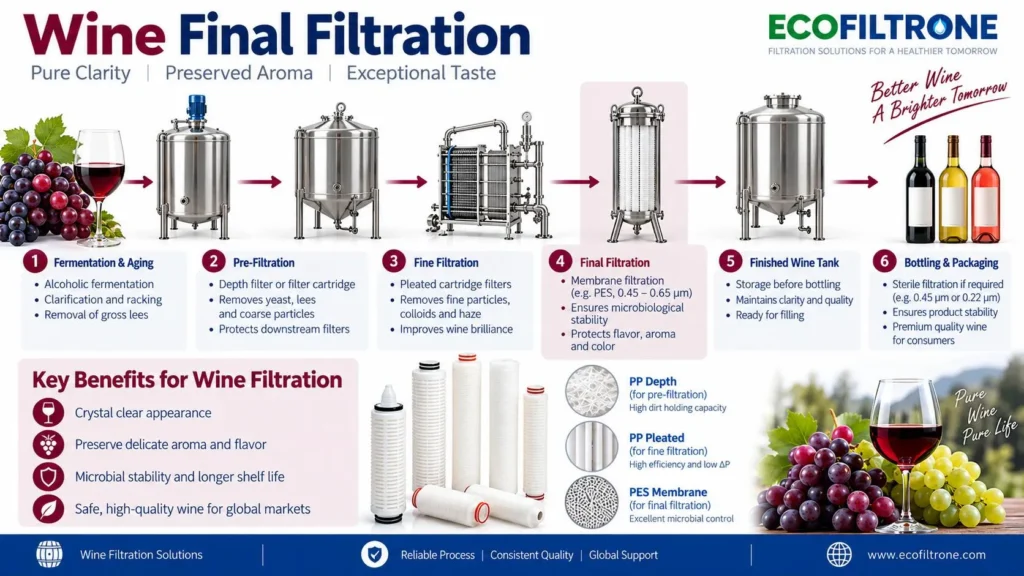
Challenge: Remove yeast (Saccharomyces, Brettanomyces) and lactic acid bacteria without stripping color, flavor or body. Red wine is particularly sensitive to over-filtration — excessive removal of tannins and phenolics reduces mouthfeel.
Pre-filtration: 1–3 µm depth filter or lenticular module after fining and racking. Removes tartrate crystals, protein haze, gross solids.
Final filtration:
- White wine, rosé: 0.45 µm absolute PES membrane (cited, Pall Oenoflow wine filtration)
- Red wine: 0.65 µm absolute PES (preserves phenolics) or 0.45 µm if tighter microbial control is required
Material: PES is the industry standard — low extractables, pH 3–4 compatible, ethanol to 14% compatible, validated yeast retention.
Flow rate: Size for the bottling line speed. A 30 in × 2.75 in PES membrane cartridge handles approximately 100–300 L/min (26–79 gpm) at clean DP (typical, wine viscosity, 0.45 µm).
Integrity testing: Bubble point test before and after each production run. Post-use test confirms membrane did not tear during filtration.
7.2 Beer Final Filtration
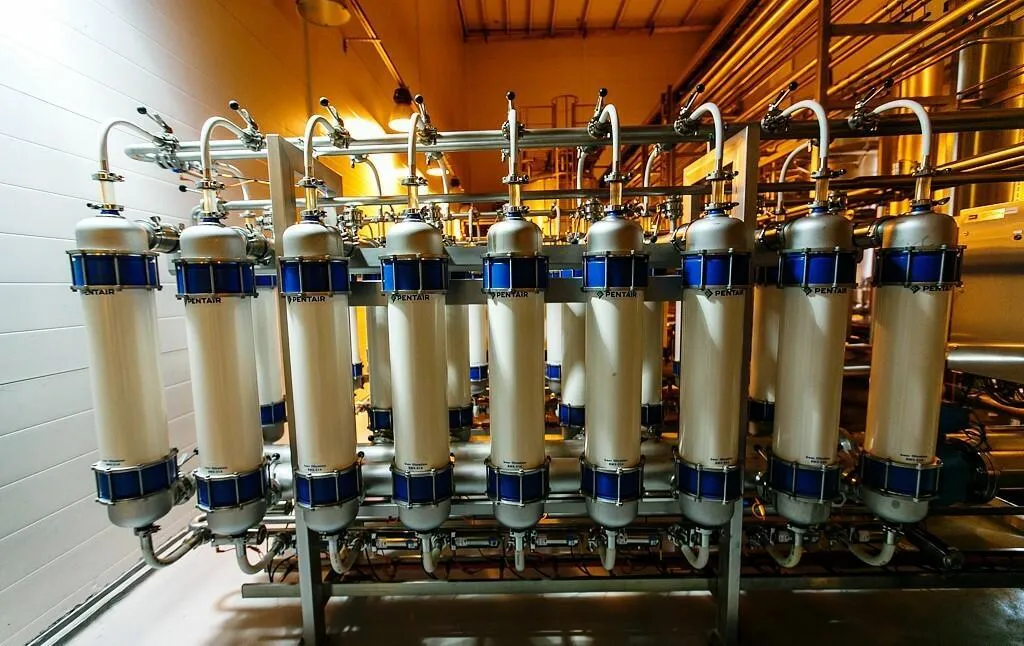
Challenge: Remove yeast and spoilage bacteria (Pediococcus, Lactobacillus) while preserving foam stability, flavor and clarity. Beer is typically pre-filtered through diatomaceous earth (DE) or kieselguhr filter, which removes bulk yeast and haze.
Pre-filtration: DE filtration or 0.65–2 µm depth filter after conditioning. Removes yeast, hop particles, chill haze.
Final filtration: 0.45 µm absolute PES membrane (cited, MoreBeer BevBright 0.45 µm PES).
Material: PES. Beer pH is 4–5, ethanol to 8%, CO₂ saturation — PES handles all of these.
Flow rate: A 30 in × 2.75 in PES cartridge at 0.45 µm handles approximately 150–400 L/min (40–105 gpm) at clean DP (typical, beer viscosity).
Integrity testing: Standard practice in craft breweries and commercial breweries. Bubble point test confirms sterile filtration.
Note: Some breweries use 0.65 µm for ales where a small yeast carryover is acceptable and contributes to flavor. Lagers and bottles intended for long shelf life use 0.45 µm.
7.3 Juice Final Filtration (Cold-Fill)
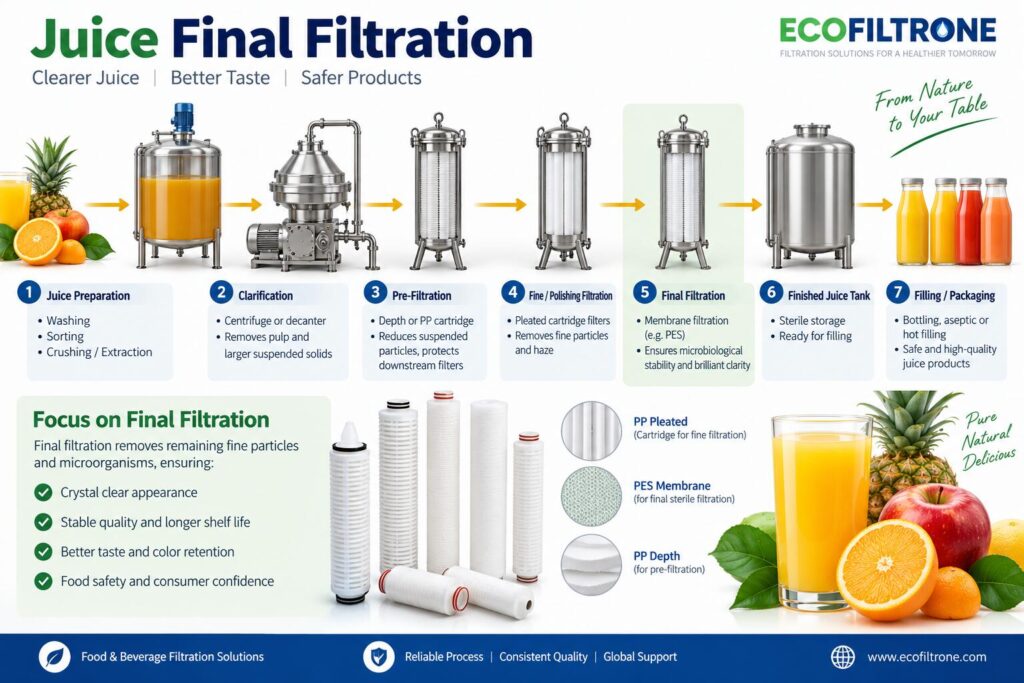
Challenge: Remove yeast, mold and bacteria to achieve shelf stability without pasteurization. Juice is high in sugar, acids (pH 2.5–4.5) and particulate (pulp, pectin).
Pre-filtration: 1–10 µm depth filter after pressing and enzymatic treatment. Removes pulp, pectin, suspended solids.
Final filtration: 0.2 µm absolute PES or PVDF membrane for bacterial retention. 0.45 µm if product is subsequently flash-pasteurized.
Material: PES (cost-effective, broad compatibility) or PVDF (if acidic pH or high temperature is a concern).
Flow rate: Juice is higher viscosity than water or beer. A 30 in PES cartridge at 0.2 µm may handle 50–150 L/min (13–40 gpm) depending on juice type (typical).
Integrity testing: Critical for cold-fill shelf-stable juice. Bubble point or diffusion test pre- and post-use.
7.4 Dairy (Extended Shelf Life Milk)
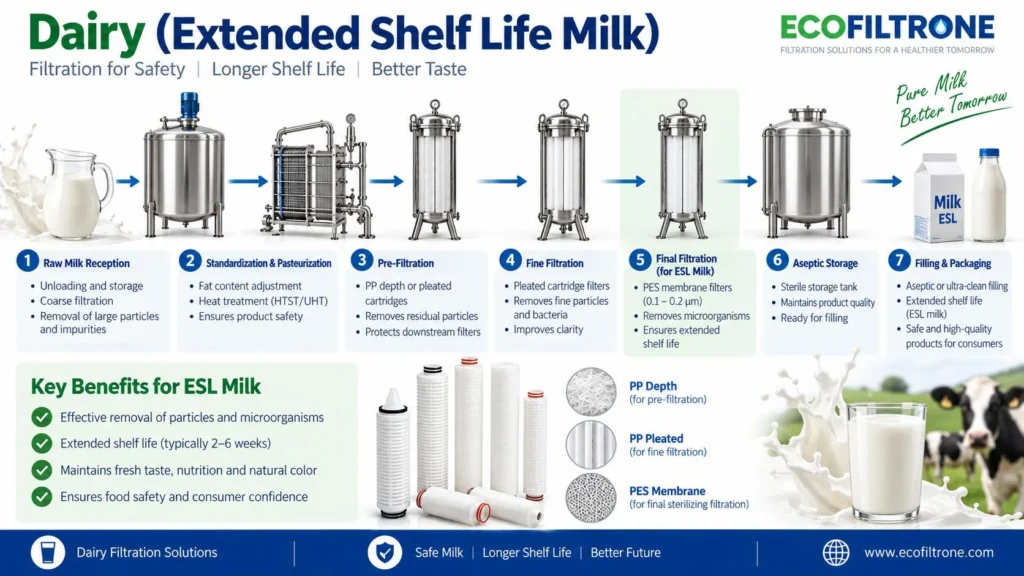
Challenge: Remove bacteria post-pasteurization to extend refrigerated shelf life from 7–14 days to 30–60 days. Milk is pasteurized at 72–75 °C for 15 seconds (HTST) or 135–150 °C for 2–4 seconds (UHT), then cooled and filtered.
Pre-filtration: Usually not required post-pasteurization, as pasteurization coagulates and separates most solids.
Final filtration: 0.2 µm absolute PES or PVDF membrane immediately after pasteurization and cooling, before filling.
Material: PES or PVDF. Milk pH is 6.5–6.8, fat and protein present — PES and PVDF are compatible. Confirm CIP compatibility with dairy cleaning agents (caustic + acid).
Temperature: If filtered hot (60–70 °C after pasteurization), confirm membrane is rated for the temperature. Standard PES (80 °C limit) is adequate; PVDF (90–100 °C) if temperature is higher.
Integrity testing: Required for ESL (extended shelf life) dairy. A failed post-use integrity test indicates potential bacterial contamination — batch is typically discarded.
8. ECOFILTRONE Food & Beverage Filter Cartridges
ECOFILTRONE PES Membrane Filter Cartridge
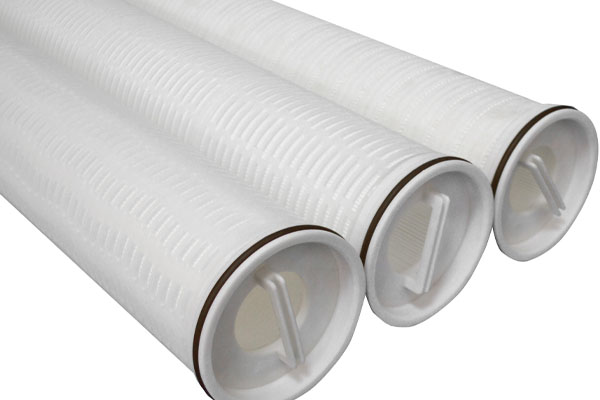
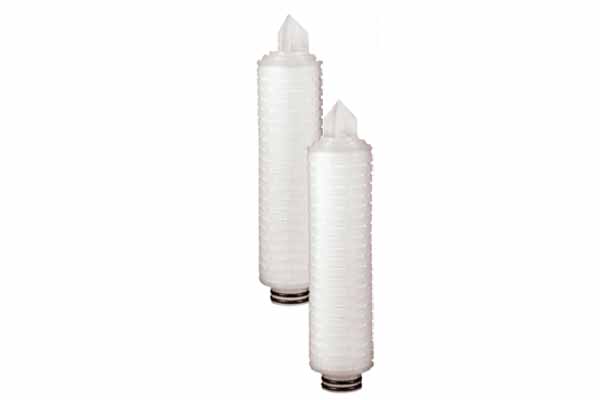
Pleated polyethersulfone (PES) membrane, hydrophilic, FDA 21 CFR compliant and EU 10/2011 compliant. Available in 0.2, 0.45 and 0.65 µm absolute ratings with validated microbial retention (Brevundimonas diminuta for 0.2 µm, Saccharomyces cerevisiae for 0.45 µm). 10, 20, 30 inch lengths, DOE and SOE end caps, EPDM and silicone seals. For wine, beer, juice, soft drink and dairy final filtration.
→ View specifications and validation dataECOFILTRONE Polypropylene Depth Filter Cartridge
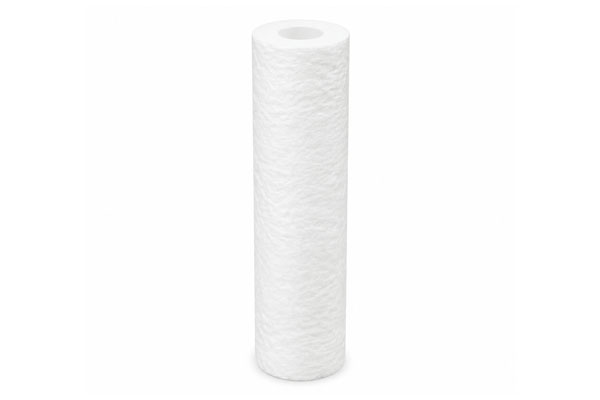
Gradient density melt-blown polypropylene depth media, FDA 21 CFR 177.1520 compliant. Available in 0.5–50 µm nominal, 10–40 inch lengths. For beverage clarification and pre-filtration (wine, beer, juice) upstream of final membrane filtration.
→ View specifications
ECOFILTRONE provides declarations of compliance (FDA 21 CFR, EU 10/2011) and microbial validation data (challenge organism, LRV, test conditions) for all food-contact membrane cartridges. Integrity testing specifications (bubble point, diffusion flow) are included with each product datasheet.
9. Common Food & Beverage Filtration Problems
Problem 1: Rapid membrane blinding and short filter life
Causes:
- Insufficient pre-filtration — bulk solids and haze hitting the final membrane directly
- Membrane micron rating too fine (0.2 µm where 0.45 µm would suffice)
- Product not properly clarified upstream (centrifugation, fining, settling)
Solutions:
- Add or optimize pre-filtration (1–5 µm depth filter before final membrane)
- Re-evaluate micron rating — use 0.45 µm for yeast control, reserve 0.2 µm for bacterial control only when required
- Confirm upstream processing is working (check turbidity, NTU before membrane filtration)
Problem 2: Off-flavors or color changes after filtration
Causes:
- Filter material is leaching extractables into the beverage
- Membrane not properly flushed before use
- Wrong material for the beverage type (nylon in acidic wine, for example)
Solutions:
- Use validated food-contact materials (PES for wine/beer/juice, not general-industrial PP)
- Follow manufacturer’s pre-use flush protocol (typically 10–20 L/m² membrane area with water or water/ethanol)
- Confirm material compatibility: PES for acidic + ethanol; PVDF for extreme pH or oxidizers
Problem 3: Microbial spoilage after "sterile" filtration
Causes:
- Membrane not truly absolute-rated or not validated for target organism
- Membrane integrity failure (pinhole, tear, seal bypass)
- Post-filter contamination (non-sterile filling equipment, airborne contamination)
Solutions:
- Confirm membrane is absolute-rated with validation data (LRV, challenge organism)
- Perform pre-use and post-use integrity testing — a failed post-use test indicates the batch may be compromised
- Verify downstream filling environment is clean and sanitary
Problem 4: Filter housing or cartridge fails CIP validation
Causes:
- Housing design has dead legs, crevices or non-drainable areas
- CIP flow rate or temperature insufficient to reach all surfaces
- Cartridge material degrades under CIP conditions (nylon with caustic, PES with hypochlorite)
Solutions:
- Use 3-A certified or sanitary-design housings with full drainage and no dead legs
- Confirm CIP flow rate meets manufacturer’s recommendation (typically 2–5 m/s velocity through the housing)
- Match cartridge material to CIP agents — PES for moderate CIP, PVDF for aggressive oxidizers
10. Frequently Asked Questions
What is the difference between 0.2 µm and 0.45 µm for beverage filtration?
0.45 µm removes yeast and most molds — standard for wine and beer final filtration. 0.2 µm removes bacteria — required for juice, dairy and soft drinks where bacterial spoilage (not just yeast) is the concern. If your product is pasteurized after filtration, 0.45 µm is often sufficient (heat kills bacteria). If cold-filled with no post-fill heat, use 0.2 µm.
Is a 0.45 µm polypropylene cartridge the same as a 0.45 µm PES membrane for wine filtration?
No. A 0.45 µm nominal polypropylene depth cartridge (used for RO pretreatment or general industrial service) does not have validated microbial retention and is not food-contact certified. A 0.45 µm absolute PES membrane with FDA 21 CFR compliance and validated yeast retention (LRV ≥ 7 against Saccharomyces) is a sterile filter. The micron number alone does not make it suitable for food use — material compliance and validation do.
What is FDA 21 CFR compliance and why does it matter?
FDA 21 CFR Part 177 specifies which polymer materials and additives are permitted for direct food contact in the United States (regulatory). A filter without 21 CFR compliance cannot legally be used in food or beverage processing in the US. Request a declaration of compliance from the manufacturer confirming the cartridge materials meet 21 CFR for your specific product and temperature.
Can I reuse a membrane filter cartridge after CIP?
Membrane cartridges are typically single-use in beverage applications, replaced after each production run or after integrity testing fails. CIP restores cleanliness but does not restore pore structure or microbial retention if the membrane has been fouled or damaged. Some stainless steel sintered filters are reusable, but pleated polymer membranes (PES, PVDF) are disposable.
How do I know if my membrane is still intact during production?
Perform a post-use integrity test (bubble point or diffusion test) after each production run. If the test passes, the membrane was intact throughout. If it fails, the membrane may have torn or degraded, and the batch filtered during that run is suspect. Pre-use and post-use testing is standard practice for critical sterile applications (aseptic juice, ESL dairy).
What pre-filtration is required before final membrane filtration?
Wine and beer typically use 1–3 µm depth filters or lenticular modules after fining/conditioning. Juice uses 1–10 µm depth filters after pressing and enzymatic treatment. The goal is to reduce the solids load to <10 NTU before hitting the final 0.2–0.45 µm membrane. Without pre-filtration, the membrane blinds in minutes instead of hours.
Which membrane material is best for wine: PES, PVDF or nylon?
PES (polyethersulfone) is the industry standard for wine — low extractables, validated yeast retention, pH 3–4 compatible, ethanol to 14% compatible, cost-effective (cited, Pall wine filtration). PVDF is used if temperature exceeds PES limit or if extreme chemical resistance is needed. Nylon is not suitable for wine — it degrades in acidic pH and ethanol.
What is a bubble point test and when is it required?
A bubble point test measures the pressure at which gas breaks through a wetted membrane, verifying the membrane has no pinholes or defects. It is required for pharmaceutical sterile filtration (FDA cGMP) and highly recommended for beverage final filtration in cold-fill or aseptic applications. Perform before use (confirms integrity after installation) and after use (confirms membrane did not fail during the run).
11. Conclusion
Filter cartridge selection for food and beverage applications begins with regulatory compliance — FDA 21 CFR 177 in the US, EU 1935/2004 in Europe — and extends to validated microbial retention, material compatibility with the product, and sanitary design for CIP/SIP. PES (polyethersulfone) is the dominant membrane material for wine, beer, juice and dairy final filtration due to its low extractables, broad chemical compatibility, and extensive validation data. PVDF offers higher temperature and chemical resistance where PES limits are exceeded. Nylon is cost-effective for near-neutral pH beverages but unsuitable for wine or acidic juices.
Micron rating is determined by the target organism: 0.45 µm for yeast (wine, beer), 0.2 µm for bacteria (juice, dairy). Absolute ratings with validation data (challenge organism, LRV) are required for sterile filtration — nominal ratings are not sufficient. Pre-filtration is essential: clarification (1–10 µm depth filters) upstream of final membrane filtration (0.2–0.65 µm absolute) extends membrane life and ensures consistent performance.
Integrity testing (bubble point or diffusion test) verifies membrane integrity before and after use, confirming no defects or failures occurred. For critical sterile applications — aseptic juice, cold-fill beverages, ESL dairy — both pre-use and post-use integrity testing is standard practice. A failed post-use test indicates potential product contamination and triggers batch hold or disposal protocols.
Material compliance, microbial validation, pre-filtration, and integrity testing are not optional enhancements — they are the baseline requirements for food-grade filtration. Specify them explicitly, request documentation from the supplier, and verify installation and testing protocols are followed in production.
Need Help Selecting Food & Beverage Filter Cartridges?
If you are specifying filters for wine, beer, juice, dairy or beverage processing, share your product type, target organism (yeast, bacteria, or both), flow rate, CIP agents and whether integrity testing or regulatory compliance documentation is required.
ECOFILTRONE will provide FDA 21 CFR and EU compliance declarations, microbial validation data (challenge organism, LRV), integrity testing specifications and CIP compatibility confirmation for your specific beverage application.
WhatsApp: +86 131 8896 2285
Sources: FDA 21 CFR Title 21 · Pall food-contact PES membrane declaration · Pall wine final filtration solutions · MoreBeer BevBright 0.45 µm PES sterile filtration · Sartorius Vinosart wine filter cartridges