What Is the Best Filtration Setup for Large Solar Farms?
You need a reliable filtration system for a huge solar farm. But your current setup is constantly failing, costing you time and money on site.
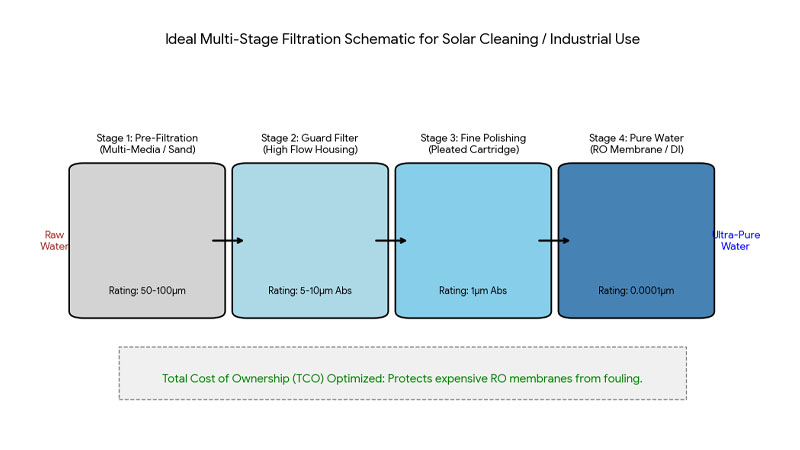
The best setup is a multi-stage system. It uses a coarse pre-filter for large debris, a High-Flow cartridge for fine sediment, and a final polishing stage to protect the RO system. This layered approach handles variable water quality reliably and cost-effectively.
I remember a large project in a very dusty, arid region. The client installed a massive, single-stage filtration unit, thinking bigger was always better. It worked when the canal water was clear, but a single rainstorm washed so much silt into their source that the expensive unit was overwhelmed in hours. They learned that the "best" setup isn’t about one single component, but about a smart, layered defense system. It’s about building a process that can withstand the worst-case scenario, not just the best one. That’s the key to reliability on a utility scale.
Should you use a centralized or decentralized system?
Deciding between one huge system or many small ones is a major challenge. The wrong choice leads to logistical nightmares, high costs, and operational inefficiency across the farm.
For large farms with a single water source, a centralized system is more efficient. For farms with multiple, distant water sources, smaller, mobile decentralized systems offer better flexibility and reduce piping costs.
| Feature | Centralized Water Treatment Plant | Distributed Mobile Skids |
|---|---|---|
| Filtration Technology | Traditional large sand filters + Standard filter cartridges | High Flow filter cartridges + Compact RO |
| Logistics Burden | High: Water trucks require frequent round trips between the power station and the water plant. | Very Low: Direct connection to the power station’s water source for on-site production. |
| Initial Investment (CAPEX) | Very High: Involves land, factory buildings, and long-distance pipelines. | Lower: On-demand configuration of mobile equipment, flexible expansion. |
| Operational Flexibility | Low: Fixed location, limited coverage radius. | Very High: Can move synchronously with cleaning vehicles, reducing empty mileage. |
| Core Advantage | Suitable for regions with extreme water scarcity requiring centralized distribution. | Suitable for ultra-large scale, topographically complex photovoltaic (solar) power plants. |
The first big decision in designing your system is your overall strategy. Do you build one large water treatment plant and pump water across the entire site, or do you use several smaller, mobile systems? The answer depends entirely on the farm’s layout and water availability. For an engineer like Jacky, getting this high-level decision right is critical. A centralized system offers great economies of scale. You have one set of equipment to maintain, monitor, and operate, which simplifies labor and consumables management. However, it requires a massive network of pipes to distribute the pure water, which can be a huge initial expense. A decentralized approach, using multiple treatment systems on trailers, offers incredible flexibility. You can move the systems to where they are needed, minimizing hose and pipe runs. This is ideal for sites with multiple wells or ponds spread far apart. The trade-off is that you now have multiple systems to maintain, which can increase operational complexity.
| System Type | Best For… | Pros | Cons |
|---|---|---|---|
| Centralized | Farms with one main water source | Easier maintenance, lower cost per gallon | High piping costs, single point of failure |
| Decentralized | Farms with multiple, spread-out sources | Flexible, lower piping costs, redundant | More complex to operate, higher initial cost |
What is the workhorse of the system?
Your fine filters are clogging constantly, wasting money and putting your RO system at risk. You need a way to remove the bulk of the sediment before it causes damage.
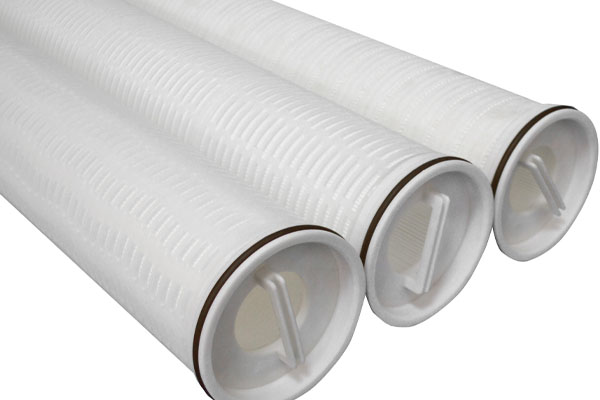
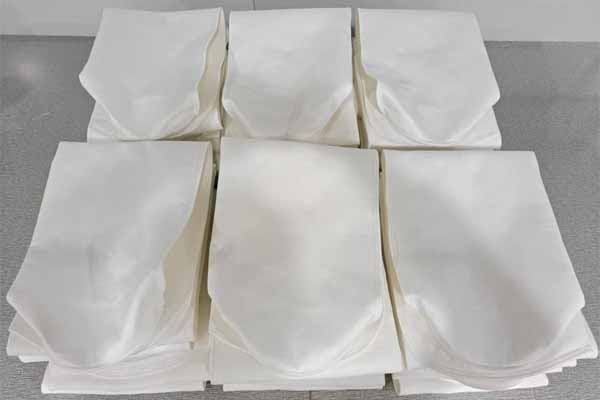
The workhorse is a two-step pre-filtration stage. A simple bag filter removes large debris (50-100 micron), which then protects the High-Flow pleated cartridge (5-10 micron) that handles the fine sediment.
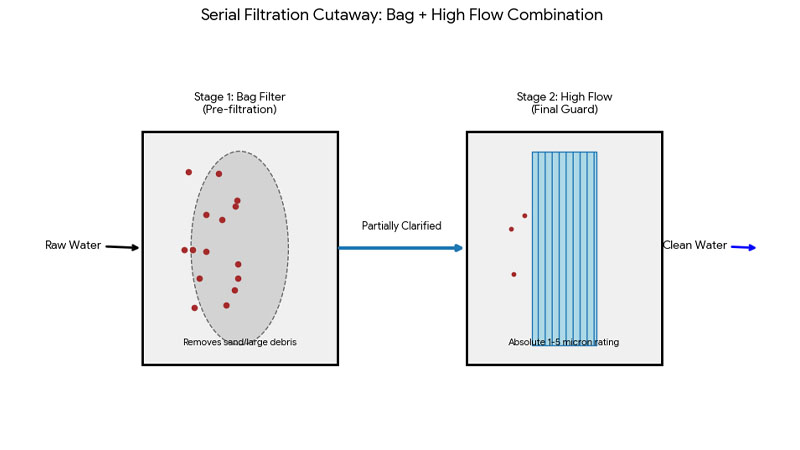
No matter if your system is centralized or mobile, the heart of its reliability is the pre-filtration stage. This is where you remove the vast majority of the dirt. Trying to do this with a single filter is a recipe for failure. The best approach uses two distinct steps to do the heavy lifting.
Step 1: The Sacrificial Layer
The very first thing your source water should see is a simple, inexpensive bag filter. I typically recommend a rating between 50 and 100 microns. This filter’s only job is to catch the big, dumb particles—sand, algae, leaves, and rust flakes. These filters are cheap and easy to change. Think of this as the bouncer at the front door, stopping the obvious trouble before it gets inside.
Step 2: The Sediment Powerhouse
Immediately after the bag filter comes your High-Flow pleated cartridge. Because the bag filter has already removed the large debris, the High-Flow filter can focus on what it does best: removing massive quantities of fine silt and suspended solids. Here, you would use a 5 or 10-micron High-Flow cartridge. Its enormous surface area allows it to hold a huge amount of this fine dirt while maintaining a low pressure drop, protecting everything that comes after it. This two-step process is the most cost-effective way to get long life from your filters.
How do you guarantee RO membrane protection?
You believe your pre-filtration is good, but your RO membranes are still fouling. This leads to expensive chemical cleanings, reduced performance, and the risk of premature replacement.
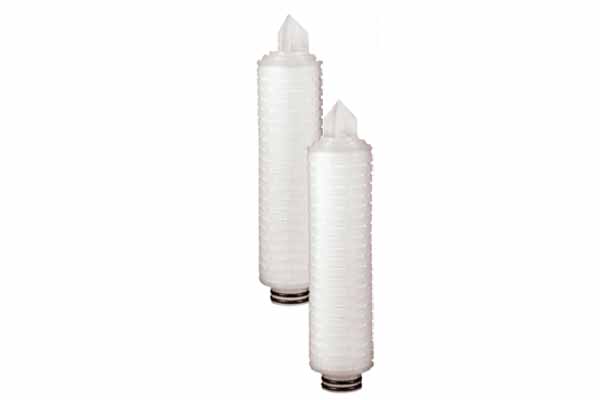
Guarantee protection by installing a 1-micron absolute-rated cartridge filter immediately before the RO system. This "guard" or "polishing" filter acts as a final, non-negotiable insurance policy for your most valuable asset.
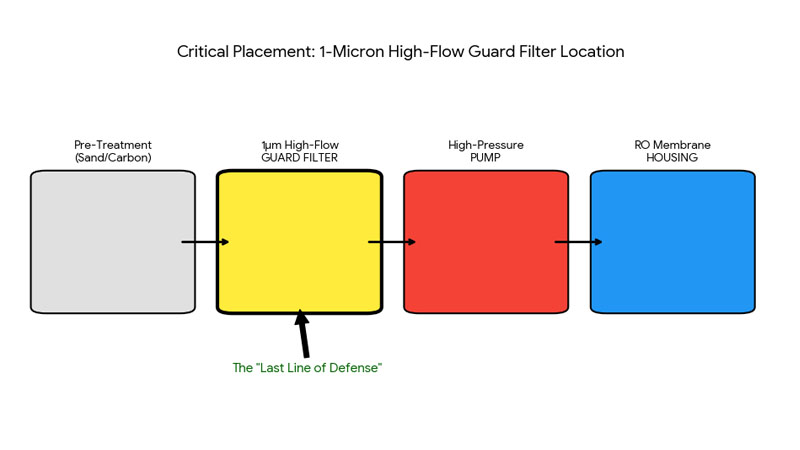
After your robust pre-filtration stage, the water is already very clean. However, it is not perfect. No pre-filtration system is 100% efficient. Pressure fluctuations or water surges can sometimes cause a small amount of fine particles to bypass the main filters. While this amount is tiny, it can slowly build up on your RO membranes over time, blinding them and reducing their performance. This is why the final step in a best-in-class system is a dedicated polishing filter. This is almost always a 1-micron absolute-rated cartridge filter. Its sole purpose is to act as a final gatekeeper. It catches the very few fine particles that might have slipped through the main system. This ensures that the water entering your expensive high-pressure RO pump and membranes is as clean as it can possibly be. I always tell my clients that this final filter is the cheapest insurance policy they can buy. Spending a few hundred dollars on a polishing filter can save you tens of thousands of dollars in RO membrane cleaning and replacement costs. It is not an optional component; it is an essential one.
Conclusion
The best setup isn’t a single product. It’s a smart, multi-stage system using bag filters, High-Flow cartridges, and a final guard filter to ensure total system reliability.