🌊 The Essence of Seasonal ΔP Fluctuations in Industrial Filtration
What is the true driver behind seasonal differential pressure (ΔP) spikes? At its core, it is a sudden increase in the contaminant load entering the system per unit time.
This is typically triggered by:
- 🌧️ Rainy season turbidity
- 🦠 Algae blooms
- 🔬 Colloidal loading increases
- ⚙️ Upstream pretreatment instability
👉 The Result: A massive influx of particles enters the filter cartridge in a drastically shortened timeframe.
❌ Why Traditional 2.5-Inch Cartridges Fail
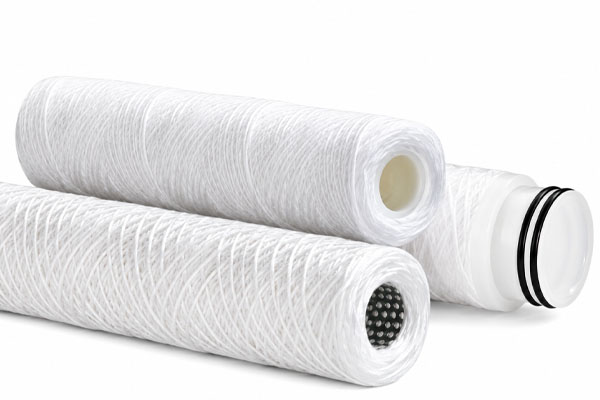
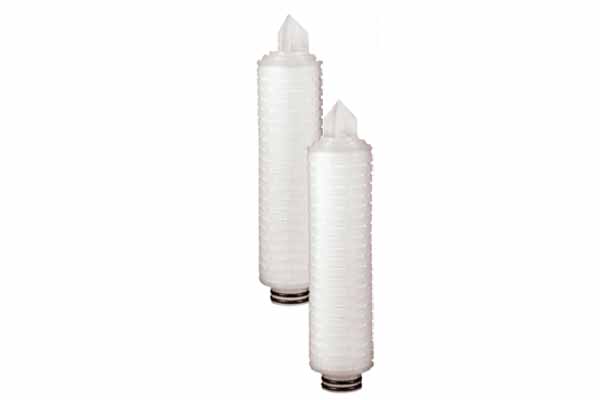
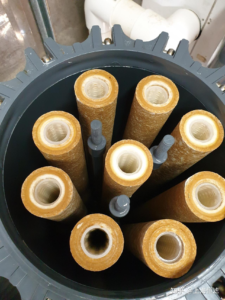
Traditional 2.5-inch melt-blown or pleated cartridges are fundamentally disadvantaged during these seasonal events because of:
- Limited filtration area
- High surface loading
- Concentrated outer surface loading (cake filtration)
Therefore: Once feed water fluctuations occur, the ΔP rises exponentially faster.
—
✅ What High-Flow Filtration Truly Solves
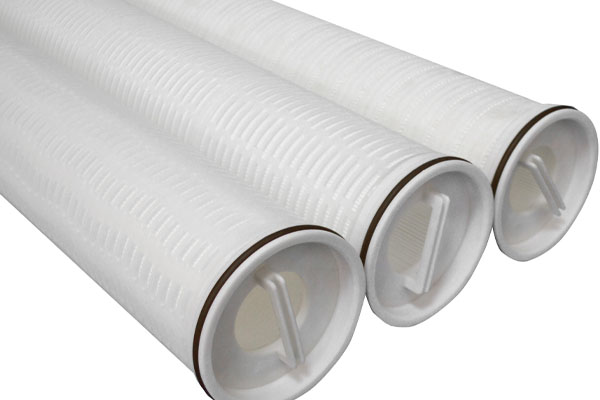
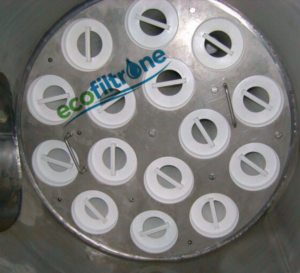
Upgrading to a High-Flow configuration is not simply about achieving a "longer lifespan." The true engineering value is maintaining a more stable loading distribution under fluctuating conditions.
Here is the mechanical breakdown of why High-Flow architecture survives seasonal spikes:
1️⃣ Larger Effective Filtration Area
A massive increase in surface area means a reduced contaminant load per unit area. This directly results in a much more gradual and predictable increase in ΔP.
2️⃣ Gradient Structure (The Critical Core)
This is the most important differentiator. The media is structured dynamically: the looser outer layer intercepts larger particles, while the tighter inner layer handles finer particles.
Result: Contamination distributes throughout the 3D depth of the media, rather than blinding the 2D surface.
3️⃣ Lower Flow Flux (Velocity)
One of the essential characteristics of a high-flow cartridge is a lower flow velocity per unit area. At the exact same system flow rate, a drastically larger filter area equals a lower flow velocity per square centimeter. Slower velocity means a significantly reduced contamination buildup rate.
💡 The Engineering Consensus:
High-Flow configurations achieve improved ΔP stability under seasonal loading fluctuations through a combination of a larger effective filter area + gradient load distribution + lower surface velocity.
Note: While High-Flow configurations exponentially improve load distribution and ΔP stability during fluctuating conditions, maintaining overall upstream pretreatment stability remains a crucial foundation for system health.