How can we infer a customer’s water quality problems by observing the color, smell, and texture of the deposits on the surface of a used filter cartridge?
Rapid Answer
In industrial fluid filtration, a prematurely exhausted filter cartridge is not just a failed consumable; it is a critical diagnostic black box. It captures the exact physical and chemical history of the upstream process.
Before sending water samples to an expensive external laboratory, field engineers can perform a physical "filter autopsy." By systematically observing the color, texture, and odor of the deposits on the pleated media, you can immediately infer critical system failures—such as aggressive piping corrosion, biological outbreaks (SRB), upstream chemical overdosing, or hydrocarbon leaks. This sensory cross-validation allows plant managers to implement corrective actions days before formal lab results are returned.
The Three Pillars of Sensory Diagnostics
To extract actionable engineering data from a used filter, you must evaluate three distinct physical traits. Never evaluate one in isolation; it is the combination of these traits that reveals the true root cause.
- Color (The Chemical State): Color indicates the oxidation state of metals, the presence of specific minerals, or the type of biological growth.
- Texture (The Physical Matrix): Texture differentiates between inorganic precipitates (hard/brittle) and organic or polymeric foulants (soft/gelatinous/sticky).
- Odor (The Volatile Signature): Smell is the fastest indicator of anaerobic biological activity or hydrocarbon ingress.
The Filter Autopsy Diagnostic Matrix
When you extract a prematurely plugged filter from the housing, use the following matrix to cross-reference your sensory observations with the upstream root cause.
| Color | Texture / Feel | Odor | Diagnostic Inference (Root Cause) | Immediate O&M Action |
|---|---|---|---|---|
| Red, Orange, or Rust-Brown | Gritty, sandy, or powdery | Faint metallic or none | Ferric Oxide (Rust) / Oxygen Pitting: Active oxidation of upstream carbon steel piping or tanks. Oxygen is entering the system. | Check deaerators, pump seals, and open tank vents. Ensure corrosion inhibitor dosing is adequate. |
| Jet Black | Soft paste or fine powder | Rotten egg (Hydrogen Sulfide) | Iron Sulfide (FeS) / SRB Activity: Severe sour corrosion. Sulfate-Reducing Bacteria are eating the pipes and generating H2S, which reacts with iron. | Initiate shock biocide treatment. Test for active SRB colonies. Warning: Dry FeS can be pyrophoric. |
| Jet Black or Dark Brown | Slick, oily, or water beads off the surface | Diesel, solvent, or chemical | Hydrocarbon Carryover: Free oil, compressor lube oil, or aromatics are bypassing upstream separators and blinding the filter via a liquid block. | Inspect upstream API separators or hydrocyclones. Add a sacrificial oil-absorbing pre-filter. |
| White, Grey, or Tan | Hard, brittle crust (like concrete) | None | Inorganic Scaling: Calcium carbonate, Barium sulfate, or Silica has precipitated out of solution directly onto the filter matrix due to pressure drops. | Check antiscalant dosing pumps. Verify if incompatible water streams are being mixed. |
| Clear, Milky, or Light Brown | Extremely sticky, gelatinous slime (snot-like) | Fishy, earthy, or musty | Biofouling (EPS): Massive bacterial colony growth. The bacteria are secreting Extracellular Polymeric Substances (EPS) that instantly glue the filter pores shut. | Shock the system with an oxidizing biocide (e.g., Sodium Hypochlorite) or non-oxidizing biocide. |
| Clear or Grey | Very sticky, slippery gel | None or faint chemical | Polymer/Coagulant Overdose: Upstream clarifiers or DAF units are injecting too much flocculant. The unreacted polymer carries over and permanently glues the pleats together. | Perform immediate jar testing to optimize and reduce upstream coagulant/polymer dosing. |
Field Experience: Diagnosing "Phantom Biofouling"
At a chemical plant operating a large cooling tower blowdown recovery system, the 5-micron pre-RO security filters were failing every 48 hours.
The maintenance team pulled the filters and noted they were covered in a thick, highly viscous, light-brown slime. Because it looked exactly like biological slime, the plant manager assumed a massive bacterial outbreak and doubled the chlorine dosing.
Two days later, the replacement filters plugged again. The chlorine had zero effect.
A filtration engineer was called in to perform a formal autopsy. They applied the sensory diagnostic matrix:
- Color: Light brown/translucent.
- Texture: Gelatinous, extremely sticky (could not be washed off with water).
- Odor: Absolutely none. The lack of an earthy or fishy odor immediately ruled out biological EPS. The engineer looked upstream and found the true culprit: the plant had recently switched to a new organic coagulant in their clarifier. The dosing pump was set too high, and the excess, unreacted liquid polymer was flowing directly into the filter housing.
When the sticky polymer hit the high-pressure filter media, it acted as a liquid net, catching microscopic silt (giving it the brown color) and forming an impenetrable plasticized gel over the pleats. The plant reduced the coagulant dosing by 40%, and the filter lifespan instantly recovered to 30 days.
The ecofiltrone Engineering Resolution: Matching Media to the Foulant
Performing a filter autopsy does more than just fix upstream chemistry; it dictates exactly what type of filter cartridge you should be purchasing.
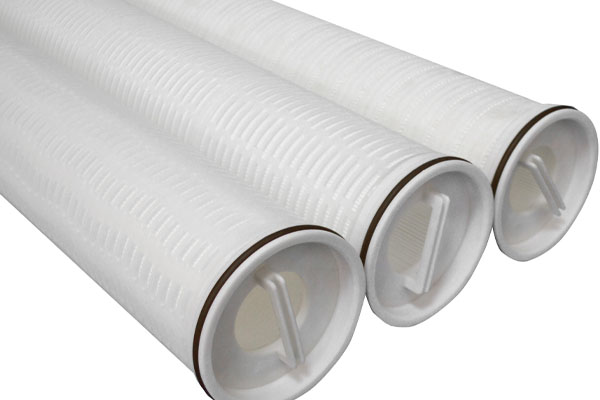
If your visual inspection reveals that the primary foulants are hard, inorganic solids (rust, scale, sand), your system is perfectly suited for ecofiltrone Absolute-Rated Pleated High-Flow Cartridges (utilizing Micro-Glass or advanced Polypropylene). These provide maximum surface area and precise mechanical retention without deformation.
However, if your autopsy consistently reveals deformable gels, biological slime, or trace oils, standard surface pleats will blind prematurely. In these scenarios, the engineering solution is to implement a two-stage approach:
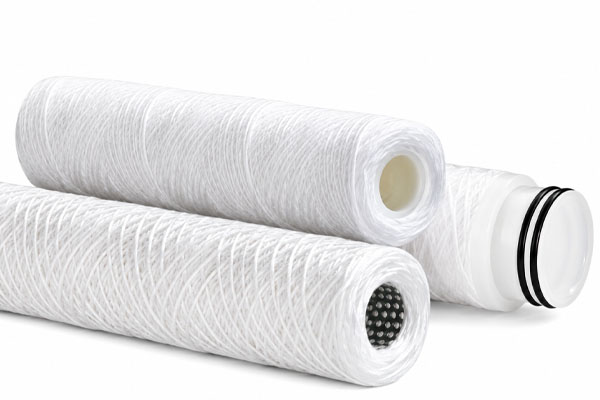
- Stage 1 (The Sponge): Install a depth-filtration matrix (like meltblown with graded density or specialized cellulose blends) to absorb the sticky gels and oils.
- Stage 2 (The Shield): Follow it with the ecofiltrone high-flow cartridge to provide the absolute, rigid mechanical barrier required to protect your downstream assets.
By reading the physical story told by the exhausted cartridge, you transition your plant from reactive maintenance to proactive, scientifically driven asset protection.