Worried about microbial contamination in your bottled water? Your filter might be the problem, silently breeding bacteria and risking product safety.
To prevent your high-flow filter from becoming a microbial breeding ground, use antibacterial materials, ensure a "zero blind spot" design, and implement regular sterilization protocols. Proper maintenance during shutdowns is also critical to stop static water from fostering bacterial growth.
I’ve seen this issue firsthand in many production lines. A pristine system can fail a quality test because of a contaminated filter. The filter element intercepts impurities, but it can also accumulate bacteria, leading to what we call secondary pollution. Let’s break down why this happens and what you can do about it. It’s about seeing the filter not just as a sieve, but as a critical sterile barrier in your continuous production line.
Why does the total number of colonies in the first batch of effluent from the filter element often exceed the standard 24 hours after the system is shut down?
Is your first production run after a shutdown failing quality checks? The culprit is likely stagnant water inside your filters, creating a perfect environment for bacteria to multiply overnight.
After a shutdown, water remains static inside the filter cartridge. This allows trapped bacteria to multiply without being flushed out. When production restarts, this concentrated burst of microorganisms is released, causing colony counts to exceed standards.
This problem is something I call the "static infection risk." Many people overlook it. When your production line stops, the water inside the filter housing and the filter media itself becomes completely still. The filter has already trapped organic matter and microorganisms from previous runs. This combination of stagnant water, nutrients, and trapped bacteria creates an ideal incubator. Over a period of just 24 hours, a small number of bacteria can multiply into a massive colony, forming a biofilm on the filter surfaces. When you restart the system, the initial rush of water dislodges this concentrated biofilm and flushes it downstream. This is why the first batch of water produced often shows a spike in the total colony count, failing quality control tests even if the system was perfectly clean before the shutdown.
Managing Shutdown and Restart Procedures
To combat this, you need a clear Standard Operating Procedure (SOP) for every shutdown, whether it’s for the weekend or just a brief maintenance break. A simple flush-to-drain for the first 15-20 minutes upon restart can help remove the initial contaminated water. For longer shutdowns, a full sanitization cycle is better.
| Shutdown Type | Risk of Contamination | Recommended Action |
|---|---|---|
| Weekend Shutdown | High | Perform a full chemical or hot water sanitization cycle before restarting production. |
| Daily Cleaning Break | Medium | Implement a flush-to-drain protocol for the first 15 minutes of the next run. |
| Emergency Stop | High | Treat as a long shutdown. Sanitize the system immediately upon restart to ensure safety. |
How does the polypropylene (PP) material filter element resist aging in ultraviolet or ozone environments?
Using UV or ozone for disinfection? These powerful methods can degrade standard PP filters, causing them to break down and release particles into your pure water.
Standard polypropylene (PP) is susceptible to degradation from UV and ozone. To resist aging, manufacturers use special PP grades with added stabilizers. These additives absorb UV radiation or neutralize ozone’s oxidative effects, preserving the filter’s structural integrity.
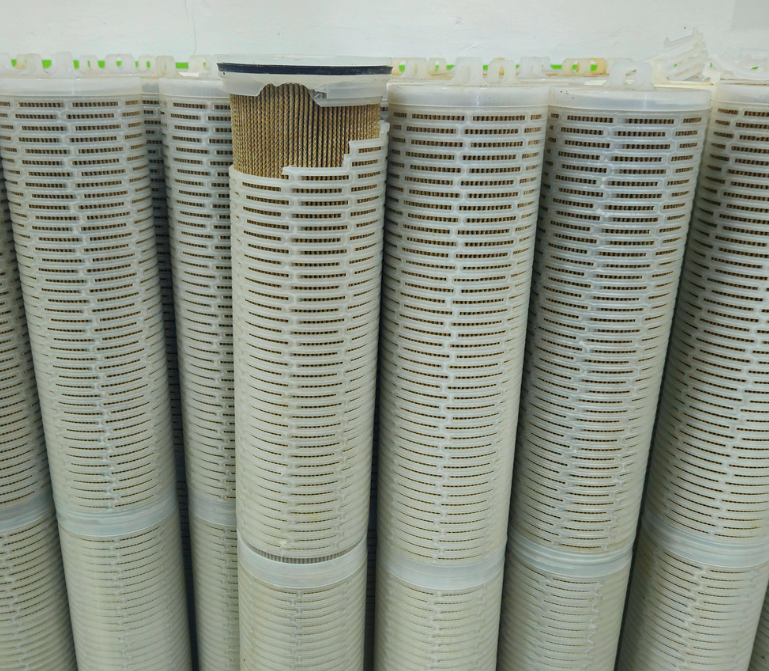
Polypropylene is a fantastic material for filtration because it’s clean and has broad chemical compatibility. However, its basic polymer structure is vulnerable. Powerful disinfectants like UV light and ozone work by breaking down organic molecules, and unfortunately, that includes the PP polymer itself. UV radiation can break the polymer chains, making the material brittle. Ozone is a strong oxidizer that attacks the PP, causing it to crack and degrade rapidly. This process, called embrittlement, can cause the filter media to shed fibers or particles directly into your product stream, which is a serious contamination issue. At our company, Ecofiltrone, we always ask clients about their disinfection methods. This information is crucial for us to recommend the right material. Using a standard PP filter in an ozonated water system is a recipe for failure.
Choosing the Right Material for Your Disinfection Method
To solve this problem, we use specially formulated polypropylene. These materials aren’t just standard PP; they contain specific additives that protect the polymer structure. For UV systems, we use PP with UV stabilizers. For ozone systems, we use PP with a high concentration of antioxidants. These additives act as sacrificial protectors, absorbing the harmful energy or neutralizing the oxidative attack before it can damage the filter media.
| Disinfection Method | Standard PP Suitability | Recommended Ecofiltrone Solution | Reason for Recommendation |
|---|---|---|---|
| UV Sterilization | Low | UV-stabilized PP Cartridge | Prevents the filter from becoming brittle and shedding fibers. |
| Ozonated Water | Very Low | Ozone-resistant PP or PES Cartridge | Contains antioxidants to neutralize ozone and prevent rapid degradation. |
| Hot Water Sanitization | High | High-Temperature PP Cartridge | The material is engineered to withstand thermal stress without deforming. |
| Chemical Sanitization | Varies | Chemically Compatible PP | We verify compatibility with your specific chemicals, like peracetic acid. |
Why do we recommend using antibacterial filter materials with internal support at key nodes?
Are you confident your filter is only trapping particles, not growing bacteria? Without active protection and structural strength, your filter could be compromising the very purity you aim for.
We recommend antibacterial filters with internal support for two reasons. The antibacterial agent actively inhibits microbial growth on the filter surface. The internal support cage prevents the filter media from collapsing, ensuring consistent flow and eliminating dead zones.
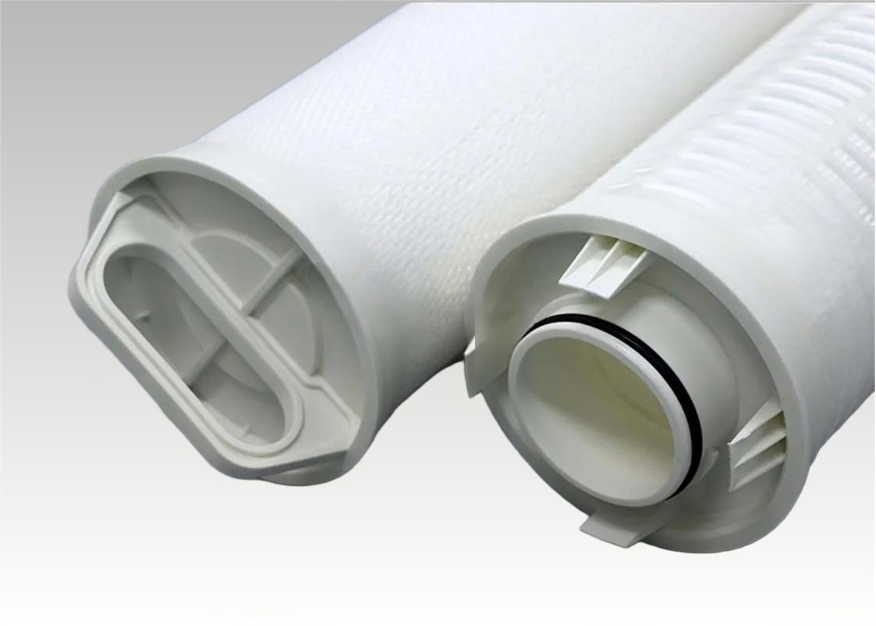
A standard filter is a passive barrier. It traps particles and bacteria, but it doesn’t do anything to stop those trapped bacteria from multiplying. This is where antibacterial filter materials make a huge difference. These filters have a bacteriostatic agent, like silver ions, embedded directly into the filter media. This agent doesn’t kill bacteria outright, but it creates an environment where they cannot reproduce. This actively prevents the filter from becoming a breeding ground and stops the formation of biofilm. It turns the filter from a simple physical barrier into an active microbiological control point, which is essential in a high-purity application like bottled water.
The Role of Structural Integrity in Preventing Contamination
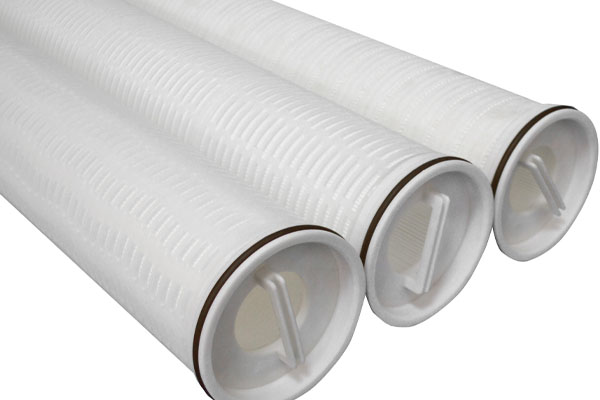
The internal support structure is just as important. High-flow systems operate under significant pressure. Without a strong internal core, the pleated filter media can compress and collapse. When this happens, it creates "dead spots" where water flow is very low or non-existent. These dead spots are the perfect hiding places for bacteria to colonize and form a resilient biofilm. Once a biofilm is established, it’s very difficult to remove with normal cleaning. Our Ecofiltrone high-flow cartridges are designed with a rigid internal support cage. This cage maintains the pleat spacing, ensuring that water flows evenly across the entire filter surface. This "zero blind spot" design eliminates potential hiding places for microorganisms, making the filter far more effective and easier to keep clean. It’s this combination of active antibacterial properties and robust structural design that provides the highest level of protection.
Conclusion
In short, preventing microbial growth in filters requires smart material choices, robust design, and proper procedures. This ensures your bottled water remains safe from filter-related contamination.