Introduction
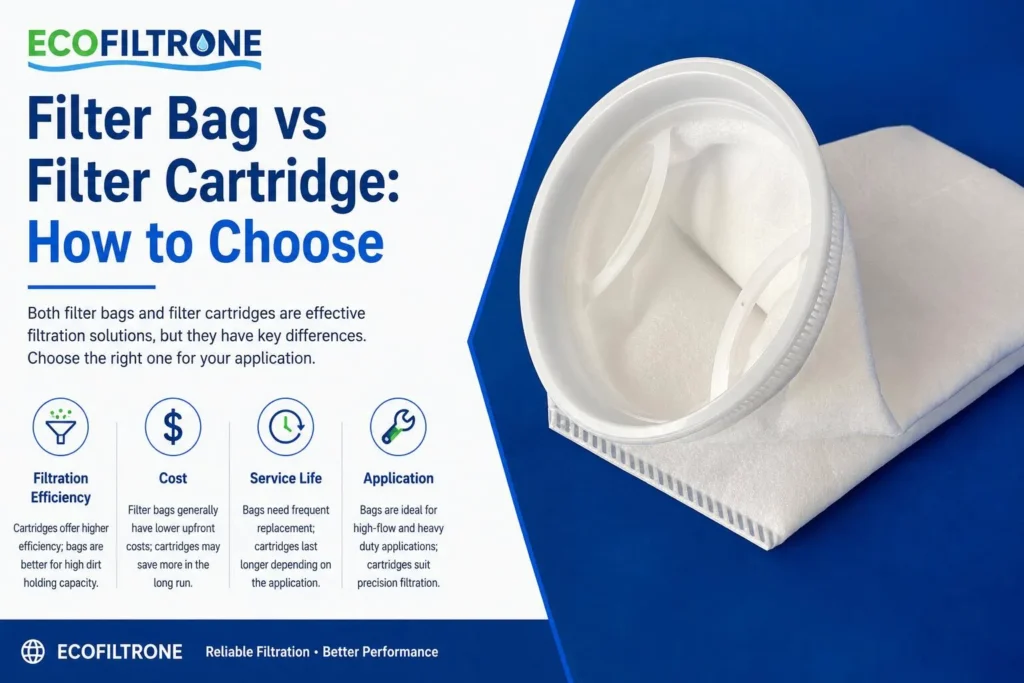
Filter bags and filter cartridges both remove particulate contamination from liquid process streams, but they are fundamentally different technologies — not interchangeable alternatives that happen to perform the same function. The choice between a bag filter and a cartridge filter determines system footprint, capital cost, operating cost, filtrate quality, and maintenance complexity for the life of the installation.
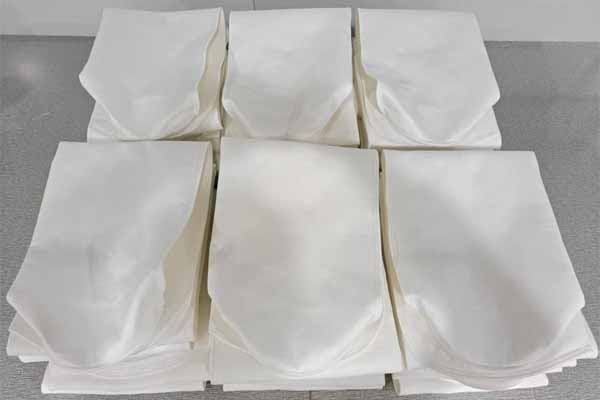
A filter bag is a fabric or felt envelope (typically 7 inches diameter × 16–32 inches long) that captures particles through depth filtration — contaminants are trapped throughout the thickness of the nonwoven or woven media. Bags excel at handling high solids loading (grams to kilograms of dirt per bag), coarse to medium filtration (1–800 µm nominal), and applications where low cost per volume filtered is the priority (cited, Acme Mills: Filter bags vs cartridges).
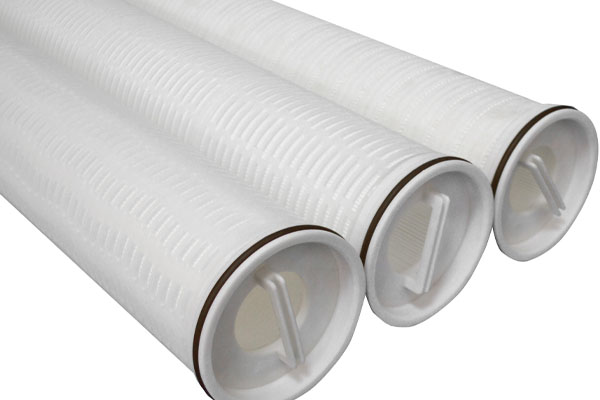
A filter cartridge is a rigid cylindrical element (typically 2.5–6 inches diameter × 10–40 inches long) with pleated membrane or depth media wrapped around a central core. Cartridges provide surface or hybrid filtration with absolute micron ratings (0.1–100 µm absolute), high filtration efficiency (>99.9% retention at rated micron), and compact footprint due to the high surface area of pleated construction. Cartridges are the technology of choice for fine filtration, sterile filtration, and applications where filtrate purity is non-negotiable (cited, NEWater: Bag filters vs cartridge filters).
Mismatching the technology to the application is costly. Using filter bags where cartridges are required (e.g., 1 µm absolute sterile filtration) results in poor retention, particle breakthrough, and product contamination. Using cartridges where bags suffice (e.g., 50 µm coarse pre-filtration of high-solids streams) results in rapid blinding, frequent changeouts, and operating costs 2–5× higher than necessary (cited, Scribd: Cartridge vs bag filter total cost analysis).
This guide explains the construction and filtration mechanisms of bags vs cartridges, compares surface area and dirt-holding capacity, provides micron rating selection guidelines, analyzes total cost of ownership (purchase + changeout + disposal), and presents a decision matrix for when to specify bags vs cartridges in water treatment, chemical processing, food & beverage, oil & gas, and other industrial liquid filtration applications.
Key Takeaways
- Filter bags are depth filters with high dirt-holding capacity — nonwoven or woven fabric captures particles throughout the media thickness. Bags handle 0.5–5 kg of solids per bag, 2–10× the capacity of an equivalent cartridge (typical). Use bags for high-solids applications (turbid surface water, wastewater, slurries, pre-filtration) where coarse to medium filtration (5–200 µm nominal) is sufficient.
- Filter cartridges are surface or hybrid filters with high efficiency and compact footprint — pleated membrane or media provides 5–20 ft² surface area in a 10–40 inch cartridge vs 0.5–1.5 ft² for a bag (typical). Cartridges offer absolute micron ratings (0.1–100 µm, >99.9% retention) and are required for fine filtration, sterile filtration, and final polishing where particle breakthrough is unacceptable.
- Bags cost less per unit but cartridges cost less per gallon filtered in fine filtration applications. A #2 bag (7" × 32") costs $5–30 depending on material and micron rating. A 10" pleated cartridge costs $15–80. But the cartridge’s higher surface area and lower clean DP mean it filters more volume before blinding, reducing total cost (cited, Scribd: Total cost analysis).
- Bags handle flow rates of 50–400 gpm (190–1,500 L/min) per bag in single-bag housings (typical). Cartridges handle 5–40 gpm (20–150 L/min) per cartridge. For high flow rates, multi-cartridge housings (6–48 cartridges) or multi-bag housings (2–18 bags) are used. Cartridges have a smaller footprint: 36 cartridges can replace 100 bags with equivalent surface area (cited, Plant Engineering: Fabric filter comparison).
- Bags use nominal micron ratings (50–90% retention at rated size) — acceptable for pre-filtration and coarse applications. Cartridges use absolute micron ratings (>99.9% retention, beta ratio ≥1000) — required for final filtration and microbial removal (cited, FDPP: Six ways bags compare to cartridges).
- Housing design differs fundamentally. Bag housings are top-loading with a basket support and snap ring or locking ring closure — fast changeout (1–3 minutes per bag). Cartridge housings require removing the vessel head or unscrewing the cartridge from a manifold — slower changeout but better seal integrity (O-ring compression) for applications requiring zero bypass (typical).
- The crossover point: Use bags for micron ratings >10 µm nominal, high solids loading (>100 ppm suspended solids), and cost-driven pre-filtration. Use cartridges for micron ratings <10 µm absolute, low solids loading (<50 ppm), fine or sterile filtration, and applications where filtrate quality is critical (guideline).
Quick Reference: Filter Bag vs Filter Cartridge Comparison
| Feature | Filter Bag | Filter Cartridge |
|---|---|---|
| Filtration mechanism | Depth filtration (particles trapped throughout media thickness) | Surface or hybrid filtration (particles captured on pleated surface or in thin depth layer) |
| Micron rating range | 1–800 µm nominal (typical) | 0.1–100 µm absolute or nominal (typical) |
| Efficiency | Nominal (50–95% retention at rated micron, depending on construction) | Absolute (>99.9% retention at rated micron for membrane cartridges) |
| Surface area (per element) | 0.5–1.5 ft² (0.05–0.14 m²) for #2 bag (7" × 32") (typical) | 2.5–20 ft² (0.23–1.86 m²) for 10–40 in pleated cartridge (typical) |
| Dirt-holding capacity | High: 0.5–5 kg per bag (typical) | Low-to-moderate: 0.1–1 kg per cartridge (typical) |
| Flow rate (per element) | 50–400 gpm (190–1,500 L/min) per bag (typical, depends on micron rating and viscosity) | 5–40 gpm (20–150 L/min) per standard cartridge; 100–400 gpm for high-flow 6" cartridges (typical) |
| Clean differential pressure | 0.2–1 psi (0.01–0.07 bar) (typical, low-viscosity liquid) | 0.5–3 psi (0.03–0.2 bar) (typical, depends on micron rating and flow rate) |
| Typical service life | 1–4 weeks (high-solids), 1–6 months (low-solids) (typical) | 2–12 weeks (high-solids avoided), 3–12 months (low-solids fine filtration) (typical) |
| Unit cost | $5–50 per bag (depending on material, micron, size) (typical market range) | $15–150 per cartridge (depending on material, micron, length) (typical market range) |
| Cost per gallon filtered | Lower in coarse filtration (>50 µm), higher in fine filtration (<10 µm) | Lower in fine filtration (<10 µm), higher in coarse filtration |
| Housing footprint | Larger (single-bag housing: 8–12 in diameter × 36–48 in height) | Smaller (multi-cartridge housing: 6–48 cartridges in compact vessel) |
| Changeout time | Fast: 1–3 minutes per bag (top-loading, no tools required) (typical) | Slower: 5–15 minutes per housing (vessel head removal or cartridge unscrewing) (typical) |
| Seal mechanism | Snap ring or locking ring compresses bag collar onto basket rim | O-ring compression (DOE knife-edge seal or threaded SOE seal) |
| Bypass risk | Higher (fabric collar seal, potential for liquid channeling around bag edge) | Lower (O-ring compression seal, better for zero-bypass applications) |
| Temperature limit | Depends on fabric: PP (80 °C), polyester (120 °C), PTFE (200 °C+) (rated) | Depends on media: PP (80 °C), PVDF (100 °C), PTFE (200 °C), SS (400 °C+) (rated) |
| Chemical compatibility | Limited by fabric and stitching: PP (acids, weak bases), polyester (aqueous, oils), nylon (oils, solvents), PTFE (universal) | Wide range: PP, PVDF, PTFE, PES, nylon, stainless steel (see chemical compatibility article) |
| Typical applications | Pre-filtration, coarse filtration (>10 µm), high-solids streams, water treatment intake, slurries, wastewater, cooling tower, paint/coatings | Fine filtration (<10 µm), sterile filtration, RO pretreatment, chemical processing, pharmaceutical, semiconductor ultrapure water, final polishing |
1. Construction and Filtration Mechanisms
1.1 Filter Bag Construction
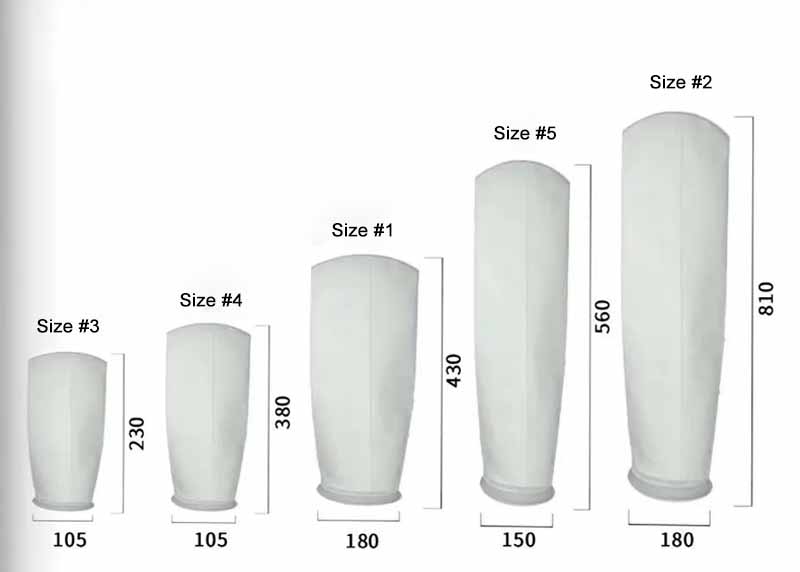
Physical form: A sewn or welded cylindrical or tapered envelope, open at one end (inlet), closed at the other (bottom). Standard sizes:
- #1 bag: 7 inches diameter × 16 inches long (industry standard)
- #2 bag: 7 inches diameter × 32 inches long (most common) (industry standard)
- #3 bag: 4 inches diameter × 14 inches long (smaller flow applications)
- #4 bag: 4 inches diameter × 8 inches long (low-flow or pilot applications)
Media types:
- Nonwoven felt (needle-punched polypropylene, polyester, nylon): Depth filtration, high dirt-holding capacity, nominal efficiency. Used for 1–200 µm nominal filtration.
- Monofilament woven mesh (polypropylene, nylon, polyester): Surface filtration, cleanable (reusable in some applications), nominal efficiency. Used for 10–800 µm nominal filtration.
- Multifilament woven (nylon, polyester): Hybrid depth/surface filtration, good for 5–100 µm nominal.
Collar types:
- Plastic ring (sewn into bag opening): Snaps over housing basket rim, compressed by snap ring or locking ring. Fast installation, moderate seal integrity.
- Metal ring (steel, stainless): Welded or sewn into bag. Better seal than plastic, used in higher-pressure or higher-temperature applications.
- Draw-string or sock-style (no rigid collar): Used in very-low-pressure gravity or sump filtration.
Seam construction:
- Sewn seam (polyester or PTFE thread): Most common, cost-effective. Seam is the weak point — can leak particles if stitching degrades.
- Welded seam (thermoplastic fabrics): No stitching, no bypass path. Used in food-grade or pharmaceutical applications where fiber migration is a concern.
Filtration mechanism: Depth filtration. Liquid flows from outside the bag to inside (or vice versa depending on housing design). Particles are trapped throughout the thickness of the felt or woven fabric as the liquid tortuously navigates the fiber matrix. Larger particles are captured near the surface; smaller particles penetrate deeper. As the bag loads, a filter cake forms on the surface, improving efficiency but increasing differential pressure (cited, Alibaba: Industrial filter types explained).
1.2 Filter Cartridge Construction
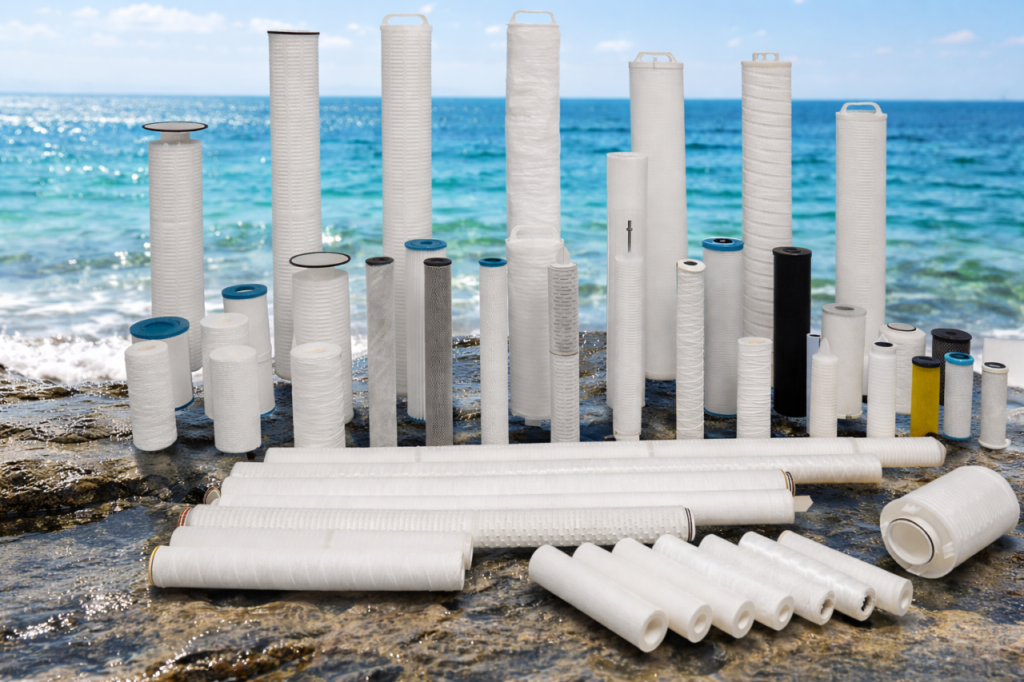
Physical form: A rigid cylindrical element with a central perforated core, media wrapped or pleated around the core, and end caps (DOE or SOE) at both ends. Standard diameters:
- 2.5–2.75 inches (64–70 mm): Standard cartridge, used in most industrial applications
- 6 inches (152 mm): High-flow cartridge, 4–10× the flow capacity of a standard cartridge
- Lengths: 10, 20, 30, 40 inches (254, 508, 762, 1016 mm) (industry standard)
Media types:
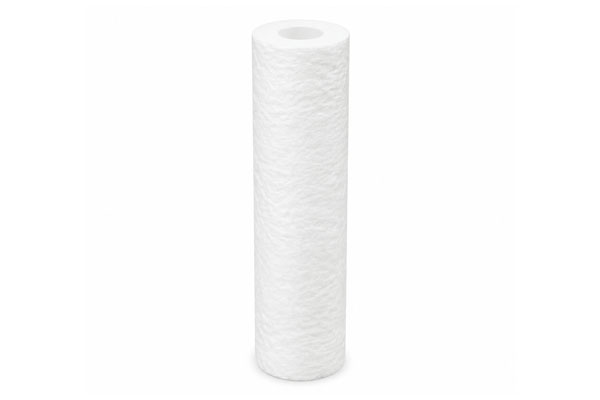
- Melt-blown polypropylene depth (wound or pleated): Nominal efficiency, 0.5–100 µm, cost-effective for pre-filtration.
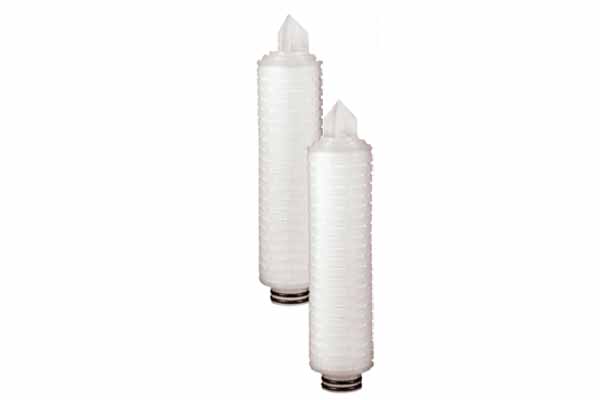
- Pleated membrane (PES, PVDF, PTFE, nylon): Absolute efficiency (>99.9% at rated micron), 0.1–10 µm, used for fine or sterile filtration.
- Pleated polyester or cellulose: Nominal to absolute, 1–50 µm, used for aqueous or low-chemical-demand applications.
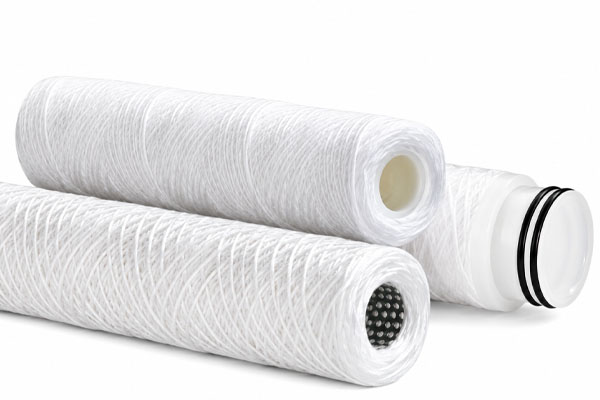
- String-wound (polypropylene, cotton cord wound around a core): Depth filtration, nominal efficiency, 1–100 µm, lowest cost but least efficient.
- Sintered stainless steel: Absolute efficiency, backwashable, high temperature, 1–100 µm, used in chemical processing and high-temp applications.
End cap types:
- DOE (Double Open End): Flat end caps, sealed by knife-edge compression against housing O-rings. Used in most standard housings.
- SOE (Single Open End): Threaded end cap on one side, closed on the other. Screws into manifold, better seal integrity, used in sanitary or high-purity applications (222, 226, or 227 O-ring profiles).
Filtration mechanism: Surface or hybrid.
- Pleated membrane cartridges: Surface filtration. Liquid flows radially through the pleated membrane (outside-to-inside or inside-to-outside). Particles are captured on the membrane surface. As the cake builds, DP rises, but the large pleated surface area (5–20 ft²) allows extended service life despite surface loading.
Depth cartridges (melt-blown, string-wound): Depth filtration similar to bags, but the media is more uniform and controlled, providing better efficiency than bag media at the same nominal rating (cited, WaterEV: String wound vs pleated filters).
2. Micron Rating and Efficiency
2.1 Nominal vs Absolute Ratings
Nominal rating: The micron size at which a certain percentage (typically 50–95%) of particles are retained. A "10 µm nominal" bag or cartridge allows some particles >10 µm to pass through — the efficiency is not tightly controlled (cited, FDPP: Bags vs cartridges efficiency).
Absolute rating: The micron size at which ≥99.9% of particles (or ≥99.98% for some specifications) are retained. A "10 µm absolute" cartridge will not allow particles >10 µm to pass (beta ratio ≥1000 by ISO 16889 or similar test). Absolute ratings require validation testing with challenge particles (glass beads, latex spheres, or specific microorganisms for sterile filters).
Key difference:
- Filter bags are typically nominal-rated. Efficiency varies by media type: nonwoven felt (60–85% retention at rated micron), monofilament woven (70–95%), and multifilament woven (80–95%) (typical).
- Pleated membrane cartridges are absolute-rated (>99.9% retention). Depth cartridges (melt-blown, string-wound) are nominal-rated (similar to bags).
2.2 Micron Rating Ranges by Technology
| Technology | Micron range | Efficiency | Typical applications |
|---|---|---|---|
| Filter bags (nonwoven felt) | 1–200 µm nominal | 60–85% at rated micron | Pre-filtration, water intake, cooling tower, coarse solids removal |
| Filter bags (woven mesh) | 10–800 µm nominal | 70–95% at rated micron | Coarse screening, large debris removal, paint/coating straining |
| Depth cartridges (melt-blown PP) | 0.5–100 µm nominal | 80–95% at rated micron | RO pretreatment, general water filtration, chemical pre-filtration |
| Pleated membrane cartridges | 0.1–10 µm absolute | >99.9% at rated micron | Sterile filtration, fine polishing, pharmaceutical, semiconductor ultrapure water |
| Sintered stainless steel cartridges | 0.5–100 µm absolute | >99.9% at rated micron | High-temperature chemical filtration, backwashable service, corrosive liquids |
Selection guideline:
- Use bags (1–200 µm nominal) where coarse to medium filtration is sufficient and particle breakthrough in the 5–20% range is acceptable (pre-filtration, upstream protection of finer filters).
- Use depth cartridges (0.5–100 µm nominal) for better efficiency than bags in the same micron range, or where housing footprint is limited.
- Use pleated membrane cartridges (0.1–10 µm absolute) where fine filtration or sterile filtration is required and particle breakthrough is unacceptable (final polishing, microbial removal, RO feed, pharmaceutical formulation).
3. Surface Area and Dirt-Holding Capacity
3.1 Surface Area
Filter bag (#2 standard):
- Diameter: 7 inches (178 mm)
- Length: 32 inches (813 mm)
- Surface area: π × 7 in × 32 in = ~700 in² = 0.7–1.2 ft² (0.065–0.11 m²) depending on fabric thickness and pleating (some bags have internal support ribs that reduce effective area) (calculated, typical).
Filter cartridge (2.75" diameter × 30" pleated):
- Outer diameter: 2.75 inches (70 mm)
- Effective filtration length: 30 inches (762 mm)
- Pleat count: 150–300 pleats (typical)
- Surface area: 10–15 ft² (0.9–1.4 m²) (rated, typical manufacturer specification for pleated membrane cartridge)
Surface area ratio: A 30-inch pleated cartridge has 10–15× the surface area of a #2 bag despite being smaller in diameter. This is the fundamental advantage of pleated construction — more surface area in a smaller footprint (cited, NEWater: Bag vs cartridge surface area).
Implication for flow rate: Higher surface area allows higher flow rate at the same face velocity (flow per unit area). A pleated cartridge can handle 20–100 gpm at low DP; a bag at the same DP handles 50–200 gpm but with lower retention efficiency (nominal vs absolute).
3.2 Dirt-Holding Capacity
Dirt-holding capacity (DHC) is the mass of contaminant a filter can retain before reaching terminal differential pressure (typically 20–30 psi / 1.4–2 bar).
Filter bags: DHC = 0.5–5 kg per bag (typical, depends on micron rating, media type, and contaminant characteristics). Coarser bags (50–200 µm) and nonwoven felt have the highest DHC because the thick depth media can store particles throughout its volume.
Filter cartridges: DHC = 0.1–1 kg per cartridge (typical). Pleated membrane cartridges have lower DHC than bags because particles accumulate on the surface (no depth storage). Depth cartridges (melt-blown) have moderate DHC (0.3–1 kg), intermediate between bags and membranes.
Why bags have higher DHC:
- Depth filtration mechanism: Particles are trapped throughout the media thickness (2–5 mm for felt), not just on the surface.
- Larger media volume: A bag’s fabric is thicker than a pleated cartridge’s membrane (0.1–0.3 mm for membrane vs 2–5 mm for felt).
- Coarser micron ratings: Bags are typically used in coarser applications where larger particles carry more mass per unit count.
Why higher DHC matters:
- Longer service life in high-solids applications (turbid water, slurries, pre-filtration)
- Lower changeout frequency reduces labor and downtime
- Lower operating cost (fewer filter purchases per year)
Tradeoff: Bags’ high DHC comes at the cost of lower retention efficiency (nominal rating). Cartridges sacrifice DHC for higher efficiency (absolute rating) and compact footprint.
4. Flow Rate and Differential Pressure
4.1 Flow Capacity per Element
Filter bags:
- Single #2 bag (7" × 32"): 50–400 gpm (190–1,500 L/min) depending on micron rating, liquid viscosity, and acceptable clean DP (typical).
- Coarse bags (50–200 µm): 200–400 gpm per bag at 0.3–1 psi clean DP (typical).
- Fine bags (1–10 µm): 50–150 gpm per bag at 1–3 psi clean DP (typical).
Filter cartridges (2.75" diameter):
- 10-inch cartridge: 5–15 gpm (20–60 L/min) (typical, 1–10 µm pleated membrane).
- 20-inch cartridge: 10–25 gpm (40–95 L/min) (typical).
- 30-inch cartridge: 15–35 gpm (60–130 L/min) (typical).
- 40-inch cartridge: 20–45 gpm (75–170 L/min) (typical).
High-flow cartridges (6" diameter):
- 40-inch high-flow: 100–400 gpm (380–1,500 L/min) per cartridge (typical, 1–10 µm pleated) — equivalent to a single #2 bag but with absolute efficiency instead of nominal.
Scaling to system flow rates:
- A 500 gpm system can use: 2–3 bags in a multi-bag housing, OR 15–20 standard cartridges in a multi-cartridge housing, OR 2–5 high-flow cartridges.
- Cartridges require more elements but offer better efficiency and smaller footprint.
4.2 Differential Pressure
Clean DP (initial pressure drop across new filter):
- Bags: 0.2–1 psi (0.01–0.07 bar) (typical, low-viscosity aqueous liquid). Bags have very low clean DP due to large pores and thin media.
- Depth cartridges (melt-blown): 0.5–2 psi (0.03–0.14 bar) (typical).
- Pleated membrane cartridges: 1–3 psi (0.07–0.2 bar) (typical, depends on micron rating and flow rate). Finer membranes (0.2 µm) have higher DP than coarser (10 µm).
Terminal DP (filter is loaded, changeout required):
- Industry standard: 20–30 psi (1.4–2 bar) for both bags and cartridges (typical).
- Operating the filter beyond terminal DP risks media failure (bag tearing, cartridge collapse), bypass (seal failure), or pump overload.
DP rise rate indicates remaining filter life. If DP increases from 2 psi to 15 psi in 2 weeks, estimate 1 more week of service before reaching 25 psi terminal DP. Monitor DP with gauges or transmitters to predict changeout timing.
5. Cost Analysis: Purchase, Changeout, and Total Cost of Ownership
5.1 Unit Purchase Cost
Filter bags:
- Standard #2 polypropylene felt bag (1–200 µm nominal): $5–25 per bag (typical market range)
- High-performance bags (multifilament woven, PTFE, stainless steel mesh): $30–100 per bag
- Food-grade or pharmaceutical bags (FDA-compliant, welded seams): $20–60 per bag
Filter cartridges:
- 10-inch melt-blown polypropylene (1–50 µm nominal): $3–8 per cartridge
- 30-inch melt-blown polypropylene: $10–25 per cartridge
- 30-inch pleated membrane (PES, PVDF, 0.2–10 µm absolute): $40–100 per cartridge
- 40-inch high-flow (6" diameter, pleated membrane): $150–300 per cartridge
Initial impression: Bags appear cheaper per unit ($15 bag vs $60 cartridge). But this ignores flow capacity and service life.
5.2 Cost per Volume Filtered
Example scenario: 100 gpm system, 50 ppm suspended solids, 10 µm filtration target.
Option 1: Single #2 bag (10 µm nominal felt)
- Flow capacity: 100 gpm per bag (at 1 psi clean DP)
- Dirt-holding capacity: 2 kg per bag (typical)
- Solids loading: 100 gpm × 50 ppm × 3.785 kg/gal × 1e-6 = 0.019 kg/min
- Service life: 2 kg ÷ 0.019 kg/min = 105 minutes = 1.75 hours (unrealistically short — indicates bags are undersized for this solids loading)
- Volume filtered per bag: 100 gpm × 105 min = 10,500 gallons
- Cost per bag: $15
- Cost per 1,000 gallons: $1.43
Option 2: Four 30-inch pleated cartridges (10 µm absolute)
- Flow capacity: 25 gpm per cartridge × 4 = 100 gpm total (at 2 psi clean DP)
- Dirt-holding capacity: 0.5 kg per cartridge × 4 = 2 kg total (typical)
- Service life: Same as bag (2 kg total DHC) = 1.75 hours
- Volume filtered: 10,500 gallons
- Cost per cartridge: $50 × 4 = $200 total
- Cost per 1,000 gallons: $19.05
Conclusion for high-solids (50 ppm) scenario: Bags are 13× cheaper per volume filtered than pleated cartridges. The cartridges’ higher surface area does not compensate for their lower dirt-holding capacity when solids loading is high.
But: If solids loading is low (e.g., 5 ppm instead of 50 ppm), service life increases 10×, and the cartridge’s lower clean DP (better flow efficiency) and absolute retention (better filtrate quality) make it competitive or superior.
General rule:
- High-solids (>50 ppm): Bags are more cost-effective.
- Low-solids (<10 ppm): Cartridges are more cost-effective or required (if absolute efficiency is needed).
- Crossover (~10–50 ppm): Depends on filtrate quality requirement, available footprint, and changeout labor cost (cited, Scribd: Total cost analysis).
5.3 Changeout Labor and Disposal Costs
Changeout time:
- Bags: 1–3 minutes per bag (top-loading, snap ring release, pull out spent bag, drop in new bag, re-secure snap ring). No tools required (typical).
- Cartridges: 5–15 minutes per housing (unscrew vessel head or cartridge, remove spent cartridge(s), inspect O-rings, install new cartridge(s), reassemble). Tools required (wrench, possibly hoist for large vessels) (typical).
Labor cost impact: For a 500 gpm system requiring weekly changeouts:
- Bags (2 bags): 6 minutes per week = 5 hours per year at $50/hr = $250/year labor
- Cartridges (20 cartridges in one housing): 15 minutes per week = 13 hours per year = $650/year labor
Disposal cost:
- Bags are larger and heavier when loaded (more volume to landfill or incinerate). Disposal cost: $0.50–2 per bag (typical).
- Cartridges are more compact but may contain more hazardous materials (membrane media, synthetic polymers). Disposal cost: $0.50–5 per cartridge depending on contamination and local regulations (typical).
Total cost of ownership (TCO) = Purchase cost + Changeout labor + Disposal + Housing amortization. Run a site-specific TCO model before specifying — the lowest purchase price is not always the lowest TCO.
6. Housing Configurations
6.1 Bag Filter Housings
Single-bag housing:
- One #1 or #2 bag
- Flow capacity: 50–400 gpm per housing (typical)
- Footprint: 8–12 in diameter × 36–48 in height
- Top-loading with hinged or bolted cover, snap ring or locking ring secures bag
- Simple, low-cost, easy to maintain
- Use case: Small to medium flow, frequent changeouts acceptable
Multi-bag housing:
- 2, 4, 6, 9, 12, or 18 bags in parallel in a single vessel
- Flow capacity: 100–7,200 gpm (depending on bag count and micron rating) (typical)
- Footprint: Larger vessel but fewer total housings than equivalent cartridge system
- Top-loading or side-entry, each bag on its own basket
- Use case: High flow, high solids, where bag economy is critical
Duplex bag housing:
- Two single-bag housings in parallel with diverter valves
- One housing in service, one on standby
- Allows continuous operation during changeouts (isolate one housing, change bag, return to service)
- Use case: Critical processes that cannot tolerate downtime for filter changes
6.2 Cartridge Filter Housings
Single-cartridge housing:
- One cartridge
- Flow capacity: 5–40 gpm (standard 2.75" cartridge) or 100–400 gpm (high-flow 6" cartridge) (typical)
- Footprint: 4–8 in diameter × 12–48 in height (depending on cartridge length)
- Use case: Low flow, point-of-use filtration, final polishing
Multi-cartridge housing:
- 3, 6, 12, 18, 24, 36, 48+ cartridges in parallel in a single vessel
- Cartridges installed vertically or horizontally, each sealed with DOE knife-edge or SOE threaded connection
- Flow capacity: 50–2,000+ gpm (typical)
- Footprint: Compact relative to flow capacity (36 cartridges replace ~100 bags with equivalent surface area) (cited, Plant Engineering: Cartridge vs bag footprint)
- Use case: High flow, fine filtration, limited floor space
Duplex cartridge housing:
- Two multi-cartridge vessels in parallel with diverter valves
- Use case: Continuous operation, critical sterile filtration (pharmaceutical, semiconductor)
7. When to Use Bags vs Cartridges
7.1 Use Filter Bags When:
- Micron rating >10 µm nominal and absolute efficiency is not required
- High solids loading (>50 ppm suspended solids, turbid water, slurries, wastewater)
- Pre-filtration upstream of finer filters (RO membranes, cartridges, IX resin beds)
- Low initial cost is the priority (bags cost less per unit than cartridges)
- High dirt-holding capacity is needed to extend time between changeouts
- Fast, simple changeouts are important (bags are top-loading, no tools required)
- Large-particle screening (>50 µm) where woven mesh bags suffice
Typical applications:
- Cooling tower filtration (20–100 µm removal of silt, algae, debris)
- Surface water intake pre-filtration (10–50 µm removal before RO or cartridge polishing)
- Paint and coating straining (25–200 µm removal of agglomerates, skin, foreign particles)
- Wastewater tertiary filtration (10–50 µm solids removal)
- Industrial process water pre-filtration (protecting heat exchangers, pumps, spray nozzles)
7.2 Use Filter Cartridges When:
- Micron rating <10 µm absolute or sterile filtration is required
- Low solids loading (<50 ppm, clear water, final polishing)
- High filtration efficiency (>99.9% retention, no particle breakthrough tolerated)
- Compact footprint or limited floor space (pleated cartridges have 10–20× surface area per unit volume vs bags)
- Final polishing or sterile filtration (pharmaceutical, beverage, semiconductor ultrapure water)
- Chemical compatibility is critical and specific membrane materials (PVDF, PTFE, PES) are required
- Regulatory compliance requires validated absolute-rated filters (FDA, cGMP, food safety)
Typical applications:
- RO pretreatment (1–5 µm absolute removal of colloidal silica, iron oxide, biofilm upstream of RO membranes)
- Pharmaceutical sterile filtration (0.2–0.45 µm absolute removal of bacteria, yeast)
- Semiconductor ultrapure water (0.1–1 µm absolute removal of particles in DI water for chip manufacturing)
- Food & beverage final filtration (0.45 µm sterile filtration of wine, beer, juice — see food & beverage article)
- Chemical process fine filtration (1–10 µm absolute removal of catalyst fines, polymer particles, contamination)
7.3 Hybrid Approach: Bags for Pre-Filtration, Cartridges for Final Filtration
Many systems use staged filtration: bags upstream (coarse removal, high DHC, protect downstream equipment) + cartridges downstream (fine removal, absolute efficiency, final product quality).
Example: RO pretreatment system
- Stage 1: Multi-media filter (sand, anthracite) removes >20 µm
- Stage 2: Bag filter (10 µm nominal) removes 5–20 µm solids, protects cartridges from rapid blinding
- Stage 3: Cartridge filter (1 µm absolute) removes colloidal material, meets RO feed SDI <3 requirement
Advantage: Each technology is used where it performs best. Bags handle the bulk solids load (cheap, high DHC); cartridges provide the final barrier (expensive, high efficiency). Total cost is minimized.
8. ECOFILTRONE Filter Bags and Cartridges
ECOFILTRONE Liquid Filter Bags
Nonwoven polypropylene or polyester felt, needle-punched, 1–200 µm nominal. Standard #1 (7" × 16"), #2 (7" × 32"), and custom sizes. Plastic or stainless steel ring collar, sewn or welded seams. For water treatment, chemical pre-filtration, paint/coating, and industrial process applications. Available in FDA-compliant food-grade and high-temperature (up to 200 °C) PTFE versions.
→ View specifications and micron ratingsECOFILTRONE Pleated Membrane Cartridges
PES, PVDF, PTFE, nylon pleated membranes, 0.1–10 µm absolute (>99.9% retention), 10–40 inch lengths, 2.75" or 6" (high-flow) diameter. DOE/SOE end caps, EPDM or Viton seals. For RO pretreatment, sterile filtration, chemical fine filtration, and pharmaceutical applications. Surface area: 2.5–20 ft² per cartridge (standard), 40–80 ft² (high-flow 6" diameter).
→ View specificationsECOFILTRONE Melt-Blown Polypropylene Depth Cartridges
Gradient density melt-blown PP, 0.5–100 µm nominal, 10–40 inch lengths, thermally bonded (no adhesives). Low cost, high dirt-holding capacity (0.3–1 kg per 30" cartridge). For general water filtration, RO pretreatment, and chemical pre-filtration where absolute rating is not required.
→ View specifications
ECOFILTRONE provides flow-vs-DP curves, dirt-holding capacity test data (by contaminant type), chemical compatibility charts, and housing selection guidance for both bag and cartridge filtration systems. Custom lengths, micron ratings, and materials available for OEM and high-volume applications.
9. Common Mistakes When Choosing Bags vs Cartridges
Mistake 1: Using bags where absolute efficiency is required
Scenario: Specifying 5 µm nominal bag filter for RO pretreatment, expecting <SDI 3 feed water.
Problem: Nominal bags allow 10–40% of 5 µm particles to pass. Colloidal material (1–5 µm) passes through, fouls RO membranes, causes frequent cleaning and reduced membrane life.
Solution: Use 1–5 µm absolute pleated cartridges upstream of RO. Bags can be used for coarser pre-filtration (10–25 µm) to protect the cartridges.
Mistake 2: Using fine cartridges where bags suffice
Scenario: Specifying 50 µm absolute pleated cartridges for cooling tower side-stream filtration with 100 ppm suspended solids.
Problem: Cartridges blind rapidly (low dirt-holding capacity), require changeouts every few days, operating cost is 5–10× higher than necessary.
Solution: Use 50–100 µm nominal bags. They have 3–5× the dirt-holding capacity of cartridges, extend changeout intervals to weeks, and cost $10–15 per bag vs $40–60 per cartridge.
Mistake 3: Ignoring total cost of ownership (TCO)
Scenario: Choosing bags because unit cost ($10) is lower than cartridges ($50), without calculating cost per gallon filtered or changeout labor.
Problem: In low-solids, fine-filtration applications, cartridges filter more volume per element (higher surface area, lower clean DP) and may have lower TCO despite higher unit cost.
Solution: Calculate TCO = (Unit cost + Changeout labor + Disposal) ÷ Volume filtered. Include housing amortization if comparing single-bag vs multi-cartridge systems with different capital costs.
Mistake 4: Mismatching housing to filter type
Scenario: Installing cartridges in a bag housing (or vice versa) using adapters.
Problem: Adapters compromise seal integrity (bypass risk), reduce flow capacity, and may not support the cartridge mechanically (risk of collapse).
Solution: Use housings designed for the filter type. If converting from bags to cartridges (or vice versa), replace the housing or use a manufacturer-validated conversion kit.
Mistake 5: Overlooking changeout access and safety
Scenario: Specifying multi-cartridge housing with 48 cartridges in a confined space with no hoist or access platform.
Problem: Changeout requires 2–3 hours of labor, vessel head weighs 50–200 kg (requires lifting equipment), and technicians cannot safely access the housing.
Solution: Consider changeout logistics during system design. Multi-bag housings with top-loading may be faster and safer to service than large multi-cartridge vessels in confined spaces.
10. Frequently Asked Questions
Can I use a filter bag where a cartridge is specified (or vice versa)?
No, they are not interchangeable. Bags and cartridges differ in efficiency, dirt-holding capacity, seal mechanism, and housing design. A system designed for cartridges (O-ring seals, DOE knife-edge) cannot accommodate bags without adapters (which compromise performance). Always match the filter type to the housing and application requirements.
What is the difference between nominal and absolute micron ratings?
Nominal: Retains 50–95% of particles at the rated size. A "10 µm nominal" filter allows some particles >10 µm to pass. Used for bags and depth cartridges in pre-filtration where some bypass is acceptable.
Absolute: Retains ≥99.9% of particles at the rated size. A "10 µm absolute" filter will not allow particles >10 µm to pass (beta ratio ≥1000). Required for final filtration, sterile filtration, and applications where particle breakthrough is unacceptable. Only pleated membrane or sintered cartridges provide absolute ratings.
How do I calculate how many bags or cartridges I need for my flow rate?
Step 1: Determine total system flow rate (e.g., 500 gpm).
Step 2: Select filter type and micron rating (e.g., 10 µm cartridge).
Step 3: Find flow capacity per element from manufacturer’s data (e.g., 25 gpm per 30" cartridge at acceptable clean DP).
Step 4: Divide total flow by per-element capacity: 500 gpm ÷ 25 gpm = 20 cartridges required.
Step 5: Add 10–20% safety margin for fouling and future flow increases: 20 × 1.15 = 23 cartridges (round to next standard housing size, e.g., 24-cartridge housing).
Are filter bags reusable?
Sometimes. Woven mesh bags (monofilament polypropylene or nylon, 25–800 µm) can be cleaned and reused 5–20 times depending on the contaminant and cleaning method (backwashing, pressure washing, ultrasonic cleaning). Nonwoven felt bags (1–200 µm) are typically single-use — the felt structure is damaged by cleaning and efficiency drops significantly after the first use. Cartridges (except sintered stainless steel) are also typically single-use.
When should I use high-flow (6 inch diameter) cartridges instead of standard cartridges or bags?
Use high-flow cartridges when:
- Flow rate is high (>200 gpm) and you want to minimize the number of elements
- Fine or sterile filtration is required (0.2–10 µm absolute) — bags cannot provide this
- Compact footprint is critical (2–5 high-flow cartridges replace 10–20 standard cartridges or 2–4 bags)
- Absolute efficiency is required but you want to reduce housing count and simplify piping
High-flow cartridges cost 2–4× more than standard cartridges but handle 4–10× the flow per element.
What is the difference between a #1 and #2 filter bag?
#1 bag: 7 inches diameter × 16 inches long. Used in lower-flow applications (25–200 gpm per bag depending on micron rating). Smaller housing, lower cost.
#2 bag: 7 inches diameter × 32 inches long (twice the length of #1). Used in higher-flow applications (50–400 gpm per bag). Most common size in industrial filtration. Higher dirt-holding capacity than #1 (twice the surface area).
How often do I need to change filter bags or cartridges?
Depends on:
- Solids loading (ppm suspended solids in feed stream)
- Dirt-holding capacity (kg per bag or cartridge)
- Flow rate (gpm)
- Terminal DP (typically 20–30 psi)
Example calculation:
- Solids loading: 20 ppm
- Flow rate: 100 gpm
- Dirt-holding capacity: 2 kg (filter bag)
- Solids accumulation rate: 100 gpm × 20 ppm × 3.785 L/gal × 1 g/1000 mg = 7.6 g/min
- Service life: 2000 g ÷ 7.6 g/min = 263 minutes = 4.4 hours
This is unrealistically short — indicates the bag is undersized for the solids loading. In practice, install more bags in parallel or use coarser pre-filtration upstream.
Typical service life:
- High-solids applications (>50 ppm): Bags — 1–4 weeks; Cartridges — not recommended (blind too quickly)
- Low-solids applications (<10 ppm): Bags — 1–6 months; Cartridges — 3–12 months
Monitor differential pressure (DP) to predict changeout timing. When DP reaches 20–25 psi, change the filter.
Can I use filter bags in sanitary or pharmaceutical applications?
Yes, with caveats. Use FDA-compliant food-grade bags with:
- Welded seams (no stitching that can harbor bacteria or shed fibers)
- FDA 21 CFR-compliant materials (polypropylene, polyester, nylon, PTFE)
- Stainless steel ring collar (not plastic)
- Sanitary housing (3-A certified or designed for clean-in-place)
For sterile filtration (0.2–0.45 µm absolute, microbial removal), bags are not suitable — use validated pleated membrane cartridges (PES, PVDF) with integrity testing (bubble point, diffusion test). See food & beverage filtration article for details.
11. Conclusion
Filter bags and filter cartridges are complementary technologies, not substitutes. Bags provide high dirt-holding capacity, low cost per unit, and fast changeouts for coarse to medium filtration (1–200 µm nominal) in high-solids applications. Cartridges provide high filtration efficiency (absolute micron ratings), compact footprint (10–20× surface area per unit volume), and the ability to achieve fine or sterile filtration (<10 µm absolute) that bags cannot deliver.
The decision hinges on micron rating, filtration efficiency requirement (nominal vs absolute), solids loading, and total cost of ownership. Use bags for pre-filtration, coarse screening, and high-solids streams where nominal efficiency is acceptable and low cost is critical. Use cartridges for final polishing, fine filtration, sterile filtration, and applications where absolute efficiency and compact footprint justify the higher unit cost.
Many industrial filtration systems use both: bags for coarse pre-filtration (high dirt-holding capacity, protect downstream equipment, low cost) followed by cartridges for final filtration (absolute efficiency, product quality assurance, compact design). This staged approach minimizes total cost by assigning each technology to the task where it performs best.
Housing design, seal integrity, changeout logistics, and chemical compatibility must also be considered. Bags require top-loading housings with snap-ring closures; cartridges require O-ring compression seals (DOE or SOE) and vessel head removal for changeout. Specify the complete system — filter type, housing configuration, DP monitoring, and changeout procedures — not just the filter element in isolation.
Need Help Choosing Between Filter Bags and Cartridges?
If you are designing a filtration system or evaluating bags vs cartridges for an existing application, share your flow rate, suspended solids concentration (ppm), target micron rating, chemical compatibility requirements, and available footprint.
ECOFILTRONE will provide filter selection recommendations, dirt-holding capacity estimates, cost-per-gallon calculations, and housing configuration options for your specific application.
WhatsApp: +86 131 8896 2285
Sources: Acme Mills: Filter bags vs cartridges · NEWater: Bag filters vs cartridge filters · FDPP: Six ways bags compare to cartridges · Scribd: Cartridge vs bag filter total cost analysis · Alibaba: Industrial filter types explained · Plant Engineering: Fabric filter comparison · WaterEV: String wound vs pleated filters