Data grading: (rated) = manufacturer specification · (typical) = commonly observed industry range · (cited) = published standard or reference · (measured) = site-specific data
Introduction
Condensate filtration in steam power plants is one of the most demanding industrial filtration applications. Condensate — the liquid water formed when steam exhausts from a turbine and cools in a condenser — must be purified before returning to the boiler as feedwater. Even trace amounts of suspended solids (iron oxide, copper oxide, silica, corrosion products collectively called "crud") or dissolved ions (sodium, chloride, sulfate from condenser leaks or corrosion) cause boiler tube fouling, turbine blade erosion, and ultimately forced outages and efficiency losses.
A condensate polishing system combines mechanical filtration and ion exchange demineralization to restore condensate purity to boiler feedwater standards: <5 ppb total suspended solids, <0.2 µS/cm conductivity (cation conductivity after degassing), and <2 ppb dissolved iron (cited, EPRI guidelines for high-pressure steam plants). The filter cartridge is the first line of defense — removing particulate crud protects downstream ion exchange resin beds from fouling and mechanical attrition, and in precoat polishing systems, the cartridge itself serves as the substrate for powdered resin application.
Filter selection for condensate service is not straightforward. The condensate temperature can range from 40 °C (air-cooled condensers in cold climates) to 150 °C (high-backpressure or feedwater heater drain applications). Flow rates are high: a 500 MW power plant circulates 400–800 m³/h (1,750–3,500 gpm) of condensate. Crud loading spikes during startup, shutdown, or upsets when corrosion rates increase. The filter must operate continuously for weeks to months between changeouts or backwashes, maintain integrity under pressure and temperature cycling, and introduce zero extractables or fiber migration into ultrapure condensate.
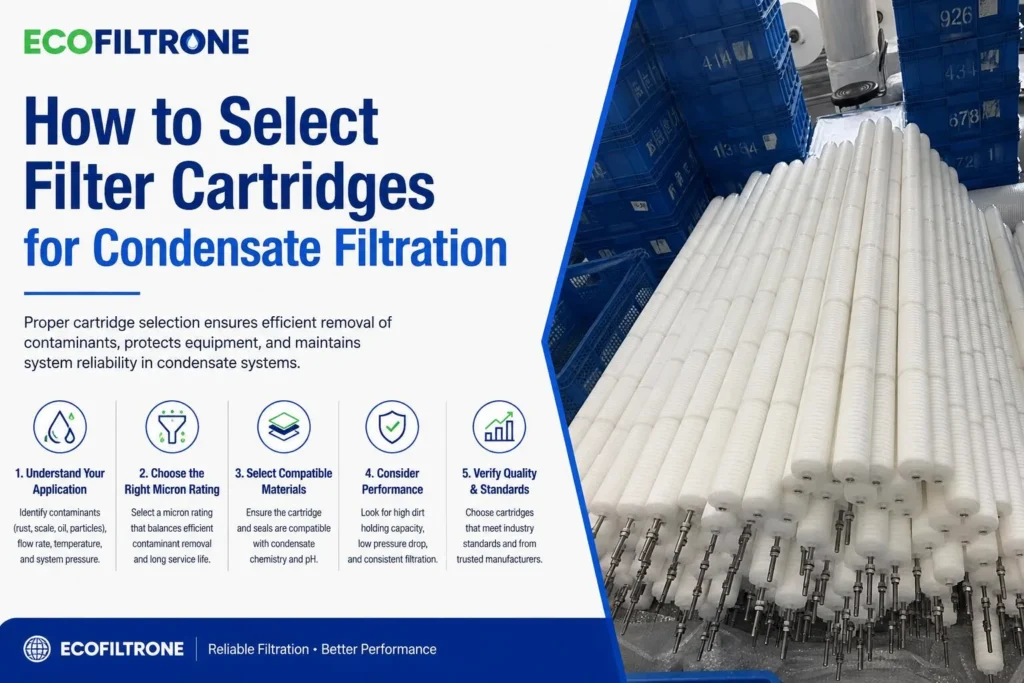
This guide explains the difference between deep-bed condensate polishing (where filters protect the resin) and precoat polishing (where filters support powdered resin), how to select micron ratings for iron oxide crud removal (0.5–10 µm), which materials (stainless steel, polypropylene, PTFE-reinforced) are compatible with 100–150 °C condensate, and how backwashable pleated cartridges reduce operating costs in high-solids-loading environments.
Key Takeaways
- Condensate polishing systems use two architectures: deep-bed ion exchange (where filters protect the resin from crud) or precoat filtration (where powdered resin is applied onto the filter surface). Filter selection depends on which system you have.
- Iron oxide crud is 0.5–5 µm in size — filtration at 1 µm or 3 µm absolute is standard for bulk crud removal (typical, Graver AFA backwashable condensate filters). Finer filtration (0.5 µm) is used where ultrahigh purity is required or where colloidal magnetite is present.
- Backwashable pleated cartridges (stainless steel mesh or reinforced pleated polymer) allow in-place cleaning, extending service life to 2–5 years. Standard disposable cartridges are replaced every 3–12 months depending on crud loading. Backwashing reduces cartridge waste and changeout labor but requires more complex housing design and backwash infrastructure.
- Temperature capability is the primary material constraint. Polypropylene is limited to 80 °C; PTFE-reinforced polypropylene or glass-fiber composites reach 100–120 °C; sintered stainless steel (316L) handles 150 °C+ (rated, typical manufacturer limits). Match the cartridge temperature rating to your condensate temperature plus a safety margin.
- Precoat filters (Powdex-style systems) use coarser support cartridges — 10–40 µm nominal wound or pleated septum — onto which powdered ion exchange resin is deposited. The resin layer (not the cartridge itself) provides filtration and demineralization. The cartridge’s role is structural support and backwash integrity, not fine filtration (cited, Graver Powdex precoat polisher).
- Fiber migration is forbidden. Condensate filters must not shed fibers or polymer extractables into the ultrapure water. Cellulose, cotton, or unbonded fiber media are prohibited. Use fully sintered stainless steel, thermally bonded polypropylene, or validated low-extractable pleated membranes only.
- Resin fines (broken ion exchange resin beads) from upstream polishing beds require 10–25 µm post-polishing filtration if the plant uses deep-bed mixed resin. A downstream cartridge filter prevents resin carryover to the boiler feedwater pump and economizer (typical practice).
Quick Reference: Filter Selection by Condensate System Type
| System type | Filter location | Primary contaminant | Micron rating | Material | Backwashable? |
|---|---|---|---|---|---|
| Deep-bed ion exchange (upstream protection) | Before resin vessels | Iron oxide crud, copper oxide, silica, suspended solids | 1–5 µm absolute | SS 316L sintered or pleated PP (if <80 °C) | Yes (typical) |
| Deep-bed ion exchange (downstream protection) | After resin vessels | Resin fines (broken beads), carryover resin | 10–25 µm nominal | Pleated PP or SS mesh | Optional |
| Precoat polisher (Powdex-style) | Inside precoat vessel (resin support) | Crud + ions (removed by powdered resin layer on cartridge) | 10–40 µm nominal (septum support only) | Pleated PP or SS, precoatable surface | Yes (required) |
| Air-cooled condenser (low-temp condensate) | Condensate pump discharge | Crud, condenser tube corrosion products | 1–5 µm absolute | Pleated PP (cost-effective at 40–60 °C) | Optional |
| High-backpressure or feedwater heater drain | Drain cooler outlet | Crud at 120–150 °C | 1–5 µm absolute | SS 316L sintered (only material rated 150 °C+) | Yes |
1. Condensate Polishing System Architectures
Understanding your condensate polishing system architecture is the first step in filter selection. The two dominant designs are deep-bed ion exchange and precoat filtration. Each uses filters differently.
1.1 Deep-Bed Ion Exchange Polishing
Design: Condensate flows through vessels packed with bead-type ion exchange resin (mixed bed: strong acid cation + strong base anion, or separate beds). The resin removes dissolved ions (Na⁺, Cl⁻, Ca²⁺, SO₄²⁻, SiO₂) by ion exchange. Suspended solids (crud) are removed by mechanical filtration through the resin bed itself, but excessive crud fouls the resin, channels flow, and requires frequent backwashing or resin replacement.
Filter role: Upstream protection filter removes bulk crud before the resin bed, preventing fouling and extending resin life. Typically installed at the condensate pump discharge or immediately before the polisher inlet. Micron rating: 1–5 µm absolute (typical).
Optional downstream filter: Some plants install a 10–25 µm resin fines filter after the polisher to catch broken resin beads or fines that escape during service or regeneration. This protects the boiler feedwater pump and economizer from resin carryover.
Advantages: Proven technology, capable of ultrahigh purity (<0.1 µS/cm cation conductivity), suitable for base-load plants with low condenser leakage.
Disadvantages: Resin requires periodic regeneration (acid/caustic), produces chemical waste, and is sensitive to crud fouling in high-makeup or cycling plants.
1.2 Precoat Filtration (Powdex-Style)
Design: Condensate flows through a vessel containing pleated cartridges (called septa). Powdered ion exchange resin (50–100 µm particles) is continuously or periodically fed into the condensate stream upstream. The powdered resin deposits as a thin layer (precoat) on the cartridge surface. The precoat layer performs both filtration (removes crud) and ion exchange (removes dissolved ions). As the precoat becomes loaded with crud and exhausted ions, the system is backwashed, discarding the spent resin and crud, and a fresh precoat is applied (cited, Graver Powdex precoat polisher).
Filter role: The septum cartridge is a structural support for the precoat layer. It does not perform fine filtration itself — the powdered resin layer does. The septum must be coarse enough to allow backwash flow (10–40 µm nominal), strong enough to withstand repeated backwash cycles without deforming or tearing, and cleanable (no blinding from resin embedment).
Advantages: No regeneration chemicals required (spent resin is discarded), lower capital cost than deep-bed systems, excellent for cycling plants or plants with high condenser leakage (precoat handles sudden ionic loads better than fixed beds).
Disadvantages: Ongoing consumable cost (powdered resin), backwash waste disposal, and slightly lower ionic removal efficiency than deep-bed systems (cation conductivity typically 0.1–0.2 µS/cm, vs <0.1 µS/cm for deep-bed).
Critical point: If you have a precoat polishing system, do not specify a fine (1 µm) septum cartridge — it will blind immediately during precoat formation and prevent proper resin layer buildup. Use the manufacturer-recommended coarse septum rating (typically 10–40 µm).
2. Crud Characteristics and Micron Rating Selection
2.1 What is Crud?
"Crud" is power plant jargon for suspended corrosion products in the steam-water cycle. The primary constituents are:
- Iron oxides (magnetite Fe₃O₄, hematite Fe₂O₃) from carbon steel piping, condenser tubes, and feedwater heaters: 0.5–5 µm particle size, the dominant crud component (typical).
- Copper oxides (cupric oxide CuO, cuprous oxide Cu₂O) from brass or copper-alloy condenser tubes: 0.5–3 µm (typical).
- Silica (SiO₂) from makeup water or condenser leakage: colloidal (0.01–1 µm) or dissolved (ionic).
- Calcium/magnesium compounds (from condenser tube leaks in seawater or cooling tower plants): precipitate as carbonates, sulfates, or phosphates, 1–50 µm (typical).
Crud concentration varies by plant type and operating mode:
- Base-load plants with good condenser integrity: 10–50 ppb total iron in condensate (typical).
- Cycling plants or plants with condenser leaks: 100–500 ppb iron, spikes to 1–5 ppm during startups (typical).
- Plants with oxygen ingress or poor chemistry control: 500+ ppb iron, heavy crud loading (measured, site-specific).
2.2 Crud Particle Size Distribution
Studies of condensate crud show the following size distribution (cited, EPRI TR-105040, "Condensate Polishing: State of Knowledge"):
- 50–70% by mass: 0.5–5 µm (colloidal magnetite, fine iron oxide)
- 20–30% by mass: 5–20 µm (agglomerated oxides, larger corrosion product flakes)
- 5–10% by mass: >20 µm (gross debris, weld slag, pipe scale from construction or outages)
Implication for micron rating selection:
- A 1 µm absolute filter captures >95% of crud by mass. Standard for high-purity requirements or plants with colloidal magnetite issues.
- A 3 µm absolute filter captures 80–90% of crud, allows slightly higher flow rate and longer service life. Common in plants with moderate crud loading.
- A 5 µm absolute filter captures 70–80% of crud, used in prefilter applications upstream of finer polishing or where turbidity control (not ultrahigh purity) is the goal.
Resin protection guideline: Ion exchange resin manufacturers recommend condensate crud loading <50 ppb iron entering the resin bed. A 1–3 µm filter achieves this in most plants. If your raw condensate iron is >500 ppb, consider a two-stage approach: 5 µm pre-filter + 1 µm final filter.
3. Temperature Limits and Material Selection
Condensate temperature is the primary constraint on filter material selection. Most condensate is 40–60 °C (surface condensers with cooling water), but some applications reach 100–150 °C.
3.1 Polypropylene (PP) — up to 80 °C
Characteristics:
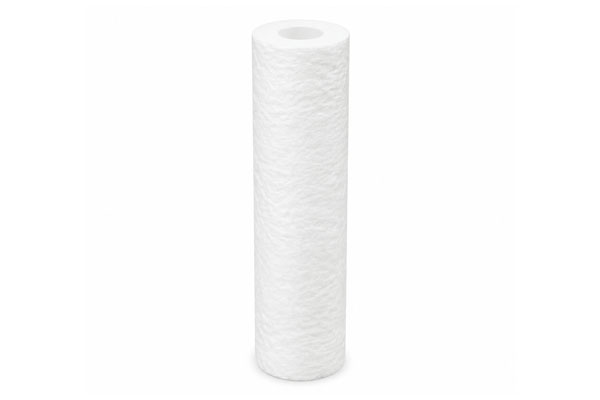
- Melt-blown or pleated polypropylene, thermally bonded (no adhesives)
- Low extractables, suitable for ultrapure water
- Cost-effective
- Temperature limit: 80 °C (176 °F) continuous (rated, typical PP melt-blown or pleated media)
Applications:
- Condensate at 40–70 °C (air-cooled condensers, surface condensers with cold cooling water)
- Low-to-moderate crud loading
- Disposable (single-use) or short-cycle backwashable
Limitations: Cannot be used above 80 °C. Not suitable for steam-in-place (SIP) sterilization or high-temperature feedwater heater drains.
3.2 PTFE-Reinforced Polypropylene or Glass-Fiber Composite — up to 100–120 °C
Characteristics:
- Polypropylene pleated media reinforced with PTFE fibers or glass-fiber support layers
- Higher mechanical strength and temperature capability than pure PP
- Temperature limit: 100–120 °C (212–248 °F) depending on construction (rated, manufacturer-specific)
Applications:
- Condensate at 80–100 °C (high-backpressure condensers, some feedwater heater drains)
- Plants where standard PP is marginal but stainless steel cost is prohibitive
Limitations: Still a polymer — subject to gradual degradation at elevated temperature. Not suitable for 150 °C service.
3.3 Sintered Stainless Steel (316L) — up to 150 °C and beyond
Characteristics:
- Sintered porous stainless steel (316L), no binders or adhesives
- Absolute-rated filtration with rigid pore structure (1, 3, 5, 10 µm available)
- Fully backwashable and chemically cleanable
- Temperature limit: 150 °C (302 °F) continuous; up to 200 °C short-term (rated, typical sintered SS316L)
- Zero fiber migration or extractables
Applications:
- High-temperature condensate (feedwater heater drains, high-backpressure condensers)
- Backwashable condensate polishing (long service life, 2–5 years typical)
- Nuclear power plants where zero extractables and no organic materials are required
- Steam filtration (process steam, instrument air, sterile steam at 150+ °C)
Advantages:
- Longest service life (years vs months for polymer)
- Backwashable in place (reverse flow + optional chemical clean)
- Handles temperature cycling and pressure spikes without degradation
Disadvantages:
- Higher initial cost than polymer cartridges (typically 3–5× the cost of PP)
- Requires backwash infrastructure (reverse flow, compressed air or steam for pulse cleaning)
- Heavier and more complex to handle
Backwash protocol for sintered SS cartridges:
- Reverse flow at 1.5–2× normal flow rate for 5–15 minutes
- Optional air or steam pulse to dislodge embedded crud
- Chemical clean (citric acid or caustic) every 10–20 backwash cycles if iron oxide buildup persists
- Integrity test (bubble point) after each chemical clean to confirm no pore damage
3.4 Material Selection by Temperature
| Condensate temperature | Recommended material | Typical applications |
|---|---|---|
| 40–70 °C | Polypropylene (melt-blown or pleated) | Air-cooled condensers, surface condensers (cold cooling water) |
| 70–80 °C | Polypropylene (verify manufacturer’s max temp rating) | Surface condensers (warm cooling water, summer conditions) |
| 80–100 °C | PTFE-reinforced PP or glass-fiber composite | High-backpressure condensers, some feedwater heater drains |
| 100–120 °C | PTFE-reinforced composite or sintered SS 316L | High-pressure feedwater heater drains (after drain cooler) |
| 120–150 °C | Sintered SS 316L (only option) | Feedwater heater drains (direct), high-pressure extraction steam condensate |
| >150 °C | Sintered SS 316L (confirm rating to 200 °C+) | Steam filtration, rare ultra-high-temperature condensate |
4. Backwashable vs Disposable Cartridges
4.1 Disposable (Single-Use) Cartridges
Design: Melt-blown polypropylene depth or pleated polypropylene membrane. Installed, used until differential pressure (DP) reaches terminal limit (typically 2–3 bar / 30–45 psi), then discarded and replaced.
Typical service life:
- Low crud loading (<50 ppb iron): 6–12 months
- Moderate crud loading (50–200 ppb iron): 3–6 months
- High crud loading (>200 ppb iron) or startup/shutdown cycles: 1–3 months
Advantages:
- Simple: no backwash infrastructure required
- Lower capital cost (simpler housing, no backwash valves/pumps)
- Suitable for low-flow or intermittent-duty applications
Disadvantages:
- Ongoing cartridge replacement cost and labor
- Waste disposal (contaminated cartridges must be handled as industrial waste, especially if radioactive in nuclear plants)
- Downtime for cartridge changeouts
Use case: Small plants (<100 MW), low crud loading, or where backwash water disposal is difficult.
4.2 Backwashable Cartridges
Design: Sintered stainless steel or pleated polymer with reinforced structure. Periodically cleaned in place by reversing flow, removing accumulated crud and restoring permeability. Service life: 2–5 years or more (typical, Graver AFA backwashable filters).
Backwash trigger:
- DP-based: When DP across the filter reaches a setpoint (e.g., 1.5 bar / 22 psi), initiate backwash
- Time-based: Backwash every 24–72 hours regardless of DP (preventive)
- Flow-based: If flow rate drops below a threshold due to blinding
Backwash procedure:
- Isolate the filter vessel (switch to redundant parallel vessel if available)
- Reverse flow direction at 1.5–2× service flow rate for 5–15 minutes
- Discharge backwash water (containing crud) to waste or settling tank
- Optional: air or steam pulse to dislodge stubborn deposits
- Return to service flow
Backwash water requirement: 1–3% of total condensate flow over a backwash cycle (typical). For a 500 m³/h condensate system, backwashing once per day consumes 5–15 m³ (1,300–4,000 gallons) of condensate as backwash.
Advantages:
- Dramatic reduction in cartridge replacement frequency (years vs months)
- Lower operating cost (no frequent cartridge purchases)
- Reduced maintenance labor and downtime
- Environmentally favorable (less cartridge waste)
Disadvantages:
- Higher capital cost (backwash-capable housing, valves, controls, backwash waste handling)
- Requires parallel redundant filtration or online backwashing capability (plant must tolerate brief flow interruptions)
- Backwash wastewater must be treated or disposed (contains iron oxide crud)
Use case: Large plants (>200 MW), high crud loading, cycling duty (frequent startups/shutdowns), or where cartridge disposal is expensive (nuclear plants with radioactive crud).
5. Precoat Polishing: Septum Cartridge Selection
If your plant uses a Powdex-style precoat polisher or similar system (brand names: Graver Powdex, Siemens CONDEX, Veolia CPX), the filter cartridge selection criteria are different from deep-bed protection filters.
5.1 What is a Septum?
A septum is the support cartridge in a precoat polisher. Powdered ion exchange resin (50–100 µm particles) is slurried and pumped into the condensate stream upstream of the filter vessel. The resin deposits onto the septum surface, forming a 2–5 mm thick precoat layer. Condensate flows through this resin layer (outside-to-inside or inside-to-outside depending on design), and the resin layer removes both crud (by filtration) and ions (by ion exchange).
The septum’s role is structural support, not fine filtration. The precoat layer is the active filtration medium.
5.2 Septum Requirements
- Coarse micron rating: 10–40 µm nominal (typical). Fine enough to retain the powdered resin particles (which are 50–100 µm), but coarse enough to allow backwash flow without blinding.
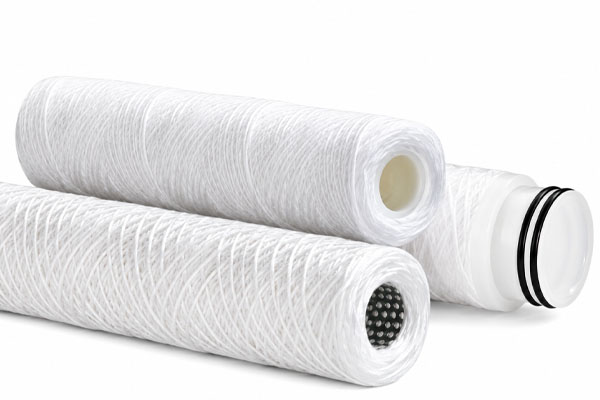
- Smooth, cleanable surface: The septum must release the spent precoat layer during backwashing without resin embedment. Pleated polymer or wrapped wire (316L SS) are standard constructions.
- Mechanical strength: Must withstand repeated backwash flow reversal and pressure spikes without deforming or collapsing. Spring-core or rigid frame construction is typical.
- No fiber migration: Any fibers shed from the septum contaminate the ultrapure condensate. Fully sintered, thermally bonded, or wrapped wire constructions only.
5.3 Dual-Function Septa
Some manufacturers offer dual-function septa (e.g., Graver DualGuard) that combine a precoatable outer surface (coarse) with an inner fine pleated layer (1–3 µm). The coarse outer layer supports the powdered resin precoat, while the inner layer provides backup filtration for any resin fines or crud that penetrate the precoat.
Advantages: Better crud removal and resin fines retention than a single-layer septum.
Disadvantages: Higher cost, more complex to backwash (the inner pleated layer can blind over time and requires periodic replacement).
5.4 Septum Micron Rating: Do Not Over-Filter
Common mistake: Specifying a 1 µm or 3 µm septum in a precoat polisher. The fine pores blind immediately when the powdered resin is applied, preventing precoat formation. The resin particles bridge across the surface instead of depositing uniformly, causing high DP and poor performance.
Correct approach: Follow the precoat polisher manufacturer’s specification — typically 10, 20, or 40 µm nominal for the septum. The powdered resin layer (which is 50–100 µm particles packed together) provides the effective filtration down to sub-micron levels.
6. Resin Fines Filtration (Downstream Protection)
Plants using deep-bed ion exchange polishers sometimes experience resin fines carryover — broken resin beads or attrited resin particles (100–500 µm) that escape the resin vessel and enter the boiler feedwater. Resin fines can foul boiler tubes, block economizer passages, and damage feedwater pumps.
6.1 Causes of Resin Fines
- Mechanical attrition: Resin beads break due to repeated backwash, hydraulic shear, or impact against vessel internals.
- Osmotic shock: Rapid concentration or temperature changes cause resin beads to crack.
- Chemical degradation: Oxidizing agents (dissolved oxygen, chlorine from condenser leaks) degrade resin polymer, weakening beads.
- Poor-quality resin: Low-grade or aged resin is brittle and generates more fines.
6.2 Resin Fines Filter Specification
Location: Immediately downstream of the ion exchange polisher, before the boiler feedwater pump.
Micron rating: 10–25 µm nominal (typical). Resin beads are 300–1200 µm when whole; broken fines are 100–500 µm. A 25 µm filter retains the bulk of fines without excessive DP. Finer filtration (5 µm) is sometimes used but blinds faster.
Material: Polypropylene pleated (if condensate temperature <80 °C) or sintered stainless steel (if higher temperature or backwashable operation desired).
Flow rate: Resin fines are intermittent, not continuous. The filter sees carryover during resin regeneration, upsets, or when resin quality is poor. Size for full condensate flow but expect low DP most of the time (resin carryover is typically <1 ppm by volume).
Monitoring: Install a DP indicator or transmitter. A sudden DP rise indicates resin carryover — investigate the polisher (resin bed damage, underdrain failure, channeling).
7. Filter Sizing and Flow Rate
Condensate filter sizing is governed by flow rate, crud loading, and acceptable DP (differential pressure).
7.1 Sizing Methodology
Step 1: Determine condensate flow rate
- Typical power plant: 1–3 times the steam flow rate (accounting for makeup and blowdown). A 500 MW plant with 400 tonnes/h steam production may have 450–600 m³/h (2,000–2,600 gpm) condensate flow (typical).
Step 2: Select micron rating (based on crud characteristics and purity requirement, see §2)
Step 3: Estimate clean DP from manufacturer’s flow vs DP curves
- A 30 in (762 mm) long × 2.75 in (70 mm) diameter pleated cartridge at 3 µm, flowing 10 m³/h (44 gpm), typically has 0.2–0.5 bar (3–7 psi) clean DP (typical, manufacturer data).
- Scale DP by flow rate squared: if DP at 10 m³/h is 0.3 bar, then DP at 20 m³/h is ~1.2 bar.
Step 4: Calculate number of cartridges
- Target clean DP: 0.3–0.7 bar (5–10 psi) (typical design practice).
- Terminal DP (end of life or backwash trigger): 2–3 bar (30–45 psi) for disposable; 1.5–2 bar (22–30 psi) for backwashable.
- If total flow is 600 m³/h and each cartridge handles 10 m³/h at acceptable DP, you need 60 cartridges.
Step 5: Add safety margin
- Install 10–20% more cartridges than calculated to allow for fouling and future flow increases.
7.2 High-Flow Cartridge Considerations
For very high condensate flow rates (>1,000 m³/h), consider high-flow filter cartridges:
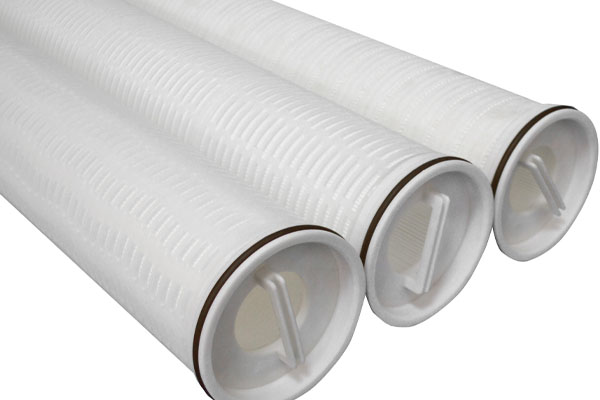
- 6 in (152 mm) diameter, 40–60 in (1016–1524 mm) length sintered stainless steel or pleated media
- Flow capacity: 40–100 m³/h (175–440 gpm) per cartridge at 0.5 bar DP (typical)
- Reduces the number of cartridges and vessels required
- Standard in large fossil or nuclear plants
8. ECOFILTRONE Condensate Polishing Filter Cartridges
ECOFILTRONE Sintered Stainless Steel Filter Cartridge (316L)
Absolute-rated sintered porous 316L stainless steel, backwashable, zero fiber migration. Available in 1, 3, 5, 10 µm absolute ratings. Lengths: 10, 20, 30, 40 inches (254–1016 mm). DOE or SOE end caps. Temperature rating: 150 °C continuous, 200 °C short-term. For high-temperature condensate polishing, feedwater heater drain filtration, and long-life backwashable service in power plants. Typical service life: 2–5 years with periodic backwashing.
→ View specifications and backwash protocolsECOFILTRONE High-Temperature Pleated Polypropylene Cartridge
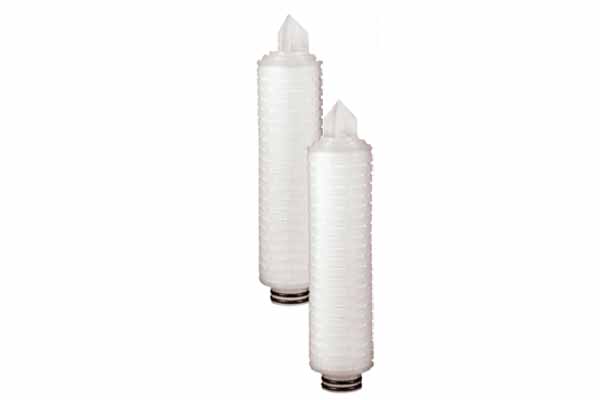
PTFE-reinforced polypropylene pleated media, thermally bonded (no adhesives), low extractables. Available in 1, 3, 5 µm absolute ratings. Lengths: 10, 20, 30, 40 inches. DOE end caps, EPDM or Viton seals. Temperature rating: 100 °C continuous. For condensate polishing at 80–100 °C where stainless steel cost is prohibitive. Disposable or short-cycle backwashable (5–10 cycles typical before replacement).
→ View specifications
ECOFILTRONE provides crud retention efficiency data (beta ratio vs particle size), clean and terminal DP curves, backwash protocol recommendations, and material extractables certificates (TOC, ionic leachables) for all condensate polishing cartridges. Custom lengths and end cap configurations available for OEM condensate polisher retrofits (Pall, Graver, Siemens, GE legacy systems).
9. Common Condensate Filtration Problems
Problem 1: Rapid DP rise and short filter life
Causes:
- Crud loading higher than design (condenser leaks, corrosion upsets, startup transients)
- Filter micron rating too fine (1 µm where 3 µm would suffice)
- No pre-filtration upstream (gross debris reaching the fine filter directly)
Solutions:
- Install online crud monitors (iron meters, turbidity meters) to track condensate quality and identify upsets
- Add a coarse pre-filter (5–10 µm) upstream of the fine filter (1–3 µm)
- Switch to backwashable cartridges if crud loading is consistently high
- Address root cause: fix condenser tube leaks, improve oxygen scavenger dosing, repair air in-leakage
Problem 2: Cartridge fails (tears, collapses) during backwash
Causes:
- Cartridge not designed for backwash duty (standard disposable cartridge in a backwash application)
- Backwash flow rate or pressure too high, exceeding cartridge mechanical rating
- Cartridge media embrittled by temperature or chemical exposure
Solutions:
- Specify backwash-rated cartridges with reinforced construction (spring-core support, rigid frame)
- Verify backwash flow rate does not exceed manufacturer’s limit (typically 1.5–2× service flow max)
- Replace polymer cartridges more frequently in high-temperature service (they degrade over time)
Problem 3: Resin fines carryover to boiler feedwater despite polisher filtration
Causes:
- No downstream resin fines filter installed
- Downstream filter too coarse (50 µm where 25 µm is needed)
- Bypass around the filter due to housing O-ring failure or cartridge seal leak
Solutions:
- Install a 10–25 µm resin fines filter immediately downstream of the ion exchange polisher
- Perform integrity testing (bubble point or visual inspection) on filter housings to confirm no bypass
- Monitor boiler feedwater for resin (visual inspection of economizer inlet screens, or lab analysis for organic carbon)
Problem 4: Extractables or fiber migration from filters detected in ultrapure condensate
Causes:
- Filter material not suitable for ultrapure water (cellulose, cotton, adhesive-bonded media)
- Filter not properly flushed before service (manufacturing oils, preservatives)
- Polymer filter degrading due to temperature, oxidizer exposure, or age
Solutions:
- Use only validated low-extractable filter media: sintered stainless steel (zero organics), thermally bonded polypropylene, or PTFE (no adhesives, no fiber shedding)
- Follow manufacturer’s pre-use flush protocol (typically 20–50 L/m² membrane area with ultrapure water)
- Replace polymer filters at or before the rated service life (do not extend beyond manufacturer’s recommendation in ultrapure service)
10. Frequently Asked Questions
What micron rating should I use for condensate filtration?
1 µm absolute is standard for high-purity condensate polishing where ultrahigh water quality is required (cation conductivity <0.1 µS/cm, iron <2 ppb). 3 µm absolute is used in moderate-purity applications or where flow rate and service life are prioritized over ultimate purity. 5 µm is used for pre-filtration or in plants with lower purity requirements. Match the rating to your crud particle size distribution (see §2.2) and water quality targets.
Should I use backwashable or disposable cartridges?
Backwashable (sintered stainless steel) if:
- Crud loading is high (>200 ppb iron in raw condensate)
- You want long service life (2–5 years) and low cartridge replacement cost
- You have backwash infrastructure (parallel vessels, backwash valves, waste handling)
- Condensate temperature >100 °C (stainless steel may be the only option)
Disposable (polypropylene pleated) if:
- Crud loading is low (<50 ppb iron)
- Plant is small (<100 MW) or intermittent duty (frequent shutdowns)
- You want simple operation (no backwash complexity)
- Condensate temperature <80 °C (where PP is cost-effective)
What is the difference between a condensate filter and a precoat septum?
A condensate filter (1–5 µm absolute) removes crud and protects downstream ion exchange resin in a deep-bed polisher. It performs the filtration itself.
A precoat septum (10–40 µm nominal) in a Powdex-style polisher is a structural support for powdered resin. The resin layer (not the septum) does the filtration and ion exchange. The septum must be coarse to avoid blinding during precoat formation. Do not confuse the two — specifying a 1 µm septum in a precoat polisher will fail.
Can I use polypropylene cartridges at 100 °C?
Standard polypropylene is rated to 80 °C maximum. PTFE-reinforced polypropylene or glass-fiber composite cartridges can reach 100–120 °C depending on construction. Above 120 °C, sintered stainless steel (316L) is the only reliable option (rated to 150 °C continuous, 200 °C short-term). Always confirm the manufacturer’s temperature rating and add a safety margin (don’t operate at the absolute limit).
How often should I backwash a condensate filter?
Backwash when differential pressure (DP) reaches 1.5–2 bar (22–30 psi) or on a time-based schedule (every 24–72 hours) as preventive maintenance (typical). The optimal frequency depends on crud loading: high-loading plants may backwash daily; low-loading plants may go weeks between backwashes. Monitor DP trends to optimize the schedule.
What is the difference between nominal and absolute micron ratings for condensate filters?
Nominal rating (e.g., "5 µm nominal") means the filter removes "most" particles larger than 5 µm, but the efficiency is not tightly controlled — it may be 60–90% retention depending on the media (typical). Used for coarse pre-filtration or precoat septa.
Absolute rating (e.g., "3 µm absolute") means the filter removes ≥99.9% of particles larger than 3 µm (beta ratio ≥1000 by ISO 16889 or similar test). Used for final condensate polishing where high purity is required. Always specify absolute for condensate polishing protection filters.
How do I size a condensate filter for a 500 MW power plant?
Example sizing:
- Condensate flow: assume 500 m³/h (2,200 gpm) for a 500 MW fossil plant (typical)
- Select 3 µm absolute pleated cartridge, 30 in length, 2.75 in diameter
- Each cartridge handles ~10 m³/h at 0.5 bar DP (typical manufacturer data)
- Number of cartridges required: 500 ÷ 10 = 50 cartridges
- Add 20% margin: install 60 cartridges
- Housing configuration: 3 parallel vessels × 20 cartridges each (allows one vessel offline for maintenance while two remain in service)
Consult filter manufacturer for specific flow-vs-DP curves and confirm with your condensate chemistry (crud loading, temperature) for final sizing.
Do I need a resin fines filter downstream of my condensate polisher?
Yes, if you use deep-bed ion exchange resin. Resin bead attrition generates fines (broken resin particles 100–500 µm) that can escape the polisher and reach the boiler feedwater. Install a 10–25 µm nominal filter downstream of the polisher to catch carryover resin before it fouls boiler tubes or economizer passages. This is standard practice in most power plants.
No, if you use a precoat polisher (Powdex-style). Powdered resin is continuously fed and discarded; there is no bead attrition or carryover issue (the septum retains the powdered resin).
11. Conclusion
Filter cartridge selection for condensate polishing in steam power plants requires matching the filtration technology to the polishing system architecture (deep-bed ion exchange vs precoat), the crud characteristics (0.5–5 µm iron oxide), and the operating conditions (40–150 °C temperature, 400–2,000 m³/h flow rate). Micron ratings of 1–3 µm absolute are standard for ion exchange resin protection, while 10–40 µm nominal septa support powdered resin in precoat polishers.
Material selection is governed by temperature: polypropylene to 80 °C, PTFE-reinforced composites to 100–120 °C, and sintered stainless steel (316L) for 120–150 °C and beyond. Backwashable stainless steel cartridges offer 2–5 year service life and dramatic reductions in operating cost in high-crud-loading environments, while disposable polypropylene cartridges provide simple, low-capital-cost filtration for low-loading or small plants.
Precoat polisher septa must be coarse (10–40 µm) to avoid blinding during resin layer formation — specifying a fine (1 µm) septum in a precoat system is a common mistake that guarantees failure. Resin fines filters (10–25 µm nominal) downstream of deep-bed polishers protect the boiler feedwater system from carryover resin and are standard practice in most plants.
Zero fiber migration, zero extractables, and validated performance under ultrapure water conditions are non-negotiable requirements. Use only sintered stainless steel (no binders), thermally bonded polypropylene (no adhesives), or validated low-extractable membranes. Pre-use flushing and integrity testing are standard commissioning procedures.
Author: [name and role — to be supplied]
Technically reviewed by: [reviewer name and credentials — to be supplied]
Published: 2026-08-20 · Last reviewed: 2026-08-20
Need Help Selecting Condensate Polishing Filter Cartridges?
If you are specifying filters for a power plant condensate polishing system, share your system type (deep-bed vs precoat), condensate flow rate, temperature, crud loading (iron concentration), and whether backwashable or disposable cartridges are preferred.
ECOFILTRONE will provide crud retention efficiency data (beta ratio), flow-vs-DP curves, backwash protocol recommendations, and material extractables certificates (TOC, ionic leachables) for your specific condensate chemistry and operating conditions.
WhatsApp: +86 131 8896 2285
Sources: Graver AFA backwashable condensate filters · Graver Powdex precoat polisher · Graver DualGuard dual-function septa · Pall condensate polishing systems · Pall Hydro-Guard Cold R specifications · Power Engineering: Condensate polishing deep-bed systems · EngineerFix: How condensate polishing systems work