The increased pressure differential in summer is not a problem with a single filter cartridge, but rather a balance issue resulting from changes in system load.
Recently, we have received many customer feedback reports regarding increased raw water contaminants with the arrival of high summer temperatures.
For example:
→ Increased TEP/algae/colloids/organic matter/biological slime
→ Increased UF or pretreatment load
→ Accelerated clogging of the security filter surface
→ Increased ΔP
→ Shorter filter cartridge lifespan, increased RO risk.
The solution is not simply to replace with finer filter cartridges, but rather to improve system stability by strengthening pretreatment contaminant control and the high contaminant-holding capacity of the security filter.
- Upstream Control: Strengthen pretreatment monitoring and prevention: SDI, turbidity, algae, TEP trends, flocculation/sterilization/backwashing strategies. Reduce contaminants entering the security filter.
For example: Optimize coagulation and flocculation
Enhance algae control
Monitor SDI and turbidity changes
Pay attention to UF operating status
- Cartridge Defense
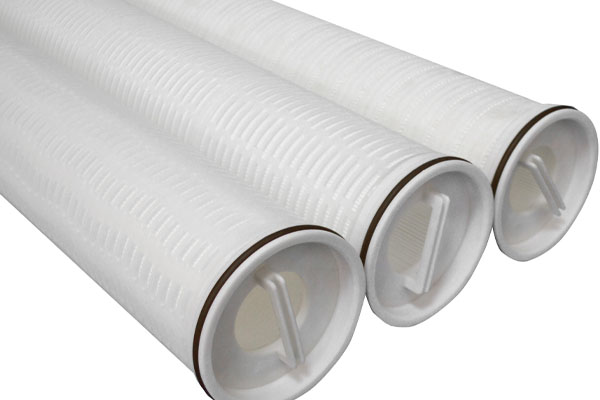
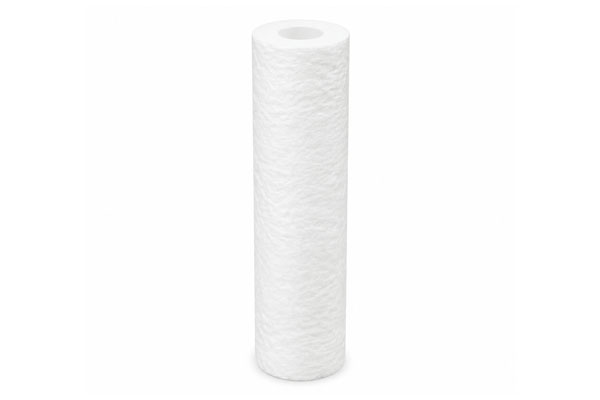
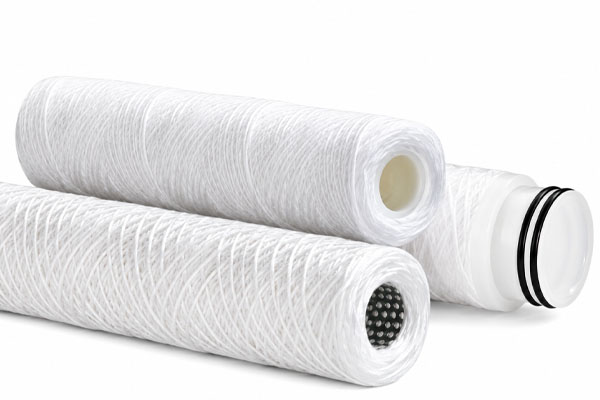
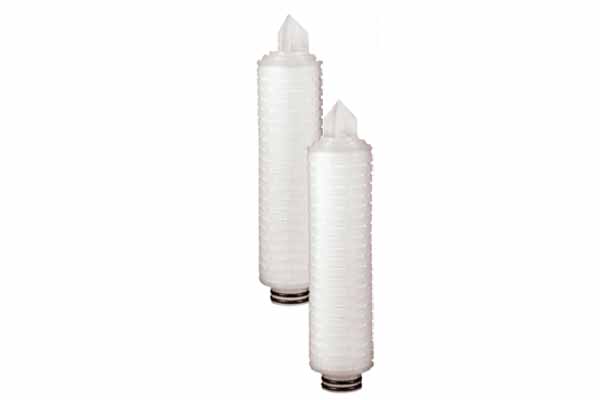
Security filters use higher dirt-holding capacity, gradient deep-layer structure cartridges to delay surface clogging and stabilize ΔP growth. Improve the system’s tolerance to raw water fluctuations.
For example: Gradient density structure
Deep dirt-holding structure
Larger filtration area
More stable ΔP growth curve
*Outer layer coarse pore size, inner layer fine pore size gradient density structure
Function:
Layered trapping of contaminants
Delayed surface clogging
Increased dirt-holding capacity
Reduced ΔP growth rate
*Larger filtration area means:
Lower surface velocity
More uniform flow distribution
Lower initial pressure differential
Longer operating cycle
This is also an important reason why many SWRO projects are switching from ordinary cartridges to high-flow cartridges.