🌊 TFF vs. Dead-end Filtration: Choosing the Right Method for Industrial Water Treatment
Headline: 🌊 Tangential Flow (TFF) vs. Dead-End Filtration: Understanding the Physics of Separation
In the world of industrial filtration, there are two fundamental operating modes. Choosing the wrong one is the fastest way to crash your process efficiency.
We have Dead-End Filtration (DEF), which is like a traffic jam.
And Tangential Flow Filtration (TFF), which is like a highway exit.
Conclusion: Although TFF is suitable for biopharmaceuticals, high-flow industrial pretreatment mainly relies on Dead-end
What is the difference, and which one does your process actually need? Let’s dive into the fluid dynamics.
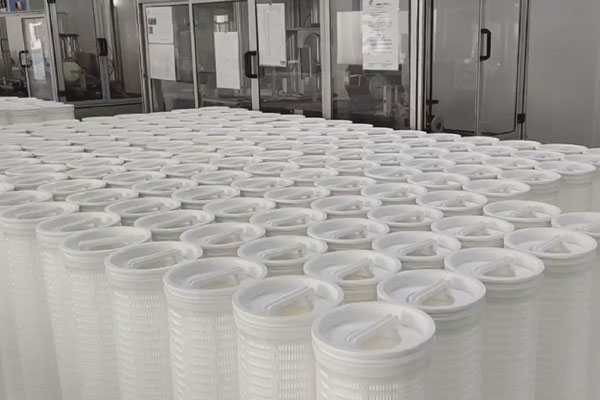
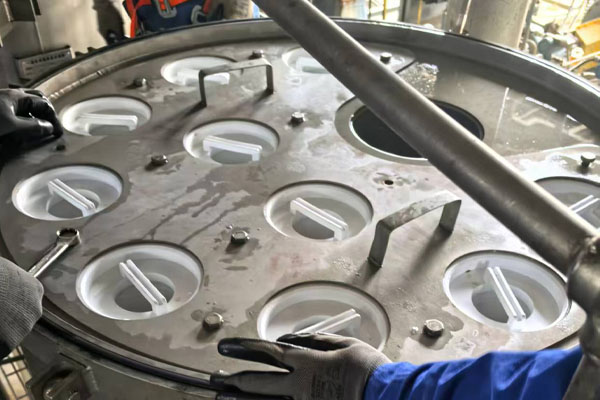
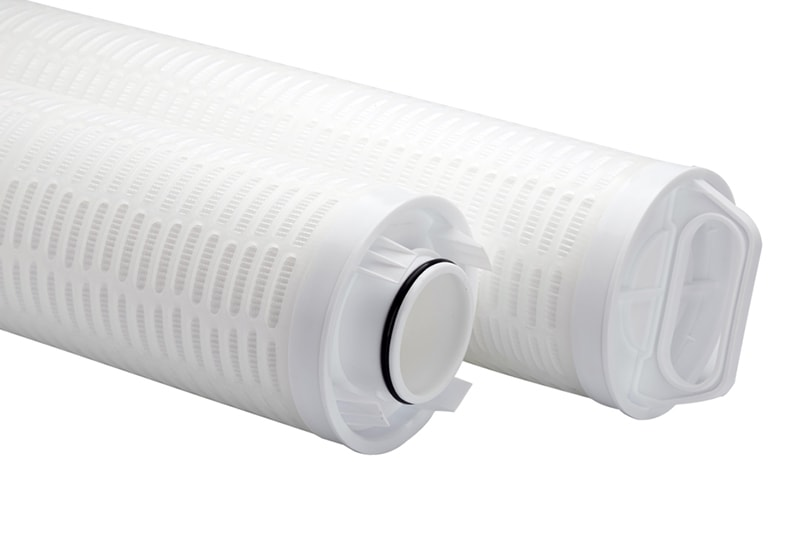
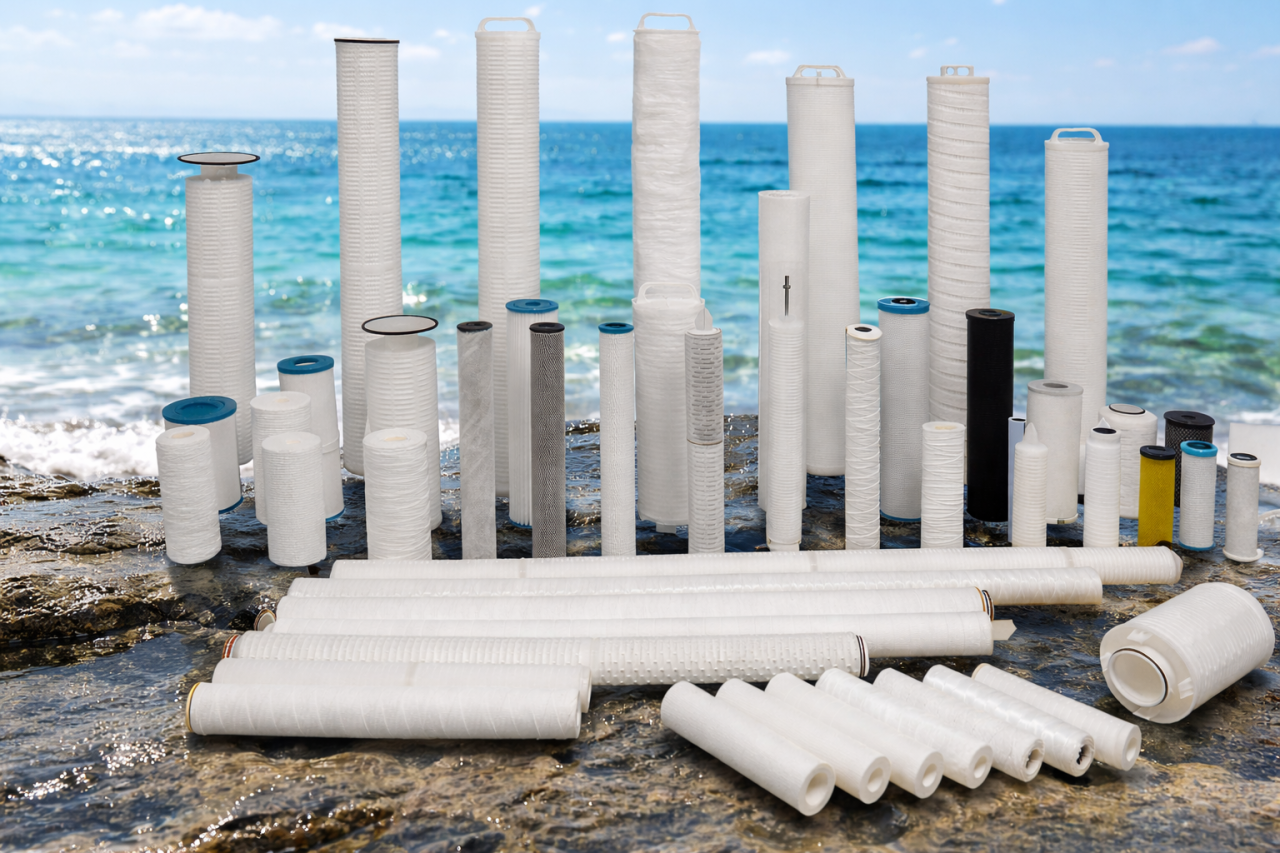
“Looking for high-efficiency Dead-end Filtration? Check out Ecofiltrone High-Flow Series
1. Dead-End Filtration (The "Coffee Filter" Method)
Also known as Normal Flow Filtration (NFF).
-
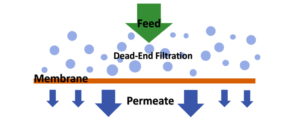
How it Works: The feed stream flows perpendicular ($\bot$) to the filter surface. 100% of the fluid attempts to pass through the membrane.
-
The Physics: As particles are stopped, they build up a "filter cake" on the surface.
-
The Consequence: As the cake grows, the flow rate drops, and the pressure rises. Eventually, the filter plugs completely and must be replaced or backwashed.
-
Best For: "Polishing" applications where the concentration of solids is low (e.g., final water bottling, sterile filtration). You want to remove the trace contaminants and throw the filter away.
2. Tangential Flow Filtration (The "Self-Cleaning" Method)
Also known as Cross-Flow Filtration.
-
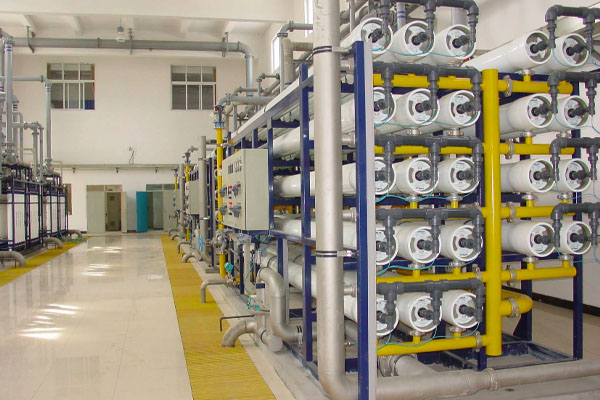
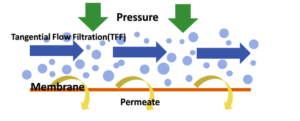
How it Works: The feed stream flows parallel ($\parallel$) to the filter surface at high velocity. Only a portion of the liquid passes through (Permeate), while the rest (Retentate) continues to sweep across the membrane surface.
-
The Physics: The high-velocity flow creates "shear force" that constantly scours the membrane surface. This prevents the filter cake from building up.
-
The Consequence: You can process fluids with very high solid loads without the filter blocking immediately. The fluid recirculates until the desired concentration is reached.
-
Best For: High-solid fluids, fermentation broths, concentration processes, and continuous manufacturing.
3. Comparison: The Decision Matrix
| Feature | Dead-End Filtration (DEF) | Tangential Flow Filtration (TFF) |
|---|---|---|
| Flow Direction | Perpendicular ($\bot$) to media | Parallel ($\parallel$) to media |
| Filter Cake | Builds up rapidly (blocking) | Minimized by shear force (sweeping) |
| Throughput | Limited by surface area | Limited by time/recirculation |
| Complexity | Simple (In $\rightarrow$ Out) | Complex (Pumps, Loops, Valves) |
| CAPEX | Low | High (requires more equipment) |
| OPEX (Consumables) | High (if solids are high) | Low (membranes last longer) |
4. Which One Do You Need?
- Choose Dead-End if your fluid is relatively clean (e.g., tap water, solvents) and you just need to capture rare particles. It is the economical choice for low-load fluids.
- Choose Tangential Flow if your fluid is "soup-like" (e.g., biomass, starch, heavy slurry) or if you need to separate two liquids/molecules. If you try to put a fermentation broth through a dead-end filter, it will block in seconds.
Conclusion
Filtration is not just about pore size; it is about Flow Dynamics.
Dead-End is a Trap.
Tangential Flow is a Process.
Understanding the nature of your feed stream is the first step to designing a system that doesn’t just work, but lasts.
👇 Discussion: Have you ever clogged a Dead-End filter because the solid load was unexpectedly high?
The button for "Get cross-reference Guide for Free"
https://ecofiltrone.com/cross-replacement/