Worried about your expensive RO membranes failing early? Constant clogging causes downtime and high costs. The right high-flow pre-filter is the simple solution to protect your investment.
A truly effective RO pre-filtration system isn’t just about using the finest filter. It’s about matching the filter’s micron rating and media type to the specific contaminants in your feed water, like silt density index (SDI), to maximize membrane life and reduce operational costs.
I’ve seen many project managers focus only on the micron number. They think smaller is always better. But my experience over 10 years in this industry tells a different story. The details are what truly protect your RO system. Let’s break down the most common questions I get from engineers just like you.
What micron rating is ideal before RO membranes?
Confused by all the micron rating options for pre-filters? Choosing the wrong one can either clog your pre-filter too fast or fail to protect the RO membrane. Let’s clarify the industry standard.
For most reverse osmosis (RO) systems, a nominal rating of 5 microns is the industry standard for pre-filtration. This provides a crucial balance, effectively removing most suspended solids that can foul membranes without causing the pre-filter to clog prematurely, which would increase operational costs.
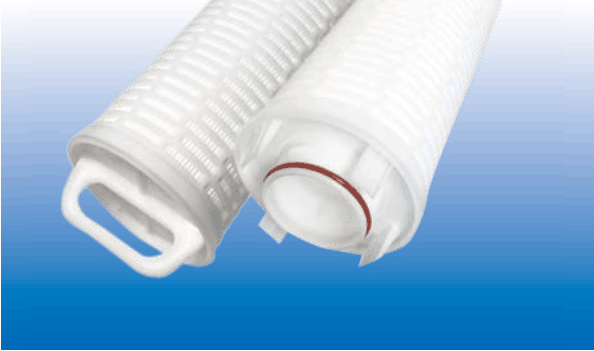
The 5-micron rule is a great starting point, but it’s not the complete picture. The real goal is to protect the downstream RO membranes from fouling, and this depends entirely on the quality of your feed water. My main insight is that you must match the filter to the type of pollutant, not just chase the smallest number.
Beyond the 5-Micron Rule
A 5-micron nominal rated filter might capture 85% of particles at that size. An absolute rated filter will capture 99.9% or more. For critical applications, understanding this difference is key. However, the most important metric is the Silt Density Index (SDI), which measures the water’s fouling potential. Your pre-filter’s job is to get the SDI value below the level required by the membrane manufacturer, which is typically less than 5, and ideally less than 3.
When to Adjust
If your source water is very clean (low SDI), a 5-micron filter is perfect. If the water is very dirty (high SDI), a single 5-micron filter will clog up in hours. In that case, a two-stage approach might be better. You could use a 20-micron filter first to catch the big particles, followed by a 5-micron filter to do the fine-tuning. This protects the final filter and extends its life, saving you money on replacements.
| Feed Water Quality | SDI Value | Recommended Pre-Filtration Strategy |
|---|---|---|
| High Quality (e.g., well water) | < 3 | Single-stage 5-micron nominal filter |
| Medium Quality (e.g., surface water) | 3 – 5 | Single-stage 5-micron absolute filter |
| Low Quality (e.g., wastewater) | > 5 | Two-stage: 10-20 micron followed by 5-micron |
Should you choose polypropylene or glass fiber media?
Unsure whether to pick polypropylene (PP) or glass fiber (GF) media? This choice directly impacts filtration efficiency, filter life, and your budget. Here’s a simple way to decide.
Choose polypropylene (PP) for general water treatment and cost-effectiveness, as it offers broad chemical compatibility. Opt for glass fiber (GF) when you need higher dirt-holding capacity and better efficiency for removing finer particles, especially gelatinous or colloidal substances. GF often provides a longer service life.

As a manufacturer, we work with both materials every day. The decision between them comes back to my central point: you must match the filter media to the type of contaminant you are trying to remove. One is not simply "better" than the other; they are engineered for different jobs.
The Case for Polypropylene (PP)
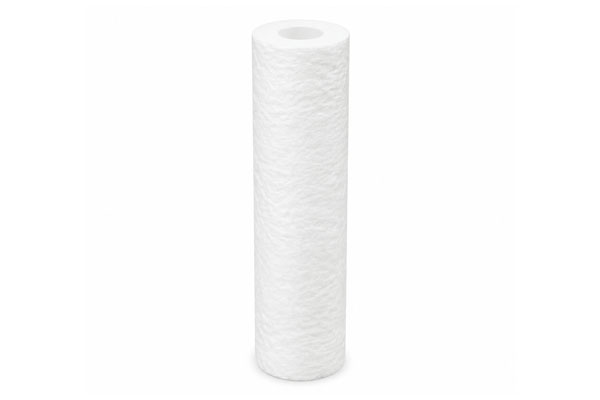
Polypropylene is the workhorse of the industry. It’s a depth media, meaning it has a complex matrix of fibers that trap particles throughout the filter’s depth. This makes it excellent for removing hard, crystalline particles like sand and silt. It’s also very cost-effective and has great chemical compatibility, making it the default choice for many standard applications, including most seawater RO pre-filtration projects we supply.
When Glass Fiber (GF) Excels
Glass fiber media has a different structure. It has finer fibers and can offer higher void volume. This gives it a huge advantage when dealing with soft, deformable particles like biological matter or colloids. These "squishy" contaminants can easily squeeze through PP media, but they get trapped more effectively by GF. This means GF filters have a higher dirt-holding capacity and can achieve better efficiency, especially at smaller micron ratings. They often last longer, which can offset their higher initial cost.
| Feature | Polypropylene (PP) | Glass Fiber (GF) |
|---|---|---|
| Best For | Hard, crystalline particles (sand, silt) | Soft, gelatinous particles (bio-fouling) |
| Structure | Depth Media | High Void Volume Media |
| Cost | Lower | Higher |
| Service Life | Good | Excellent |
| Common Use | General RO Pre-filtration | High-purity or problematic water |
What is the impact of SDI on filter selection?
Hearing about Silt Density Index (SDI) but not sure how it affects your filter choice? Ignoring SDI can lead to rapid membrane fouling, no matter how good your pre-filter is.
Silt Density Index (SDI) directly dictates your pre-filtration strategy. A high SDI (>5) indicates a high potential for membrane fouling and may require multi-stage filtration or a tighter micron rating. A low SDI (<3) means a standard 5-micron filter is likely sufficient.
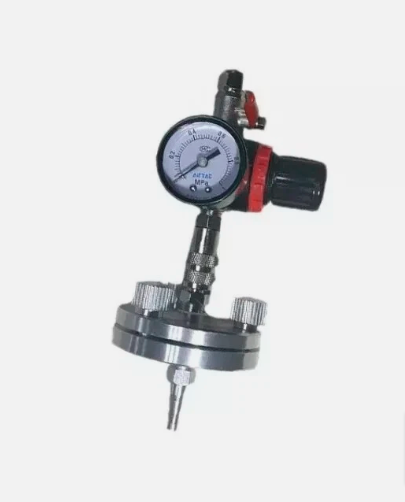
For any project manager responsible for an RO system, SDI is the most important number to know about your feed water. It’s more important than turbidity or total suspended solids (TSS). Why? Because SDI specifically measures the "sticky" stuff—the fine colloidal particles that are the main cause of irreversible membrane fouling.
What SDI Really Tells You
The SDI test is simple. It measures how quickly a 0.45-micron test filter clogs when feed water is passed through it under constant pressure. A high number means it clogs fast, indicating your water has a high fouling potential. This tells you exactly what your pre-filtration system needs to accomplish. The goal isn’t just to make the water look clear; it’s to reduce its ability to foul the RO membranes. This is the ultimate measure of your pre-filter’s performance.
Matching Filters to SDI Values
All major RO membrane manufacturers, like Dow or Toray, will void their warranty if the feed water SDI is too high. They demand an SDI of less than 5, and for many newer membranes, they require an SDI of less than 3. Your entire pre-filtration system, from media filters to cartridge filters, must be designed to meet this target. When a client sends us their water analysis, the first thing I look for is the SDI. It tells me whether a standard filter will work or if we need a more robust, multi-stage solution to protect their expensive assets.
| SDI Measurement | Fouling Potential | Recommended Action |
|---|---|---|
| SDI < 3 | Low | Standard pre-filtration is adequate. |
| SDI 3 – 5 | Moderate | Requires high-efficiency absolute-rated filters. |
| SDI > 5 | High | Pre-treatment is insufficient; system upgrade needed. |
How does flow direction affect filtration efficiency?
Does it matter if the flow is inside-to-outside or outside-to-inside? It absolutely does. The wrong flow path can reduce filter life and even release trapped contaminants.
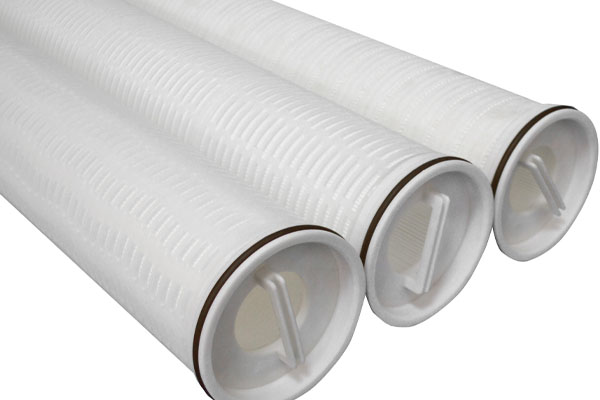
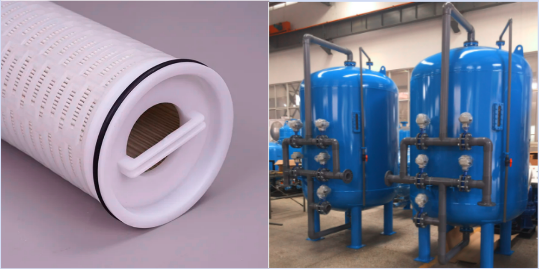
For pleated high-flow cartridges, the standard and most efficient flow direction is outside-to-inside. This design utilizes the entire pleated surface area for capturing contaminants, maximizes dirt-holding capacity, and ensures that trapped particles are securely contained within the filter element during pressure fluctuations.
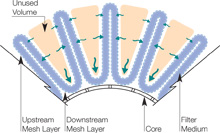
The physical design of a filter cartridge is just as important as the media it’s made from. At our ecofiltrone facility, we have five automated production lines dedicated to high-flow cartridges, and they are all engineered around a core principle: optimizing flow dynamics for maximum performance and reliability.
Why Outside-to-Inside is Standard
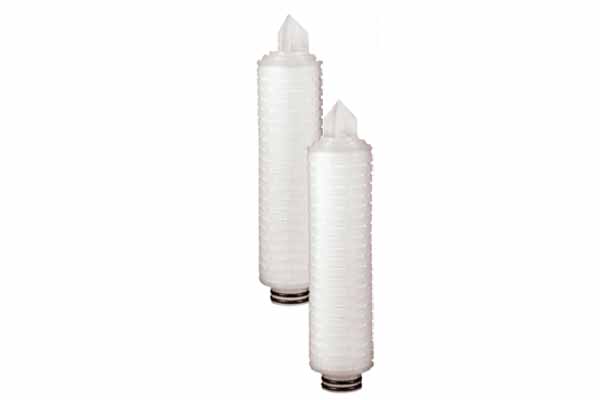
Think about the structure of a pleated cartridge. It has a huge amount of surface area folded up into a small space. With an outside-to-inside flow path, the incoming water meets this large surface area first. Contaminants are distributed evenly across the entire media, which leads to a gradual increase in pressure drop and a much longer service life. The filtered water then flows to the center and exits. The rigid inner core provides crucial support against the system’s operating pressure, preventing the pleats from collapsing.
The Risk of Incorrect Flow
If you were to reverse the flow (inside-to-outside), you would force all the water through the small space inside the core first. The contaminants would immediately clog this small area, causing the pressure to spike rapidly. The filter’s life would be extremely short. Furthermore, the flow would be pushing the delicate pleated media away from its support core. A sudden pressure surge could tear the media or release a burst of previously trapped contaminants downstream, which could instantly damage an RO membrane. This is why our housings and cartridges are designed to work together for outside-to-inside flow.
What certifications are required for seawater applications?
Worried if your filters meet the strict standards for drinking water or desalination? Using non-certified components can lead to project rejection or even health risks. Knowing the key certifications provides peace of mind.
For seawater applications, especially those producing potable water, certifications are non-negotiable. Key standards include NSF/ANSI 61, which ensures materials are safe for drinking water contact, and ISO 9001 for the manufacturing process, which guarantees consistent quality control and product traceability.
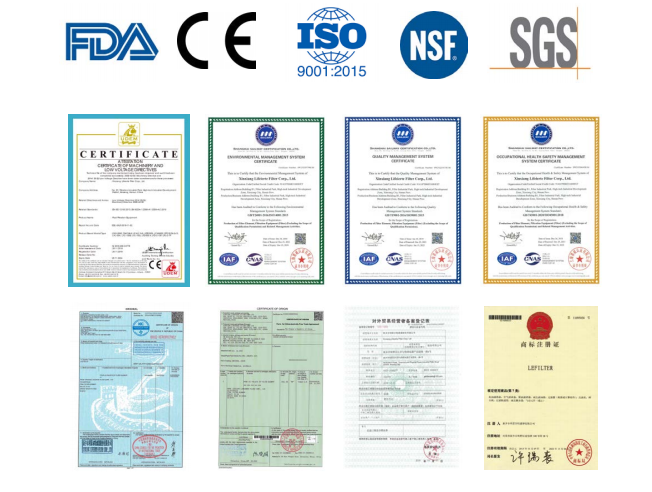
When we supply large-scale projects, like the AWPT project in Saudi Arabia or municipal water systems in the United States, our clients aren’t just buying a filter. They are buying a guarantee. Certifications are the proof behind that guarantee. They are independent verifications that our products are safe, reliable, and made to a consistent, high standard.
NSF/ANSI 61: The Drinking Water Standard
This is the most important certification for any component that touches drinking water. It ensures that no harmful chemicals can leach from the filter’s materials—the polypropylene, the end caps, the O-rings—into the water supply. It’s a health and safety standard. For any desalination or municipal project, not having NSF/ANSI 61 is an immediate disqualification. We ensure our materials and processes meet this strict standard.
ISO 9001: The Quality Management Promise
While NSF focuses on the final product’s safety, ISO 9001 focuses on our factory’s process. It certifies that we have a robust Quality Management System. This means we document everything, from raw material inspection to final product testing. It ensures that the high-flow cartridge we make for you today is identical in quality to the one we make next year. For a procurement engineer managing a large plant, this consistency is critical for predictable maintenance schedules and stable operations. It’s our promise of reliability.
Conclusion
Choosing the right RO pre-filter is more than just specs. It’s about understanding your water and matching the filter type to the pollutant, ensuring long-term system health.