Worried about your desalination filters failing in harsh conditions? These failures cause costly shutdowns and risk system-wide contamination. The right filter technology is your only guarantee for reliability.
Enhanced filter technology provides a "heart guarantee" by using advanced materials and a full heat fusion welding process. This creates a robust, monolithic structure that resists chemical attack from high-salinity brine and prevents stress cracking from extreme temperature swings, ensuring uninterrupted operation.
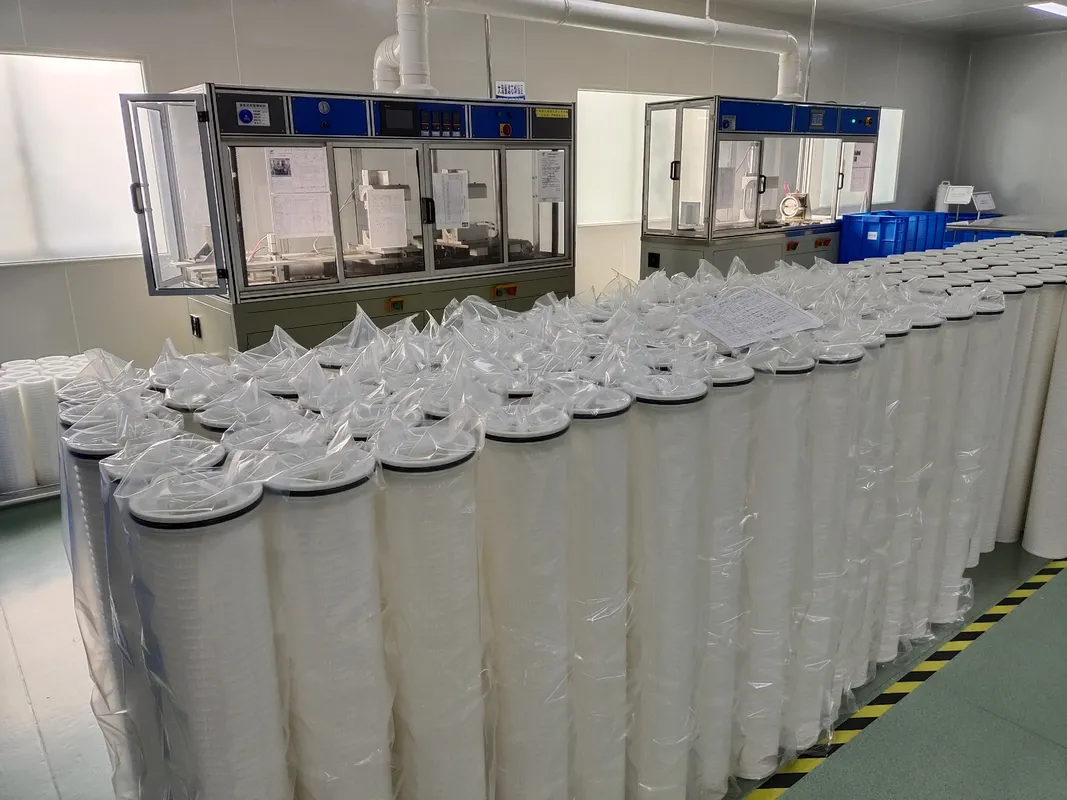
I’ve seen firsthand how standard filters buckle under the pressure of real-world desalination operations, especially in places like the Middle East. The environment is simply too demanding for average solutions. Let’s break down the specific failure points and explore how to build a truly resilient pre-filtration system.
Why is chemical leakage most likely to occur at the bonding area of the filter element end cover in a high-concentration brine environment?
Seeing unexpected leaks from your filter end caps? This isn’t just a small drip. It’s a sign of adhesive failure, a chemical time bomb that threatens your entire process.
High-concentration brine acts as a powerful solvent, aggressively degrading the chemical adhesives used to bond filter end caps. This attack weakens the bond over time, creating a prime location for structural failure, pressure breaches, and critical chemical leakage into your water system.
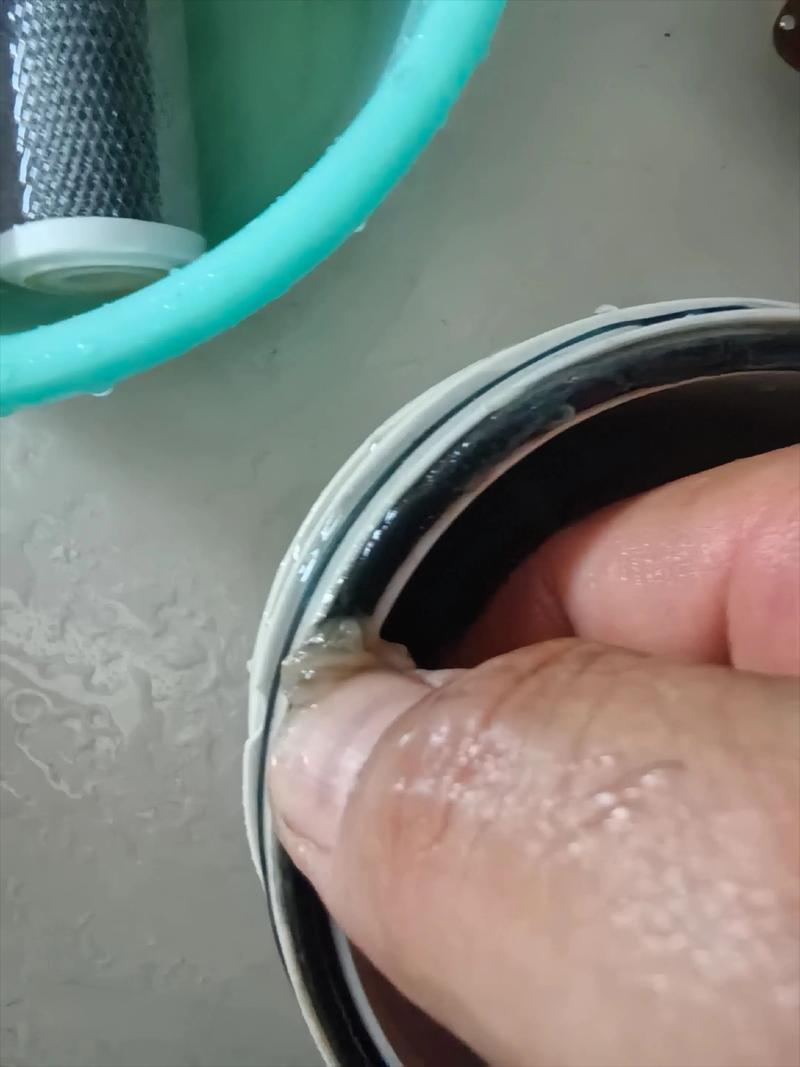
Adhesives are often the Achilles’ heel of a filter cartridge, especially in the unforgiving environment of a desalination plant. The combination of high salinity, constant pressure, and fluctuating temperatures creates a perfect storm for failure right at the end cap bond. At our company, we have studied these failures extensively to engineer a better solution.
The Chemical Assault of Saltwater
High-concentration brine is not neutral. The salt ions, primarily sodium and chloride, relentlessly attack the complex polymer chains that make up most industrial adhesives. This process, known as chemical degradation, is like a slow-motion dissolving of the glue. It’s made worse by the constant flow and pressure inside the filter housing. The adhesive becomes brittle, loses its elasticity, and eventually, its ability to hold the components together. This chemical weakness is the root cause of many unexpected plant shutdowns I have investigated for our clients.
Pressure Points and Failure Modes
The joint between the end cap and the filter body is a point of immense mechanical stress. The pressure difference across the filter media constantly tries to push the end cap off. When the adhesive bond is chemically weakened by the brine, it can no longer withstand this force. The failure is often catastrophic, not a slow leak. This can release not only unfiltered seawater but also particles of the failed adhesive itself. These particles can travel downstream and permanently foul expensive RO membranes, turning a filter problem into a multi-million dollar system failure.
| Feature | Adhesive-Bonded End Cap | Thermally-Welded End Cap |
|---|---|---|
| Bonding Agent | Chemical Glue/Epoxy | None (Melt Fusion) |
| Brine Resistance | Low (Prone to Degradation) | High (Homogeneous Material) |
| Failure Risk | High (Chemical & Pressure Stress) | Extremely Low |
| Contamination Risk | High (Leaching of Adhesives) | None |
How can you solve the problem of stress cracking in filter element plastic components caused by large temperature differences?
Are you finding premature cracks in your filter components? These fractures are caused by temperature swings, compromising filtration integrity and putting your expensive downstream equipment at risk.
To solve stress cracking, you must use materials with high thermal stability, like virgin polypropylene. More importantly, the filter must be built using a thermal welding process. This creates a single, solid piece, eliminating the joints and seams where thermal stress concentrates and causes cracks.
Temperature fluctuation is a silent killer of plastic components in any industrial setting. In desalination plants, where water temperatures can vary with the seasons, tides, or operational cycles, this becomes a critical issue for filter cartridges. We have designed our manufacturing process specifically to overcome this challenge.
The Science of Thermal Stress
All materials expand when they get hot and shrink when they cool down. This is a basic law of physics. In a filter cartridge made of multiple parts joined by glue, this becomes a big problem. The filter cage, the end cap, and the adhesive itself all expand and contract at slightly different rates. This difference creates immense stress right at the bond line, the weakest point of the structure. Over hundreds of cycles of heating and cooling, this repeated stress causes tiny micro-fractures to form. Eventually, these fractures connect and grow into a visible crack, compromising the filter’s integrity. This process is called thermal stress fatigue.
Designing for Durability
Our solution to this problem is twofold. First, we start with a superior material. We only use 100% pure, virgin polypropylene, which has excellent and predictable thermal properties. Second, and most importantly, we eliminate the bonded joint entirely. We use a state-of-the-art ultrasonic welding process that melts the plastic components and fuses them together at a molecular level. The end cap and the filter cage become one single, solid piece of polypropylene. There is no weak point for stress to build up. The entire structure expands and contracts as a single unit, which prevents cracking and guarantees a much longer, safer operational life.
| Construction Method | Stress Concentration | Thermal Cycling Resistance | Service Life in Variable Temps |
|---|---|---|---|
| Glued Components | High (at the bond line) | Low | Short (Prone to Cracking) |
| Welded Components | None (Monolithic Structure) | High | Long (Structurally Stable) |
Why is "full heat fusion welding" the only safety standard for seawater desalination?
You need a filter that offers absolute reliability for your critical desalination project. Relying on glued filters introduces a variable that can, and often does, fail catastrophically.
Full heat fusion welding is the only true safety standard because it creates a seamless, monolithic filter structure without any foreign materials like glues. This process eliminates the risk of chemical leaching and adhesive degradation, guaranteeing 100% structural integrity and process purity for desalination.
In my years in this industry, I have come to a firm conclusion. For critical applications like seawater desalination, reliability is the same thing as safety. This is why I insist on promoting our binder-free, fully welded manufacturing process. Any chemical adhesive, no matter how advanced, is a potential point of failure—a time bomb waiting in a long-term, high-salt environment.
The Zero-Compromise Approach
A glued joint introduces uncertainty. Will it hold up to the next pressure surge? Has it started to degrade from chemical exposure? Could it be leaching unknown chemicals into your pure water stream, potentially damaging your sensitive RO membranes? These are not questions a plant manager should have to ask. A sudden filter failure can lead to unscheduled downtime, which can cost a large plant thousands of dollars per hour. More importantly, it can compromise the quality and safety of the water being produced. Full heat fusion welding removes this uncertainty completely.
Building a Fortress, Not Just a Filter
Our "full heat fusion welding" process uses advanced ultrasonic technology to melt and fuse the polypropylene components. This is not gluing; it is re-forming the plastic into one solid, continuous structure. This monolithic construction provides unmatched strength against pressure, water hammer, and thermal shock. It is the ultimate guarantee that the only thing you are putting into your system is pure filter media and its integral polypropylene support structure. There are no added binders, resins, or glues that could fail or contaminate your process. This is why we consider it the only true safety standard for the demanding world of seawater desalination.
| Aspect | Glued Filter Cartridge | Fully Welded Filter Cartridge |
|---|---|---|
| Structural Integrity | Dependent on adhesive quality and application | Monolithic, as strong as the parent material |
| Risk of Leaching | High (adhesives, solvents can leach) | Zero (no foreign materials added) |
| Long-Term Reliability | Lower (prone to chemical/thermal failure) | Highest (stable and predictable performance) |
| Suitability for RO Pre-filtration | Risky (can foul membranes) | Ideal (protects downstream equipment) |
Conclusion
For absolute reliability in desalination, choose robust materials and demand fully welded construction. This eliminates adhesive failure and stress cracking, protecting your plant’s core and ensuring long-term operational safety.