High Flow vs Standard Cartridge Filters: When Should Industrial Systems Upgrade
If an industrial water system uses too many standard cartridges, operators may face frequent change-outs, high labor cost, large housing footprint and unstable ΔP.
This is common in RO pretreatment, cooling water, process water and large-flow industrial filtration systems.
Standard cartridge filters are still useful in many applications. But when flow demand, maintenance frequency and cartridge quantity become too high, high flow filter cartridges may provide a more efficient solution.
The real question is not simply:
Which filter is bigger?
The better question is:
When does an industrial system need to upgrade from standard cartridges to high flow cartridges?
Quick Answer: What Is the Main Difference?
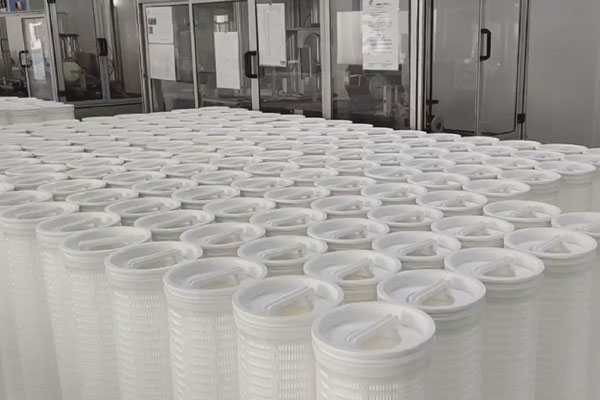
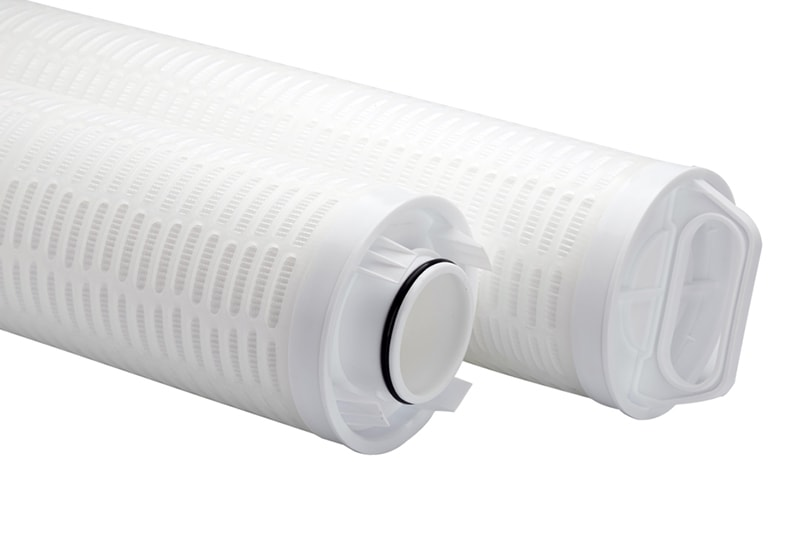
High flow filter cartridges are designed for large-flow industrial systems. They usually have a larger diameter, larger pleated filtration area, higher flow capacity per element and stronger support structure.
Standard cartridge filters are smaller and are more suitable for lower-flow systems, point-of-use filtration, small housings or applications where initial cost and simple replacement are more important.
The main differences are:
- Cartridge diameter
- Effective filtration area
- Flow capacity per element
- Housing size and cartridge quantity
- Dirt holding capacity
- Change-out labor
- Flow direction
- Total cost of ownership
In many industrial systems, a high flow cartridge can replace multiple standard cartridges, depending on cartridge length, micron rating, media type, flow rate and operating condition.
Related High Flow Filter Solutions
If your system is using many standard cartridges with frequent replacement, high ΔP or large housing footprint, it may be time to review whether high flow cartridges are more suitable.
Recommended pages:
- HFL Series High Flow Filter Cartridge
- RO Pretreatment Filtration Solution
- Cooling Water Filtration Solution
- Request a Compatibility Check
How Are High Flow and Standard Cartridges Built Differently?
At first glance, the difference looks simple: one cartridge is larger, the other is smaller.
But this physical difference changes the entire filtration design.
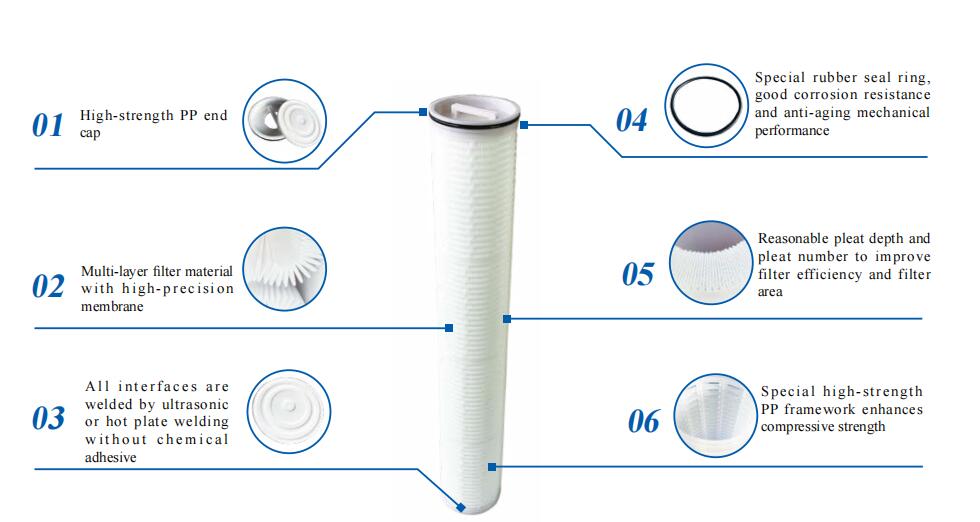
High flow cartridges are typically designed with a large diameter, pleated media structure and reinforced support cage. Standard cartridges are usually smaller and are often used in multi-cartridge housings to achieve higher flow.
Key Construction Differences
| Feature | High Flow Filter Cartridge | Standard Cartridge Filter |
|---|---|---|
| Typical diameter | Large diameter, commonly around 6 inches | Smaller diameter, commonly around 2.5 inches |
| Cartridge length | Commonly 20", 40", 60" or other large formats | Commonly 10", 20", 30", 40" |
| Filtration area | Larger pleated media area per element | Smaller filtration area per element |
| Cartridge quantity | Fewer elements required for large flow | More elements required for large flow |
| Support structure | Reinforced cage and internal support design | Depends on cartridge type and construction |
| Typical use | RO pretreatment, cooling water, process water, large-flow systems | Small to medium-flow filtration and general prefiltration |
The larger diameter and pleated structure allow high flow cartridges to handle more flow per element while reducing the number of cartridges required in the housing.
Flow Direction: Why It Matters
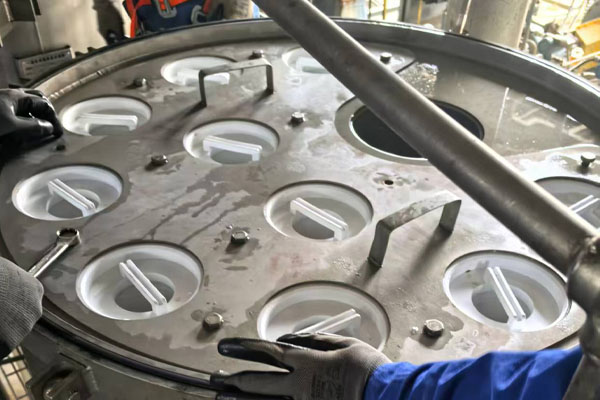
Many high flow cartridge systems use inside-to-outside flow.
In this design, unfiltered fluid enters the center core of the cartridge and flows outward through the media. Captured contaminants remain inside the cartridge core.
This can make cartridge replacement cleaner because the contaminant load is contained inside the used cartridge.
Standard cartridges often use outside-to-inside flow, where contaminants accumulate on the cartridge exterior. This design is common and effective in many general filtration systems, but change-out can be messier when the cartridge surface is heavily loaded.
Flow Direction Comparison
| Item | High Flow Cartridge | Standard Cartridge |
|---|---|---|
| Common flow path | Often inside-to-outside | Often outside-to-inside |
| Contaminant location | Captured inside the cartridge core | Captured on the outer surface |
| Change-out cleanliness | Cleaner removal in many high flow designs | Dirtier cartridge surface during removal |
| Maintenance risk | Lower risk of debris falling into housing | Higher risk if the cartridge surface is heavily loaded |
| Best fit | Critical or large-flow systems where clean change-out matters | General filtration where standard housings are already used |
Flow direction should always be confirmed before replacement because it must match the housing design and sealing structure.
Which Performs Better Under High Flow Demand?
For large-flow systems, high flow cartridges usually provide a clear operational advantage.
A standard cartridge may work well in small systems, but when the flow requirement becomes large, many standard cartridges are needed. This increases housing size, installation complexity and maintenance workload.
High flow cartridges are designed to reduce this problem.
They can provide:
- Higher flow capacity per cartridge
- Fewer cartridges in one housing
- Lower labor during replacement
- Smaller system footprint
- Larger filtration area
- More stable ΔP growth under suitable operating conditions
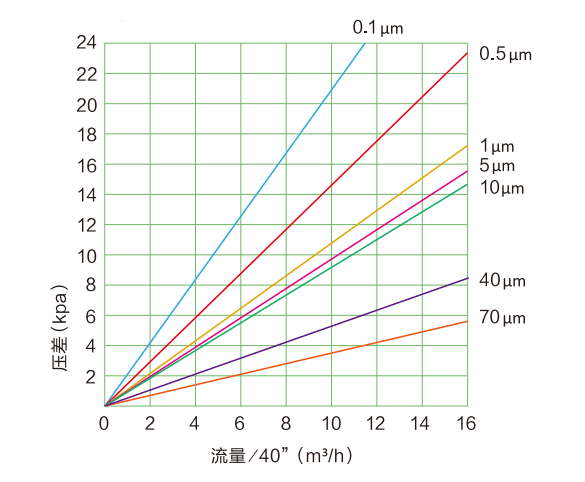
The actual performance depends on:
- Cartridge length
- Micron rating
- Media type
- Water quality
- Flow rate
- Operating temperature
- Contaminant load
- Housing design
This is why selection should be based on system conditions, not only cartridge size.
Dirt Holding Capacity and Cartridge Life
Flow rate is only one part of the decision.
In many industrial systems, cartridge life is controlled by dirt holding capacity and how contaminants load into the media.
High flow cartridges usually have more pleated media area and larger internal structure. This can allow more contaminants to be captured before reaching terminal ΔP.
This is especially useful when the system has:
- Variable suspended solids loading
- RO pretreatment fluctuation
- Cooling water rust and scale particles
- Process water contaminants
- Seasonal biological loading
- Frequent cartridge change-outs
However, high flow does not automatically mean long life. Cartridge life also depends on media structure, micron rating, upstream water quality and actual contaminant type.
Operational and Cost Differences
A single high flow cartridge usually costs more than a single standard cartridge.
But the cartridge price alone does not show the full cost.
The more important question is total cost of ownership.
High flow cartridges may reduce overall operating cost by reducing:
- Number of cartridges required
- Housing size
- Change-out time
- Labor cost
- Disposal volume
- Inventory complexity
- Shutdown frequency
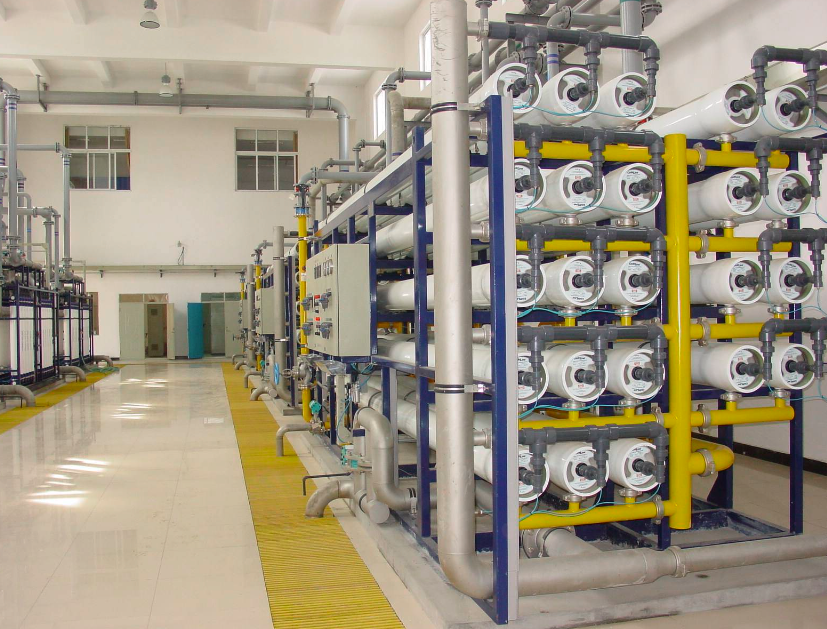
Cost and Maintenance Comparison
| Cost Factor | High Flow System | Standard Cartridge System |
|---|---|---|
| Cartridge unit cost | Higher per element | Lower per element |
| Number of cartridges | Fewer | More |
| Housing size | More compact for large flow | Larger housing may be needed |
| Change-out time | Shorter | Longer |
| Labor cost | Lower in large systems | Higher when many cartridges are used |
| Disposal volume | Lower | Higher |
| Best economic fit | Large-flow and frequent change-out systems | Small or low-flow systems |
For large industrial systems, the higher unit price of a high flow cartridge may be offset by lower labor, smaller housing, fewer replacements and reduced downtime.
When Should an Industrial System Upgrade to High Flow Cartridges?
High flow cartridges are worth considering when standard cartridges create operational burden.
Typical upgrade signals include:
- Too many cartridges in one housing
- Frequent filter replacement
- High labor cost during change-out
- Large housing footprint
- Unstable ΔP growth
- High flow demand
- Large-volume RO pretreatment
- Cooling water or process water circulation
- Need to reduce shutdown time
- Desire to simplify cartridge inventory
If operators are replacing dozens of standard cartridges frequently, the system may be a good candidate for high flow cartridge conversion.
When Are Standard Cartridges Still Suitable?
Standard cartridges are not outdated. They are still suitable for many applications.
They may be the better choice when:
- Flow rate is low or moderate
- Existing housing is already designed for standard cartridges
- Cartridge replacement frequency is acceptable
- Initial cost is the main concern
- System footprint is not a problem
- The application does not require large flow capacity
- The filtration duty is simple and stable
The right decision depends on system flow, contaminant load, maintenance target and total operating cost.
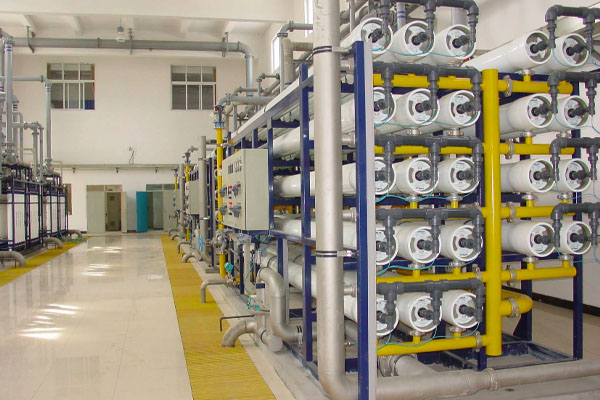
RO Pretreatment: Why High Flow Cartridges Are Commonly Used
RO pretreatment systems often require stable security filtration before the high-pressure pump and RO membranes.
When the system flow is large, using many standard cartridges can increase maintenance work and housing complexity.
High flow cartridges are commonly selected in RO pretreatment because they can provide:
- Large flow capacity per element
- Fewer cartridges required
- Stable ΔP growth under suitable conditions
- Higher dirt holding capacity
- Cleaner change-out in inside-out flow designs
- Direct replacement options for common high flow housings
This makes them suitable for seawater desalination, brackish water RO, industrial RO, wastewater reuse and power plant water treatment systems.
Cooling Water Filtration: When High Flow Makes Sense
Cooling water systems often carry suspended solids, rust, scale particles and biological debris.
For large cooling water loops, standard cartridges may require frequent replacement and large housings.
High flow cartridges can be useful in:
- Cooling tower filtration
- Side-stream cooling water filtration
- Full-flow cooling water filtration
- Heat exchanger protection
- Process cooling loops
- Power plant cooling systems
- Petrochemical cooling water
The main advantage is not only flow capacity. It is also reduced maintenance workload and better handling of large circulation volumes.
What Should Be Checked Before Switching to High Flow Cartridges?
Before upgrading from standard cartridges to high flow cartridges, the system should be reviewed carefully.
Important points include:
- Current flow rate
- Required micron rating
- Contaminant type
- Operating temperature
- Current ΔP trend
- Current replacement cycle
- Housing space
- Installation layout
- Required cartridge quantity
- End cap or adaptor type
- Flow direction
- Media type
- Compatibility with existing housing or new housing design
If the system already uses Pall, 3M, Parker or other high flow housings, the replacement cartridge should be checked by model, length, end cap, seal structure and flow direction.
High Flow vs Standard Cartridge Filters: Selection Summary
| Selection Question | High Flow Cartridge Is Better When… | Standard Cartridge Is Better When… |
|---|---|---|
| Flow demand | System requires large flow capacity | Flow rate is low or moderate |
| Cartridge quantity | Too many standard cartridges are required | A small number of cartridges is enough |
| Maintenance | Change-out labor is high | Replacement work is manageable |
| Footprint | Housing space needs to be reduced | Space is not a major issue |
| Operating cost | Total cost of ownership matters | Initial cartridge price is the main concern |
| Application | RO pretreatment, cooling water, large process water | General filtration or smaller systems |
| Change-out cleanliness | Cleaner replacement is important | Standard handling is acceptable |
Need to Check Whether High Flow Cartridges Fit Your System?
If your system uses too many standard cartridges, has frequent change-outs, or needs a more compact large-flow filtration solution, Ecofiltrone can help review the suitable high flow cartridge option.
Send us your current filter model, flow rate, micron rating, housing photo, application or replacement cycle.
We can help check:
- Whether high flow cartridges are suitable
- Estimated cartridge quantity
- Media and micron rating options
- Pall / 3M / Parker replacement possibility
- Housing and flow direction compatibility
Conclusion
High flow cartridges and standard cartridges both have valid applications.
Standard cartridges are still useful for smaller systems, stable filtration duties and lower-flow applications.
High flow cartridges are more suitable when industrial systems require large flow capacity, fewer cartridges, lower maintenance workload, smaller housing footprint and improved total cost of ownership.
For RO pretreatment, cooling water, process water and other large industrial water systems, the choice should not be based only on cartridge price.
The better decision comes from reviewing flow rate, ΔP trend, replacement cycle, contaminant load, housing design and long-term operating cost.
If your current system uses many standard cartridges or requires frequent replacement, it may be time to review whether a high flow cartridge solution is more suitable.