Your filtration system is underperforming, and you suspect the filter cartridges. But what if the problem is hidden in the system’s core? The housing design itself is often the real issue.
The best housing design depends on your needs. Parallel systems are for high flow rates and continuous operation, offering redundancy. Single vessels are simpler for lower flows. The critical factor for both is a design that ensures even flow distribution to maximize filter life and efficiency.
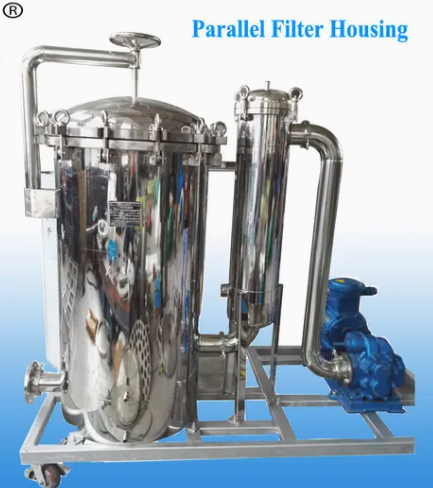
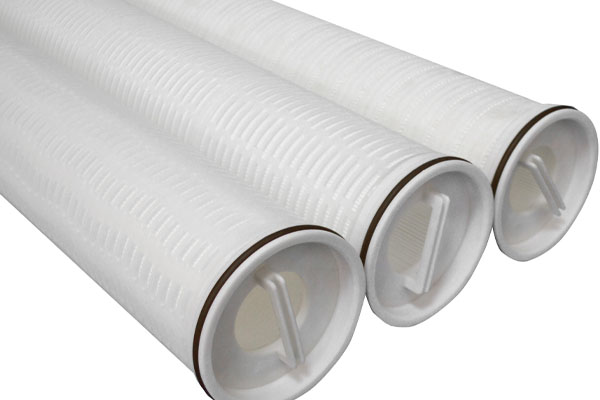
I’ve been in the industrial filtration business for over a decade, and I’ve seen it all. At Ecofiltrone, we manufacture top-tier high-flow filter cartridges. But I can tell you that even the best filter in the world will fail in a poorly designed system. The most common problem we see isn’t the filter element; it’s the housing that holds it. Let’s dive into why the housing design is so critical to your operational success and how to get it right.
When should you use parallel filter housings?
Your single filter system struggles to keep up with demand, forcing costly shutdowns. This downtime kills productivity and eats into your profits. Parallel housings offer a smarter, more reliable solution.
Use parallel housings for high flow rates that exceed a single vessel’s capacity. They are also perfect for critical processes where you cannot afford downtime. One housing can be serviced while the other remains online, ensuring continuous, uninterrupted operation.
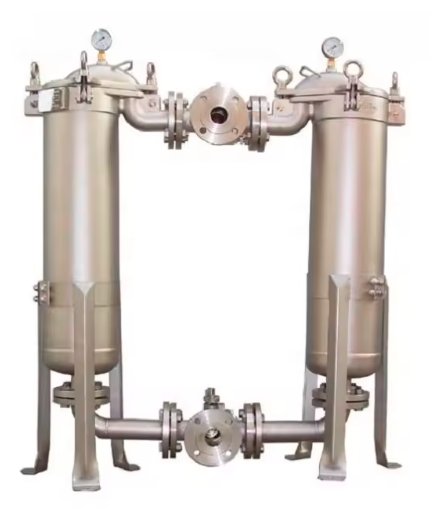
Parallel filtration is a simple but powerful concept. Instead of directing all your fluid through one large filter vessel, you split the flow across two or more smaller vessels arranged side-by-side. This setup immediately provides two major advantages: increased capacity and operational flexibility, also known as redundancy. For a project manager at a large engineering firm or a procurement engineer at a desalination plant, these benefits are not just convenient; they are essential for maintaining stable operations and managing costs effectively.
Key Scenarios for Parallel Systems
The decision to use a parallel system isn’t just about flow rate. It’s about risk management and future-proofing your operations. If a system shutdown means thousands of dollars in lost production per hour, the investment in a parallel setup pays for itself very quickly. We often work with clients in the power generation sector who simply cannot stop their processes. For them, parallel housings with isolation valves are non-negotiable. This allows their maintenance teams to perform filter change-outs on one vessel while the other continues to protect their critical equipment.
| Factor | Favors Single Vessel | Favors Parallel Vessels |
|---|---|---|
| Flow Rate | Low to Medium | High to Very High |
| Process Criticality | Non-critical, can be shut down | Critical, requires 24/7 operation |
| Maintenance | Requires full system shutdown | Allows for online maintenance |
| Scalability | Limited | Easily expandable by adding more vessels |
| Initial Cost | Lower | Higher |
How does flow distribution impact filter life?
You find yourself replacing filters far too often. You blame the quality of the cartridges and spend more on premium brands, but the problem persists. The real culprit is likely hiding in plain sight.
Poor flow distribution forces some filters to work much harder than others. These overloaded filters clog prematurely, which reduces the service life of the entire set. This increases your replacement frequency and overall operational costs.
Imagine a team of workers assigned to a task. If the work isn’t divided equally, a few workers will burn out quickly while others remain idle. The same thing happens inside a multi-cartridge filter housing. Ideally, the incoming fluid should be distributed perfectly evenly, so each high-flow filter cartridge receives the same flow rate and contaminant load. However, in a poorly designed housing, the fluid takes the path of least resistance. This usually means the cartridges closest to the inlet get hit with a much higher flow velocity and more dirt, while those at the far end do very little work.
The Chain Reaction of Poor Flow
This imbalance sets off a negative chain reaction. The overworked filters clog up fast. As they clog, the pressure drop across them increases. This forces even more fluid to divert to the less-clogged filters, accelerating their failure too. In the end, you are forced to change out the entire set of cartridges, even though many of them still have plenty of life left. At Ecofiltrone, when a client tells me our filters aren’t lasting as long as expected, my first question is always about their housing design. A well-designed vessel with proper inlet/outlet placement and sometimes internal baffles is essential to ensure you get the full value and service life out of every single filter cartridge.
What is the risk of uneven loading in large systems?
In a large system with dozens of filters, a few failing early might seem like a small issue. But this can trigger a cascade of problems leading to downstream contamination and equipment failure.
Uneven loading creates high-velocity channels that can cause filter bypass or media migration. This allows contaminants to slip through, damaging sensitive equipment like RO membranes. It creates a false sense of security while compromising your entire system’s integrity.
The risk of uneven loading goes far beyond just reduced filter life. When one filter cartridge becomes overloaded, the fluid velocity through it can become dangerously high. This high velocity can physically damage the filter’s structure, a phenomenon known as media migration, where parts of the filter material itself break off and flow downstream. It can also lead to "particle unloading," where previously captured contaminants are dislodged and released back into the fluid stream. In either case, your downstream processes are now exposed to the very contaminants you were trying to remove.
Beyond Clogging: Critical System Failures
For our clients in the semiconductor or petrochemical industries, this is a catastrophic failure. A single contamination event can ruin an entire batch of product, costing hundreds ofthousands of dollars. For a water treatment facility, it could mean failing to meet regulatory standards or, worse, damaging an entire rack of expensive RO membranes. The irony is that the system’s pressure gauges might still look normal, giving operators a false sense that everything is working correctly. This is why we stress that even loading isn’t a "nice to have" feature; it is a fundamental requirement for reliable and safe industrial filtration.
| Risk of Uneven Loading | Potential Consequence |
|---|---|
| Filter Bypass | Contamination of final product or process fluid |
| Media Migration | Damage to downstream pumps, nozzles, or RO membranes |
| Increased Pressure Drop | Higher energy consumption and pump strain |
| Premature Clogging | Frequent, costly change-outs and increased downtime |
How to optimize housing design for maintenance efficiency?
Your filter change-outs are a slow, difficult, and messy process. This extended downtime disrupts your production schedule and is a constant headache for your maintenance team. Smart housing design can fix this.
Optimize for maintenance with easy-access vessels, quick-opening closures, and well-placed drain and vent ports. In parallel systems, proper isolation valves are essential for performing change-outs without a complete system shutdown, saving valuable time.
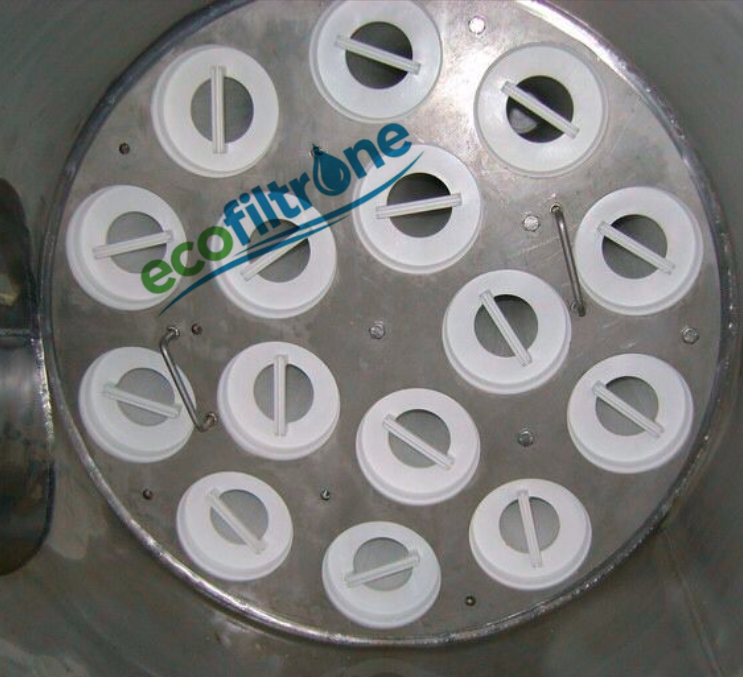
The total cost of filtration isn’t just the price of the cartridges; it’s also the labor and downtime associated with replacing them. A housing that is difficult to service can turn a 30-minute job into a half-day ordeal. When we consult with clients on new projects, we always encourage them to think about the entire lifecycle of the system, especially maintenance. An intelligently designed housing prioritizes the safety and efficiency of the technicians who will be working on it. This means ensuring there is enough physical space around the unit to work comfortably and selecting features that simplify the change-out process.
Design Features for Faster Turnaround
Several key features can dramatically reduce maintenance time. For larger vessels, a davit-arm or spring-assisted lid lifter is a must-have, allowing a single operator to open the housing safely. Swing-bolt closures are much faster to operate than traditional nut-and-bolt flanges. The placement of drain and vent ports is also crucial; they should be easily accessible to allow for quick draining before opening and proper venting after sealing. I remember a client in the food and beverage industry who upgraded their housings to include these features. They reported that their filter change-out time was reduced by over 70%, which translated directly to more production uptime and a happier, more efficient maintenance crew.
Can improper housing design reduce filter efficiency by 50%?
You invested in premium filters with a 99.9% retention rating. Yet, your process results are disappointing, and downstream contamination is still an issue. The problem isn’t the filter; it’s your housing.
Yes, a bad housing design can easily cut your true filtration efficiency in half. It creates uneven flow and "channeling," where a large portion of the fluid bypasses the filter media entirely. You are paying for high efficiency but not receiving it.
![An animation showing fluid bypassing filter media due to channeling]
This is one of the most misunderstood aspects of industrial filtration. The stated efficiency of a filter cartridge is determined in a laboratory under perfect, controlled conditions with ideal flow. In the real world, the housing design dictates whether you actually achieve that efficiency. If the design allows for "channeling" or "bypassing," the fluid will always follow the path of least resistance. This means it will flow around the filter media instead of through it. This can happen if the cartridges are not sealed properly in their seats or if the flow dynamics within the vessel create dead zones and high-velocity channels.
The Hidden Cost of "Channeling"
The result is that a significant percentage of your fluid passes through the system effectively unfiltered. You might have a 99.9% efficient filter, but if 50% of the flow bypasses it, your actual system efficiency is less than 50%. This is a huge waste of money and completely defeats the purpose of using high-performance filtration. This is why at Ecofiltrone, we see ourselves as more than just a supplier of high-flow cartridges. We are partners in our clients’ success. We provide the technical support needed to ensure that our products are used in systems designed to unlock their full performance potential. The filter and the housing must work together as a single, optimized system.
| Feature | Good Design | Poor Design |
|---|---|---|
| Stated Filter Efficiency | 99.9% | 99.9% |
| Flow Distribution | Evenly distributed | Uneven, with channeling |
| Risk of Bypass | Very Low | High |
| Actual System Efficiency | >99% | <50% |
Conclusion
Remember, your filter cartridges are only as good as the housing they are in. Proper design is critical for maximizing performance, extending filter life, and ensuring reliable, cost-effective operation.