Why TEP Is Becoming a Major Challenge in SWRO Pretreatment
Many operators monitor:
✔ Turbidity
✔ SDI
✔ TSS
But an increasing number of SWRO plants are discovering that these indicators alone cannot explain rapid cartridge fouling or RO membrane biofouling.
One important reason is:
TEP (Transparent Exopolymer Particles)
TEP (Transparent Exopolymer Particles)
What Is TEP?What Is TEP?
TEP is a sticky gel-like organic substance produced by:
Algae
Bacteria
Phytoplankton
Biofilms
TEP is primarily composed of polysaccharides and extracellular organic polymers.
Although often invisible to the naked eye, TEP is highly adhesive and can accumulate throughout the pretreatment process.
Why Is TEP Difficult to Remove?
Unlike ordinary suspended solids:
Sand → removed by multimedia filters
Large particles → removed by UF
But TEP behaves differently.
TEP is:
✔ Soft
✔ Compressible
✔ Sticky
✔ Deformable
✔ Able to pass through some pretreatment barriers
This means:
Even when UF turbidity and SDI are acceptable, TEP can still reach the cartridge filtration stage.
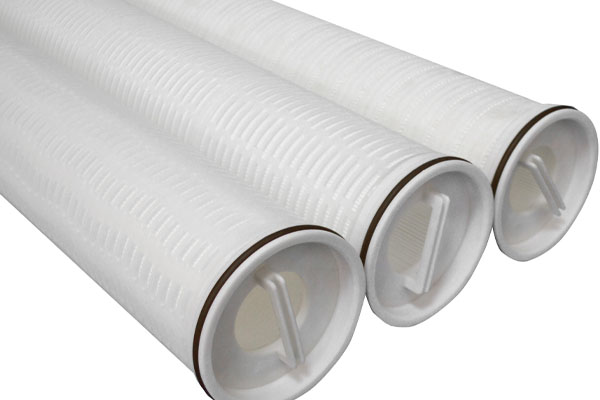
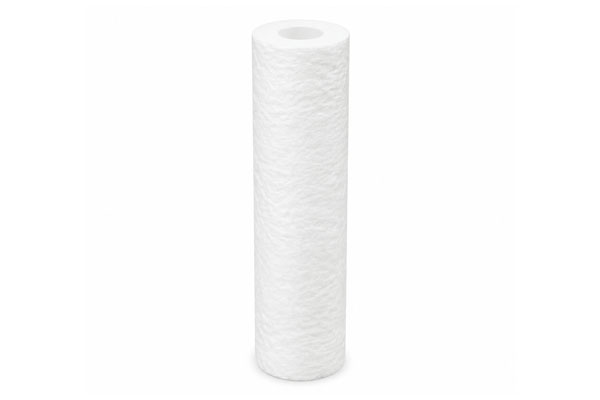
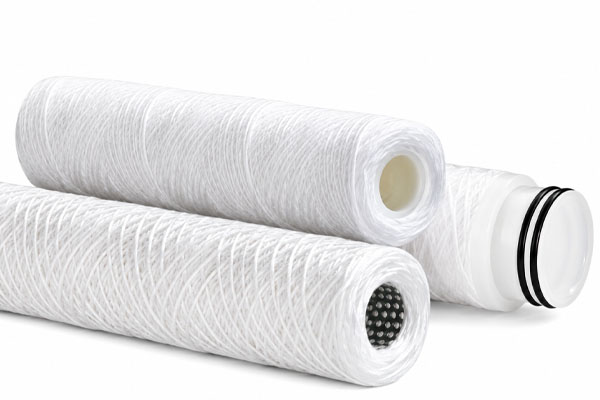
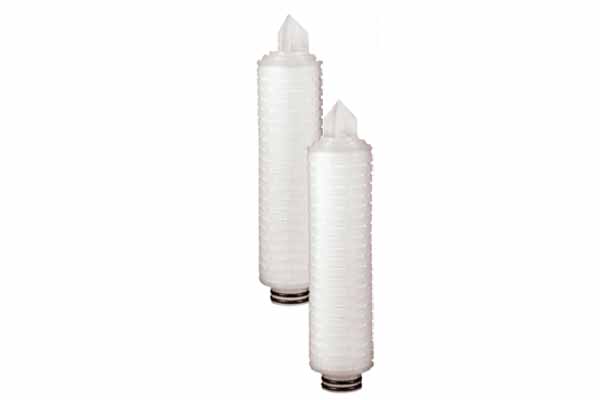
Impact on Cartridge Filters
1. Rapid Surface Blinding
TEP forms a gel layer on the cartridge surface.
Result:
Flow channels narrow
Surface pores become blocked
ΔP rises rapidly
2. Reduced Dirt Holding Capacity
Normal particles build a porous cake layer.
TEP forms a dense gelatinous layer.
This significantly reduces effective filtration area.
Result:
Shorter cartridge life
More frequent cartridge replacement
3. Uneven Flow Distribution
When one area becomes blocked:
Flow redistributes to cleaner sections.
This creates:
Localized high velocity
Localized fouling
Accelerated pressure drop increase
Impact on RO Membranes
This is where TEP becomes expensive.
TEP Promotes Biofouling
TEP acts as a nutrient-rich attachment surface for bacteria.
Once reaching the membrane:
Bacterial attachment increases
Biofilm develops faster
Membrane cleaning frequency increases
Increased Membrane Differential Pressure
Biofilm formation leads to:
Feed channel blockage
Higher feed pressure
Reduced membrane productivity
Typical symptoms:
✔ RO ΔP increases
✔ Normalized permeate flow decreases
✔ CIP frequency increases
Why Summer Is the High-Risk Season
When feed water temperature rises:
35–48°C in some regions
Biological activity accelerates.
Result:
More algae
More bacterial growth
More extracellular polymers
More TEP generation
This is why many plants observe:
Winter:
Cartridge life = 30 days
Summer:
Cartridge life = 10–15 days
Even when micron rating remains unchanged.
Engineering Perspective
Many cartridge selection decisions focus on:
❌ Micron Rating
But TEP fouling is often influenced more by:
✔ Media structure
✔ Depth loading capability
✔ Flow distribution
✔ Dirt holding capacity
The goal is not simply to remove particles.
The goal is to maintain stable ΔP under changing biological loading conditions.