
Food & Beverage Filtration Solutions
Food-Grade Filtration for Every Stage of Production
From incoming water to final bottling — one filtration partner across your whole line
EcoFiltrone builds food-grade filter cartridges and filter bags for bottled water, beer, wine, juice, dairy, edible oil and beverage production. Drop-in fit for your existing housings, verified filtration, factory-direct pricing and free samples before you order.
✔Food-grade & FDA-compliant materials ✔Sediment to sterile-grade filtration ✔ Factory-direct pricing ✔Free sizing advice & samples
Filtration Challenges in Food & Beverage
Every product has a different filtration job — but the stakes are the same: product safety, clarity, taste and uptime.
Product safety comes first
Filter media in contact with food and drink must be food-grade and traceable. The wrong material risks contamination, off-taste and failed audits.
Clarity & taste can't be compromised
Haze, sediment, pulp and off-flavors have to go — without stripping the character your product depends on. That means the right micron at each stage.
Downtime and filter cost add up
Short cartridge life and premium OEM pricing quietly drain the maintenance budget. High dirt-holding media and factory-direct supply fix both.
Application Overview
Five filtration duties in food and beverage processing
Cartridge filtration in food and beverage plants serves distinct duties depending on where it sits in the process. Each duty has a different contaminant profile, performance requirement and compliance consideration. Identifying the duty is the first step in cartridge selection.
💧
Process water filtration
Incoming water used for utility, ingredient or rinse duties. Removes suspended solids, sediment and particulate carried from the supply or storage system. See process water filtration for general guidance.
🔀
Intermediate stream filtration
Filtration of liquid streams between processing stages — after extraction, blending, heating or holding. Removes particulate generated or carried through the process before the next stage.
🧪
Product particulate filtration
Removal of particulate from the product stream. Where clarification is a process objective, cartridge filtration may form part of the approach — but it is not always the primary clarification technology and should be evaluated against the specific product and process.
✨
Final polishing
Final particulate reduction before filling or packaging. Requirements for microbial retention, sterilizing-grade performance or integrity testing must be confirmed for the exact cartridge series and configuration before specification.
🛡
Equipment protection
Protection of pumps, heat exchangers, fillers, nozzles and downstream membrane systems from particulate damage and fouling. Often the most cost-effective filtration position in the plant.
📋
Compliance review
Food-contact suitability, material declarations and regulatory documentation are confirmed per cartridge series and configuration. See food-contact and regulatory suitability review
Operating Challenges
What makes food and beverage filtration demanding
📈
Rapid differential pressure rise
High particulate or colloidal loading, viscous product streams, or an over-fine cartridge rating drive pressure drop up quickly. Short service cycles increase changeout labour, product loss at changeover and downtime. Micron rating alone does not determine service life — media structure and dirt-holding capacity must match the actual load. See differential pressure and cartridge replacement guidance.
🌡
Temperature and CIP exposure
Cartridges may be exposed to hot product, hot water rinse or clean-in-place chemicals. Media, end caps, core and seal materials must all be confirmed for the temperature and chemical exposure of both the process and the cleaning regime — not the process alone.
🍯
Viscosity and product character
Sugar solutions, syrups, concentrates and oils behave differently from water. Higher viscosity raises pressure drop at the same flow, and some products contain colloidal or gel-like material that blinds fine media rapidly. Flow and ΔP must be evaluated on the actual fluid, not on a water equivalent.
🔁
Batch operation and changeover
Batch processes create intermittent flow, pressure surges at start-up and repeated wet-dry cycling. Cartridge construction must tolerate this duty. Changeover between products may also impose cleaning or dedicated-cartridge requirements to avoid carry-over.
📦
Replacement compatibility
Housing interface, end connection, seal material, length, outside diameter and flow direction all affect whether a cartridge will seat and seal correctly. Dimensional similarity alone does not confirm compatibility. See filter cartridge end connections and seals.
📄
Documentation requirements
Food-contact suitability, material declarations, traceability and — where applicable — validation or integrity-test data are project requirements that must be confirmed for the exact cartridge series and configuration before it is specified into the process.
Contaminants and Filtration Objectives
What the cartridge must remove, and what the filtration stage is for
| CONTAMINANT / LOAD TYPE | TYPICAL ORIGIN | FILTRATION RELEVANCE |
|---|---|---|
| Suspended solids and sediment | Incoming water supply, storage tanks, pipework | Primary load in process water duties; drives ΔP rise and cartridge life |
| Particulate from raw materials | Ingredient carry-over, extraction and blending stages | Variable size distribution; depth structures generally handle higher loading |
| Process-generated particulate | Precipitation on cooling, crystallisation, agglomeration during holding | May appear only under certain operating conditions — evaluate at actual process temperature |
| Colloidal and gel-like material | Product-dependent; common in juices, concentrates, plant extracts | Can blind fine media rapidly; prefiltration staging is often required |
| Scale and precipitates | Hardness carry-over, chemistry shifts, heat-exchange surfaces | Hard deposits that shorten cycles; usually signals an upstream water-treatment issue |
| Equipment-derived particles | Pump and seal wear, valve debris, pipework residue after maintenance | Abrasive; protecting fillers, nozzles and membranes is a common filtration objective |
Reduce particulate load in the stream
Deliver the particulate reduction the next process stage requires — whether that is a filling line, a membrane system, a heat exchanger or a packaging operation.
Protect downstream equipment
Prevent abrasive and fouling particles reaching pumps, nozzles, fillers, heat exchangers and membrane systems where cleaning or repair cost exceeds filtration cost.
Support consistent process operation
Predictable cartridge service life allows changeouts to be planned around production schedules rather than triggered by unplanned pressure-drop events.
Meet the documented requirement for the position
Where the position carries food-contact, microbial-retention, sterilizing-grade or integrity-test requirements, these are confirmed against the specific cartridge series and configuration before selection is finalised.
Microbial retention, sterilizing-grade status and integrity testing are not assumed. Where a position requires validated microbial retention or integrity-test correlation, the requirement must be confirmed for the exact cartridge series, media, pore rating and configuration. A particulate-rated cartridge is not a substitute for a validated membrane cartridge.
Applications We Serve
Pick your process to see the filtration stages, recommended micron ratings and matched products.
💧
Bottled & Drinking Water
Sediment, carbon and final filtration for water bottling lines, from source to fill.
🍺
Beer & Brewery
Trap filters, haze and yeast control, and sterile filtration before packaging.
🍷
Wine & Winery
Clarification, lees removal and sterile membrane filtration before bottling.
🥤
Beverage & Soft Drinks
Ingredient water, syrup and final filtration for flavored and carbonated drinks.
🥛
Dairy & Milk
Particulate control for milk, whey and process water with sanitary media.
🛢️
Edible & Cooking Oil
Bleaching-earth removal, polishing and clarification for refined oils.
🍯
Sugar & Syrup
Char, floc and sediment removal for liquid sugar, syrups and sweeteners.
🔬
Final & Sterile Filtration
0.2–0.45 μm membrane filtration for bottling and packaging.
🔧
CIP & Process Water
Utility and CIP rinse-water filtration to protect nozzles and product.
Related ECOFILTRONE Filtration Products
Cartridge families used in food and beverage positions
Selection logic is covered in the strategy section above. The list below maps each cartridge family to the duty it typically serves, with links to the product pages for construction and specification detail.
Depth · High Loading
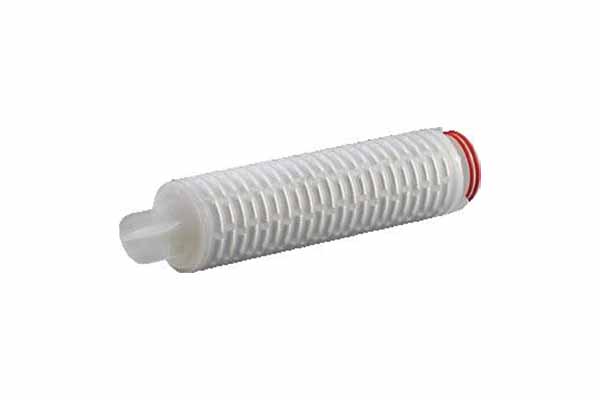
Depth filtration for process water and higher-loading particulate duties where dirt-holding capacity and service cycle are the priority. Commonly used as a prefilter stage ahead of finer filtration.melt blown filter cartridges
Depth · Cost-Effective
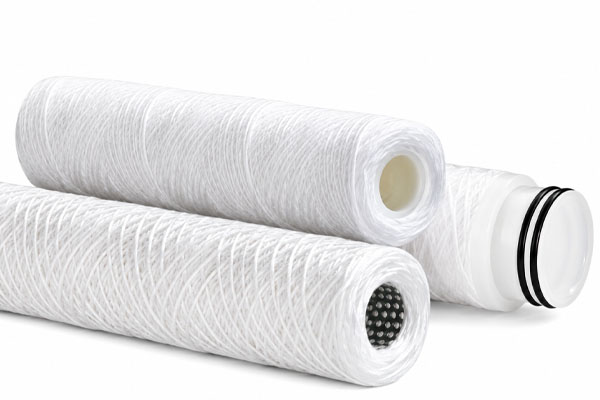
Yarn-wound depth filtration for process water and utility streams where cost per changeout is a primary consideration. Yarn and core material confirmed against fluid, temperature and cleaning exposure.string wound filter cartridges
Pleated · Particulate
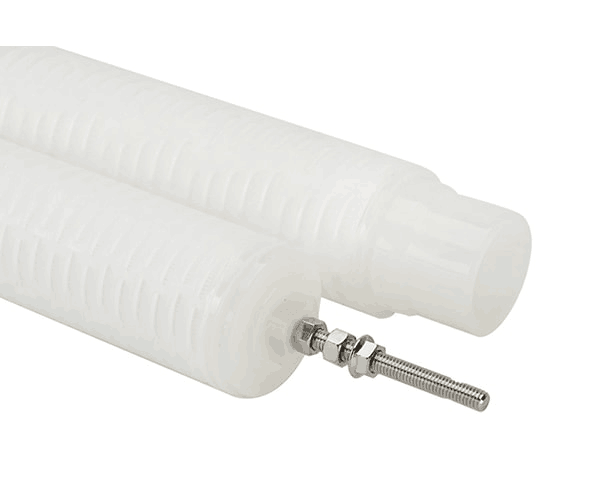
Pleated polypropylene for particulate filtration where higher filtration area and lower initial pressure drop are needed. Particulate-rated — microbial retention is not implied.PP pleated filter cartridges
Membrane · Confirmed Retention
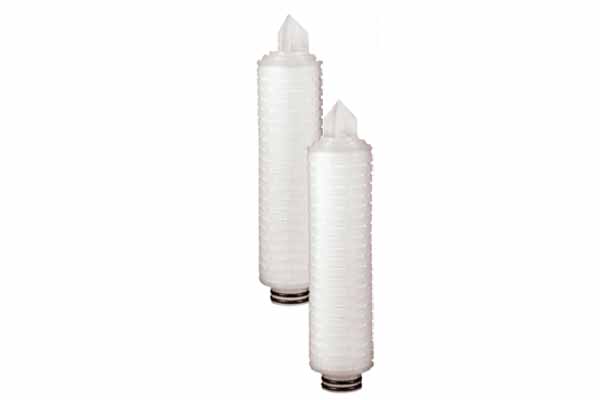
PES, PTFE, Nylon 66 and PVDF membrane media for positions requiring defined retention characteristics. Validation, integrity-test correlation and sterilizing-grade status must be confirmed for the exact series and configuration.membrane pleated filter cartridges
High Flow · Large Systems
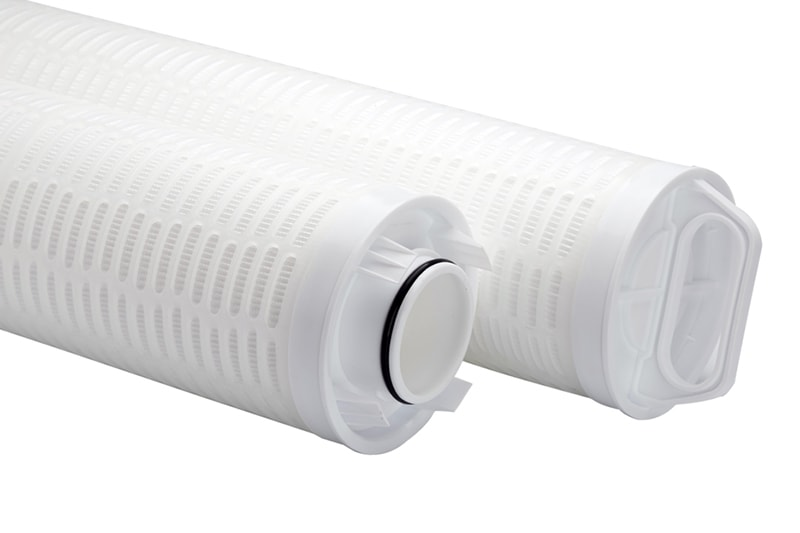
Large-diameter cartridges for high-flow process water and utility duties where reducing housing count and simplifying changeout handling are operational priorities.high flow filter cartridges
Metal · Cleanable
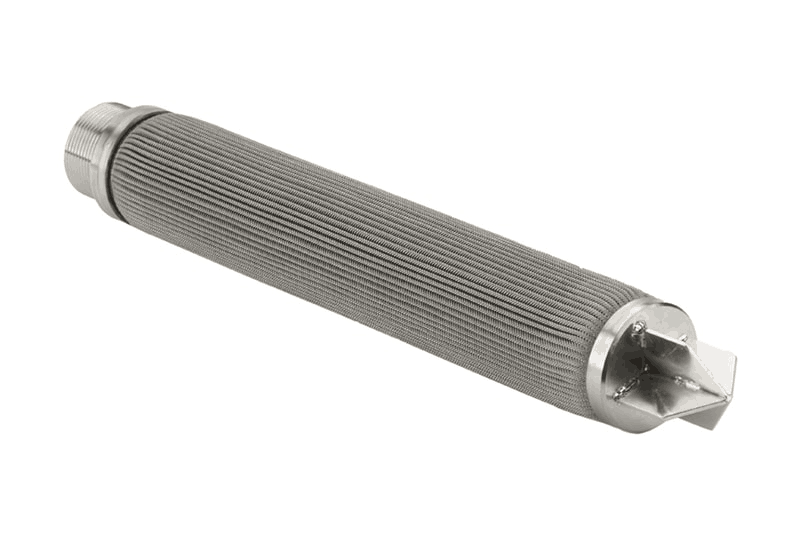
Cleanable stainless constructions for positions where reusability, elevated temperature or aggressive cleaning chemistry make polymer cartridges unsuitable. Grade confirmed against fluid and CIP chemistry.stainless steel filter cartridges
Food-Grade & FDA-Compliant Materials
Filtration that touches your product has to be safe by design. Our food & beverage media and hardware are built from materials compliant with recognized food-contact standards, with documentation available on request.
FDA CFR 21 compliant media
Food-grade polypropylene
EU 10/2011 options
Full material traceability
✔ Food-contact safe — media and end caps rated for direct product contact
✔ Low extractables — rinse-up media that won’t taint taste or odor
✔Integrity-testable membranes for sterile-grade applications
Why Food & Beverage Makers Choose EcoFiltrone
Free samples
Fit-test on your line before you commit to a bulk order.
Drop-in fit
Dimension-matched to your existing housings — no re-engineering.
Verified filtration
Third-party tested media, not marketing claims. Reports on request.
Factory-direct pricing
Buy the filtration, not the brand markup. Direct from our manufacturing line.
Frequently Asked Questions
Food and beverage filtration — technical questions
What types of filter cartridges are used in food and beverage processing?
Depth cartridges (melt blown filter cartridges, string wound filter cartridges) for higher-loading particulate duties; PP pleated filter cartridges for particulate filtration with higher filtration area; membrane pleated filter cartridges in PES, PTFE, Nylon 66 or PVDF where defined retention characteristics are required; high flow filter cartridges for large process water systems; and stainless steel filter cartridges where a cleanable element or elevated temperature capability is needed. Selection follows the filtration duty and process conditions.
How do I choose the micron rating?
Rating follows the requirement of the downstream stage, not the finest option available. An over-fine cartridge raises pressure drop and shortens service cycles without improving downstream protection. Contaminant loading, target changeout interval and fluid behaviour at process temperature all factor into the decision alongside rating.
Can cartridge filtration clarify my product?
Cartridge filtration may form part of a clarification approach for some liquid products, but it is not always the primary clarification technology and results depend heavily on the specific product, its colloidal character and the upstream process. This should be evaluated against the actual product rather than assumed.
Do you supply sterilizing-grade cartridges with integrity test data?
Where a position requires validated microbial retention, sterilizing-grade status or integrity-test correlation, these requirements are confirmed for the exact membrane cartridge series, pore rating and configuration. A particulate-rated cartridge does not carry these characteristics. Specify the requirement and the suitable configuration will be reviewed — see membrane cartridge selection guide.
Where is cartridge filtration used in a food or beverage plant?
Common positions are process water filtration, intermediate stream filtration between processing stages, product particulate filtration, final polishing before filling, and equipment protection ahead of pumps, fillers, heat exchangers and membrane systems. Actual positions vary by product and plant design.
Why is my cartridge life shorter than expected?
Common causes are higher-than-expected particulate or colloidal loading, an over-fine rating for the duty, insufficient filtration area for the flow, viscous product raising pressure drop, or upstream process variability. Reviewing the differential pressure and cartridge replacement guidance trend usually indicates whether the cause is loading or sizing.
Common causes are higher-than-expected particulate or colloidal loading, an over-fine rating for the duty, insufficient filtration area for the flow, viscous product raising pressure drop, or upstream process variability. Reviewing the differential pressure and cartridge replacement guidance trend usually indicates whether the cause is loading or sizing.
Food-contact suitability, material declarations and applicable regulatory documentation are confirmed for the specific cartridge series, media and configuration rather than claimed generally across the product range. See food-contact and regulatory suitability review — provide the position, product and documentation requirement and the applicable configuration will be reviewed.
What do you need to quote a replacement cartridge?
Existing manufacturer and model number, length, outside diameter, inside diameter, end connection and terminal style, seal material, media type, core material, housing model, process fluid, operating conditions and current service life. Photographs and drawings help confirm the housing interface. See filter cartridge end connections and seals.
Tell Us Your Process. Get a Filtration Plan.
Share your product, flow rate and current filters — we’ll come back within 24 hours with recommended cartridges or bags, micron ratings, pricing and a free sample.
WhatsApp: +86 131 8896 2285 · Email: [email protected]
© EcoFiltrone — Industrial Filter Cartridge Manufacturer. Food-grade filtration solutions for bottled water, beer, wine, juice, dairy and edible oil production.