Facing the AI Compute Challenge: Why High Flow Filter Cartridges Are the Secret Weapon for PUE Optimization in Data Center Cooling Systems
Meta Description: In 2026, soaring AI computing power presents severe challenges to data center cooling systems. This article provides an in-depth analysis of how High Flow Filter Cartridges directly optimize PUE metrics and lower OPEX by reducing pressure drop and increasing dirt holding capacity.
Introduction: "Cooling Anxiety" in the Age of the AI Compute Explosion
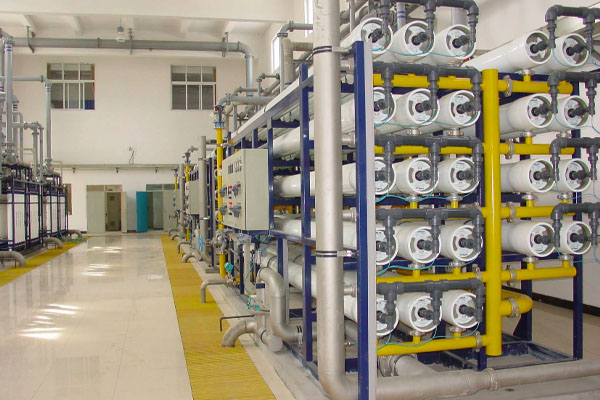
In 2026, with the large-scale deployment of NVIDIA B200 and other high-power chips, liquid cooling and highly efficient chilled water systems have become the standard for modern data centers. However, the accumulation of micro-particulates within these systems directly leads to fouling in Plate Heat Exchangers (PHE), which subsequently drives up the PUE (Power Usage Effectiveness).
Traditional 2.5-inch low-flow filter cartridges can no longer meet the dual demands of high circulation flux and ultra-low pressure drop required by modern data centers. High flow filtration technology is no longer an "optional" upgrade; it is a core component for optimizing system efficiency.
I. The Key to PUE Optimization: Pressure Drop and Energy Efficiency Ratio
The energy consumption of circulating water pumps accounts for a massive percentage of the total energy used by a cooling system. The initial and operating pressure drops of your filter cartridges directly dictate the pumping frequency and power load.
1. Pressure Drop Calculation and the Logic of Energy Saving
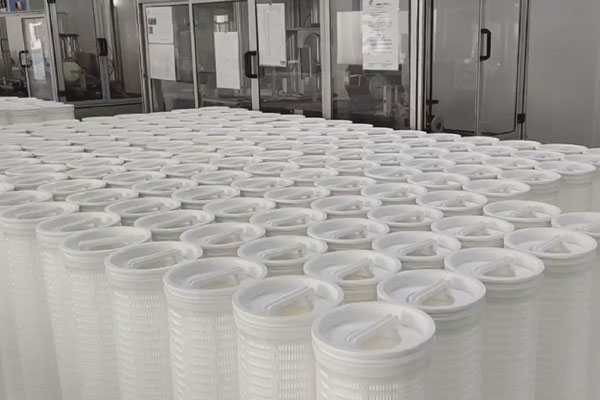
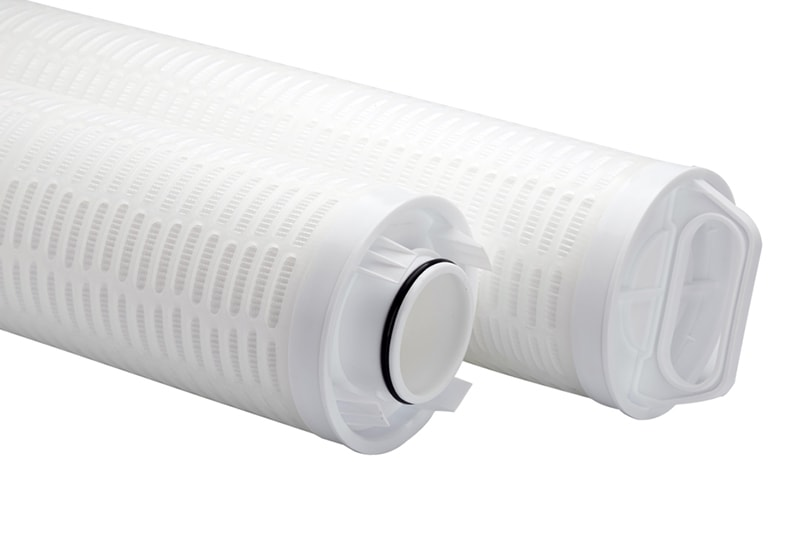
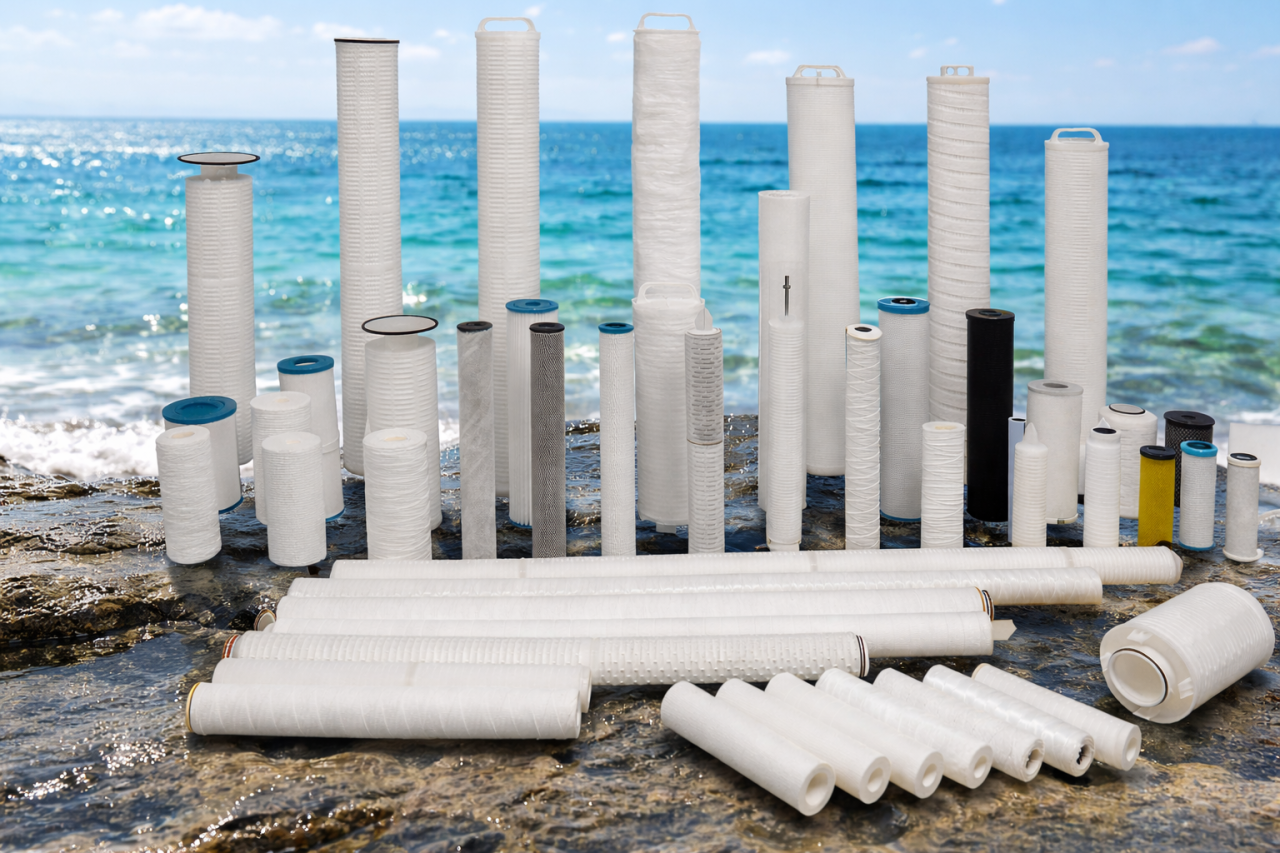
According to fluid dynamics, the pressure drop (ΔP) across a filter cartridge is proportional to the square of the flow velocity. High flow filter cartridges (typically 6 inches in diameter) utilize a deep-pleated structure that dramatically increases the effective filtration area:
- Traditional Cartridges (2.5"): Filtration area of approx. 0.5 m²
- High Flow Cartridges (6"): Filtration area of up to 8 – 12 m²
Conclusion: Under the same flow rate requirements, the flow capacity of a single 40-inch high flow cartridge is equivalent to 20 traditional standard cartridges. A lower operating pressure drop means the water pumps can run in a much lower power band, directly lowering the facility’s PUE value by 0.01 to 0.03.
II. Reducing Downtime: 2026 Requirements for High Dirt Holding Capacity
The continuous nature of AI operations demands extreme reliability from data centers. Frequent filter replacements mean:
- System Bypass Risks: Bypass operation during change-outs allows impurities to enter delicate precision heat exchangers.
- Surging Labor Costs: Replacing 20 times the number of filters on a massive scale is a severe operational burden.
The "Three Lows, One High" Advantage of High Flow Filters:
- Low Replacement Frequency: The Dirt Holding Capacity (DHC) of a single cartridge is over 15 times that of a standard filter.
- Low Spatial Footprint: Filter housing volumes can be reduced by over 50%, saving highly valuable floor space in the server room.
- Low Waste Emissions: Complies with strict 2026 Data Center ESG (Environmental, Social, and Governance) green audit standards.
- High Flow Consistency: Maintains a stable flow output even near the end of the filter’s service life, protecting chillers and CDUs (Coolant Distribution Units).
III. Technical Selection Guide for AI Liquid Cooling Systems
When specifying filter cartridges for high-power racks in 2026, engineers must focus on these three strict metrics:
1. Micron Rating and Beta Ratio
Do not just look at the "nominal" rating. For data center cooling water, it is recommended to select absolute-rated filters with a Beta Ratio of $\beta \ge 5000$ (e.g., 1-5 microns) to ensure a 99.9% interception rate of fine suspended solids.
2. Material Chemical Compatibility
Considering the latest environmental regulations in 2026, the filter cartridges must be:
- 100% PFAS-Free: Complete elimination of per- and polyfluoroalkyl substances.
- Low Extractables: Manufactured using thermal bonding processes to avoid chemical glues that could contaminate ultrapure circulating water.
3. Model Cross-Referencing and Interchangeability
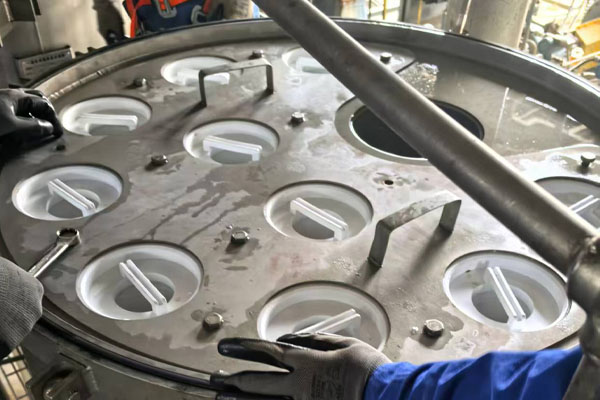
For systems currently using mainstream 3M High Flow, Pall High Flow, or Parker filter housings, selecting an alternative with precise compatibility can drastically reduce procurement costs without requiring any piping modifications.
Conclusion: Investing in Filtration is Investing in PUE
In the era of high computing power, the efficiency of your cooling system is your profitability. Upgrading from a traditional filtration setup to a High Flow filtration solution is not just a maintenance tactic; it is a strategic decision to drastically lower your Total Cost of Ownership (TCO).