Why RO Security Filter ΔP Rises Rapidly Even When the Micron Rating Is Correct
Rapid Answer
When diagnosing a rapidly clogging Reverse Osmosis (RO) security filter, process engineers often obsess over the micron rating. If the feed water analysis shows particles larger than 5 microns, and you install a 5-micron absolute filter, the math seems correct. However, if the differential pressure (Delta P) still spikes catastrophically within days, the micron rating is not your problem; the fluid dynamics and particle morphology are.
Selecting the correct micron size only defines the threshold of what the filter will catch. It does not dictate how the filter will handle the hydraulic load. A rapid Delta P rise on an accurately rated filter is almost always caused by an excessively high flux rate (fluid velocity), the presence of deformable contaminants (like biological gels that extrude and blind pores), or starting with an artificially high initial Delta P due to an undersized steel housing.
The Physics of Failure: Beyond the Micron
Filtration is not a simple 2D sieve; it is a complex 3D dynamic process. To understand why a correctly rated filter is failing prematurely, you must analyze three physical factors that override the micron rating.
1. The Flux Rate Trap (Velocity vs. Surface Area)
Micron rating dictates the size of the hole, but Flux Rate dictates how fast the water is shoved through that hole.
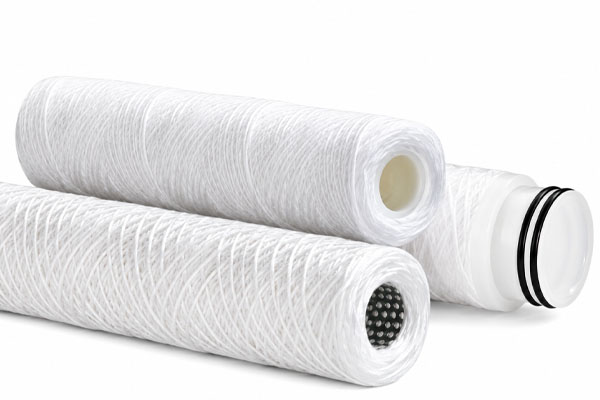
- The Physics: If you force 100 cubic meters per hour through a standard 2.5-inch meltblown filter, the fluid velocity is massive.
- The Result: High velocity physically forces the dirt deep into the roots of the pleats or the core of the depth media. Instead of allowing a porous, breathable "filter cake" to form on the surface, the high kinetic energy compacts the dirt into a dense, impermeable brick. The filter blinds instantly, long before its physical volume is full.
2. Particle Morphology (The Extrusion Effect)
A 5-micron filter is tested and validated in a laboratory using perfectly hard, spherical test dust (like silica sand). Industrial RO feed water rarely contains hard spheres.
- The Physics: Contaminants like biological slime (EPS), trace oils, or iron sulfide (FeS) are soft and deformable.
- The Result: When a soft, 10-micron biological gel hits a 5-micron pore under high pressure, it does not bounce off. It flattens out like a pancake, completely sealing the 5-micron hole. Because the gel is hydrated, it acts as a total liquid block. You matched the micron rating to the particle size, but you failed to account for the particle’s physical texture.
3. Chemical Blinding (The Invisible Glue)
If your feed water contains unreacted upstream chemistry (like overdosed polymeric coagulants or antiscalants), the micron rating is entirely irrelevant.
- The Physics: Liquid polymer is not a particulate; it has no "micron size." It passes into the filter matrix and cures under pressure.
- The Result: The polymer forms an invisible, sticky film across the filter media, gluing the pores shut. The filter looks brand new, but it is hydraulically sealed.
Diagnostic Cross-Validation Matrix
When a correctly rated filter fails prematurely, use this matrix to cross-reference the physical state of the filter with the true engineering root cause.
| Physical State of the Exhausted Filter | System Data Cross-Validation | True Engineering Root Cause |
|---|---|---|
| Filter looks relatively clean; pleats are crushed or deformed. | Initial clean ΔP was above 0.3 bar. | Flux Rate is Too High: The housing is severely undersized for the flow rate. High velocity is compacting the media. |
| Filter is coated in a sticky, slippery film (water beads off). | Upstream DAF/Clarifier polymer dosing is high. | Chemical Blinding / Coagulant Carryover: Liquid glue is sealing the pores, negating the micron rating entirely. |
| Filter is covered in a thick, gelatinous brown/clear slime. | SDI is fluctuating; Chlorine/Biocide demand is high. | Deformable Biofouling (EPS): Soft biological organics are extruding into the pores and flattening out, causing a liquid block. |
| Filter has a hard, white/grey concrete-like crust. | Antiscalant dosing is low; high calcium/silica in raw water. | Inorganic Scaling: Dissolved minerals are precipitating directly onto the filter matrix due to the localized pressure drop. |
The Cascading O&M Consequences
Blaming the micron rating when the flux rate or morphology is the real issue traps plant operators in a costly cycle of trial and error:
- The "Upsizing" Mistake: An operator sees a 5-micron filter plug in two days. They assume it’s "too tight" and install a 10-micron or 20-micron filter instead. The Delta P stabilizes, but now they are passing 5-to-10 micron dirt directly into the RO membranes, transferring the fouling to a much more expensive asset.
- OPEX Burn Rate: If the flux rate is too high, the plant will burn through standard filters at triple the normal rate, destroying the maintenance budget and increasing hazardous labor exposure.
- Pump Cavitation: A rapid, unexpected △P spike starves the high-pressure RO feed pumps. If interlocks fail, the pumps will cavitate, destroying mechanical seals and impellers.
The ecofiltrone Engineering Solution: Optimize Flux, Not Just Microns
If you have confirmed that your micron rating is correct for your RO membrane specifications, but you are still suffering from rapid Delta P spikes, the solution is a structural upgrade, not a micron change.
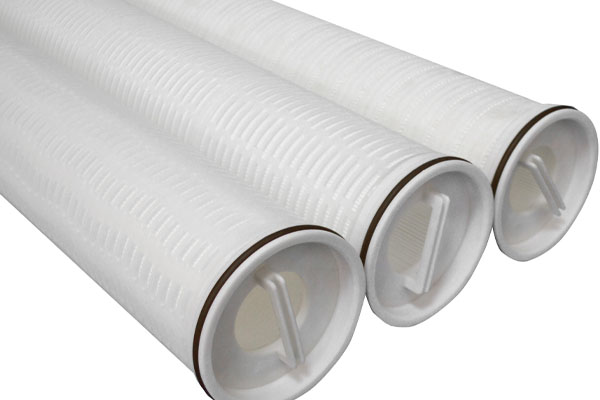
You must lower the fluid velocity. To do this without reducing your plant’s water production, you must radically increase the filtration surface area by upgrading to ecofiltrone High-Flow Pleated Cartridges.
- The Flux Rate Collapse: A single ecofiltrone 60-inch high-flow cartridge can hold up to 10 times the surface area of a standard depth filter. By spreading your system’s flow over this massive area, the fluid velocity (flux) drops to a gentle crawl.
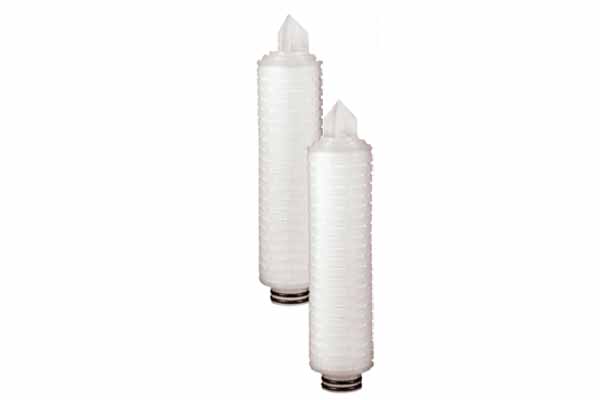
- Handling Deformable Solids: At a low flux rate, soft contaminants (like EPS or organics) are not violently smashed into the pores. They rest gently on the surface of the pleated micro-glass or polypropylene, maintaining a breathable, porous filter cake and extending the lifespan from days to months.
- Absolute Retention Integrity: Unlike cheap meltblown filters that stretch and release dirt under pressure, our rigid pleated media maintains its exact absolute micron rating from day one until the final change-out, ensuring your RO membranes are never compromised by extrusion bypass.