Why Is the Consumption of Filter Cartridges So High During the Start-Up Phase (Flush Phase) After a Power Plant Is Newly Built or Overhauled?
Rapid Answer
The exceptionally high consumption of filter cartridges during a power plant start-up or post-outage flush is not a symptom of poor filter quality; it is a deliberate, necessary mechanical consequence of the system clearing process.
During construction or major maintenance, miles of internal piping are exposed to the atmosphere, accumulating weld slag, mill scale, flash rust, silica (dust/dirt), and preservative oils. The start-up "flush phase" utilizes high-velocity water and chemical cleaning agents to aggressively scour these contaminants from the pipe walls. The filter cartridges act as sacrificial barriers, intentionally absorbing this massive "crud burst" to prevent irreversible damage to downstream boiler tubes, turbine blades, and expensive condensate polishing resins.
Consequently, high filter consumption during this transient phase is a planned operational investment, ensuring long-term steam cycle purity.
The Mechanics of the "Crud Burst"
To understand why filters plug so rapidly during a start-up, we must look at the physical and chemical state of the plant’s internal metallurgy before the boiler is fired.
Whether it is a greenfield construction project or a plant returning from a major maintenance outage, the internal surfaces of the piping network are fundamentally dirty. The contaminants typically fall into two categories:
- Construction & Maintenance Debris: This includes silica (sand/dirt), welding spatter, grinding dust, and stray gaskets. These are large, hard particulates that can physically erode high-speed pump impellers or block narrow heat exchanger passages.
- Oxidation & Chemical Products: During an outage, oxygen enters the drained pipes, causing "flash rust" (hematite) to form on surfaces that were previously protected by a passive magnetite layer. In new pipes, mill scale from the steel manufacturing process remains attached to the inner walls.
During the flush phase, operators intentionally induce turbulent flow—often pushing the water velocity well above normal base-load parameters—to physically shear this debris off the pipe walls. This creates a highly concentrated wave of suspended solids (the crud burst) that is orders of magnitude higher than anything the plant will experience during normal steady-state operation.
Operational Diagnostics: Tracking the Flush Parameters
Field engineers manage the flush phase by closely monitoring the progressive removal of suspended solids. The filtration system is the primary diagnostic tool for determining when the piping is clean enough to advance to the next start-up stage (e.g., alkaline boil-out or steam blows).
Operators cross-reference system chemistry with filter performance to gauge the flush’s effectiveness.
Start-Up Flush Diagnostic Matrix
| Correlated Operational Signals | Diagnostic Inference (System State) | Typical Operator Action |
|---|---|---|
| High Turbidity (NTU) + Rapid △ P spikes (hours) | The scouring velocity is effectively shearing mill scale and construction debris from the pipe walls. | Expect rapid filter exhaustion. Maintain continuous flow and stage replacement cartridges near the housings. |
| Turbidity decreasing + Iron (ppm) remains high | Large particulate debris has been cleared, but fine colloidal iron (flash rust) is still circulating. | Shift focus to sub-micron filtration efficiency; monitor filter effluent to ensure iron is not bypassing. |
| △ P spikes abruptly + System flow rate drops | The particulate load has completely blinded the filter media, creating a hydraulic bottleneck. | Immediately switch to the standby filter housing to prevent loss of scouring velocity in the piping loop. |
| Stable low △ P + NTU < 1.0 + Iron within OEM limits | The piping loop is mechanically clean. The crud burst has been successfully captured. | Terminate the high-velocity flush; prepare the system for chemical passivation or boiler firing. |
Field Experience: Misdiagnosing "Premature" Filter Failure During a Restart
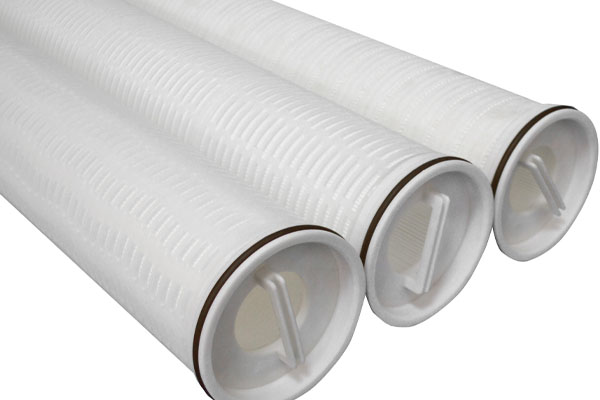
During the restart of a combined-cycle gas turbine (CCGT) plant following a prolonged 45-day maintenance outage, the operations team encountered a severe filtration bottleneck. The 60-inch high-flow cartridges in the temporary flush skid were hitting their maximum differential pressure (△ P) limit every 3 to 4 hours.
Initially, the procurement manager suspected a defective batch of filters, arguing that the exact same cartridges normally lasted 4 to 6 months during base-load operation.
However, a review of the operational parameter linkages revealed a different story. The plant had been placed in a "dry lay-up" during the outage, but the dehumidification equipment had failed intermittently. This allowed atmospheric moisture to interact with oxygen inside the carbon steel piping, generating a massive volume of fine flash rust.
When the high-velocity flush was initiated, the sudden hydraulic shear stripped this rust off the walls simultaneously. The filters were not failing; they were working exactly as designed, capturing hundreds of pounds of iron oxide in a matter of hours. If those filters had bypassed or ruptured under the pressure, that iron throw would have permanently fouled the multi-million-dollar deep-bed condensate polishing resins downstream. The rapid replacement frequency was the mechanical proof of a successful system save.
The Engineering Logic of Flush Filtration
Because the flush phase requires moving massive volumes of highly contaminated water, standard operational filtration logic does not apply.
Why Conventional Filters Struggle During Flushes:
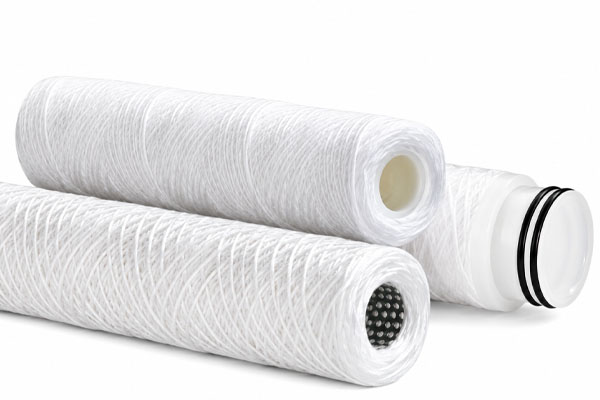
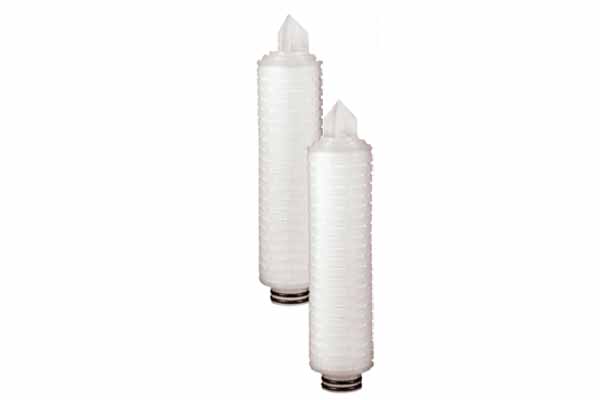
Standard depth filters (such as 2.5-inch string-wound or melt-blown PP) are often overwhelmed by a crud burst. Their small surface area means they blind almost instantly under high solid loading. More critically, as the △ P climbs rapidly, these standard elements often deform, bend, or experience "channeling"—allowing abrasive weld slag and iron particulate to bypass the filter and enter the boiler feedwater loop.
The Operational Justification for High-Flow, Pleated Structures:
To manage the extreme dynamics of the start-up phase, temporary flush skids and condensate pre-filter housings typically utilize large-diameter, high-flow pleated filter structures.
The engineering rationale for this design during a start-up includes:
- Sustaining Scouring Velocity: High-flow structures maintain a much lower initial pressure drop. This allows the primary pumps to achieve the high turbulent flow velocities necessary to actually clean the pipes, without the filters acting as a hydraulic brake.
- High Dirt-Holding Capacity: The deeply pleated surface area can physically hold massive amounts of construction debris and iron oxide before reaching terminal △ P, extending the time between change-outs from minutes to hours.
- Critical Path Efficiency: During a plant start-up, downtime is measured in thousands of dollars per hour. Replacing a high-flow housing takes significantly less time than swapping out hundreds of standard 2.5-inch cartridges, minimizing critical path delays during the flush.
Conclusion
The rapid exhaustion of filter cartridges during a power plant start-up is a normal, transient operational dynamic. By correlating differential pressure trends with turbidity and iron transport data, operators can accurately track the progress of the pipe-clearing process.
Viewing these filters as sacrificial mechanical safeguards—rather than long-term consumables—is essential. Their rapid consumption during the flush phase directly guarantees the long-term thermodynamic efficiency and metallurgical stability of the entire power generation cycle.