Why Do RO Security Filters Clog So Quickly?
Introduction
In many RO pretreatment systems, operators notice that security filters clog much faster than expected. Cartridge replacement intervals become shorter, differential pressure rises rapidly, and operating costs increase unexpectedly.
In most cases, the filter itself is not the root cause.
Rapid cartridge fouling is usually a symptom of upstream pretreatment instability, contaminant fluctuation, or an incorrect filtration strategy.
Rapid differential pressure increase is often a system-level symptom rather than cartridge failure.
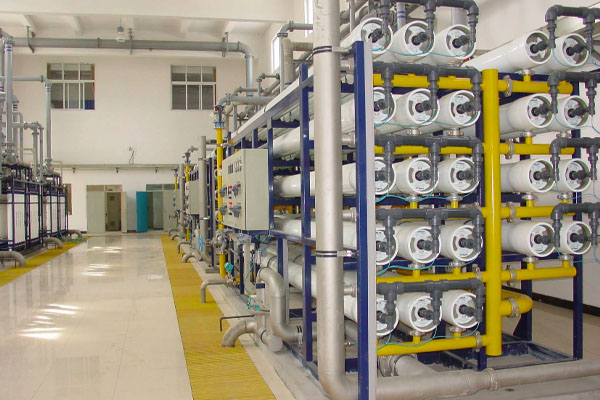
 "RO Pretreatment System Flow Diagram")
Rapid Answer
RO security filters usually clog quickly because the contaminant loading entering the filter exceeds the cartridge’s actual dirt holding capacity.
Common causes include:
- UF permeate instability
- Colloidal fouling
- Flocculant carryover
- Algae bloom events
- Iron sulfide contamination
- Sudden raw water quality changes
- Incorrect filter structure selection
What Causes Sudden Pressure Drop Increase in High-Flow Filters?
A sudden differential pressure (ΔP) increase is one of the most common operational problems in RO pretreatment systems.
Many operators initially suspect:
- poor cartridge quality
- incorrect micron rating
- manufacturing defects
However, in many real plant conditions, the filter is only reacting to upstream process instability.
A rapid DP spike usually indicates a sudden increase in contaminant loading rather than immediate cartridge failure.
Common Causes of Rapid ΔP Increase
1. UF Permeate Instability
Even small fluctuations in UF permeate quality can significantly shorten cartridge life.
Operators often observe:
- unstable replacement cycles
- uneven fouling patterns
- sudden DP increase
- shortened operating life
In many systems, the UF average performance may appear acceptable, but intermittent turbidity spikes continuously overload the downstream security filter.
UF instability often damages cartridge stability gradually rather than causing immediate failure.
2. Colloidal Fouling
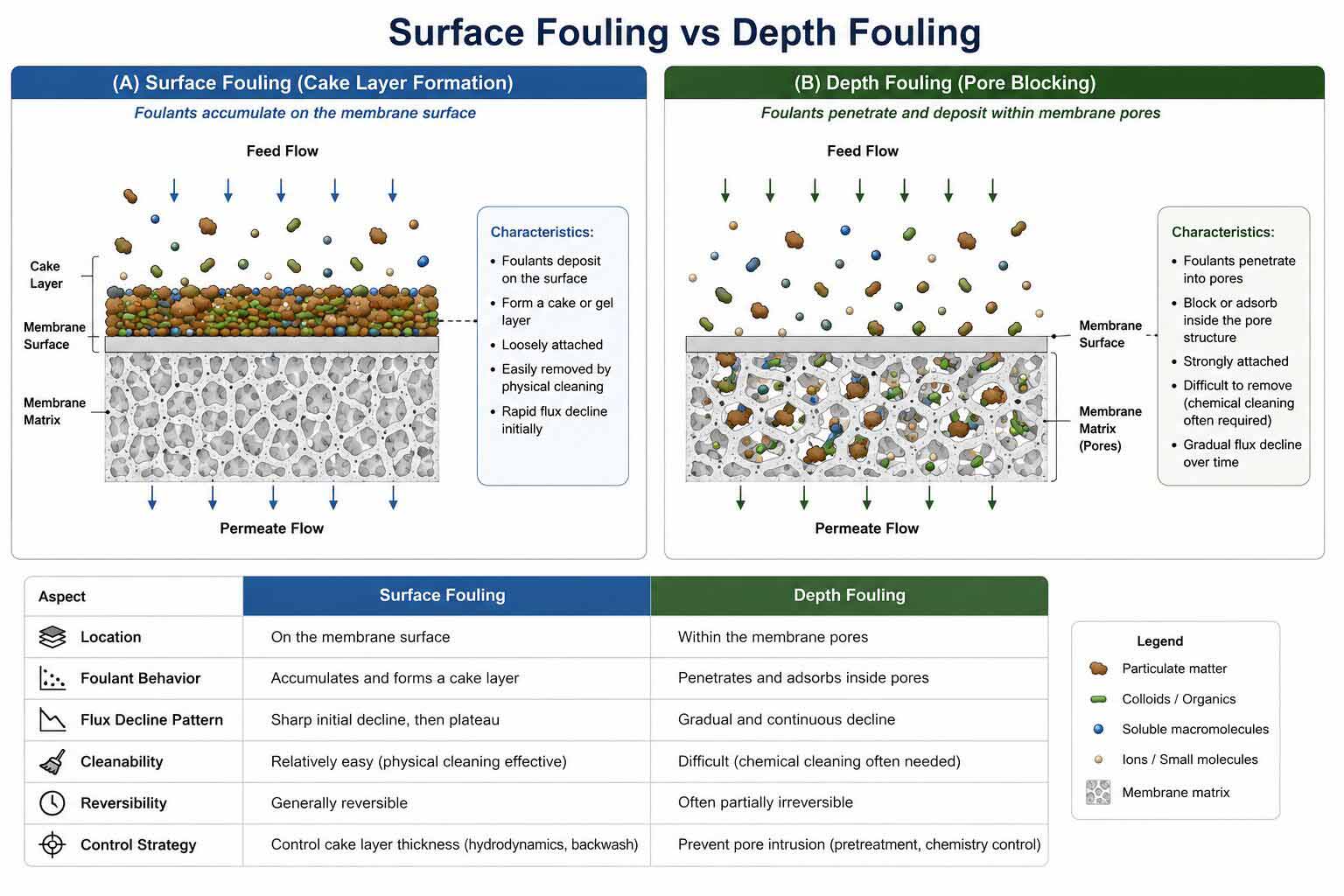
Fine colloidal particles are one of the most difficult contaminants for high-flow filters.
Unlike large suspended solids, colloids:
- penetrate deeply into the media
- block pore structures gradually
- accelerate long-term DP increase
This type of fouling is especially common in:
- seawater desalination
- wastewater reuse systems
- surface water applications
Colloidal fouling usually causes continuous DP increase rather than sudden surface blockage.
3. Flocculant Overdosing
Improper coagulant or flocculant dosing may create sticky gel-like contaminants.
These contaminants:
- blind the media surface rapidly
- reduce effective filtration area
- create unstable DP behavior
In some RO systems, chemical carryover causes faster cartridge plugging than suspended solids themselves.
4. Algae and Biological Fouling
During algae season, many plants experience significantly shorter cartridge life.
Unlike hard particles such as sand or silt, biological contaminants behave differently.
Algae may:
- spread across the media surface
- form slimy biofilms
- block flow channels rapidly
Biological fouling often creates surface blinding rather than true depth loading.
This is especially common in:
- open intake seawater systems
- reservoir water systems
- cooling water systems during summer seasons
How to Diagnose the Fouling Pattern
Understanding the fouling mechanism is critical before selecting a replacement cartridge.
Surface Fouling
Typical Symptoms
- rapid DP increase
- short replacement interval
- outer layer blockage
- slimy contaminant layer
Common Causes
- algae
- flocculant carryover
- biological contamination
- large suspended solids
Depth Fouling
Typical Symptoms
- slower but continuous DP increase
- contaminants trapped inside media depth
- stable but gradual fouling behavior
Common Causes
- colloids
- fine silica
- ultrafine suspended solids
How Filter Structure Affects Cartridge Life
Filter structure directly affects:
- dirt holding capacity
- DP stability
- fouling behavior
- service life
Not all high-flow filters behave the same under unstable water conditions.
Gradient Density Media
Gradient-density media uses a progressive pore structure to distribute contaminants through the entire media depth.
This helps:
- reduce premature surface blinding
- improve dirt holding capacity
- stabilize differential pressure increase
Depth-loading structures usually perform more consistently under fluctuating contaminant conditions.
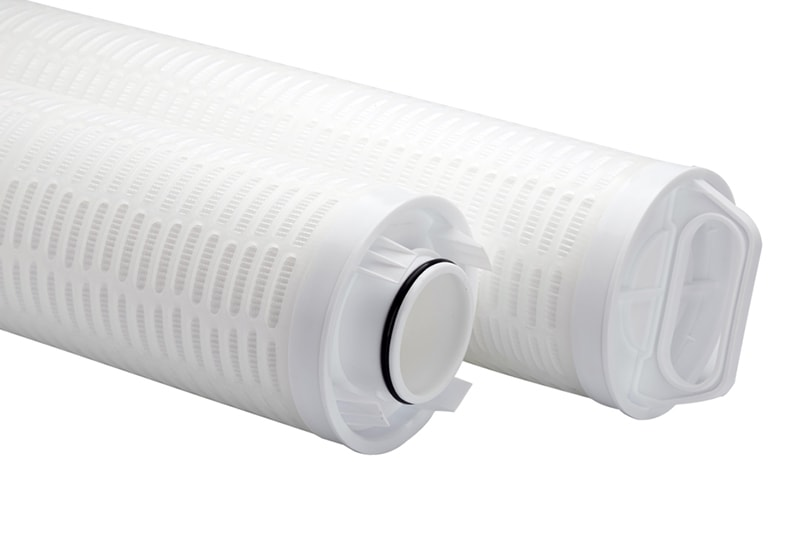
High Filtration Area Design
Optimized pleat geometry improves:
- contaminant distribution
- usable media area
- flow stability
This becomes especially important during:
- algae season
- colloidal loading
- unstable pretreatment conditions
Reinforced Outer Cage Structure
A reinforced outer structure helps:
- maintain stable flow channels
- reduce pleat deformation
- improve operational consistency
This is particularly important in high-flow RO pretreatment systems operating under fluctuating differential pressure conditions.
Recommended Solutions
To reduce rapid cartridge clogging in RO systems:
- monitor UF permeate consistency
- optimize coagulant dosing
- reduce colloidal loading
- monitor SDI trends regularly
- select higher dirt holding structures
- improve pretreatment stability
- match filter structure to contaminant type
In many plants, improving pretreatment stability reduces cartridge replacement frequency more effectively than simply switching micron ratings.
The correct filtration strategy is usually more important than simply choosing a tighter filter.
FAQ
Why do RO security filters foul suddenly?
Sudden fouling is usually caused by upstream contaminant surges, UF instability, algae events, or chemical carryover.
Can UF instability increase cartridge pressure drop?
Yes. Even small intermittent turbidity fluctuations can significantly shorten cartridge life over time.
Is tighter micron rating always better?
No. Overly tight micron ratings may accelerate pressure drop increase and reduce service life under unstable water conditions.
Why does algae clog filters faster than silt?
Algae forms slimy biofilms on the media surface, causing rapid surface blinding rather than gradual depth loading.
How does gradient density media stabilize DP increase?
It distributes contaminants through multiple media layers instead of concentrating fouling only on the outer surface.
Conclusion
Frequent RO security filter clogging is usually not a simple cartridge problem.
It is often a system-level issue involving:
- pretreatment instability
- contaminant behavior
- filtration structure selection
- operational fluctuation
Understanding the real fouling mechanism is critical for improving cartridge life, stabilizing differential pressure, and reducing total filtration operating cost.