Why Are Security Filters Needed Before RO?
Rapid Answer
Security filters are installed before RO systems to protect membranes and high-pressure pumps from suspended solids, colloids, biological contaminants, and unstable particle loading.
Without proper prefiltration, RO systems may experience:
- rapid membrane fouling
- unstable differential pressure
- increased cleaning frequency
- shortened membrane life
- higher operating costs
Security filters act as the final protection barrier before water enters the RO membrane stage.
Why Security Filters Are Critical Before RO
Many operators focus heavily on:
- RO membranes
- chemical dosing
- high-pressure pumps
- CIP procedures
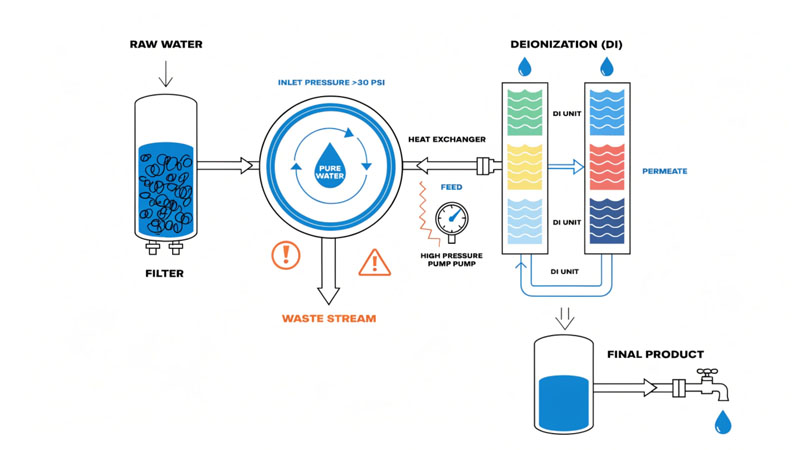
However, pretreatment stability is often the real factor determining membrane performance.
RO membrane stability is usually a reflection of pretreatment stability.
Even small contaminant fluctuations entering the RO stage may gradually accelerate:
- membrane fouling
- channel blockage
- pressure instability
- cleaning frequency
What Does a Security Filter Actually Remove?
Security filters help remove contaminants that may damage or foul RO membranes over time.
Fine Suspended Solids
Fine particles such as:
- sand
- rust
- silt
- suspended solids
may:
- block membrane channels
- increase pressure drop
- reduce permeate flow
Even when particles are relatively small, continuous loading may gradually reduce membrane efficiency.
Colloidal Contamination
Colloids are one of the most difficult contaminants in RO pretreatment systems.
Unlike larger suspended solids, colloidal particles:
- remain suspended for long periods
- penetrate deeply into filter media
- gradually foul membrane surfaces
Colloidal fouling often develops slowly but continuously.
This type of fouling is especially common in:
- seawater desalination
- surface water systems
- wastewater reuse systems
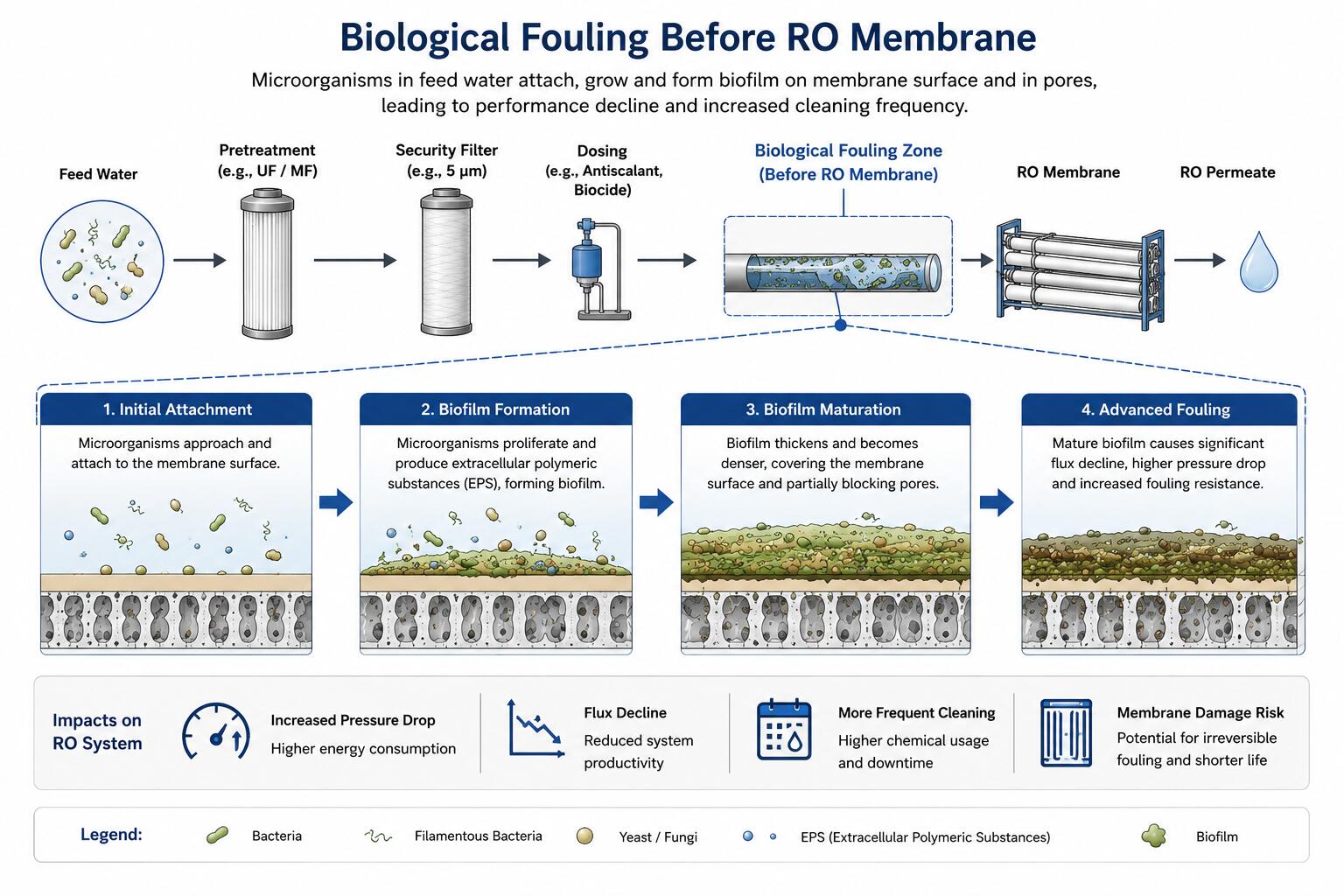
Biological Contamination
Biological contaminants may include:
- algae
- biofilm fragments
- organic slime
- bacterial residue
These contaminants often create unstable fouling behavior during:
- warm seasons
- algae bloom periods
- raw water quality fluctuations
Why Pretreatment Stability Matters More Than Micron Rating
Many plants attempt to solve fouling problems simply by selecting tighter micron ratings.
However, tighter filtration alone does not always improve RO stability.
Pretreatment consistency is usually more important than simply choosing a tighter cartridge filter.
Common Misunderstanding
Some systems use:
- 1 micron filters
- 0.5 micron filters
- tighter absolute-rated cartridges
but still experience:
- rapid differential pressure increase
- unstable cartridge life
- premature membrane fouling
This usually indicates:
- unstable UF permeate
- colloidal loading
- biological contamination
- improper coagulant dosing
The root cause is often system instability rather than cartridge failure.
Surface Fouling vs Depth Loading
Different contaminants foul filters differently.
Understanding the fouling mechanism is critical before selecting a replacement cartridge.
Surface Fouling
Common Causes
- algae
- biological slime
- flocculant carryover
- large suspended solids
Typical Symptoms
- rapid pressure drop increase
- slimy surface contamination
- short cartridge replacement interval
Surface fouling usually creates rapid media blinding.
Depth Loading
Common Causes
- colloids
- ultrafine suspended solids
- fine silica particles
Typical Symptoms
- slower but continuous pressure increase
- deeper particle penetration
- more stable fouling behavior
Depth-loading structures usually provide better dirt holding performance under unstable water conditions.
How Security Filters Protect RO Membranes
Stable security filtration helps:
- reduce membrane fouling rate
- stabilize system differential pressure
- improve membrane operating life
- reduce CIP frequency
- improve operational consistency
In many desalination plants, membrane performance is directly linked to pretreatment stability.
How Filter Structure Affects RO Protection
Not all high-flow filters perform equally under unstable contaminant conditions.
Filter structure directly affects:
- dirt holding capacity
- fouling stability
- pressure drop behavior
- filtration consistency
Gradient Density Media
Gradient-density structures distribute contaminants through multiple media layers instead of concentrating fouling only on the outer surface.
This helps:
- reduce premature surface blinding
- improve dirt holding capacity
- stabilize differential pressure increase
Depth-loading media structures often perform better during contaminant fluctuations.
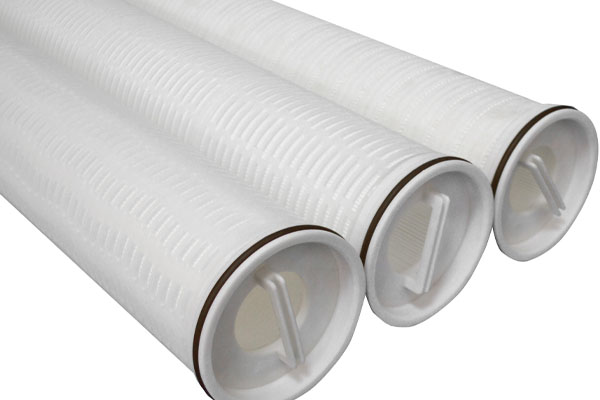
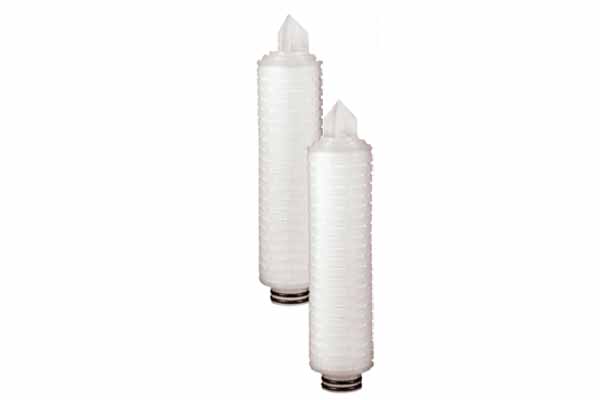
High Filtration Area Design
High-surface-area pleated filters help:
- improve contaminant distribution
- reduce localized fouling
- increase usable filter life
This becomes especially important during:
- algae season
- colloidal loading
- unstable pretreatment conditions
Reinforced Structure Stability
Stable outer cage structures help:
- maintain flow channels
- reduce pleat deformation
- improve operational consistency under high loading conditions
Recommended RO Pretreatment Strategy
To improve RO system stability:
- stabilize UF permeate quality
- monitor SDI trends regularly
- optimize coagulant dosing
- reduce colloidal loading
- select high dirt holding filter structures
- monitor differential pressure behavior
- improve pretreatment consistency
The correct pretreatment strategy is usually more important than simply choosing a tighter filter.
FAQ
Why is a security filter installed before RO?
It removes suspended solids, colloids, and biological contaminants that may foul or damage RO membranes.
Can RO operate without a security filter?
In most industrial applications, operating without a security filter significantly increases membrane fouling risk.
Is tighter micron filtration always better?
No. Overly tight filters may increase pressure drop and shorten cartridge life without solving upstream instability.
Why do RO membranes foul even with cartridge filters installed?
The root cause is often unstable pretreatment conditions, colloidal contamination, or biological fouling.
Why are colloids difficult to remove before RO?
Because colloidal particles remain suspended for long periods and gradually foul membrane surfaces over time.
Conclusion
Security filters are not simply disposable cartridges before RO systems.
They are a critical protection barrier that stabilizes:
- membrane fouling behavior
- operational reliability
- pressure stability
- long-term RO performance
Understanding contaminant behavior, fouling mechanisms, and pretreatment stability is essential for optimizing industrial RO systems.