What Is the Difference Between a Resin Trap Filter Element and a Regular Security Filter Element?
Confusing these two filters can lead to costly system failures. Imagine expensive ion exchange resin destroying your downstream equipment. Understanding their specific roles is essential to prevent this.
A resin trap filter is a coarse safety screen installed after an ion exchange system to catch any escaping resin beads. In contrast, a security filter is a fine pre-filter used before sensitive equipment, like RO membranes, to remove general suspended solids and prevent fouling.
At a glance, both might seem like simple filters designed to stop contaminants. However, their jobs, designs, and locations within a system are completely different. Using the wrong one is not just inefficient; it’s a recipe for disaster. Let’s dive deeper into what sets them apart and why getting it right is so critical for your operations and your budget.
How Does a Resin Trap Filter Actually Work?
Your ion exchange system is vital, but what happens if the costly resin beads escape? This can contaminate your entire process, forcing expensive shutdowns and equipment replacement. A resin trap is your final safety net.
A resin trap filter works by physically blocking ion exchange resin beads from moving downstream. It uses a robust screen or wedge wire element with openings just smaller than the resin beads, typically around 150-250 microns, capturing any escaped media while allowing treated water through.
The primary purpose of a resin trap is not fine filtration; it’s insurance. Think of it as a last line of defense. It sits right after the ion exchange vessel, ready to catch any resin beads that might get through a broken underdrain or nozzle. Under normal conditions, it does very little, offering a very low pressure drop so it doesn’t impede flow. But during a system failure, it becomes the most important component, preventing a catastrophic loss of expensive media and protecting everything downstream. I remember a client at a large power plant in Saudi Arabia who learned this the hard way. During a maintenance cycle, they briefly bypassed their resin trap. A small, unnoticed leak in their ion exchange unit allowed resin to pour into their condensate polishing system. The resulting damage and downtime cost them hundreds of thousands of dollars. A simple, properly installed resin trap would have prevented it all.
Key Design Features of a Resin Trap
The design is built for a specific, rugged purpose. It’s not about capturing silt; it’s about catching specific, larger particles under pressure.
| Feature | Resin Trap Filter |
|---|---|
| Primary Goal | Capture escaping ion exchange resin beads |
| Micron Rating | Coarse (e.g., 150-250 µm) |
| Material | Often robust stainless steel (wedge wire) |
| Flow Design | Low pressure drop, high flow capacity |
| Placement | Immediately after an ion exchange unit |
What Makes a Security Filter Element Different in its Role?
Your high-value RO membranes are extremely sensitive to tiny particles. Even a small amount of silt or organic debris can cause irreversible fouling, slashing your system’s efficiency and service life. A security filter stands guard.
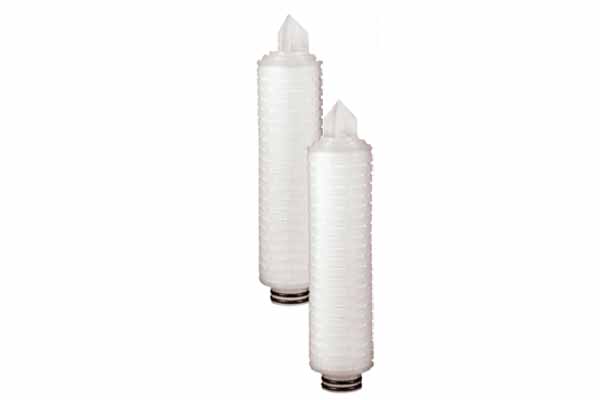
A security filter element’s main job is to protect downstream equipment, like RO membranes, from fine suspended solids. It uses depth or pleated filter media with a much finer micron rating, typically 1 to 10 microns, to capture a wide range of contaminants.
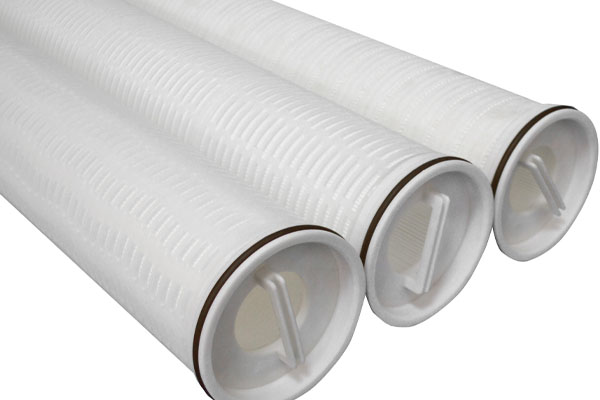
Unlike a resin trap, a security filter is a workhorse, not just an insurance policy. It’s placed just before sensitive equipment and is designed to constantly remove fine particles from the feed water. This is why we, at ecofiltrone, specialize in high-flow pleated security cartridges. Our clients, especially those in seawater desalination and power generation, rely on these filters to maximize the operational life of their RO membranes. The goal here is high efficiency and high dirt-holding capacity. A good security filter reduces long-term operational costs (OPEX) by minimizing the frequency of RO membrane cleaning and replacement. As a manufacturer, we get requests every day from project managers looking for cost-effective alternatives to Pall or 3M filters that can deliver the same performance. For them, a 5-micron absolute-rated high-flow cartridge is a critical component for system stability.
Comparing Security Filter and Resin Trap Applications
The name says it all. A "security" filter provides security from fine contaminants. A "resin trap" provides a trap for resin.
| Aspect | Security Filter Element | Resin Trap Filter |
|---|---|---|
| Primary Role | Protection of equipment (e.g., RO membranes) | Protection against catastrophic media loss |
| Contaminant Type | Fine suspended solids, silt, colloids | Specific, larger particles (ion exchange resin) |
| Typical Micron Rating | Fine (1, 5, 10 µm) | Coarse (150-250 µm) |
| Location | Before sensitive processes (Pre-RO) | After ion exchange beds |
| Common Name | Cartridge Filter, Pre-filter, Guard Filter | Media Trap, Resin Catcher |
Can You Use a Security Filter as a Resin Trap, or Vice Versa?
You have a filter housing to fill and only one type of cartridge on hand. Using the wrong one could cause either an immediate system shutdown or silent, long-term damage. Never substitute one for the other.
No, you absolutely cannot use them interchangeably. A fine security filter used as a resin trap would clog instantly, creating a massive pressure drop. A coarse resin trap used as a security filter would fail to protect downstream equipment from fine particles.
Let’s break down why this is a terrible idea. If you put one of our 5-micron high-flow security filters in place of a resin trap, it would be a disaster. The filter’s fine pores are designed to capture silt, not large resin beads at high velocity. If a resin leak occurred, the filter would blind off almost instantly. This would create a huge pressure differential, starving the downstream process of water and potentially even rupturing the filter element or housing. I once worked with a distributor in the U.S. whose customer in a large brewery did this. They thought ‘finer is better’ and installed a security filter after their demineralizer. A small resin leak caused the pressure to spike so high it damaged the filter housing. Conversely, using a coarse 200-micron resin trap as a security filter is just as bad, but the damage is silent. It would let all the fine silt and particles flow right through, directly into your expensive RO membranes. It’s like using a fishing net to catch sand. You wouldn’t see a problem immediately, but your membrane performance would degrade rapidly, leading to costly premature replacement.
The Financial Impact of Incorrect Filter Selection
The consequences of a mismatch go straight to your bottom line.
| Mismatch Scenario | Immediate Consequence | Long-Term Consequence |
|---|---|---|
| Security Filter as Resin Trap | High pressure drop, system shutdown | Filter damage, process flow starvation |
| Resin Trap as Security Filter | No immediate visible issue | RO membrane fouling, reduced efficiency, costly replacements |
Conclusion
Resin traps are coarse safety nets for media, while security filters are fine protectors for equipment. Choosing correctly is not a small detail—it is vital for your system’s safety and efficiency.