What Impact Does High-Oil-Content Wastewater Have on the Membrane Surface of a Pleated Filter Cartridge?
Rapid Answer
High-oil-content wastewater does not merely "dirty" a pleated filter cartridge; it fundamentally alters the fluid dynamics at the membrane surface, creating an impenetrable liquid block.
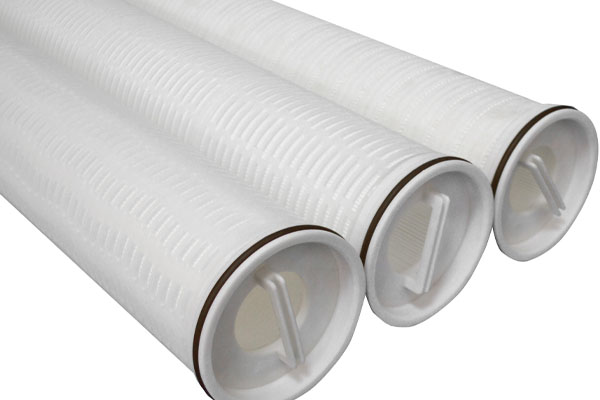
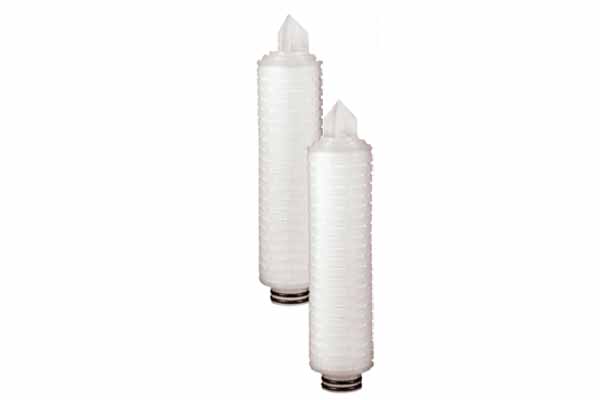
When emulsified or free oil contacts standard polymer filtration media (like Polypropylene or PES), the oil droplets coalesce and spread, coating the fibers in a microscopic hydrocarbon film. Because oil and water are immiscible, this film acts as a liquid barrier. The pressure required to push water through an oil-wetted pore is mathematically exponentially higher than pushing it through a clean pore. Consequently, the filter experiences an instantaneous, vertical spike in differential pressure (△P), crushing the pleats and terminating the filter’s life in a matter of hours, long before its actual solid dirt-holding capacity is reached.
The Physics of Hydrocarbon Fouling at the Membrane
To understand why pleated filters fail so rapidly in oily wastewater, operators must examine the surface chemistry and capillary mechanics occurring at the micron level.
The impact is driven by three distinct physical mechanisms:
1. Oleophilic Attraction (Surface Wetting)
Most standard industrial pleated filters are manufactured from Polypropylene (PP). Polypropylene is inherently oleophilic (oil-attracting) and hydrophobic (water-repelling). When high-oil wastewater flows through the housing, the PP fibers actively attract the oil droplets. The oil preferentially wets the surface of the media, displacing the water and forming a continuous hydrocarbon film across the entire pleated surface area.
2. Capillary Sealing (The "Liquid Block")
Filtration relies on open pores to allow fluid passage. When an oil droplet is forced into a micron-sized pore, it deforms and plugs the opening. Because of the high interfacial tension between oil and water, the water cannot simply "push" the oil out of the pore. To force water through an oil-plugged pore, the system pump must overcome the capillary entry pressure—which often exceeds the structural burst pressure of the filter cartridge itself. The pore is effectively permanently blinded.
3. Pleat Pinching and Structural Collapse
A pleated cartridge relies on a V-shaped geometry to maximize surface area. As the oil blinds the outer surface, the local flow velocity through the remaining open pores skyrockets, dragging the △P up with it. This massive hydraulic force pushes the adjacent pleats together (pleat pinching). Once the pleats pinch shut, the effective surface area of the filter drops by 80%, accelerating the △P spike into a vertical "hockey stick" curve and causing structural collapse of the support core.
Operational Diagnostics: Cross-Referencing Oil Blinding Signals
Field engineers often misdiagnose oil blinding as a "high suspended solids" event because the △P signature looks similar on a SCADA screen. A physical and operational cross-reference is required.
Membrane Oil Fouling Diagnostic Matrix
| Correlated Operational Signals | Diagnostic Inference (Root Cause) | Typical Operator Action |
|---|---|---|
| △P spikes in hours + Filter media feels slick, water beads off it | Severe Oil Blinding (Film Formation): Free oil has completely wetted the media. The filter is blocked by liquid, not solid dirt. | Immediately inspect upstream oil/water separators (DAF, hydrocyclones) for carryover. |
| Effluent water shows oil sheen + △P remains flat | Droplet Extrusion / Emulsion Shear: The filter pores are too large, or the oil is highly emulsified. The pump pressure is shearing the oil droplets into sub-micron sizes and pushing them through the media. | Upgrade to coalescing technology; standard particulate filters cannot stop sheared emulsions. |
| Filter pleats are crushed/deformed + Dark brown/black sticky coating | Hydrocarbon / Solid Agglomeration: Oil is acting as a binder, gluing fine inorganic solids (like sand or rust) into a dense, impermeable concrete-like paste on the pleats. | Implement a sacrificial oil-absorbing depth pre-filter to break the binding loop. |
Field Experience: The "Phantom Solids" in a Desalter Effluent
At a petroleum refinery, operators were polishing the effluent water from an electrostatic desalter before routing it to a reverse osmosis (RO) reuse system. They installed 5-micron absolute pleated PP cartridges.
The design specification stated the filters should last 14 days based on the Total Suspended Solids (TSS) load of 15 ppm. Instead, the filters were hitting the 2.5 bar △P alarm every 12 hours.
The procurement team assumed the filter manufacturer had provided a defective, undersized batch. However, an autopsy of the cartridges revealed that the pleated media was almost entirely free of solid particulate. Instead, the media was saturated with a clear, highly viscous hydrocarbon.
Diagnostic water sampling revealed that while the TSS was indeed only 15 ppm, the upstream coalescer had failed, allowing a transient spike of 80 ppm of free oil (Total Petroleum Hydrocarbons – TPH) to reach the filters. The oleophilic PP media instantly absorbed the oil, creating a capillary liquid block.
The engineers realized that pleated surface filters cannot be used as oil separators. The solution was to install a deep-bed nut shell filter and a specialized oil-absorbing cellulose-blend pre-filter stage to reduce the TPH to < 2 ppm before the fluid ever touched the absolute pleated cartridges. Once the oil was removed, the pleated filters easily achieved their 14-day lifespan.
The Engineering Mitigation Strategy
If a wastewater stream contains > 5 ppm of free or emulsified oil, standard pleated surface filtration will fail economically. Process engineers must implement specific defensive layers:
- Decouple Liquid vs. Solid Separation: Never use a pleated particulate filter to catch oil. Upstream mechanical separation (DAF, API separators, Hydrocyclones) must be optimized first.
- Deploy Oil-Absorbent Depth Matrices: If trace oil (5 to 20 ppm) is unavoidable, install a pre-filtration stage utilizing modified cellulose, meltblown polypropylene with graded density, or specialized oleophilic resins designed to act as a sponge, soaking up the oil before it reaches the pleated membrane.
- Specify Oleophobic (Oil-Repelling) Membranes: For the final security filtration stage, specify advanced membrane materials that are specifically surface-modified to be oleophobic and hydrophilic (water-attracting). These membranes will allow water to pass while physically repelling oil droplets, preventing the formation of the liquid block.