What Does the Strict Limitation on Chloride Ion Content in Power Plant Boiler Feedwater Systems Mean?
Rapid Answer
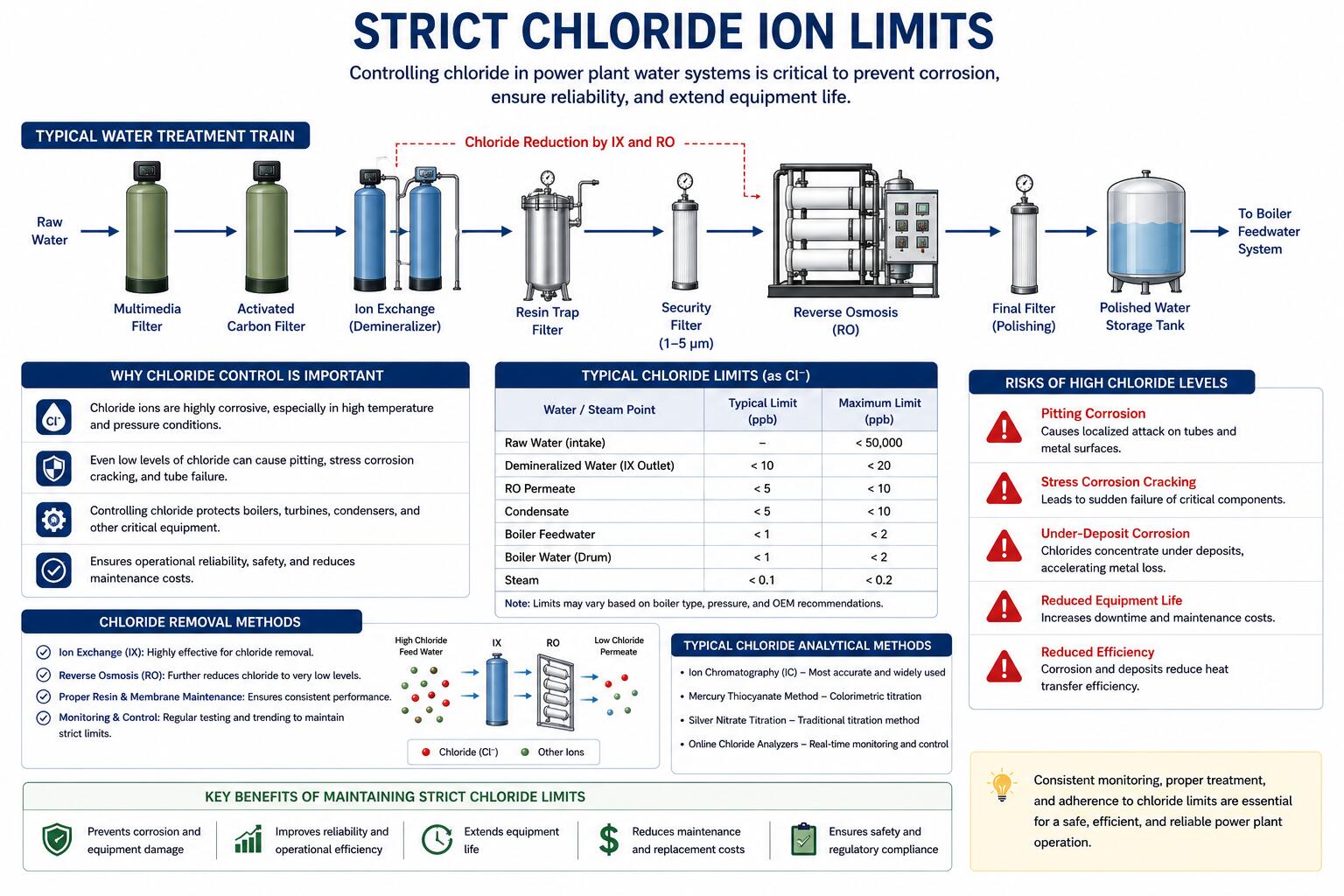
The strict limitation on chloride ion content in boiler feedwater—often controlled at ppb-level limits (e.g., below 2 to 3 ppb, depending on specific plant chemistry guidelines and turbine OEM requirements)—serves as a critical diagnostic baseline for predicting irreversible metallurgical degradation.
Chloride ions destabilize the passive oxide layer (magnetite or chromium oxide) on internal metal surfaces by locally disrupting the oxygen equilibrium. In high-temperature steam environments, this localized electrochemical imbalance triggers pitting corrosion and stress corrosion cracking (SCC).
Consequently, the chloride limit is not merely a static water chemistry target; it is a primary operational indicator used to prevent sudden boiler tube ruptures, turbine blade failures, and extended unplanned outages.
The Metallurgy of Chloride-Induced Degradation
To understand the operational severity of chloride intrusion, it is necessary to examine the failure mechanism at the metal surface boundary.
Austenitic stainless steels and boiler alloys rely on a continuous, naturally forming passive oxide layer. When chloride ions (Cl-) accumulate inside the steam cycle, they migrate to micro-imperfections in this passive layer. Because chlorides are highly electronegative, they displace the protective oxygen, creating a highly acidic, localized anodic micro-environment.
This process generally manifests in two primary failure modes:
- Pitting Corrosion: Occurs beneath an apparently intact surface. It is metallurgically insidious because it does not result in uniform wall thinning, making it difficult to detect via standard ultrasonic thickness gauging until a high-pressure rupture occurs.
- Stress Corrosion Cracking (SCC): Occurs when elevated chloride concentrations intersect with residual tensile stress (e.g., at turbine blade roots, weld heat-affected zones, or U-bends). SCC propagates rapidly along grain boundaries, often leading to structural shearing without prior mechanical deformation.
Operational Diagnostics: Cross-Referencing Feedwater Signals
Experienced plant operators do not rely on a single parameter to diagnose chloride contamination. Instead, they evaluate the rate of change and cross-reference multiple operational signals across the SCADA system.
If a chloride excursion is suspected, examining the logical linkage between conductivity, particulate transport, and system pressure drops is essential.
The Condensate System Diagnostic Matrix
| Correlated Operational Signals | Diagnostic Inference (Root Cause) | Typical Operator Action |
|---|---|---|
| Slow CACE upward drift + RO △ P stable + Silica stable | May indicate gradual RO membrane aging or slow degradation of makeup water ion-exchange resins. | Schedule performance testing for makeup water treatment system. |
| CACE transient spikes + Correlates with turbine load changes | Often suggests a mechanically responsive micro-leak in the condenser. | Isolate suspected condenser bay; initiate leak detection (e.g., helium testing). |
| CACE stable + Sodium ( Na + ) spike | Likely a sodium throw from an exhausting condensate polishing cation resin. | Switch or regenerate the active condensate polishing bed before chloride breakthrough occurs. |
| CACE ↑ + Particulate Iron ↑ + Pre-filter △ P ↑ | Strongly points to an active cooling water leak causing immediate flow-accelerated corrosion (FAC). | Investigate condenser integrity and prepare for shortened pre-filter run lengths. |
Field Experience: Diagnosing the Transient Condenser Leak
In a supercritical thermal plant project operating with seawater cooling, operators observed an intermittent, unexplained rise in Conductivity After Cation Exchange (CACE) in the condensate return loop.
Initially, the plant chemistry team suspected continuous ionic breakthrough from the makeup water system. However, diagnostic trending revealed a specific operational dynamic: the conductivity spike typically appeared 3–5 minutes after the turbine load exceeded approximately 80%, then gradually stabilized once the unit returned to steady-state base load.
This lagging transient behavior strongly suggested a mechanically responsive condenser leak. The diagnosis: a microscopic fatigue crack in a titanium condenser tube. During base-load operation, the crack remained tightly closed. However, during load ramp-ups, thermal expansion and increased exhaust steam velocity caused the tube to flex, temporarily aspirating chloride-rich seawater into the high-purity condensate.
Identifying this dynamic parameter linkage allowed the plant to isolate the specific condenser bay during the next scheduled low-load period, preventing massive chloride accumulation in the boiler.
The Engineering Logic of Condensate Pre-Filtration
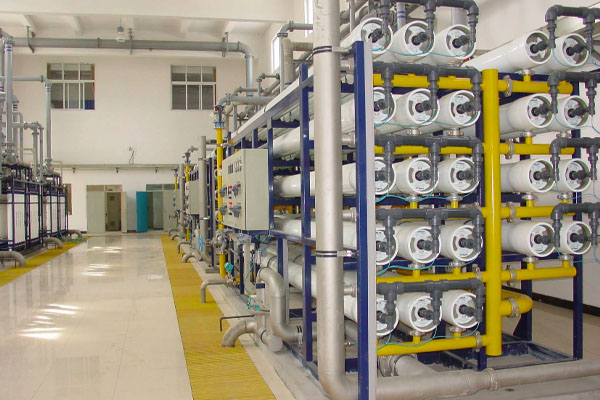
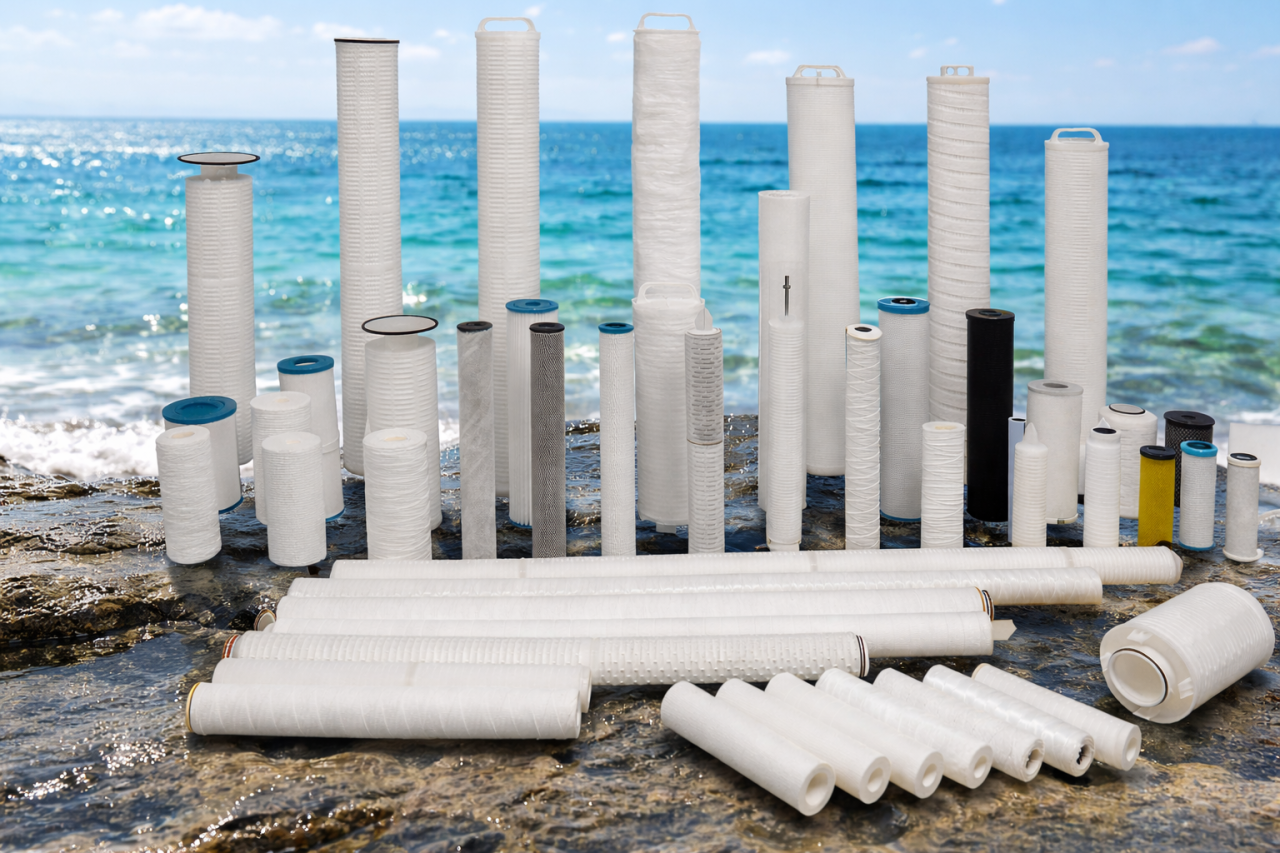
Crucial Clarification: High-flow filter cartridges do not remove dissolved chloride ions. Instead, they serve as the mechanical barrier that protects the delicate RO membranes and ion-exchange resin systems that actually perform dissolved ion removal.
When chloride limits are compromised, the immediate secondary effect is the destabilization of the passive oxide layer, resulting in an "iron throw"—a sudden release of particulate iron oxides (crud) into the condensate stream.
This creates a severe operational challenge for the Condensate Polishing Plant (CPP). If the deep-bed ion exchange resins become coated in particulate iron, their exchange capacity drops significantly, allowing chlorides to bypass directly into the feedwater heaters.
O&M Consequences of Iron Throw Events
During severe iron throw events, operators may observe condensate pre-filter cartridge replacement frequency shortening from several months to only a few days as differential pressure (△ P) accelerates rapidly.
Standard depth filters (such as conventional 2.5-inch melt-blown PP) typically fail in this scenario. The massive hydraulic flow causes rapid structural deformation, and the sudden influx of iron instantly blinds the media, forcing a system bypass.
The Operational Justification for High-Flow Structures
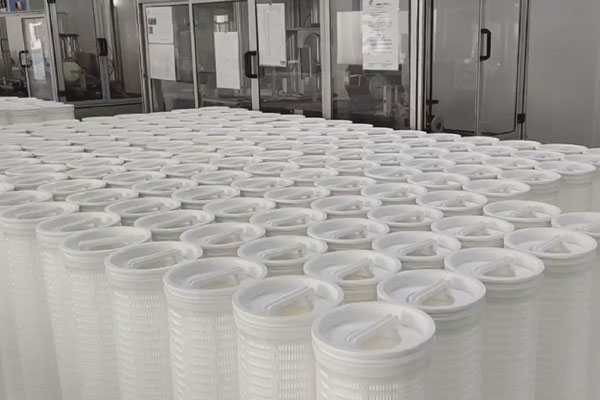
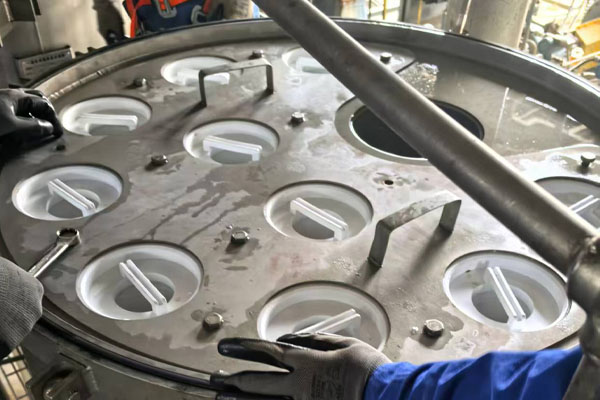
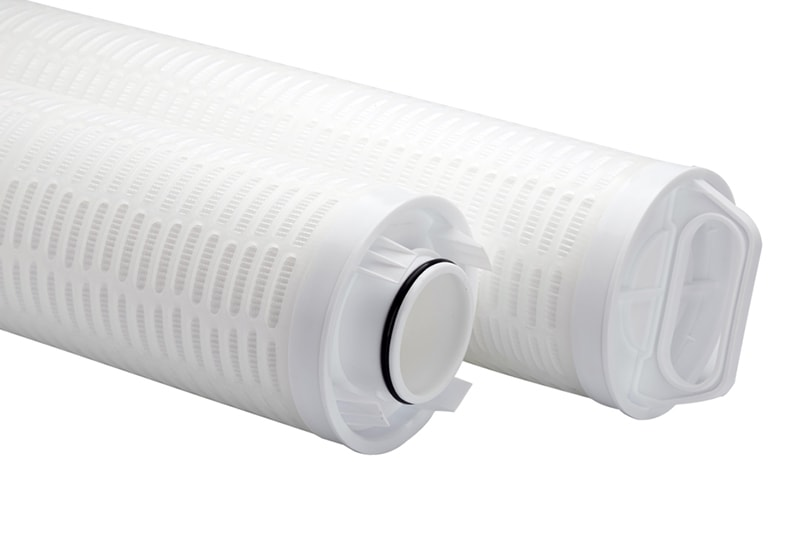
To decouple particulate filtration from dissolved ion exchange, modern power plants typically specify high-flow, large-diameter (e.g., 60-inch) pleated filter structures upstream of the resin beds.
The operational decision logic is based on maintaining system stability:
- Hydraulic Stability: The extended pleated surface area maintains an ultra-low initial △ P (typically <0.1 bar), ensuring condensate extraction pumps do not experience sudden hydraulic resistance.
- Run Length Extension: During a transient iron throw, the rigid pleated media can absorb a high volume of suspended iron oxides, preventing the rapid △ P spikes that force premature shutdowns.
- Resin Performance Protection: By mechanically arresting the particulate crud, the downstream ion-exchange resins remain hydraulically clean. This allows the resins to maintain stable ion exchange performance, capturing the dissolved chlorides before they enter the steam generator.
Conclusion
Controlling chloride ions is an active diagnostic discipline. By cross-referencing conductivity trends, pressure differentials, and system load variations, operators can identify the mechanical precursors to chloride intrusion long before irreversible metallurgical damage occurs.
Strategically deploying robust, high-flow pre-filtration safeguards ensures that when transient chloride events do happen, the plant’s active chemical defense systems remain clean, stable, and fully operational.