Reducing Cartridge Deformation in Hot Process Liquid Filtration
High Temperature Filtration Often Causes Structural Instability Inside Filter Cartridges
In hot process liquid filtration systems, cartridge deformation is often caused by combined thermal stress, pressure fluctuation, and unstable flow distribution rather than temperature alone.
When filtration structures soften or lose mechanical stability under elevated temperature conditions, cartridges may deform, collapse, or experience unstable ΔP behavior, especially during repeated startup, shutdown, or cleaning cycles.
Example:
“Cartridge deformation became significantly worse after operating temperature increased above 90°C during repeated cleaning cycles.”
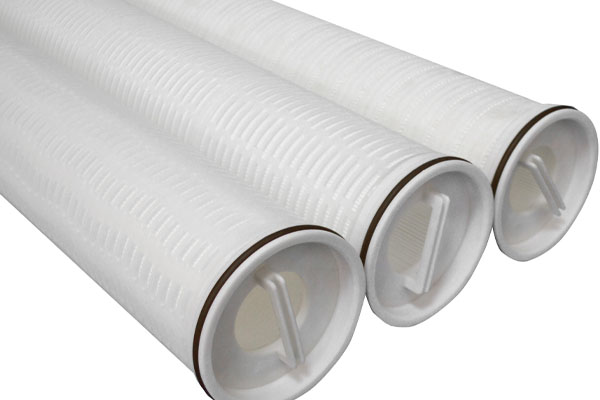
![High temperature process liquid filtration causing cartridge deformation]
What Operators Usually Observe
Operators commonly notice:
- pleat deformation
- cartridge bending
- unstable ΔP increase
- shortened cartridge lifetime
- collapsed flow channels
- deformation near inlet zone
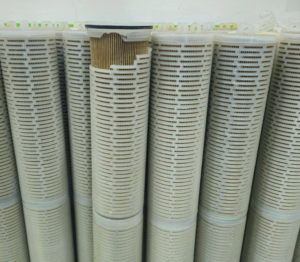
In many cases, cartridges removed from high-temperature systems show structural distortion concentrated near the outer support structure or pleat surface.
Example:
“Removed cartridges showed severe pleat distortion near the inlet section after repeated thermal cycling.”
What Usually Causes It
Thermal Stress
Repeated heating and cooling cycles may gradually weaken cartridge structural stability.
This often causes:
- pleat deformation
- bonding stress
- media softening
- support instability
Thermal expansion differences between filtration layers may further increase deformation risk.
Excessive Differential Pressure
Under high-temperature conditions, unstable ΔP increase may overload weakened cartridge structures.
This becomes more severe when:
- fouling accumulates rapidly
- flow channels become restricted
- surface blinding occurs
- viscosity changes significantly
“ΔP increased rapidly during high-viscosity production cycles before deformation appeared.”
Weak Flow Distribution
Uneven flow distribution may create localized overload zones inside the cartridge.
Under elevated temperatures, these localized stresses may accelerate:
- pleat collapse
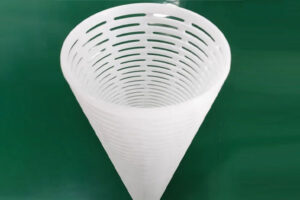
- cage deformation
- media distortion
- structural fatigue
Incompatible Filter Structure
Some filtration structures designed for standard temperature operation may not maintain sufficient rigidity under hot liquid conditions.
This often affects:
- pleat stability
- bonding integrity
- cage strength
- dimensional stability
—
What Should Be Checked Onsite
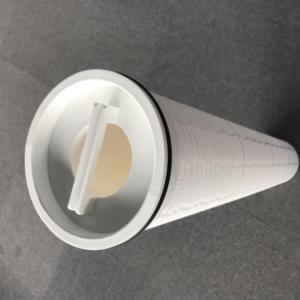
Inspect Removed Cartridges
Check:
- pleat deformation location
- collapse direction
- media softening
- cage distortion
- fouling distribution
In many systems, deformation patterns help identify whether the primary issue is thermal stress or flow overload.
Example:
“Pleat deformation was concentrated mainly near the inlet side where fouling and flow restriction were highest.”
Review Operating Conditions
Review:
- operating temperature trend
- pressure fluctuation
- startup frequency
- CIP conditions
- flow rate changes
- liquid viscosity variation
Rapid deformation often reflects unstable thermal and hydraulic conditions combined together.
Engineering Insight
In many hot liquid filtration systems, cartridge deformation is not caused by temperature alone.
The real issue is often the interaction between:
- thermal stress
- unstable ΔP
- localized fouling
- weak flow distribution
- insufficient structural rigidity
Once flow channels become restricted under high temperature conditions, localized overload increases rapidly and deformation accelerates.
| Onsite Symptom | Possible Cause | What to Check |
|---|---|---|
| Pleat deformation | Thermal stress | Review temperature cycle |
| Localized collapse | Flow maldistribution | Check fouling pattern |
| Rapid ΔP increase | Surface blinding | Inspect contaminant loading |
| Short cartridge life | Structural instability | Review operating pressure |
FAQ
Why do cartridges deform under high temperature conditions?
High temperature may weaken structural stability, especially under unstable pressure and fouling conditions.
Can rapid ΔP increase accelerate deformation?
Yes. Localized pressure overload under fouled conditions may significantly increase deformation risk.
What usually indicates thermal stress damage?
Typical signs include pleat distortion, media softening, and deformation after repeated heating and cooling cycles.
Engineering Perspective
In many hot process liquid filtration systems, stable filtration performance depends not only on temperature resistance, but also on maintaining:
- stable flow distribution
- controlled ΔP behavior
- sufficient structural rigidity
- stable contaminant loading
Reducing cartridge deformation often requires both thermal compatibility and improved structural stability under real operating conditions.