How to accurately measure and compare the effective filtration area (EFA) of two filter cartridges?
Datasheets promise huge surface areas, but your new filters clog faster than the old ones. You feel like you are not getting the performance you paid for.
To accurately compare EFA, you must go beyond the datasheet. Perform a physical check by counting the pleats and measuring their depth. A filter with more, deeper pleats has a genuinely larger effective filtration area.
I once had two suppliers competing for a large contract. Both claimed their High Flow filters had an EFA of 60 square feet. On paper, they were identical. But when we put them into service for a trial, one lasted nearly twice as long as the other. My client was confused, but I suspected the truth. We cut both filters open in our lab. One supplier’s filter unfolded to a massive sheet of media. The other was significantly smaller. Their datasheet number was pure marketing. This experience taught me that you have to be able to verify these claims yourself.
Why can’t I just trust the numbers on the datasheet?
The EFA number on a datasheet seems like a hard fact. But when the filter underperforms, you realize that the number might not be telling the whole story.
You can’t always trust datasheet numbers because there is no universal standard for how EFA is calculated. Some manufacturers may include non-usable areas, like the media glued to the end caps or core, to inflate their specifications.
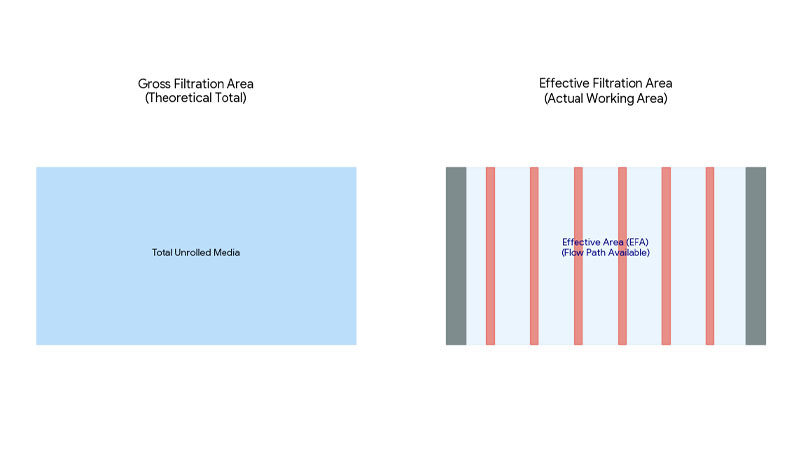
The difference lies in a concept called "Gross Area" versus "Effective Area." The gross area is the total size of the media sheet used to build the filter. The effective area, however, is the part of that media that is actually available for water to pass through. Think of it like a window. The gross area is the entire opening in the wall, but the effective area is only the glass you can see through, not the part covered by the frame. Some manufacturers will advertise the gross area because it’s a bigger, more impressive number. A quality manufacturer will only state the true, usable EFA. The media that is sealed with glue to the inner core and outer cage is not effective. It’s blocked. An engineer like Jacky needs to know this difference to avoid paying for performance that doesn’t really exist.
Is there a simple way to physically check the EFA?
You don’t have a lab to cut filters open, so you feel stuck. You need a practical method to compare two competing filters right on the factory floor.
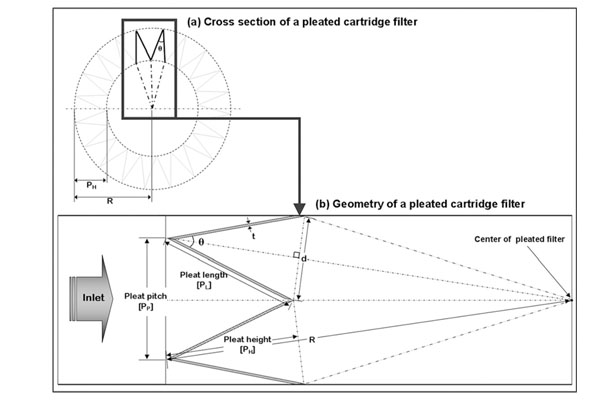
Yes. You can get a very reliable comparison with a simple two-step physical check. First, count the number of pleats. Second, measure the depth of a single pleat. This gives you a powerful, real-world estimate of the filter’s capacity.
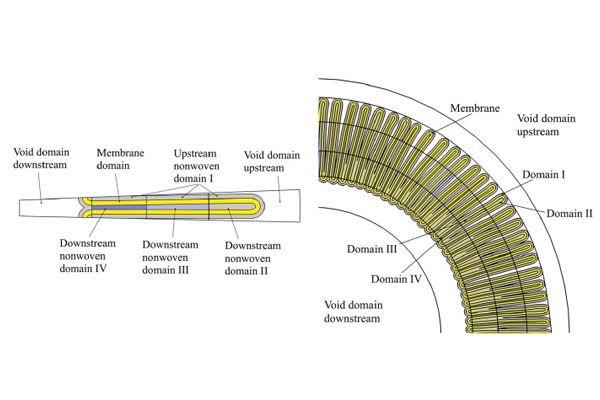
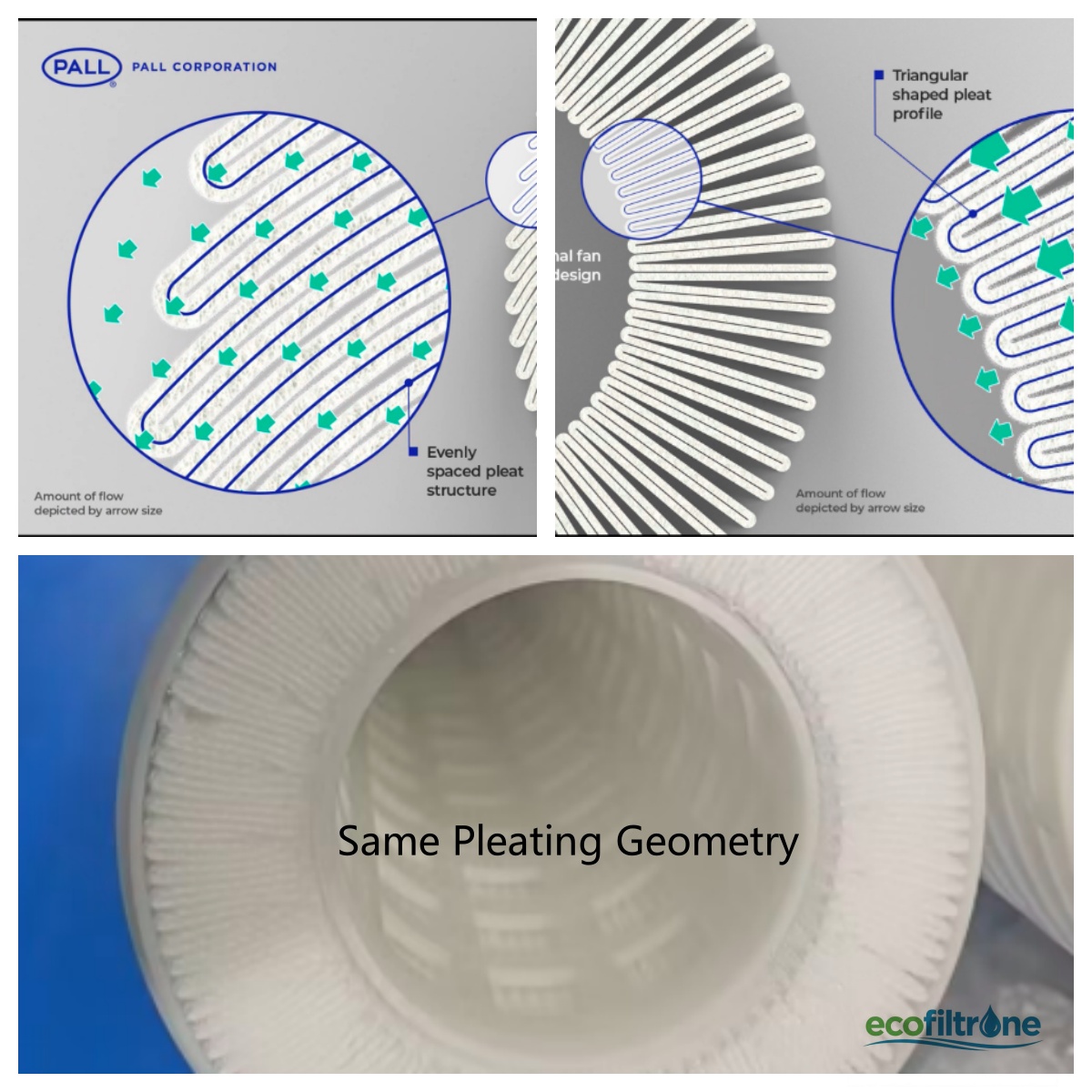
This quick check is my favorite trick for sorting good filters from bad ones without any fancy equipment. Here’s how you do it. Take two filters you want to compare. First, look at the end of the cartridge and count the total number of pleats on each one. A higher pleat count is a good start. But pleat count alone isn’t enough; they could be very shallow. The second step is to measure the pleat depth. Use a small ruler or caliper to measure the distance from the outer edge of the pleat to its innermost point near the core. A filter with both a high pleat count and deep pleats will have a significantly larger EFA. If Filter A has 100 pleats that are 1 inch deep, and Filter B has 80 pleats that are 0.75 inches deep, you can be very confident that Filter A will perform better and last longer, regardless of what the datasheets say.
What is the ultimate ‘gold standard’ for measuring EFA?
Your visual check is a great tool, but for a critical project, you need absolute certainty. You want to know how the experts get an exact, undeniable measurement.
The gold standard for measuring EFA is a destructive physical test. This involves cutting the end caps off the filter, carefully unrolling the entire pleat pack, and using a tape measure to find the true length and width of the media.
This is the definitive method that leaves no room for marketing tricks or calculation shortcuts. In our lab at Ecofiltrone, this is how we qualify a new supplier. We take a sample cartridge and literally dissect it. We carefully cut away the end caps and outer cage. Then, we gently separate the media from the inner core and unfold the entire pleated sheet onto a large table. Once it’s flat, we simply use a tape measure to get the exact length and width. Multiplying these two numbers gives us the true, undeniable filtration area. While you probably won’t be doing this on your own shop floor, you can use this knowledge to your advantage. When evaluating a new filter supplier, ask them if they can provide a certified report from this type of destructive test. A manufacturer who is confident in their product will have this data readily available. It shows they stand by their numbers.
Conclusion
Don’t just trust datasheets. A simple physical check of pleat count and depth gives a reliable EFA estimate. For critical applications, demand certified destructive test data to guarantee performance.