How Gradient Density Media Helps Slow Down ΔP Growth?
Gradient density media slows down △P growth by forcing different-sized contaminants to be captured at distinct depths within the filter matrix, preventing the catastrophic surface blinding that kills standard uniform filters. In a standard uniform filter, large and small particles compete for the exact same pores on the outermost surface, causing the filter to choke and pressure to spike exponentially. Gradient density media acts as a selective sorting mechanism—coarse on the outside, progressively tighter on the inside. This structural segregation ensures that 100% of the filter’s physical void volume is utilized, transforming a rapid pressure spike into a slow, highly economical, linear curve.
The Physics of the Pressure Curve: Uniform vs. Gradient
To understand why gradient density completely alters the differential pressure (△P) curve, process engineers must analyze how particles interact with the media matrix on a microscopic level.
1. The Uniform Density Bottleneck (The 2D Crust)
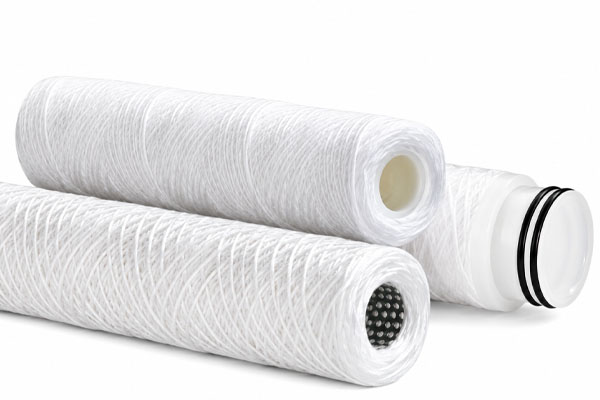
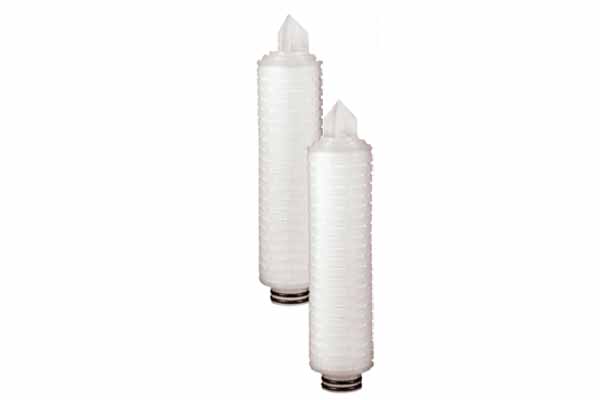
Commodity meltblown filters usually have a uniform pore structure throughout their depth. If you buy a 5-micron uniform filter, the pores on the outside are 5 microns, and the pores on the inside are 5 microns.
- The Failure Mechanism: Industrial water contains a Particle Size Distribution (PSD)—a mix of large (50-micron), medium (20-micron), and fine (5-micron) dirt. When this mixed water hits a uniform 5-micron filter, the large and medium particles cannot penetrate. They all jam together on the outermost surface.
- The △P Impact: This creates a 2D crust (surface blinding). The inner 90% of the filter remains perfectly clean and completely wasted. Because the surface pores are sealed instantly, fluid resistance goes to infinity, resulting in a sudden, vertical "hockey-stick" △P spike.
2. The Gradient Density Funnel (3D Volume Utilization)
Gradient density media is engineered in distinct, bonded layers. A 5-micron absolute gradient filter might have a 50-micron outer layer, a 20-micron middle layer, and a 5-micron inner core.
- The Sorting Mechanism: When the raw water enters the media, the 50-micron rocks and rust are trapped in the coarse outer layer. The 20-micron silt passes through the outer layer and is caught in the middle. Only the finest 5-micron colloids reach the inner core.
- The △P Impact: By physically separating the filtration workload, no single layer is overwhelmed. The dirt is distributed evenly throughout the entire 3D volume of the cartridge. Because fluid paths remain open around the trapped particles at every layer, the hydraulic resistance increases gradually. The △P curve rises in a slow, highly predictable, linear diagonal.
Engineering Comparison Matrix
| Filtration Metric | Uniform Density Media | Gradient Density Media |
|---|---|---|
| Media Utilization | ~10% (Surface only) | 95%+ (True depth loading) |
| △P Growth Curve | Exponential (Vertical spike within days) | Linear (Gradual climb over months) |
| Tolerance to TSS Spikes | Extremely low (Blinds instantly) | Very high (Outer layers act as a buffer) |
| OPEX Impact | High consumable burn rate; constant labor. | Minimized TCO; maximum time online. |
The ecofiltrone Engineering Standard
When clients experience erratic filter life or rapid △P spikes, they often assume they need a filter with a larger micron rating, which puts their downstream Reverse Osmosis (RO) membranes at severe risk.
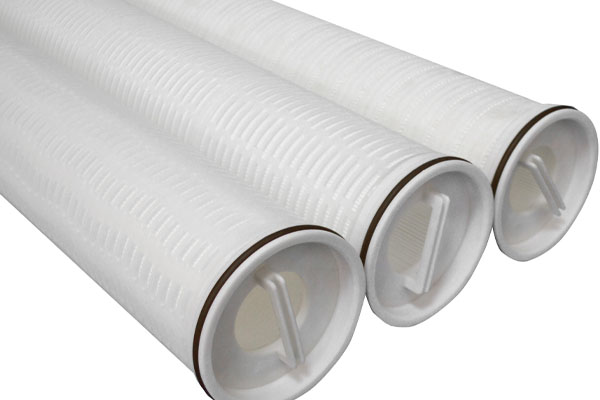
By upgrading to ecofiltrone High-Flow Pleated Cartridges, you do not have to compromise your micron rating to gain a longer lifespan. Our high-flow cartridges combine massive pleated surface area with advanced graded-density micro-glass and polypropylene layers.
This dual-engineering approach means the coarse outer layers act as an integrated pre-filter, absorbing heavy sludge and crud bursts, while the absolute-rated inner layers guarantee ultimate RO membrane security. The result is absolute particle retention coupled with an ultra-flat △P curve that extends your change-out intervals from weeks to months.
Use the interactive simulator below to visualize exactly how gradient layers sort particles by size, preventing the surface blinding that destroys uniform filters.