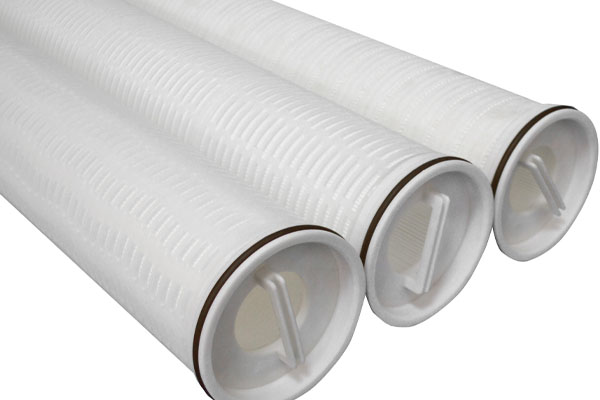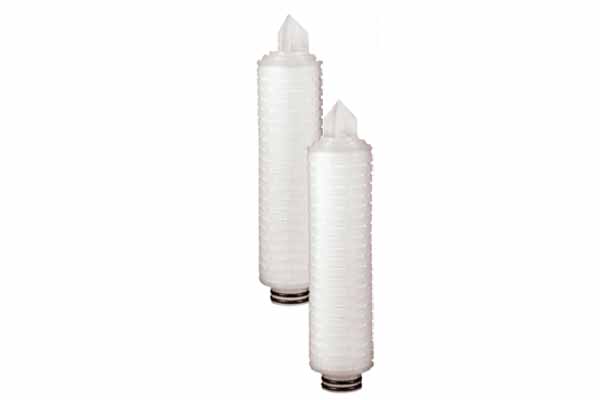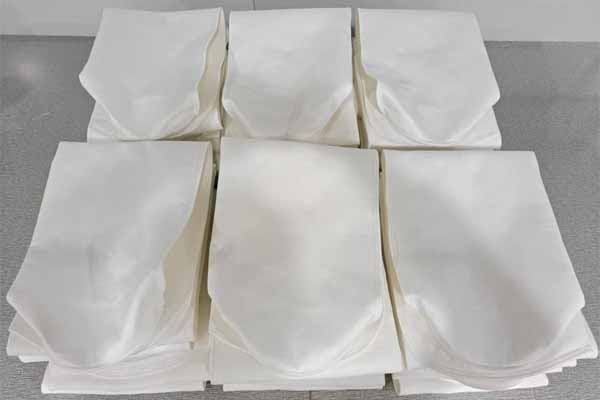
Running a massive desalination plant is a huge challenge. One wrong choice in your filter setup can halt the entire operation, costing a fortune. We know how to avoid that.
In 100,000-ton plants, security filter housings are usually set up in multiple parallel trains. This design often uses horizontally oriented housings to simplify maintenance and ensure continuous operation, even when some filters need changing. It’s all about redundancy and efficiency.
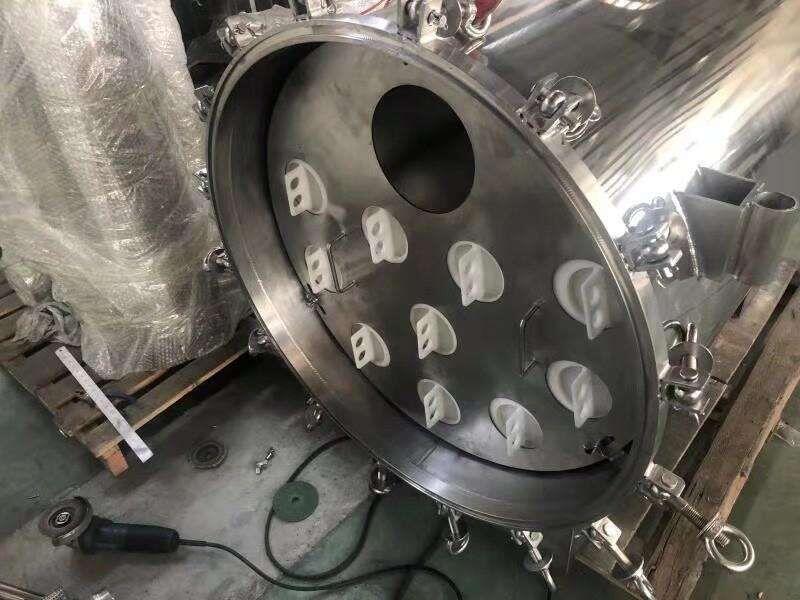
That’s the short answer. But the real expertise is in the details that make this setup work. How do you keep a city’s water supply running without a single interruption during filter maintenance? It comes down to smart engineering choices that we see every day in the projects we supply. Let’s look closer at how these massive systems are designed for reliability and easy maintenance.
How does a "Parallel Train" configuration optimize maintenance without stopping a 100,000-ton plant?
Downtime in a massive plant is not an option. A single filter change could disrupt the water supply for thousands. But a parallel train design completely changes the game.
A parallel train configuration uses multiple independent filtration lines running side-by-side. If one train needs maintenance, operators simply use valves to isolate it. The other trains keep running, ensuring the plant’s output remains stable. This redundancy is the key to uninterrupted operation.
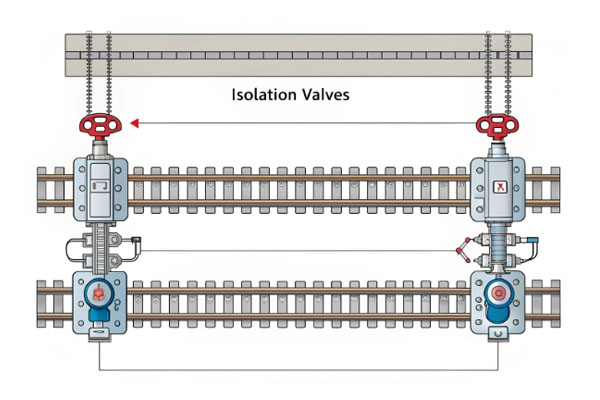
In my experience visiting these facilities, the concept of "N+1" redundancy is the gold standard. A plant might need five filtration trains (N) to meet its daily output. To ensure 100% uptime, engineers will install a sixth identical train (the "+1"). This extra train sits on standby, ready to be activated the moment one of the primary trains is taken offline for service. The process is seamless. An operator closes the inlet and outlet valves of the train that needs new filters, and opens the valves for the standby train. The total flow through the system never drops. This is how you can schedule filter cartridge replacements—like installing our high-flow cartridges—without ever shutting down the plant. It turns a potential crisis into a routine task.
Key Benefits of Parallel Trains
| Feature | Single Large System | Parallel Train System |
|---|---|---|
| Maintenance | Requires total plant shutdown | One train serviced while others run |
| Reliability | Single point of failure | High; N+1 redundancy |
| Operational Flexibility | Low; all or nothing | High; can adjust active trains |
| Cost of Downtime | Extremely high | Almost zero |
Horizontal vs. Vertical: Which housing orientation offers better efficiency for high-flow seawater desalination?
Choosing between horizontal and vertical filter housings seems simple. But in a huge plant, this one decision dramatically impacts your long-term operational costs and maintenance efficiency.
For large-scale desalination, horizontal housings are the clear winner. While vertical units save floor space, horizontal designs allow for much faster and safer replacement of long, heavy high-flow cartridges. This significantly reduces labor costs and system downtime.
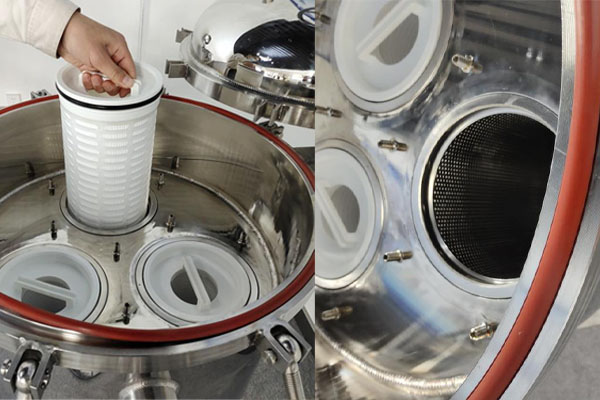
I’ve seen this firsthand in many modern 100,000-ton projects. In the past, vertical housings were common because they took up less floor space. The problem started when high-flow cartridges became longer, often 60 inches or more, to handle higher volumes. To change a 60-inch cartridge in a vertical housing, you need to lift it straight up. This means the building needs extremely high ceilings, often double the normal height, just for maintenance clearance. It also requires overhead cranes and a team of operators, making the process slow, costly, and potentially unsafe.
The "Drawer" Method: A Game-Changer for Maintenance
The horizontal orientation solves this problem beautifully. The housing is mounted on its side. To change the filters, an operator simply unbolts the end cap and slides the cartridges out sideways, just like opening a drawer. I’ve watched a single technician replace multiple 60-inch cartridges in a horizontal housing in the time it would take a team to just set up for a vertical replacement. This design is safer, requires less specialized equipment, and drastically cuts down on the time the filtration train is offline. For any large-scale project, the long-term operational savings from this simple choice are massive.
| Factor | Vertical Housing | Horizontal Housing |
|---|---|---|
| Footprint | Smaller | Larger |
| Ceiling Height | Very High | Standard |
| Replacement Method | Crane Lift | Manual Slide-out |
| Labor Needed | 2-3 Operators | 1-2 Operators |
| Downtime | Higher | Lower |
| Safety | Higher Risk (lifting heavy loads) | Lower Risk |
What is the critical ratio between high-pressure pump units and security filter housings?
Mismatching your pumps and filters is a recipe for disaster. It can lead to inefficient filtration, pump damage, or even system failure. Getting the ratio right is absolutely essential.
There isn’t a single magic number for the ratio. The ideal setup depends on the pump’s flow rate and the design capacity of each security filter housing. The goal is to perfectly match the total flow from the pump to the combined optimal flow rate of the filter housings it serves.
Engineers don’t think in terms of "one pump for five housings." They think in terms of flow rate. For example, a main high-pressure pump in a desalination train might push out 4,000 cubic meters of seawater per hour (m³/h). The job of the security filter array is to handle that specific flow. As a manufacturer, we at ecofiltrone provide data showing that one of our large-diameter filter housings, filled with our 60-inch high-flow cartridges, can efficiently handle 1,000 m³/h.
Matching Flow Rate: The Core Principle
Based on this data, the engineering firm will design a filter train with four of these 1,000 m³/h housings running in parallel. This creates a combined capacity of 4,000 m³/h, perfectly matching the pump’s output. This ensures two things. First, the pump isn’t working too hard or too little, which protects its lifespan. Second, the water flows through our filter cartridges at the optimal velocity. This allows the cartridges to capture the most sediment and last as long as possible, which is a direct saving on operational costs for the plant owner.
How do professional engineers manage the "Flow Balancing" challenge in multi-housing desalination arrays?
In a parallel setup, how do you ensure each filter does its fair share of work? If the flow is uneven, some filters will clog and wear out fast while others are underused.
Engineers achieve flow balancing through symmetrical piping design and smart instrumentation. By ensuring the pipe length and fittings to each parallel housing are identical, they minimize pressure differences. Then, flow meters and pressure gauges on each line allow for monitoring and fine-tuning.
I always admire the elegance of a well-designed piping layout. To achieve natural flow balancing, engineers create a perfectly symmetrical header pipe system. This means the path water travels from the main pipe to the inlet of each filter housing is exactly the same length and has the same number of bends and valves. This simple physical design ensures that water resistance is equal for all paths, so flow naturally distributes itself evenly among the different housings. It’s the foundation of a stable system.
Symmetrical Design and Smart Instrumentation
Of course, a good design needs good monitoring. That’s where instrumentation comes in. Each individual housing will have pressure gauges on its inlet and outlet. The difference between these two readings is the differential pressure, or ΔP. As a filter cartridge gets clogged with sediment, the ΔP will rise. By monitoring the ΔP on each housing, operators can see if one is clogging faster than the others, indicating a potential flow imbalance or a problem with that specific filter set. This is also where the quality of our ecofiltrone cartridges becomes critical. Because our manufacturing is so consistent, each cartridge has a nearly identical clean pressure drop, which makes it much easier for engineers to establish a baseline and spot any issues.
Conclusion
In summary, large-scale desalination relies on parallel, horizontal filter trains with balanced flow. This smart design ensures continuous operation, simplifies maintenance, and protects the entire system effectively.