
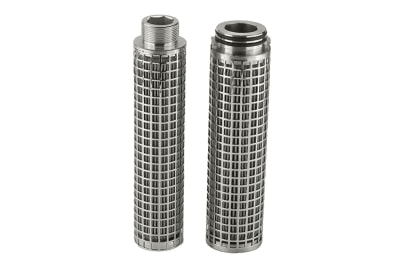
Stainless Steel Filter Cartridge
Reusable stainless steel filtration for high-temperature, corrosive and high-pressure service
ECOFILTRONE stainless steel filter cartridges provide particulate removal, equipment protection and process stability in liquid and gas service where temperature, chemical exposure or operating pressure exceed the limits of polymer filter media. Wire mesh, pleated stainless, sintered wire mesh and sintered metal fiber constructions available in SS304, SS316 and SS316L.
Stainless Steel Construction
| Construction types | 4 options |
| Filtration mode | Surface / Depth |
| Grades available | SS304 · SS316 · SS316L |
| Cleaning methods | Backwash · Ultrasonic · Chemical |
| Typical service | Liquid & Gas |
Product Overview
Where polymer cartridges reach their limits, stainless steel begins
Stainless steel filter cartridges are used for particulate removal, equipment protection and process stability in liquid and gas service. Unlike polymer cartridges, stainless steel constructions are cleanable and reusable, and can operate across a wide temperature range, under higher differential pressures and in contact with aggressive chemical environments where polypropylene, PES or PTFE cartridges are not suitable.
High-temperature service
Suitable for process streams and gas service at temperatures that exceed the limits of polymer filter media. Confirm temperature rating for the specific construction and configuration.
Corrosion resistance
SS316 and SS316L offer improved resistance to chloride and acidic environments compared to SS304. Grade selection should be confirmed against the actual fluid chemistry, concentration and temperature.
Cleanable and reusable
Cleaning methods include backwashing, ultrasonic cleaning, chemical cleaning, solvent cleaning and thermal cleaning depending on the construction and contaminant type. Confirm cleaning method suitability before use.
Mechanical strength
Stainless steel constructions offer higher resistance to differential pressure, flow surge and mechanical stress than polymer cartridges. SS core options provide additional structural reinforcement where required.
Filtration Technology and Construction
Four construction types — surface filtration and depth filtration
Surface Filtratio
Wire mesh
Woven stainless steel wire in square or plain weave patterns. Filtration occurs at the mesh surface — particles larger than the mesh aperture are retained. Cleanable by backwashing, ultrasonic or chemical methods. Suitable for liquid and gas service. Confirm mesh aperture, wire diameter and weave specification for the application.
Surface Filtratio
Pleated stainless steel mesh
Pleated construction increases the filtration area within a standard cartridge housing. Pleating may reduce pressure drop or increase flow capability relative to a flat-mesh equivalent. Suitable where higher throughput at lower differential pressure is needed. Confirm pleat construction, mesh specification and housing compatibility.
Depth Filtration
Sintered wire mesh
Multiple layers of woven wire mesh sintered together to form a rigid, multi-layer filtration medium. Provides a more defined pore structure than single-layer wire mesh. Suitable for demanding liquid and gas filtration where mechanical strength and a more consistent flow path are required.
Depth Filtration
Sintered metal fiber
Stainless steel fiber sintered into a porous matrix. High void volume supports higher filter cartridge differential pressure capability and efficient particulate loading before cleaning is required. Suitable for fine filtration in liquid and gas service.
Filter Media and Configuration Options
Grade, construction and configuration selection by service duty
| GRADE | CHARACTERISTICS | TYPICAL SELECTION DIRECTION | NOTE |
|---|---|---|---|
| SS304 | Standard austenitic stainless; good general corrosion resistance | Neutral and mildly corrosive aqueous streams, general industrial water, gas service | Confirm for chloride-containing streams; may corrode in aggressive chloride environments |
| SS304L | Low-carbon SS304; reduced sensitisation risk in welded constructions | Where welded joints are involved and inter-granular corrosion is a concern | Confirm for specific fluid and operating conditions |
| SS316 | Molybdenum addition; improved chloride and acid resistance vs SS304 | Chloride-bearing streams, acidic process liquids, marine service, chemical processing | Confirm for aggressive concentrations or elevated temperature |
| SS316L | Low-carbon SS316; preferred for welded constructions in aggressive service | Corrosive chemical service, pharmaceutical and high-purity process applications, aggressive cleaning environments | Grade confirmation against actual fluid chemistry, concentration, temperature and cleaning chemicals is required |
Standard cartridge
Wire mesh or pleated stainless for general-duty liquid and gas filtration in standard housing sizes.
High-strength configuration
Sintered wire mesh or sintered metal fiber for higher differential pressure and demanding chemical environments.
Custom configuration
Non-standard lengths, OD, end connections or multi-layer specifications available on request. Confirm lead time and interface requirements.
Technical Specifications
Product-family ranges for initial selection — confirm for specific series
| ITEM | DOCUMENTED OPTIONS OR GUIDANCE |
|---|---|
| Construction type | Wire mesh, pleated stainless mesh, sintered wire mesh, sintered metal fiber |
| Grade | SS304, SS304L, SS316, SS316L |
| Micron rating range | Depends on construction type and mesh specification; confirm for selected series |
| Filtration mode | Surface filtration (wire mesh, pleated mesh) or depth filtration (sintered constructions) |
| Standard lengths | Standard housing lengths available; custom and long lengths on request |
| End connections | DOE, 222 / Flat, 222 / Fin, 226 / Flat, 226 / Fin; confirm housing interface |
| Seal materials | EPDM, silicone, FKM / Viton — confirm ↗ chemical compatibility for the process fluid and cleaning chemicals |
| Operating temperature | Higher than polymer constructions; confirm maximum for the selected grade and configuration |
| Max differential pressure | Higher than polymer constructions; confirm for the specific construction — see ↗ filter cartridge differential pressure |
| Cleaning methods | Backwashing, ultrasonic cleaning, chemical cleaning, solvent cleaning, thermal cleaning — confirm suitability by construction type |
| Service media | Liquid and gas service |
End Connections and Seal Options
Connection type and seal material must match the installed housing
| CONNECTION | CONFIGURATION DETAIL |
|---|---|
| DOE | Double open end — confirm housing gasket seating and seal material |
| 222 / Flat | Flat terminal; confirm housing knife-edge or land seating |
| 222 / Fin | Fin terminal; confirm bayonet or spring seating in housing |
| 226 / Flat | Flat terminal for 226-pattern housings |
| 226 / Fin | Fin terminal for 226-pattern housings |
| Threaded / custom | Available for selected configurations — confirm interface specification |
Seal material selection
Seal material must be reviewed for the process fluid, chemical concentration, temperature and cleaning chemicals applied to the housing and cartridge.
| EPDM | Good aqueous compatibility; check hydrocarbon and oxidiser exposure |
| Silicone | Wide temperature range; check solvent and oxidiser exposure |
| FKM / Viton | Broad chemical resistance; confirm for specific fluid and concentration |
Typical Industrial Applications
Six process positions where stainless steel cartridges are commonly selected
01
Chemical Processing
Challenge
Acids, alkalis, solvents and reactive chemicals requiring full cartridge and seal chemical compatibility review. High operating temperature or pressure may exclude polymer options.
Product direction
SS316 or SS316L for corrosive chemical service. Process filtration position confirmed against fluid chemistry, concentration and temperature. Seal material confirmed separately.
02
Oil & Gas / Petrochemical
Challenge
Hydrocarbon streams, produced water, gas service and high-pressure systems where mechanical strength and chemical resistance are primary selection criteria.
Product direction
Wire mesh or sintered constructions for particulate removal and equipment protection upstream of compressors, heat exchangers and separation equipment. Grade confirmed for the specific process stream.
03
Power Generation
Challenge
High-temperature steam condensate, boiler makeup water and cooling water systems with demanding operating conditions.
Product direction
Stainless steel construction for high-temperature liquid and steam filtration where polymer temperature limits are exceeded. Confirm operating temperature, pressure and fluid chemistry for the selected configuration.
04
Food & Beverage
Challenge
Reusable, cleanable filtration for process liquids where polymer extractables or cleaning-in-place requirements limit polymer cartridge suitability.
Product direction
SS316 / SS316L for food and beverage filtration process positions where stainless steel construction, cleanability and chemical compatibility are required. Material compliance confirmed separately against application requirements.
05
Pharmaceutical and High-Purity Process
Challenge
Process streams requiring cleanable, chemically resistant filtration where stainless steel construction and surface quality are specified.
Product direction
SS316L for pharmaceutical and high-purity process applications where stainless steel construction, cleanability and chemical compatibility are required. The stainless steel cartridge is a prefiltration or particulate removal element — separate product documentation applies to any membrane-grade or retention requirement.
06
Power Generation
Challenge
High-temperature gas streams, steam lines and compressed air where polymer media is not suitable and a cleanable element is preferred.
Product direction
See high-temperature gas filtration application page. Wire mesh and sintered constructions for particulate removal in gas service. Confirm maximum temperature and pressure rating for the selected configuration.
Selection Guide
Seven steps to a verified stainless steel cartridge specification
1⃣️
Define the service: liquid or gas filtration, operating temperature, maximum pressure. Confirm whether operating conditions exceed the capability of polymer filter cartridges — if not, a polymer cartridge may be more cost-effective.
2⃣️
Select the construction type: wire mesh for standard surface filtration; pleated mesh where higher flow area is needed; sintered wire mesh or sintered metal fiber for higher differential pressure or finer retention. See the filter cartridge micron rating guide.
3⃣️
Select the stainless steel grade: SS304 for general service; SS316 / SS316L for chloride-bearing or acidic environments and for food, beverage and high-purity process positions. Grade selection confirmed against the actual fluid chemistry, temperature, pressure and cleaning chemicals.
4⃣️
Review chemical compatibility for the metal construction and all sealing materials. Chemical concentration, temperature, pH, oxidising conditions, solvent content and cleaning chemical exposure all affect long-term suitability.
5⃣️
Confirm operating differential pressure. Monitor pressure drop across the cartridge in service — rising ΔP indicates contaminant accumulation and approaching clean-out or replacement. See the filter cartridge differential pressure guide for change-out criteria.
6⃣️
Confirm cartridge dimensions: length, OD, ID and end connection. Do not assume dimensional interchangeability between manufacturers — verify against the housing drawing or existing cartridge measurement.
7⃣️
Confirm end connection (DOE / 222 / 226), terminal style, seal material and housing interface. See the replacement evaluation checklist for the full interface verification list. If reusable service is planned, confirm the appropriate cleaning method for the construction type.
Replacement and Compatibility Considerations
Dimensional matching alone is not sufficient for a compatible replacement
When replacing an existing stainless steel filter cartridge, dimensions alone are not enough. Important factors include filter media structure, stainless steel grade, filter cartridge micron rating, end connection, operating conditions and cleaning requirements.
A technical review of the existing cartridge and filtration process helps ensure compatibility and performance. For a full replacement evaluation, provide: existing manufacturer and model number, construction type, grade, dimensions, end connection, terminal style, seal material, housing model, process fluid and operating conditions. Photographs of the existing cartridge and housing help confirm the interface when the original model code is unclear.
ECOFILTRONE Engineering Support
Selection, replacement evaluation and custom configuration
| INFORMATION TYPE | USEFUL DETAILS TO PROVIDE |
|---|---|
| Application | Industry, ↗ process filtration position, current filtration problem (short life, rapid ΔP, corrosion, bypass, seal failure) |
| Process fluid / gas | Fluid or gas name, concentration, pH, temperature and mixture composition |
| Contaminant | Type, estimated loading, particle size if known |
| Filtration requirement | Required ↗ filter cartridge micron rating , downstream equipment sensitivity |
| Operating conditions | Flow rate, pressure, ↗ filter cartridge differential pressure at change-out, current service life |
| Cleaning method | Whether reusable service is required; cleaning method used or preferred (backwash, ultrasonic, chemical, solvent, thermal) |
| Existing cartridge | Manufacturer, model, construction type, grade, dimensions, end connection, seal material, photos |
| Housing interface | Housing model, end connection, terminal style, seal material |
Frequently Asked Questions
Stainless steel filter cartridge — technical questions
What is a stainless steel filter cartridge?
A reusable or high-durability filtration element constructed from stainless steel wire mesh, pleated mesh, sintered wire mesh or sintered metal fiber. Used where high temperature, corrosive chemicals, elevated pressure or reusability requirements make polymer cartridges unsuitable.
When should I select SS316 or SS316L over SS304?
SS316 and SS316L offer improved resistance to chloride and acidic environments due to the molybdenum addition. Select SS316 / SS316L for chloride-bearing streams, acidic process liquids, marine service, and applications where aggressive cleaning chemicals are used. Grade selection confirmed against actual fluid chemistry, concentration and temperature.
Can stainless steel cartridges be used for gas filtration?
Yes. Wire mesh and sintered constructions are used for particulate removal in gas and steam service at temperatures that exceed polymer limits. Confirm maximum temperature, pressure and construction type for the specific application. See the high-temperature gas filtration page.
How do I know when to clean or replace a stainless steel cartridge?
Monitor differential pressure across the cartridge. Rising ΔP indicates increasing contaminant accumulation. The clean-out or replacement point depends on process requirement, flow stability, contaminant loading and the cleaning capability of the construction. See the filter cartridge differential pressure guide.
What construction type should I select?
Wire mesh for standard surface filtration. Pleated stainless mesh where higher flow area is needed within a standard housing. Sintered wire mesh or sintered metal fiber for higher differential pressure capability, finer retention or depth filtration. Confirm with the application conditions and required filter cartridge micron rating.
How is a stainless steel cartridge cleaned?
Cleaning methods include backwashing, ultrasonic cleaning, chemical cleaning, solvent cleaning and thermal cleaning depending on construction type and contaminant. Confirm that the cleaning method is suitable for the specific construction, grade and seal material before use.
Are stainless steel cartridges suitable for pharmaceutical or high-purity use?
SS316L constructions are used in pharmaceutical and high-purity process positions where stainless steel construction, cleanability and chemical compatibility are required. The stainless steel cartridge functions as a particulate removal or prefiltration element. Any membrane-grade retention, microbial removal or compliance requirement is addressed by a separate product evaluated for those duties.
What information do I need for a replacement evaluation?
Existing manufacturer and model number, construction type, grade, dimensions, end connection, terminal style, seal material, housing model, process fluid and operating conditions. Photographs of the cartridge and housing help confirm the interface. See the replacement evaluation checklist.
Request a Selection Review
Send your process conditions and current filtration problem
To recommend a suitable stainless steel filter cartridge, please provide:
- Process fluid or gas, concentration, pH, temperature
- Contaminant type and estimated loading
- Required filtration performance and micron rating
- Operating pressure and flow rate
- Differential pressure at planned change-out or clean-out
- Cleaning method (if reusable service is required)
- Cartridge dimensions, end connection, seal material
- Housing model and existing cartridge details or photographs