Why High Dirt Holding Capacity Matters More Than Micron Rating in Some Systems
Rapid Answer
It is an absolute engineering reality that in high-load industrial systems, obsessing over a tight micron rating while ignoring Dirt Holding Capacity (DHC) will guarantee premature filter failure and destroy your OPEX budget. Many process engineers fall into the "micron trap," believing that a tighter filter (e.g., 1-micron absolute) inherently provides better system protection. However, micron rating only dictates what particles are stopped; Dirt Holding Capacity dictates how long the filter can actually survive the hydraulic and particulate load. In systems with heavy Total Suspended Solids (TSS) or deformable contaminants, a filter with massive DHC and a slightly looser micron rating will protect downstream assets far more reliably—and economically—than a tightly rated filter that blinds in a matter of hours.
The Physics of the "Micron Trap"
To understand why DHC often trumps micron rating, you must examine the physical relationship between pore size and media porosity (void volume).
When a manufacturer creates a 1-micron depth filter, they must pack the fibers extremely close together. This inherently reduces the total open space (porosity) within the media matrix.
- The Penalty of Tight Microns: Because there is less open space, the clean initial differential pressure (△P) is higher. More critically, the filter has very little physical room to store trapped dirt. It is the equivalent of trying to catch a heavy rainstorm in a very narrow bucket.
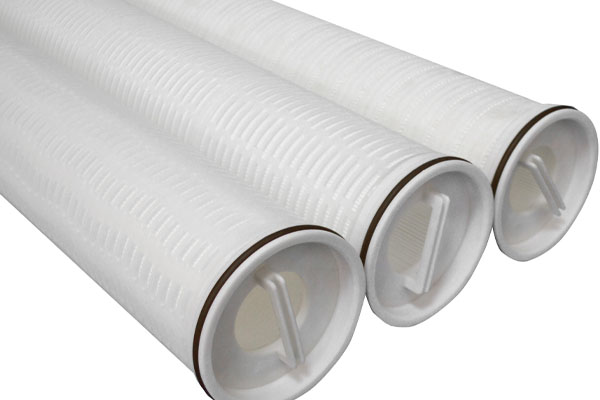
- The High DHC Advantage: A filter engineered specifically for massive Dirt Holding Capacity utilizes deep pleats and graded-density layers to maximize its internal void volume. It acts as a massive reservoir. Even if rated at 5 microns, its sheer volume allows it to intercept and hold kilograms of dirt while maintaining low fluid velocity (flux rate), keeping the system online for months instead of days.
3 Systems Where DHC Dictates Survival
In certain industrial environments, selecting consumables based purely on micron ratings will lead to catastrophic consumable burn rates. High DHC is the primary metric for survival in these specific applications:
1. Desalination and Surface Water Treatment
Plants drawing from open seawater or rivers experience massive seasonal fluctuations in turbidity and biological loading (algae blooms).
- The Threat: A tight, low-DHC meltblown filter will instantly surface-blind when hit with a wave of river silt or biological slime (Extracellular Polymeric Substances).
- The DHC Requirement: The system requires a high-DHC filter to act as a physical buffer. The massive void volume absorbs the transient "crud bursts," allowing the plant to maintain steady-state operations without shutting down RO trains for emergency filter change-outs.
2. Power Generation (Condensate and Cooling Water)
Power plants circulate massive volumes of water that frequently pick up pipe scale, iron oxides (rust), and metallic fines.
- The Threat: These are heavy, hard, bulk solids. A standard 2.5-inch filter simply lacks the physical space to hold the sheer mass of iron circulating through the system.
- The DHC Requirement: To prevent constant maintenance interventions in critical power generation loops, the filter must have the physical matrix capacity to hold pounds of heavy metallic solids before reaching the terminal △P.
3. Petrochemical and High-Viscosity Fluids
Fluids like amine, glycol, or heavy oils inherently create high baseline hydraulic friction.
- The Threat: A tight micron rating on a viscous fluid causes the initial clean △P to start dangerously close to the failure limit. Furthermore, deformable contaminants like hydrocarbons will instantly extrude and blind small pores.
- The DHC Requirement: High DHC geometry provides massive surface area. This drops the flux rate, allowing viscous fluids to pass through gently while trapping deformable gels deeply within the pleats rather than crushing them against the surface.
Engineering Comparison: The TCO Impact
This matrix demonstrates why upgrading the DHC—rather than tightening the micron—drastically improves the Total Cost of Ownership (TCO).
| Filtration Strategy | System Fluid Dynamics | Operational Consequence (TCO) |
|---|---|---|
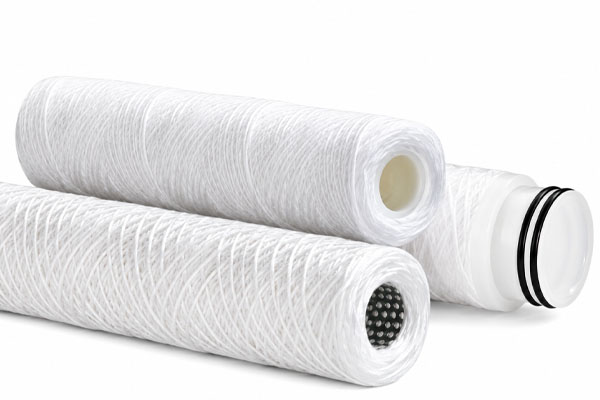
| Strategy A: 1-Micron Nominal Meltblown (Low DHC) | High flux rate; extremely low void volume. | OPEX Disaster: Filter blinds in 4 days. Massive labor costs and frequent plant downtime. |
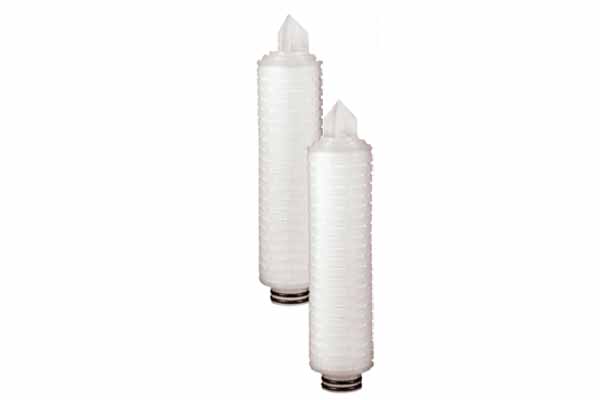
| Strategy B: 5-Micron Pleated High-Flow (High DHC) | Ultra-low flux rate; massive void volume. | Optimized TCO: Filter lasts 60 days. RO membranes remain fully protected because low velocity prevents extrusion bypass. |
The ecofiltrone Advantage: Maximizing DHC
When legacy filtration systems (such as standard multi-round housings filled with Pall, 3M, or Parker depth filters) become OPEX bottlenecks, the engineering solution is a brand replacement strategy focused on maximizing Dirt Holding Capacity.
By upgrading to ecofiltrone High-Flow Pleated Cartridges, plants do not have to compromise between micron efficiency and filter lifespan.
- Unrivaled Void Volume: Our advanced pleated micro-glass and polypropylene media are engineered with a graded-density matrix. This provides up to 10 times the surface area and DHC of standard depth filters, allowing the cartridge to absorb massive bulk loads of TSS without spiking the △P.
- Absolute Retention without the Penalty: Because the DHC is so massive, the fluid velocity drops to a crawl. This allows our high-flow cartridges to maintain strict absolute micron ratings (protecting critical downstream RO and power equipment) while simultaneously extending change-out intervals from weeks to months.
Would you like to adapt this engineering explanation into a targeted LinkedIn outreach script for process engineers in the power generation or water treatment sectors?