When Should RO Systems Upgrade from Standard Cartridge Filters to High Flow Filters?
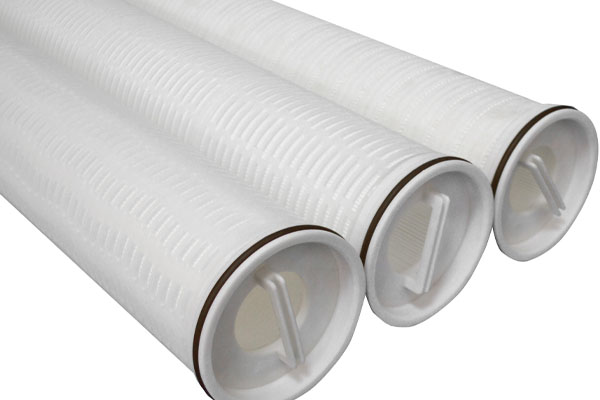
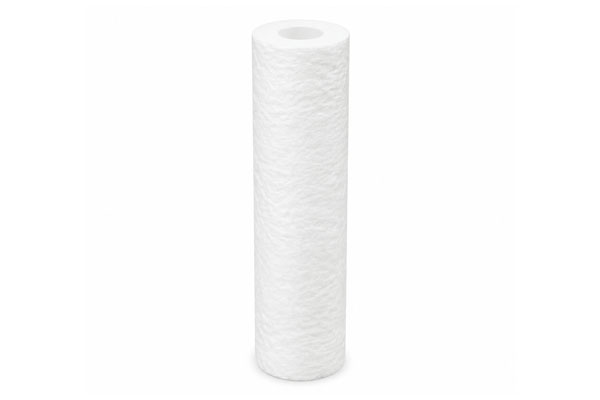
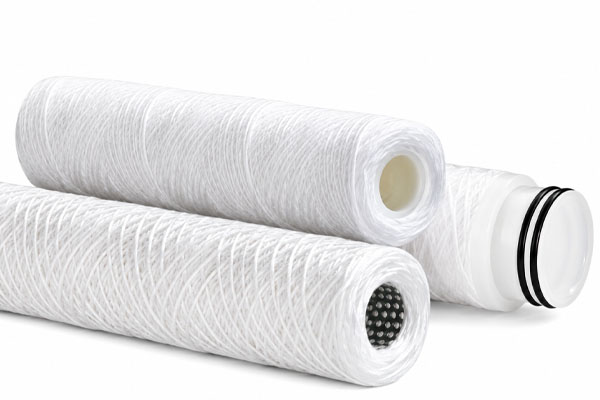
You must upgrade to a High-Flow system the moment your plant exceeds a flow rate of 50 m³/hr, when filter change-outs occur more than once a month, or when footprint constraints prevent adding larger steel vessels. In the lifecycle of a Reverse Osmosis (RO) water treatment plant, operators often accept frequent filter change-outs as an unavoidable cost of doing business. However, standard 2.5-inch diameter meltblown or string-wound depth filters were originally designed for low-flow, light-industrial applications. Forcing massive volumes of water through hundreds of these small filters creates a severe hydraulic and financial bottleneck that limits plant growth.
The 3 Operational Tipping Points for an Upgrade
Deciding to cut the piping and install a new high-flow steel vessel is a Capital Expenditure (CAPEX) decision. To justify this to plant management, process engineers must look for these three distinct failure modes in their current standard filtration setup.
1. The Consumable Burn Rate (The OPEX Death Spiral)
Standard 2.5-inch depth filters have a very small physical void volume. If the raw water experiences a transient "crud burst" or seasonal algae bloom, these small filters will reach their 2.5 bar △P limit in a matter of days.
- The Rationale: If your maintenance team is replacing standard RO security filters more than once every 3 to 4 weeks, your OPEX budget is hemorrhaging. The labor, disposal, and purchasing costs of hundreds of small filters will rapidly eclipse the one-time CAPEX cost of upgrading to a high-flow system.
2. The Footprint and Expansion Constraint
As an industrial facility expands, the RO plant must produce more water.
- The Rationale: To process 200 m³/hr of water using standard 40-inch depth filters, you need a massive, heavy steel vessel holding roughly 70 individual cartridges. If you are building a containerized RO skid or upgrading a plant with limited floor space, this massive vessel physically will not fit. Upgrading to high-flow technology allows you to process that same 200 m³/hr using a compact housing that holds just 5 high-flow elements, shrinking the equipment footprint by up to 60%.
3. High Flux Rate Extrusion (The Particle Push-Through)
Because standard filters have limited surface area, high plant flow rates force the fluid velocity (flux rate) to extremely high levels.
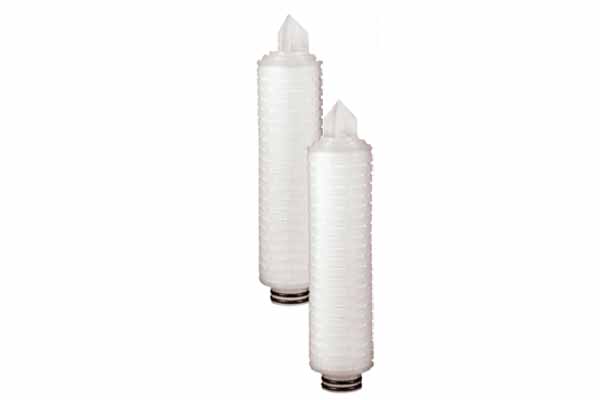
- The Rationale: If your RO membranes are fouling despite the security filters not reaching their △P limit, your filters are suffering from extrusion bypass. The high fluid velocity is physically squeezing soft contaminants (like biological EPS or fine colloids) straight through the nominal meltblown media. You must upgrade to pleated high-flow filters to radically increase the surface area, drop the fluid velocity, and secure absolute retention.
Upgrade Justification Matrix
Use this matrix to build the business case for transitioning your plant from standard meltblown cartridges to a high-flow pleated system.
| Current System Pain Point | The High-Flow Upgrade Advantage | Engineering Rationale |
|---|---|---|
| Changing 100+ standard filters per month | Drastic Consumable Reduction: 1 High-Flow element does the work of 15 to 40 standard elements. | Pleated micro-glass/PP geometry maximizes dirt-holding capacity (DHC) in a single cartridge. |
| High labor costs and system downtime | Rapid Change-outs: 30 minutes vs. 8 hours. | Inside-to-outside flow captures dirt inside the cartridge element; fewer elements mean faster turnaround. |
| RO membranes fouling prematurely | Absolute Retention Integrity: Stops extrusion bypass. | Rigid inner cores and outer cages prevent media deformation; ultra-low flux rate rests dirt gently on the surface. |
| High initial clean △P on new filters | Optimized Fluid Dynamics: Starts at < 0.1 bar. | Massive surface area drastically reduces hydraulic friction, giving you maximum "pressure runway". |
The ecofiltrone Engineering Solution: The Ultimate Retrofit
Transitioning from commodity depth filters to high-performance filtration is about minimizing the Total Cost of Ownership (TCO).
When replacing legacy filtration systems, the ecofiltrone High-Flow Pleated Cartridge
is engineered to be the direct, high-efficiency upgrade. Whether you are replacing an outdated multi-round meltblown housing or looking for a cost-effective, high-quality replacement for major brand high-flow elements, our design provides the structural rigidity and massive surface area required for true RO security.
Since you liked the interactive visualization previously, use the interactive calculator below to simulate exactly how much footprint and OPEX you can save based on your specific plant flow rate.