What Happens When UF Permeate Quality Drops Before RO Security Filtration?
Rapid Answer
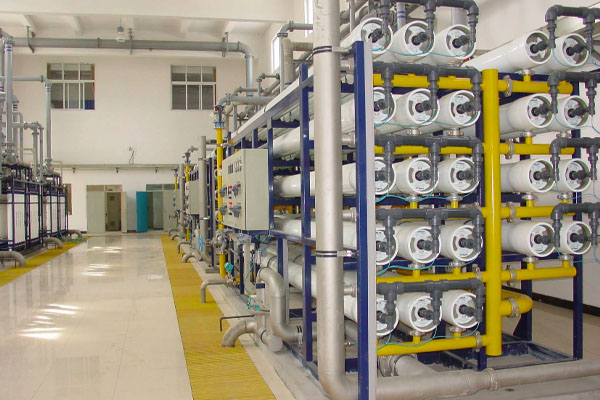
In a properly designed membrane desalination or wastewater reuse plant, the Ultrafiltration (UF) system acts as the absolute barrier against suspended solids, yielding water with a Silt Density Index (SDI) of less than 3. The downstream Reverse Osmosis (RO) security filter is merely a "police filter"—an insurance policy designed to catch rogue particles, not a primary working filter.
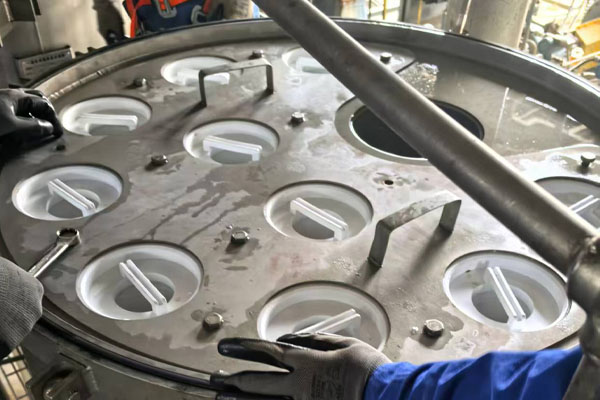
When UF permeate quality drops (typically due to broken hollow fibers, O-ring bypass, or backwash failure), the downstream RO security cartridge is suddenly forced to become the primary particulate filter. Because the security housing is engineered and sized for ultra-clean water velocities, it physically cannot handle a bulk solid load. The high-flow velocity drives the escaping UF solids deep into the security filter’s pleats, causing a vertical, catastrophic pressure drop (Delta P) spike. The security filter will plug in a matter of days or hours, sacrificing itself to save the RO membranes.
The Physical Autopsy: When the "Police" Becomes the "Primary"
Under normal conditions, an RO security filter should last 3 to 6 months. When you extract it, it should look nearly identical to the day it was installed.
When a UF system suffers an integrity failure, the physical autopsy of the prematurely plugged security filter will reveal exactly what bypassed the ultrafiltration stage:
- The "Pin-Hole" Phenomenon: UF membranes are made of thousands of hollow polymeric fibers (like PVDF or PES). Over time, cyclic backwashing and chemical cleaning cause physical fatigue. When a single fiber snaps, raw, untreated feed water shoots directly into the clean permeate header. The security filter will suddenly be coated in whatever was in the raw water (e.g., green algae, brown river silt, or grey wastewater organics).
- Fiber Shards and Potting Epoxy: In severe UF mechanical failures, the physical autopsy of the security filter will reveal microscopic pieces of white polymeric fiber or chunks of the polyurethane/epoxy resin used to pot the UF modules. The security filter has successfully prevented this plastic debris from shredding the downstream RO high-pressure pumps.
- Coagulant Carryover (The Liquid Gel): UF systems often require a low dose of in-line coagulant to help form flocs. If the UF control system malfunctions and overdoses the coagulant, the unreacted chemical passes right through the UF pores. It hits the security filter and polymerizes under pressure, forming an invisible, sticky, concrete-like gel over the pleats.
Diagnostic Cross-Validation Matrix
When operators complain that the RO security filters are "failing quickly," field engineers must cross-reference the filter’s physical state with the UF system’s operational data to prove the filter is not defective.
| Surface Signal (Security Filter) | Cross-Validation Signal (UF System Data) | Real Engineering Root Cause |
|---|---|---|
| Rapid Delta P spike + Cartridge is coated in raw feed dirt | UF Permeate Turbidity spikes above 0.1 NTU / SDI > 4. | UF Fiber Breakage / O-Ring Bypass: Raw water is short-circuiting the UF membrane. A Direct Integrity Test (DIT) is urgently required. |
| Filter feels slick/sticky, but looks perfectly clean | UF Transmembrane Pressure (TMP) is rising rapidly; Coagulant dosing is high. | Chemical Overdose: Unreacted coagulant is bypassing the UF and blinding the security filter via liquid gel block. |
| Thick, slimy biological coating on security pleats | High chlorine demand; UF CIP (Clean-In-Place) frequency has increased. | Bio-Breakthrough: The UF backwash sequence is failing to remove EPS (biological slime). Bacteria are multiplying in the permeate header and fouling the security filter. |
The Cascading O&M Consequences
Treating a UF bypass as a "filter problem" rather than a "membrane problem" leads to a dangerous cascade of financial and operational failures:
- The Consumable Death Spiral: If operators simply keep replacing the security filters without isolating the broken UF module, the OPEX budget will be destroyed. Changing 20 high-flow cartridges every three days costs thousands of dollars a week in wasted consumables and labor.
- RO Membrane Destruction: Security filters have a structural burst pressure (usually around 2.5 to 3.0 bar). If the UF bypass is severe and the operators ignore the high Delta P alarms, the security filter can rupture. The accumulated raw solids and broken UF fibers will instantly slam into the RO membranes, irreversibly fouling the spacer channels and potentially destroying hundreds of thousands of dollars of RO assets.
- Loss of Plant Capacity: Every time the security housing must be opened to change prematurely plugged filters, the entire RO train must be taken offline, devastating the plant’s daily water production metrics.
The ecofiltrone Engineering Solution: Building a Shock Absorber
The primary goal when a UF system fails is to buy the plant operators enough time to safely detect, locate, and isolate the broken UF module before the RO plant goes down.
Standard 2.5-inch meltblown filters are mathematically useless in this scenario. Because their surface area is so small, they will plug and potentially rupture within minutes of a UF fiber break.
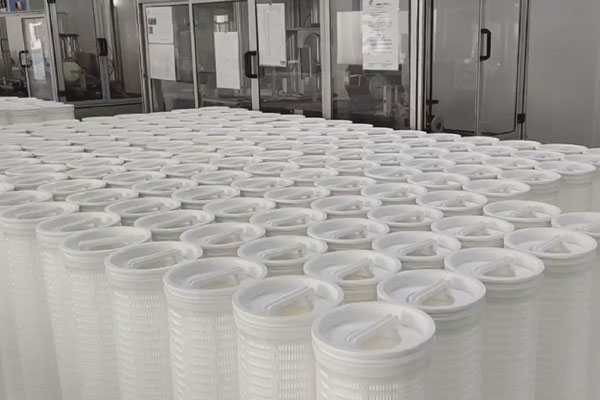
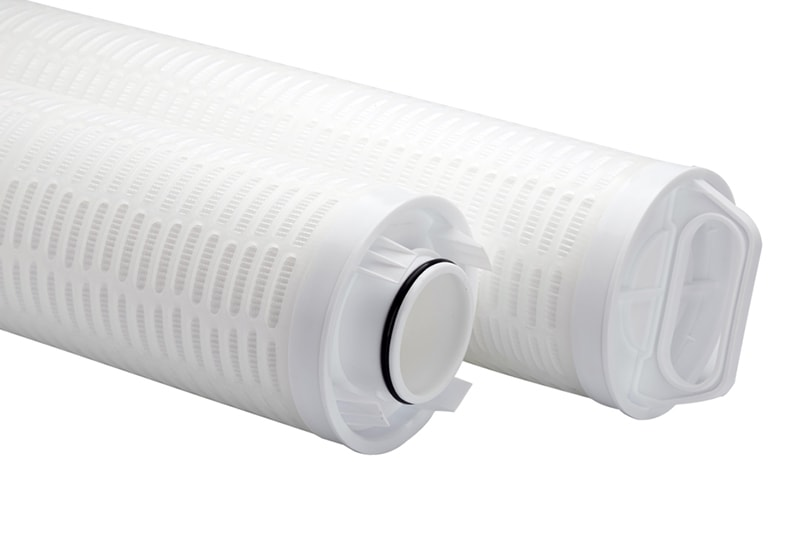
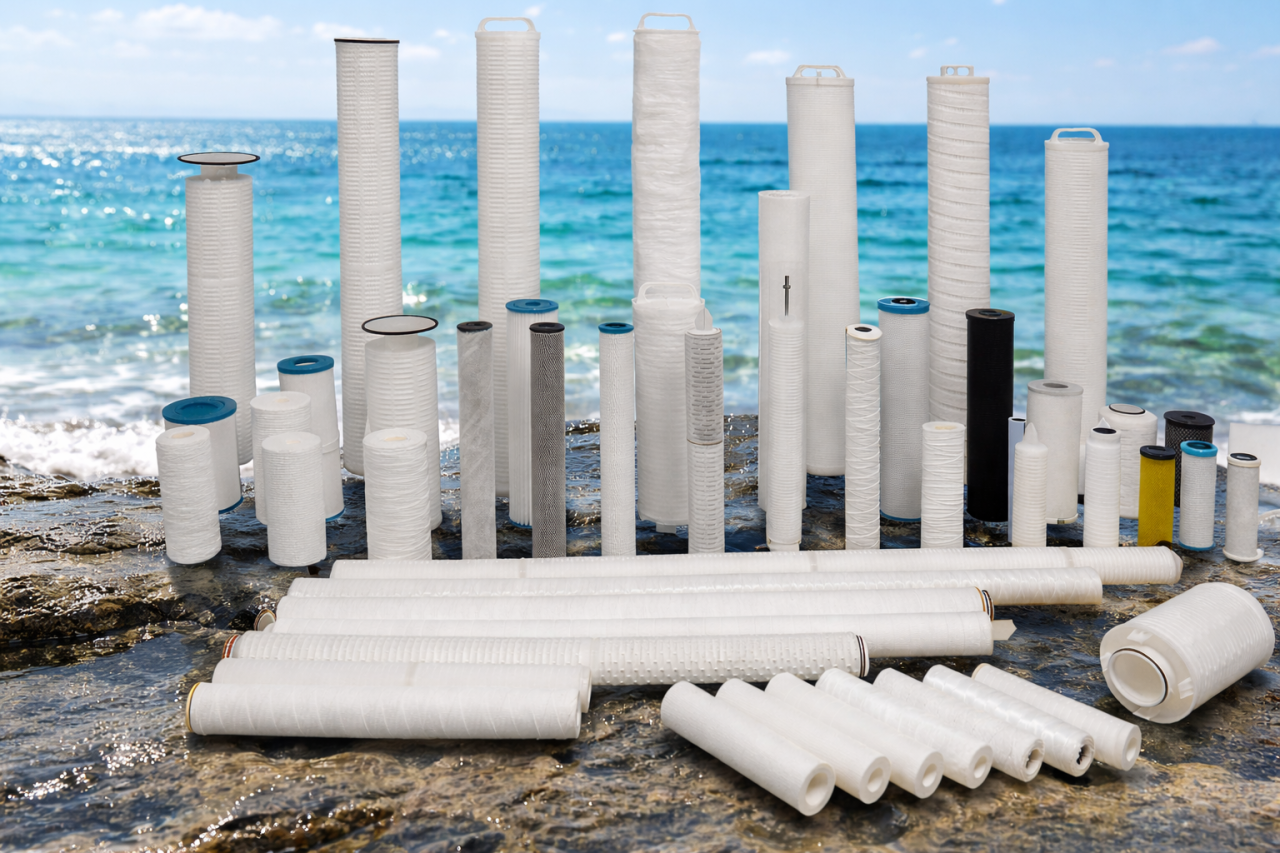
To protect the plant’s core assets, the RO security housing must be designed as a heavy-duty shock absorber. This is achieved by upgrading the system to ecofiltrone High-Flow Pleated Cartridges.
- Massive Dirt Holding Capacity (DHC): By utilizing deep-pleated micro-glass or advanced polypropylene, our high-flow cartridges offer up to 10 times the surface area of standard depth filters. When a UF crud-burst occurs, the high-flow geometry absorbs the massive dirt load while maintaining a safe, gradual Delta P curve.
- Operational Buffer Time: Instead of the security filter blinding in 30 minutes and shutting down the RO train, the ecofiltrone high-flow cartridge can sustain the UF bypass load for 24 to 48 hours. This provides the control room with the critical time buffer needed to run a Pressure Decay Test on the UF racks, pinpoint the broken module, and pin the broken fibers off-line—all without stopping RO production.
- Absolute Structural Integrity: Engineered with rigid inner cores and outer support cages, our cartridges will not deform, bypass, or rupture under sudden high-pressure transients, ensuring the RO membranes remain 100% protected during upstream mechanical catastrophes.