Why Fine Colloids Overload RO Security Filter Cartridges
Rapid Answer
In Reverse Osmosis (RO) pre-treatment, plant operators often face a baffling paradox: a 5-micron security filter cartridge experiences a rapid, catastrophic pressure spike (△P), yet the feed water appears crystal clear, and the exhausted filter looks visually clean.
The culprit is colloidal fouling. Colloids (such as colloidal silica, fine clay, and sub-micron organics) are particles typically between 0.01 and 1 micron in size. Because they are smaller than the nominal pore size of a standard security filter, operators assume they will simply pass through. However, due to the high fluid velocity inside the filter housing, these sub-micron particles are forced to collide and agglomerate within the tortuous depth of the filter media. Instead of forming a visible "filter cake" on the outside, they cause internal pore blinding—sealing the filter shut from the inside out and causing a vertical Delta P spike long before the filter’s physical dirt-holding capacity is reached.
The Physical Autopsy: The "Clean" Filter Paradox
When you extract a filter that has been overloaded by colloids, it lacks the heavy, muddy crust typically associated with suspended solids (TSS).
Instead, the filter might only exhibit a faint tan, grey, or slightly yellow discoloration. To the untrained eye, the filter looks perfectly fine. However, if you cut the media open and examine it under magnification, the physics of the failure become clear:
- Zeta Potential and Agglomeration: Colloids remain suspended in water because they carry a negative electrical charge (Zeta potential) that causes them to repel each other. However, as the RO high-pressure feed pump forces the water through the tight matrix of the filter media, hydraulic pressure overcomes this electrostatic repulsion. The colloids are physically rammed together, causing them to agglomerate into larger masses inside the pores.
- Internal Pore Blinding: Unlike large particles (like sand or rust) that are caught on the surface of the filter, sub-micron colloids penetrate deep into the media matrix. Once they agglomerate inside the microscopic channels, they form an impenetrable sub-surface barrier.
- The Liquid Block: Because colloidal matter is often highly hydrated (retaining a lot of water), the internal blockage acts more like a dense gel than a solid rock. This creates immense hydraulic friction, causing the Delta P to skyrocket in a matter of hours.
The Upstream Trap: Polymer Carryover
In 80% of industrial cases, colloidal overloading of RO security filters is not a natural phenomenon; it is a man-made chemical failure originating upstream in the clarifier or Dissolved Air Flotation (DAF) unit.
To remove colloids upstream, chemical vendors dose cationic coagulants and polymeric flocculants to neutralize the electrical charges and bind the colloids into heavy "flocs" that can be settled out.
- The Overdose Disaster: If the clarifier overdoses the polymer, or if the mixing energy is insufficient, unreacted, sticky liquid polymer carries over into the RO feed stream along with the remaining fine colloids.
- The Result: When this sticky polymer-colloid mixture hits the RO security filter, the filter media acts as a static mixer. The high pressure instantly cures the polymer and colloids into a microscopic sheet of plasticized glue, blinding the pleated media instantly.
Diagnostic Cross-Validation Matrix
Field engineers must cross-reference process data to prove that colloids, not standard suspended solids, are killing the consumables.
| Surface Signal (SCADA) | Cross-Validation Signal (Water Quality / Autopsy) | Real Engineering Root Cause |
|---|---|---|
| Rapid Delta P spike (within 24-48 hours) | Extracted filter feels slick; water beads off the surface. Upstream polymer dosing is high. | Coagulant / Polymer Blinding: Unreacted upstream chemicals are gluing fine colloids to the filter media. |
| High SDI (Silt Density Index > 5) at RO inlet | Feed water Turbidity (NTU) is perfectly low (< 0.5 NTU). | Pure Colloidal Silica/Organics: Turbidity meters cannot "see" fine colloids. The high SDI proves sub-micron foulants are present despite the water looking clear. |
| Filter Delta P is high, but RO permeate flow is dropping | First-stage RO membrane Delta P is also rising. | Colloidal Bypass: The 5-micron nominal filters are undergoing "pore dilation" and allowing colloids to pass through, transferring the fouling burden directly to the expensive RO membranes. |
The Cascading O&M Consequences
If colloidal fouling is not properly addressed at the security filter stage, the financial consequences are severe:
- OPEX Hemorrhage (Consumables): Plant operators will find themselves changing out 50 or 100 security filters every three days. The annual consumable budget is decimated within the first quarter.
- Irreversible RO Membrane Fouling: If the security filters fail to intercept the colloids (or if they bypass due to pressure), the colloids will enter the RO membrane spacer channels. Colloidal silica and organic colloids form a glassy, impermeable layer on the polyamide membrane surface.
- CIP Ineffectiveness: Unlike calcium scale (which can be dissolved with acid) or biological slime (which can be cleaned with alkaline solutions), heavy colloidal fouling is notoriously resistant to standard Clean-In-Place (CIP) chemicals. The RO membranes often suffer irreversible flux loss and must be replaced prematurely.
The ecofiltrone Engineering Solution
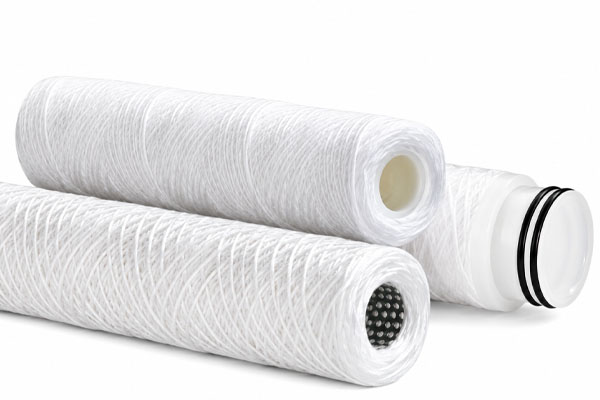
Standard 2.5-inch meltblown depth filters are mathematically the wrong tool for high-colloid environments. Because they have a very small surface area, the fluid velocity (flux) through the media is extremely high, which forces the colloids to violently agglomerate and blind the pores.
To protect your RO membranes without burning through your OPEX budget, the system requires a structural upgrade:
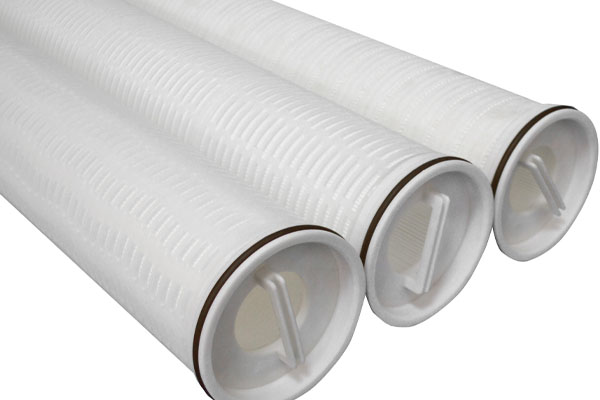
- Lower the Flux Rate with High-Flow Geometry: By upgrading the RO pre-filtration skid to ecofiltrone High-Flow Pleated Cartridges, you multiply the available filtration surface area by up to 10 times. This drastically lowers the velocity of the fluid hitting the media. A gentle flux rate allows colloids to be captured without being violently compacted into a blinding gel.
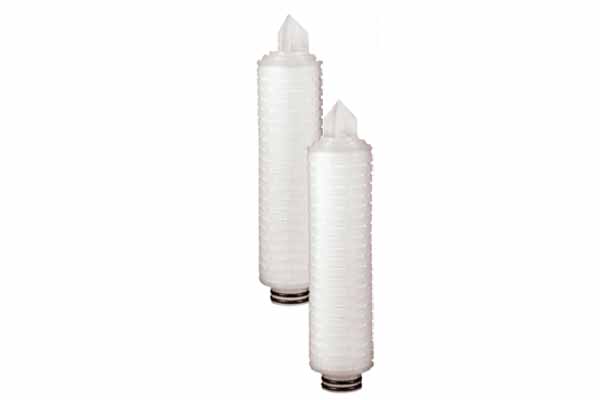
- Absolute Retention Over Nominal Depth: Standard meltblown filters will stretch and release colloids when pressure rises. Our pleated micro-glass and advanced Polypropylene media provide absolute-rated retention. The pores will not dilate under pressure, guaranteeing that the colloidal threat is physically arrested before it can reach your high-pressure RO pumps.
- Address the Upstream Chemistry: The mechanical filter is your final security barrier, not a chemical mixer. We advise our clients to aggressively optimize their upstream DAF and clarifier jar-testing protocols to eliminate polymer carryover, ensuring the high-flow cartridges can achieve their maximum engineered lifespan.