What is the "Initial Pressure Drop" of a Filter Cartridge? (And Why the 0.1 Bar Limit is Critical)
Rapid Answer
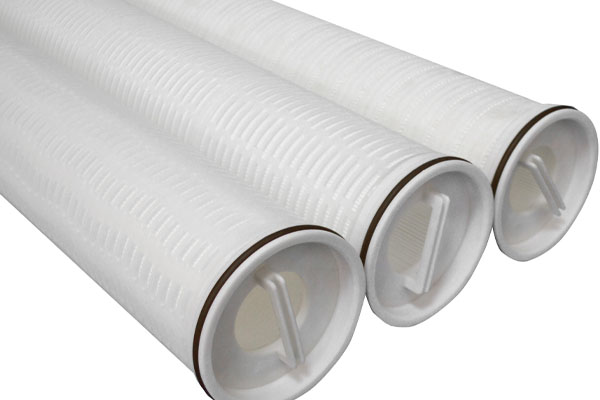
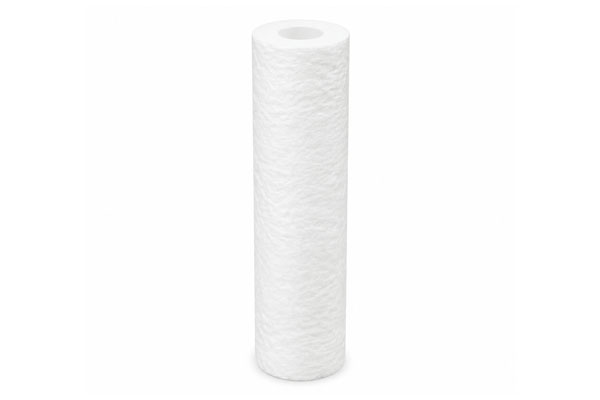
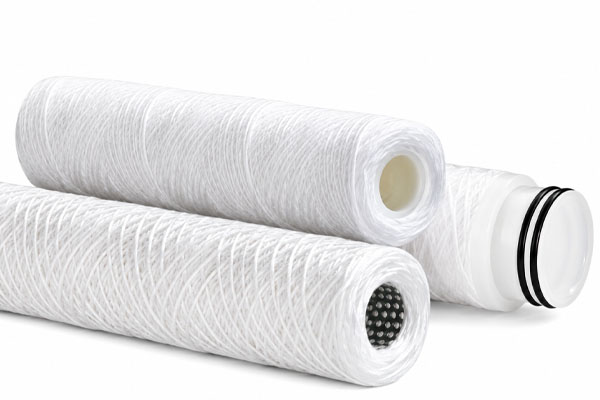
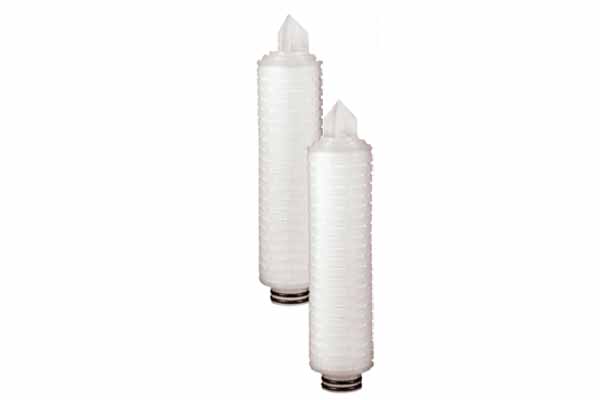
The Initial Pressure Drop (often referred to as "Clean Delta P") is the measurement of hydraulic resistance across a filtration system the moment brand-new, clean filter cartridges are brought online at the design flow rate. It is the baseline pressure lost simply by forcing the fluid through the clean filter media, the internal core, and the steel housing.
In professional process engineering, the golden rule of filter sizing is to control the Initial Delta P within 0.1 to 0.15 bar (approx. 1.5 to 2 psi). Why? Because the pressure drop of a plugging filter does not rise in a straight line; it follows an exponential "hockey-stick" curve. If you undersize a system and start with an initial Delta P of 0.5 bar, you have not merely lost a little pressure—you have instantly consumed up to 80% of the filter’s operational lifespan on day one.
The Physics of Initial Pressure Drop
To understand why controlling this metric is so important, engineers must look at the variables that create resistance in a clean system. The Initial Delta P is dictated by three fluid dynamic factors:
- Fluid Viscosity: Pumping heavy lube oil creates exponentially more resistance than pumping 20 degrees Celsius water.
- Media Permeability (Micron Rating): A tight 1-micron absolute micro-glass media has far less open porosity than a coarse 20-micron meltblown media.
- Fluid Velocity (Flux Rate): The speed at which the fluid hits the filter media. If you force 100 cubic meters per hour through a single cartridge, the velocity is high, and the resistance spikes.
The Operational Trap: Plant managers often assume that as long as the initial Delta P is below the system’s maximum alarm limit (e.g., 2.5 bar), the system is fine. This is a catastrophic misunderstanding of how filters capture dirt.
The "Hockey-Stick" Curve: Why 0.1 Bar is the Magic Number
As a filter captures solid particulates, the pores begin to close. However, the pressure does not rise linearly.
During the first 70% to 80% of a filter’s life, the Delta P remains incredibly flat and stable. The media is slowly filling up, but there are still enough open pores to handle the flow.
Once the media reaches a critical saturation point, the remaining open pores are forced to handle the entire fluid volume. The fluid velocity through these few remaining pores skyrockets, and the Delta P shoots straight up vertically (the blade of the hockey stick).
The Math of Filter Life:
- Scenario A (Optimized Design): You size the housing to start at 0.1 bar. The filter operates for 40 days before hitting the exponential curve, reaching the change-out limit of 2.5 bar on Day 45.
- Scenario B (Undersized Design): You use fewer filters to save money on the steel housing. The initial Delta P starts at 0.5 bar. Because you are already starting near the base of the exponential curve, the filter will reach 2.5 bar and fail in just 8 to 10 days.
By accepting a starting pressure of 0.5 bar, you sacrificed over 70% of the filter’s dirt-holding capacity.
Diagnostic Matrix: The O&M Consequences of High Initial Delta P
If a plant ignores the 0.1 bar limit during the design and procurement phase, the physical autopsy of the system will reveal severe operational and mechanical failures.
| Process Variable | Physical Consequence of High Initial Delta P | O&M Financial Impact |
|---|---|---|
| Media Saturation | Premature Blinding: The high fluid velocity drives dirt deep into the pleat roots immediately, rather than allowing a uniform "filter cake" to form on the surface. | Cartridge consumption triples. The OPEX budget for consumables is destroyed within the first quarter. |
| Contaminant Capture | Extrusion Bypass: High initial pressure creates intense hydraulic shear. Soft, deformable contaminants (like biological slime, oil emulsions, or Iron Sulfide) are physically squeezed through the media. | Downstream assets (RO membranes, catalysts, heat exchangers) become fouled despite having a filter in place. |
| Pump Dynamics | Energy Waste & Cavitation: The feed pumps must run at higher RPMs to overcome the immediate restriction. In some configurations, this can lead to pump cavitation or dead-heading. | Electricity costs rise significantly, and pump seal wear accelerates. |
The CAPEX vs. OPEX Sizing Trap
The root cause of high Initial Delta P almost always stems from the procurement phase.
An EPC (Engineering, Procurement, and Construction) contractor or a purchasing manager wants to reduce Capital Expenditure (CAPEX). To save money, they buy a smaller steel filter housing that holds 10 high-flow cartridges instead of 15.
Because all the plant’s flow must now squeeze through 10 cartridges, the flux rate is massive, and the system comes online with an initial Delta P of 0.6 bar.
The CAPEX savings on the smaller steel housing might have been $5,000. However, because the filters now plug every week instead of every month, the plant will spend an extra $40,000 in replacement filters (OPEX) and maintenance labor during the first year of operation alone.
The ecofiltrone Engineering Sizing Philosophy
In B2B industrial filtration, designing for a low initial pressure drop is the ultimate secret to minimizing the Total Cost of Ownership (TCO).
When we size a high-flow filtration system for your process, we do not simply rely on theoretical "maximum flow" marketing charts. We actively model your fluid’s viscosity, target micron rating, and contaminant load to oversize the media surface area by 10% to 20%.
By purposefully dropping the fluid velocity, we guarantee that your system comes online at or below the critical 0.1 bar threshold. This engineering discipline prevents extrusion bypass, protects your downstream assets, and ensures that your high-flow cartridges utilize 100% of their designed dirt-holding capacity before requiring a change-out.