Why "Ease of Replacement" is a Critical Safety Metric in Petrochemical Explosion-Proof Zones
Rapid Answer
In a general industrial setting, "ease of filter replacement" is a convenience that saves labor costs. In a petrochemical explosion-proof area (Ex-zone / Class 1 Div 1), "ease of replacement" is a strict life-safety requirement and a critical risk mitigation strategy.
Operating in these zones means the atmosphere is potentially saturated with flammable hydrocarbons or toxic gases (like $H_2S$ or benzene). Therefore, the primary goal of any maintenance operation is to minimize "Time-at-Risk." The design of high-flow filters—which reduces the number of elements from hundreds down to a handful, utilizes tool-free sealing, and contains contaminants internally—transforms a highly dangerous, multi-shift confined-space operation into a brief, low-risk task.
The 4 Pillars of Risk Mitigation in Ex-Zones
To understand why high-flow filter geometry is mandated in modern petrochemical plants, we must look at the specific hazards of replacing filters in an explosive environment.
1. Minimizing "Time-at-Risk" (The ALARA Principle)
In explosive or highly toxic environments, operators work under the ALARA (As Low As Reasonably Achievable) safety principle regarding exposure.
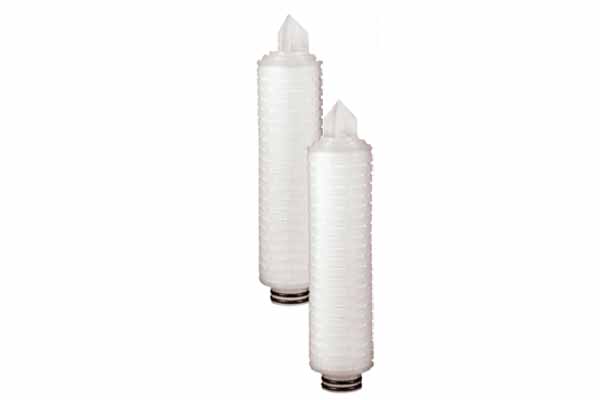
- The Legacy Danger: Changing 300 to 400 standard meltblown filters in a large amine or naphtha housing requires an operator to stand over an open, off-gassing pressure vessel for 6 to 8 hours. This prolonged exposure dramatically increases the statistical probability of a gas leak, vapor inhalation, or an ignition event occurring while the vessel is open.
- The High-Flow Advantage: A high-flow system replaces those 400 filters with 10 to 15 large-diameter elements. The operation drops from an 8-hour shift to under 45 minutes, slashing the operator’s time in the hazardous zone by over 90%.
2. Overcoming PPE & Ergonomic Limitations
Operators working in Ex-zones or toxic areas do not wear standard work clothes. They are encased in bulky Personal Protective Equipment (PPE), often including heavy chemical-resistant suits, thick multi-layered gloves, and Self-Contained Breathing Apparatus (SCBA).
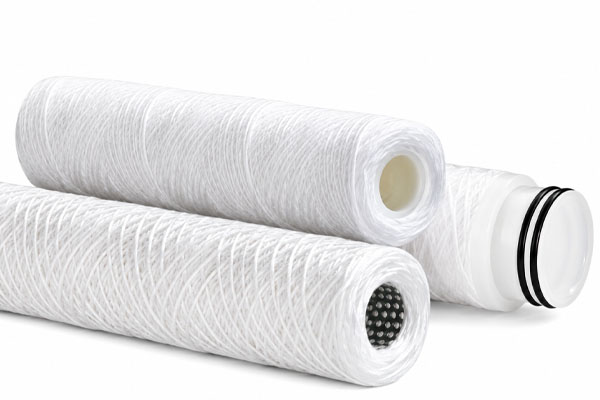
- The Legacy Danger: Standard filters often require aligning tiny springs, V-posts, and threading small nuts. Doing this with thick, chemical-resistant gloves is ergonomically infuriating, leading to dropped parts, improper seals, and severe physical fatigue. Furthermore, an SCBA tank only provides 30 to 45 minutes of air. An 8-hour filter change requires the crew to stop, exit the hot zone, and swap air bottles 10 to 15 times.
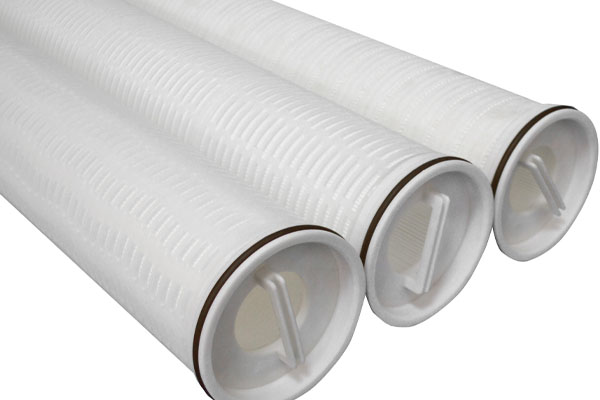
- The High-Flow Advantage: High-flow filters feature large, ergonomically designed molded handles. They use a simple "drop-and-twist" or push-fit O-ring seal. An operator in full SCBA and heavy gloves can easily grab, lift, and seat a high-flow filter without requiring fine motor skills.
3. Tool-Free and Spark-Free Operations
In an explosion-proof area, "Hot Work" permits are strictly controlled. Striking steel against steel can generate a spark, which acts as an ignition source.
- The Legacy Danger: Dismantling legacy filter arrays often requires wrenches, sockets, and heavy tools to loosen rusted or seized retaining plates. If a metal tool is dropped inside the steel vessel, it can spark. Even if brass or beryllium non-sparking tools are used, the process is still slow and cumbersome.
- The High-Flow Advantage: High-flow retrofits are designed for tool-free installation. The filters lock into place using their own internal O-ring friction or a simple integrated plastic cam-lock. No metal tools enter the vessel, completely eliminating the mechanical spark risk associated with the filter seating process.
4. Inside-Out Flow and Pyrophoric Containment
Petrochemical streams (like sour water or amine) often generate Iron Sulfide (FeS). Iron sulfide is pyrophoric—it will spontaneously combust and ignite when exposed to oxygen.
- The Legacy Danger: Standard filters flow outside-in. When you pull the filter out, the pyrophoric black powder sludges off the outside of the filter and falls to the bottom of the steel housing. Operators must then perform a dangerous "confined space entry" to shovel out the combustible sludge.
- The High-Flow Advantage: High-flow filters flow inside-out. All the pyrophoric iron sulfide, toxic sludge, and trapped hydrocarbons are safely caught inside the core of the filter. When the operator pulls the filter out via the handle, the hazard comes out entirely contained within the plastic shell. The steel vessel remains clean, eliminating the need for confined space entry.
Conclusion
When presenting high-flow upgrade solutions to a petrochemical Health, Safety, and Environment (HSE) manager or plant director, the conversation should not center on the unit price of the cartridge. It must center on risk removal.
By simplifying the replacement process, high-flow technology removes metal tools from explosive environments, accommodates bulky SCBA gear, contains pyrophoric hazards, and guarantees that operators spend the absolute minimum amount of time breathing off-gassing vapors. In an Ex-zone, ease of use is not a luxury; it is a critical layer of protection.