What Are the Specific Standards for Microparticle Filtration in a Stator Cooling Water System?
Rapid Answer
The specific standard for microparticle filtration in a stator cooling water (SCW) system generally mandates an absolute retention rating of 1 to 5 microns, with certain OEM guidelines strictly requiring sub-micron (0.5 to 1.0 μm) capabilities.
This stringent micron threshold is not designed for general water clarification. It is engineered specifically to capture suspended copper oxide particulates generated within the closed cooling loop. If these microparticles bypass the filtration stage, they accumulate and mechanically obstruct the narrow hollow copper conductors inside the generator stator.
Consequently, the SCW filtration standard serves as a primary thermal protection mechanism. Effective filtration prevents localized flow starvation, subsequent stator bar temperature excursions, insulation degradation, and catastrophic electrical ground faults.
The Metallurgy and Physics of Stator Copper Exfoliation
To understand why SCW filtration standards are so rigorous, operators must examine the degradation mechanisms of the copper hollow strands carrying the cooling water inside the generator.
The SCW system operates with ultra-pure water (typically $< 0.2 \text{ \mu S/cm}$ conductivity). In this environment, the copper surfaces rely on a delicate layer of oxide for passivation. Depending on the plant’s specific chemistry regimen—either low dissolved oxygen (DO $< 20 \text{ ppb}$) or high dissolved oxygen (DO $2\text{–}8 \text{ ppm}$)—the copper forms either cuprous oxide ($Cu_2O$, red/brown) or cupric oxide ($CuO$, black).
During chemistry transients, load changes, or thermal cycling, this oxide layer can destabilize, flake off, and become suspended in the cooling water.
The Plugging Mechanism:
Suspended copper oxide particles are relatively dense. While individual particles may be small ($0.5\text{–}2.0 \text{ \mu m}$), they tend to agglomerate in low-velocity zones or at the internal bends of the hollow stator strands. Over time, this agglomeration bridges the gap across the narrow cooling channels, creating a physical blockage. As water flow through that specific strand decreases, the local copper temperature spikes, creating a dangerous thermal gradient within the stator slot.
Operational Diagnostics: Cross-Referencing SCW Signals
Diagnosing SCW filtration issues requires tracking the mechanical behavior of the filter alongside the thermal behavior of the generator. Experienced engineers cross-reference filter differential pressure ($\Delta P$) with stator bar thermocouple (TC) readings to detect bypass or particulate breakthroughs.
SCW Filtration Diagnostic Matrix
| Correlated Operational Signals | Diagnostic Inference (Root Cause) | Typical Operator Action |
|---|---|---|
| Filter $\Delta P$ stable/low + Specific stator slot temps rising | Filter Bypass / Unloading: The filter media has deformed, or the O-ring seal failed. Microparticles are bypassing the filter and plugging stator strands. | Immediately switch to the standby duplex filter housing. Verify absolute micron rating and seal integrity of replacement elements. |
| Filter $\Delta P$ spikes rapidly + DO levels fluctuating | Chemistry Upset / Crud Burst: A loss of chemistry control (e.g., sudden oxygen ingress in a low-DO system) has caused massive copper oxide exfoliation. | Maintain SCW flow via the standby filter; investigate and correct the source of the dissolved oxygen transient. |
| Filter $\Delta P$ ↑ + System Conductivity ↑ | Resin Intrusion: If a mixed-bed polishing unit is located upstream, polishing resin fines may be escaping and blinding the SCW filter. | Isolate the polishing bed and inspect the resin trap elements for mechanical failure. |
Field Experience: Diagnosing the Stator Bar Temperature Spread
During base-load operation at a combined-cycle power plant, operators noticed a creeping temperature spread across the generator stator. Three specific stator slot thermocouples showed a gradual 4°C to 6°C rise over a two-week period, while the bulk SCW flow and header pressure remained perfectly stable.
Initially, the maintenance team suspected faulty thermocouples. However, a review of the SCW skid parameters revealed a lagging dynamic: the SCW filter $\Delta P$ had been completely flat at 0.1 bar for the past six months, despite routine copper transport occurring in the system.
An inspection of the offline filter housing uncovered the root cause. The plant had been utilizing standard, nominal-rated 5-micron melt-blown depth filters. Over time, the continuous hydraulic pulsation of the SCW pumps had caused the soft melt-blown media to structurally compress and "unload"—releasing previously captured copper oxide particles downstream and allowing new microparticles to pass straight through.
These bypassing particles agglomerated inside the specific stator bars, restricting localized flow and driving up the temperature. The corrective action required upgrading the SCW skid to absolute-rated, rigid pleated micro-glass filter elements with dual O-ring seals, ensuring positive retention of all particulates $> 1 \text{ \mu m}$ under continuous dynamic flow.
The Engineering Logic of SCW Filtration Structures
Because of the extreme financial consequence of a stator ground fault, the operational decision logic for SCW filters dictates structures that prioritize bypass prevention and absolute retention over simple dirt-holding capacity.
Why Standard Nominal Filters Fail
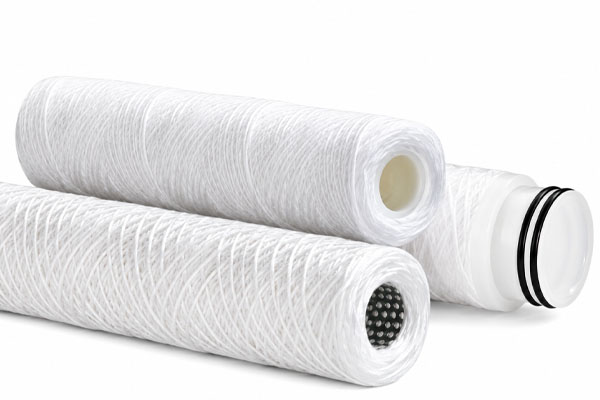
Standard depth filters (string-wound or melt-blown polypropylene) rely on tortuous paths to trap dirt. Under steady conditions, they work. However, under hydraulic stress or pump start/stop cycles, they deform. This deformation physically forces trapped copper oxides through the media matrix and into the generator.
The Operational Justification for Absolute-Rated Pleated Structures
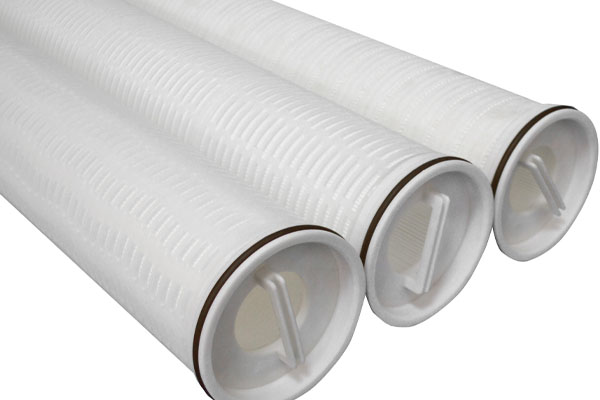
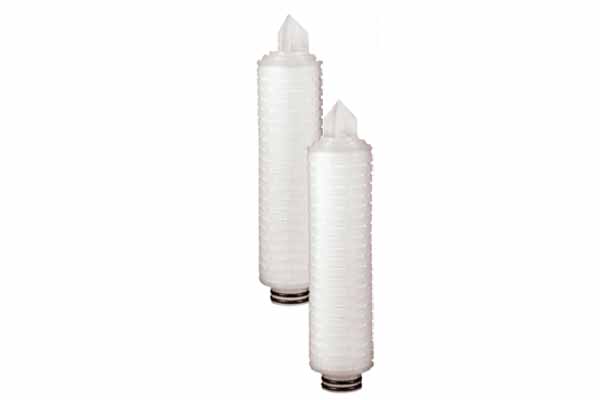
To properly protect the stator strands, modern SCW systems specify absolute-rated pleated filters (typically 1 to 5 microns).
The engineering rationale is based on mechanical certainty:
- Rigid Pore Structure: High-performance pleated media (often incorporating micro-glass or advanced synthetic composites) maintains a fixed pore size. It does not flex or unload trapped particles during hydraulic transients.
- Positive Sealing Mechanisms: Unlike flat-gasket depth filters that rely on spring tension, high-quality SCW elements utilize double open end (DOE) with high-compression gaskets, or single open end (SOE) designs with double O-rings (e.g., 222 or 226 configurations) to completely eliminate fluid bypass pathways.
- Low Initial $\Delta P$: The extended surface area of the pleats ensures that the filter does not add unnecessary hydraulic resistance to the SCW pumps, maintaining the high flow velocities required for optimal stator cooling.
Conclusion
The microparticle filtration standard in a stator cooling water system is an active, critical defense mechanism against generator thermal degradation. By cross-referencing filter differential pressures with stator slot temperatures, operators can detect the mechanical precursors to copper oxide plugging.
Deploying absolute-rated, structurally rigid filtration safeguards ensures that transient copper oxides are mechanically permanently arrested, maintaining the unobstructed flow and thermal stability required for safe generator operation.