What Is Iron Removal in Condensate? Why Is It Crucial for Power Plants?
Rapid Answer
Iron removal in condensate systems refers to the process of removing iron oxides, corrosion particles, and suspended metallic contaminants from condensate water before it returns to the boiler system.
In power plants, iron removal is critical because even small amounts of iron contamination may cause:
- boiler tube deposition
- turbine fouling
- heat transfer efficiency loss
- corrosion acceleration
- increased maintenance cost
- reduced system reliability
In high-pressure steam systems, iron contamination is not just a water quality issue — it is a long-term operational reliability issue.
What Is Condensate in a Power Plant?
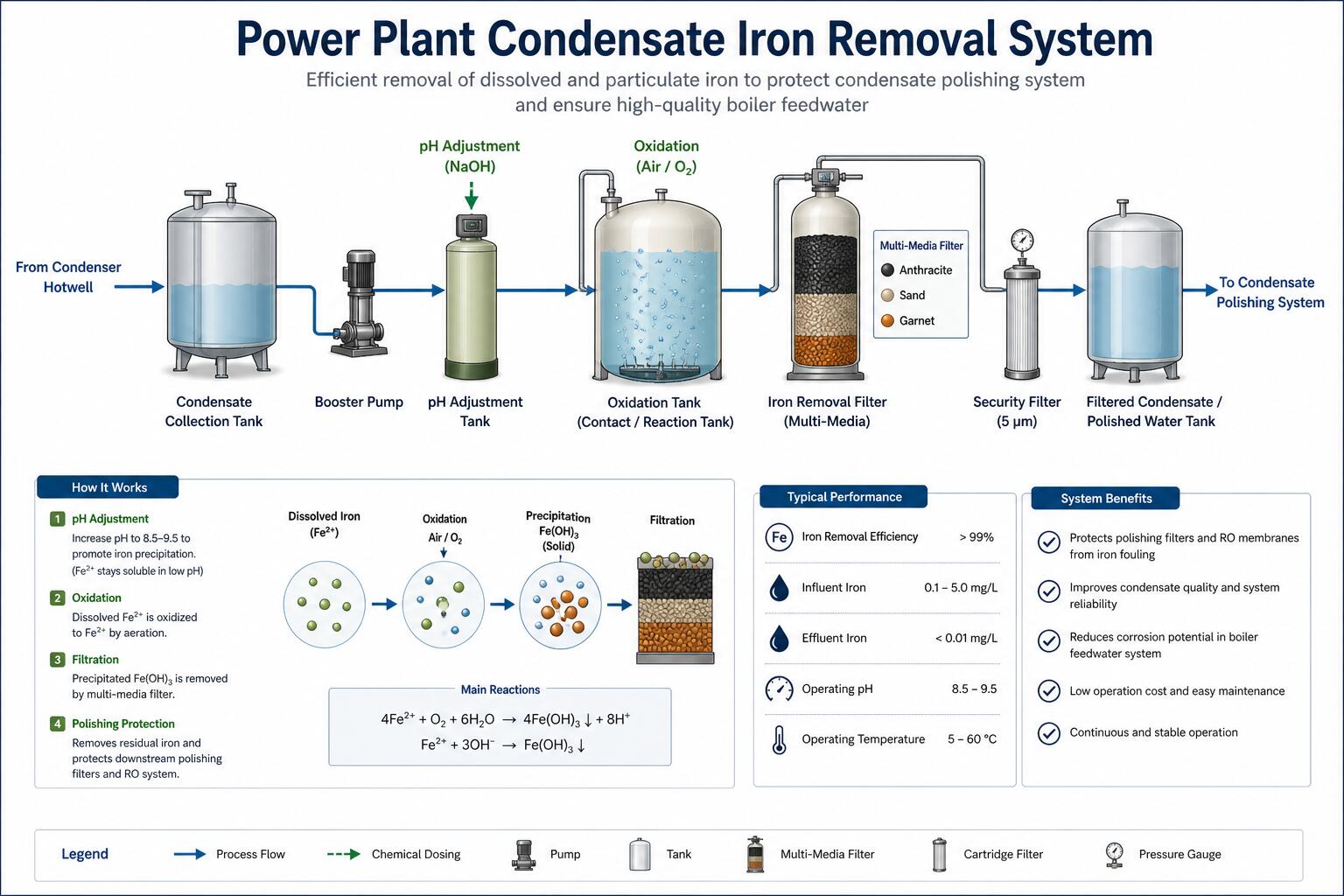
In thermal power plants, steam is used to drive turbines for electricity generation.
After steam passes through the turbine, it condenses back into water called condensate.
This condensate is then:
- collected
- treated
- polished
- returned to the boiler system
Because condensate continuously circulates through:
- boilers
- steam lines
- condensers
- turbines
it may gradually carry corrosion products and metallic contaminants throughout the entire system.
What Causes Iron Contamination in Condensate Systems?
Iron contamination mainly comes from corrosion inside:
- pipelines
- heat exchangers
- boiler tubes
- condensers
- feedwater systems
Over time, metal surfaces release:
- iron oxides
- corrosion particles
- magnetite fines
- suspended metallic debris
These particles continuously circulate inside the condensate loop.
Even well-operated systems gradually generate corrosion products during long-term operation.
Why Is Iron Removal So Important?
Many operators underestimate how sensitive steam systems are to iron contamination.
In reality, even low iron concentration may gradually create severe operational problems.
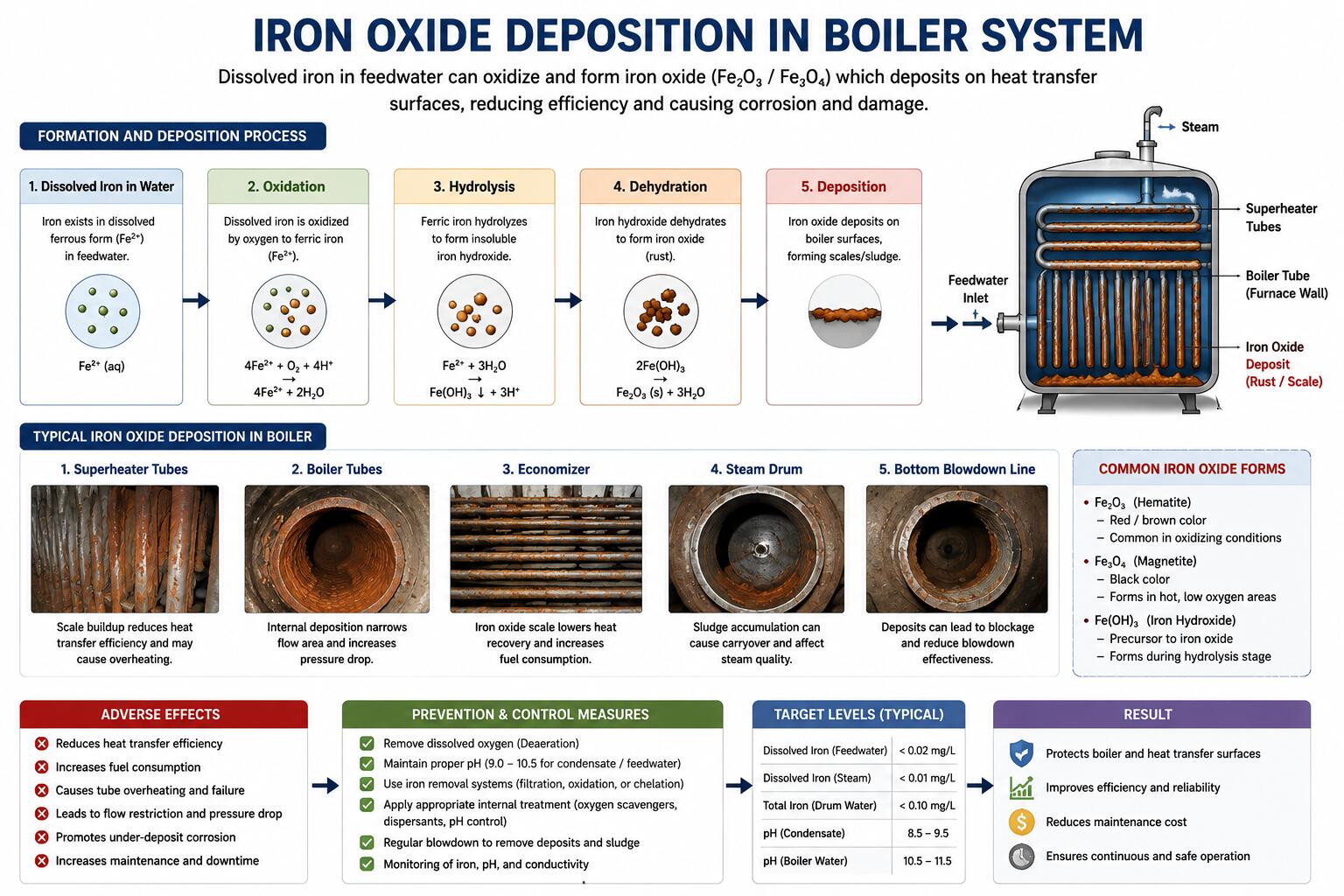
1. Boiler Tube Deposition
Iron particles may accumulate on boiler tube surfaces.
This creates:
- insulating deposits
- reduced heat transfer efficiency
- localized overheating
- tube damage risk
Over time, deposit accumulation may significantly reduce boiler performance.
2. Turbine Fouling and Efficiency Loss
Fine iron particles may travel through the steam cycle and deposit on turbine surfaces.
This may cause:
- turbine imbalance
- reduced steam efficiency
- increased vibration
- long-term mechanical wear
In high-pressure steam systems, maintaining clean condensate is essential for protecting turbine reliability.
3. Corrosion Acceleration
Iron contamination may also indicate:
- active corrosion
- oxygen ingress
- unstable water chemistry
- condensate treatment imbalance
High iron concentration is often a warning sign of larger corrosion problems inside the system.
4. Increased Maintenance and Downtime
When iron contamination increases:
- filters foul faster
- polishing systems overload
- cleaning frequency increases
- maintenance shutdowns become more frequent
In power plants, reducing maintenance interruption is often more important than reducing component cost.
What Types of Iron Exist in Condensate Systems?
Different iron forms behave differently during filtration.
Particulate Iron
Visible suspended particles such as:
- iron oxide debris
- corrosion flakes
- rust particles
These are usually easier to remove through filtration.
Colloidal Iron
Very fine iron particles may remain suspended for long periods.
Colloidal iron is more difficult because it:
- penetrates deeply into filter media
- causes gradual fouling
- may bypass unstable filtration systems
Colloidal iron often creates slow but continuous differential pressure increase.
How Is Iron Removed from Condensate?
Power plants typically use:
- condensate polishing systems
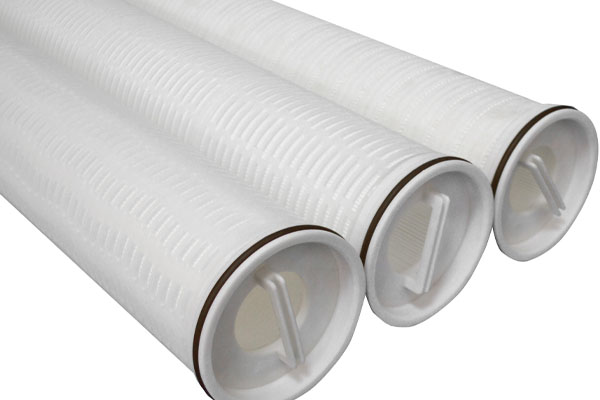
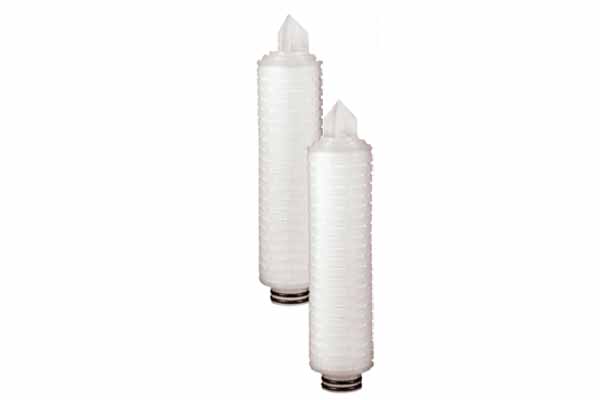
- high-flow filter cartridges
- ion exchange resins
- deep-bed polishing systems
to continuously remove iron contamination.
Why High-Flow Filters Are Commonly Used
Condensate systems usually operate with:
- high circulation flow
- continuous operation
- low contaminant concentration
- strict pressure stability requirements
High-flow cartridges help:
- reduce pressure drop
- increase dirt holding capacity
- stabilize flow distribution
- reduce maintenance frequency
Surface Fouling vs Depth Loading
Different iron contaminants foul filters differently.
Surface Fouling
Typical causes:
- large corrosion particles
- iron oxide agglomerates
- resin fines
Characteristics:
- rapid outer-layer blockage
- faster pressure rise
- localized fouling
Depth Loading
Typical causes:
- ultrafine iron particles
- colloidal iron
- fine metallic contaminants
Characteristics:
- gradual contaminant penetration
- slower differential pressure increase
more stable fouling behavior
How Filter Structure Affects Iron Removal
Filter structure directly affects:
- iron capture efficiency
- pressure stability
- dirt holding behavior
- operational consistency
Gradient Density Media
Gradient-density structures help:
- distribute contaminants through media depth
- reduce premature surface blinding
- improve iron holding capacity
This is especially important for:
- colloidal iron
- ultrafine corrosion particles
- unstable contaminant loading
High Filtration Area Design
Large filtration area helps:
- improve contaminant distribution
- reduce localized fouling
- stabilize differential pressure
Reinforced Structural Stability
Stable filter structures help:
- maintain flow channels
- improve operational reliability
- reduce pleat deformation under high flow conditions
Recommended Condensate Filtration Strategy
To improve iron removal performance:
- monitor iron concentration regularly
- stabilize condensate chemistry
- reduce oxygen ingress
- monitor differential pressure trends
- use high dirt holding filtration structures
- optimize replacement intervals
Stable condensate polishing is essential for long-term boiler and turbine reliability.
FAQ
What is iron removal in condensate systems?
It is the process of removing corrosion products and iron contaminants from condensate water before it returns to the boiler.
Why is iron dangerous in power plants?
Iron particles may cause boiler deposition, turbine fouling, corrosion problems, and efficiency loss.
What causes iron contamination in condensate?
The main source is corrosion inside pipelines, boilers, condensers, and steam systems.
Why are high-flow filters used in condensate polishing?
Because they provide lower pressure drop, higher dirt holding capacity, and more stable operation under continuous high-flow conditions.
Is colloidal iron difficult to remove?
Yes. Very fine iron particles may remain suspended and gradually foul filtration systems over time.
Conclusion
Iron removal is one of the most important functions of condensate polishing systems in power plants.
Without stable iron removal:
- boilers may foul faster
- turbines may lose efficiency
- corrosion may accelerate
- operational reliability may decrease
Understanding contaminant behavior, condensate chemistry, and filtration stability is essential for maintaining long-term power plant performance.