Your food factory relies on Clean-in-Place (CIP), but these harsh chemicals can secretly destroy filters. This leads to contamination risks and high replacement costs. How do you clean effectively without causing damage?
Yes, high-flow filter elements can endure CIP cleaning if made from robust materials like polypropylene. The key is to monitor the initial pressure drop after each wash. If it no longer returns to the baseline of a new filter, the internal structure is compromised and needs replacement.
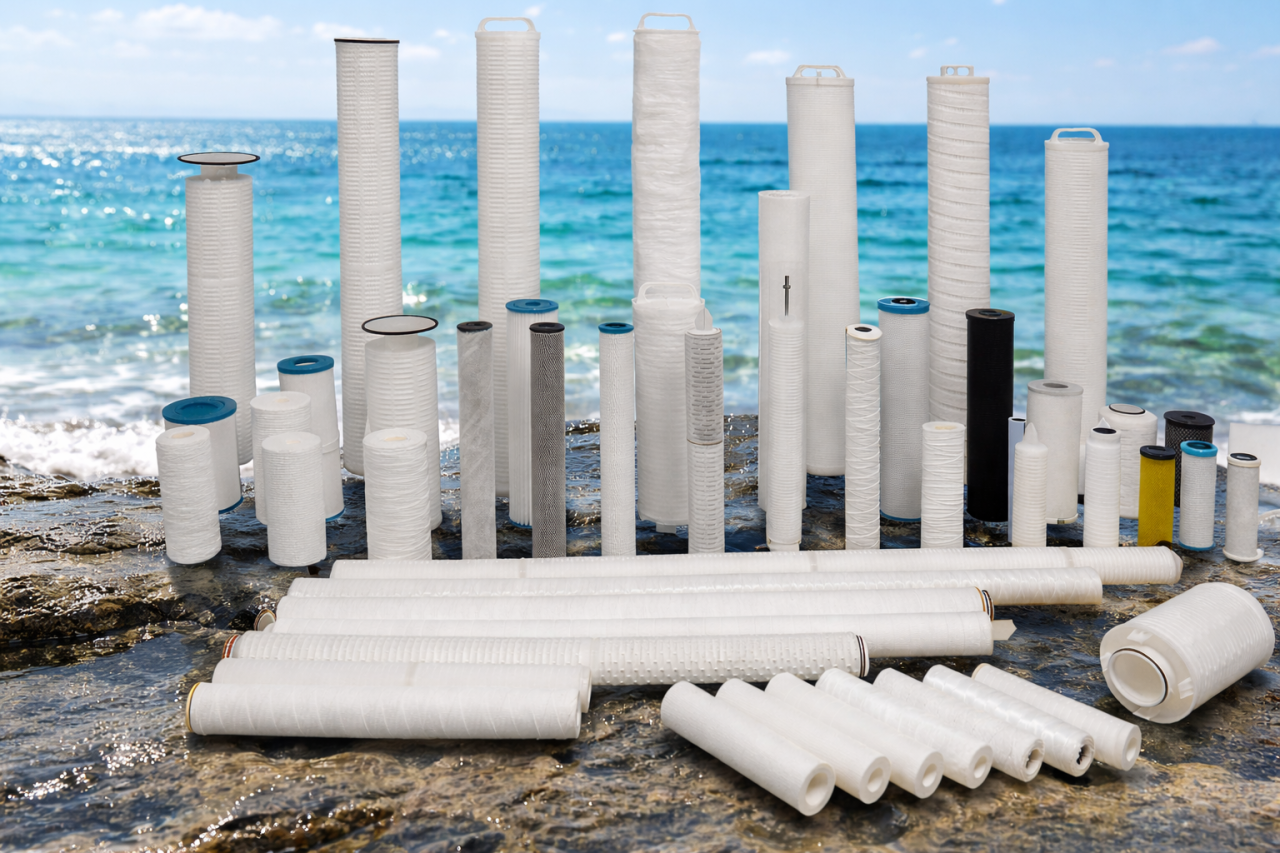
This sounds straightforward, but the reality is more complex. Many factors in your cleaning process can determine whether a filter survives or fails. Over my 10 years in the industrial filtration business, I’ve seen many clients struggle with this exact problem.
Let’s break down the common challenges our customers face and explore how to build a reliable and cost-effective CIP process for your filter cartridges.
Why does the filtration accuracy of filter cartridges drift after cleaning with 3% caustic soda?
Your filter’s performance drops after a caustic soda wash, letting contaminants through. This threatens product quality. How do you stop this accuracy drift and keep your production safe?
Filtration accuracy drifts because hot caustic soda can make the filter media’s pores swell and deform permanently. This is common with lower-grade materials. The repeated chemical and thermal stress changes the pore structure, reducing its ability to capture particles of the correct size.
I’ve seen this happen many times. A customer will call us at ecofiltrone, confused about why their particle counts are suddenly high after a routine cleaning. The problem is that caustic soda, especially when hot, is a very aggressive chemical. It doesn’t just wash away dirt; it physically interacts with the filter material itself. Polypropylene (PP) is a common choice for filter media because of its general chemical resistance, but it’s not invincible. Repeated exposure to hot caustic solutions can weaken the fine polymer fibers that create the filtration matrix. Think of it like a fabric that gets stretched and worn out after too many harsh washes. The fibers shift, and the pores either get bigger or clog up. This permanent change means the filter no longer performs at its stated micron rating.
Material Response to Caustic Cleaning
Choosing the right material is the first line of defense. Not all polypropylene is created equal, and for high-temperature CIP, you need a high-grade, resilient material.
| Material | Temperature | Effect of 3% Caustic Soda |
|---|---|---|
| Standard PP | 60°C | Minor swelling, mostly recoverable |
| Standard PP | 80°C | Significant swelling, permanent pore size change |
| High-Grade PP | 80°C | High resistance, minimal structural change |
| PES | 80°C | Excellent resistance, stable performance |
This is why we always ask our clients about their specific CIP parameters—temperature, chemical concentration, and duration—before recommending a product.
How should maintenance personnel set the cleaning flow rate to remove dirt without damaging the pleated structure?
You need a strong flow to get filters clean, but too much pressure can tear the delicate pleats. This damage is often invisible but will ruin your filtration. What is the correct balance?
Set your cleaning flow rate to 50-60% of the normal operational flow rate. This creates enough force to dislodge contaminants without deforming the pleated media. Always increase the flow gradually to prevent sudden pressure shocks that can damage the filter’s structure.
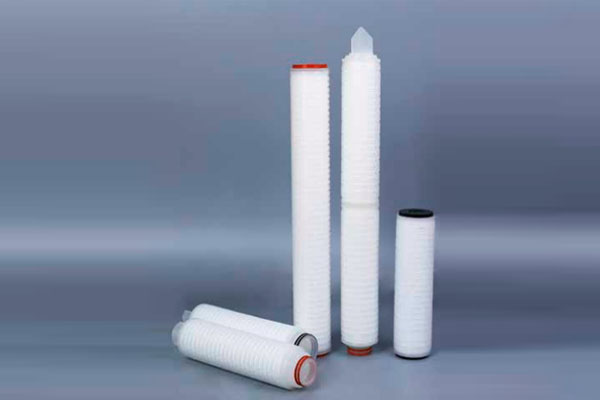
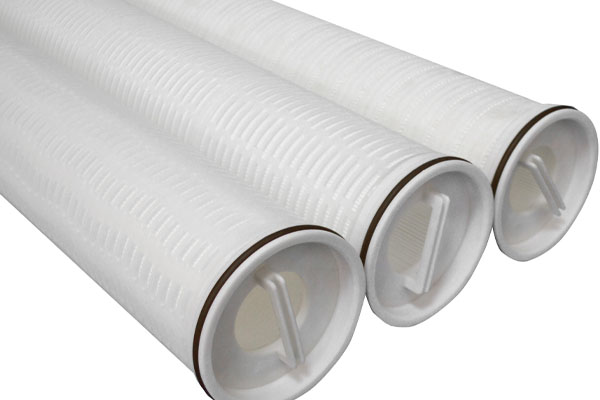
The pleated design of a high-flow filter is its biggest advantage. It packs a huge amount of surface area into a small space. But this design is also its vulnerability during cleaning. The pleats are carefully folded and supported by an outer cage and inner core. When you hit them with a high-velocity reverse flow, the hydraulic force can be immense. It can flatten the pleats against each other, which drastically reduces the available surface area and makes future cleaning impossible. In a worst-case scenario, the force can create tiny tears at the folds of the pleats. A project manager at a desalination plant once told me his team used full reverse flow, thinking it would get the filters extra clean. They ended up with a major downstream contamination event because the filters were full of micro-tears.
Recommended Cleaning Flow Protocol
The solution is a gentle, controlled approach. We advise our customers at ecofiltrone to implement a specific protocol to protect their investment.
- Soak First: Always begin by soaking the filter in the cleaning solution. This does the heavy lifting by loosening stubborn dirt without any mechanical stress.
- Ramp-Up Slowly: Instead of blasting the filter with full pressure, slowly ramp up the reverse flow over two to three minutes until you reach 50% of the normal operating flow. A variable frequency drive (VFD) on your pump is perfect for this.
- Clean at Low Flow: Maintain this gentle flow for the required duration, usually around 15 to 20 minutes.
- Ramp-Down Slowly: Just as you started, gradually ramp the flow down before shutting off the pump.
This method protects the pleated structure, extends the filter’s life, and still provides an effective clean.
In high-sugar environments such as those with syrups, how can sugar crystals be prevented from remaining deep within the filter media and being impossible to clean thoroughly?
Syrups and other sugary liquids leave behind stubborn sugar crystals deep inside your filters. These crystals resist cleaning, block flow, and can become a breeding ground for bacteria. How do you get them out completely?
To prevent sugar crystals from hardening, you must perform a warm water flush immediately after the production run, while the system is still hot. This dissolves and removes most of the sugar. After that, you can proceed with your standard CIP cycle to remove any remaining residues.

I worked with a large beverage company that faced this exact issue. They were filtering a high-fructose corn syrup and would run their CIP cycle hours after the production run ended. Their filters were failing after just a few cycles. When we inspected the old filters, we found that the syrup left inside had cooled and crystallized, forming a hard, candy-like substance deep within the pleats. It was like concrete. No amount of caustic or acid could dissolve it. The key is to never let the sugar cool down and solidify in the first place. The problem was solved by changing one simple step in their procedure. Now, the moment a production batch is finished, they immediately flush the entire system with water heated to about 60°C (140°F).
Step-by-Step Cleaning for High-Sugar Liquids
This pre-flush step is critical for any application involving sugars, syrups, or other products that can solidify upon cooling.
- Immediate Warm Water Flush: Before any chemicals touch the filter, flush the system with 50-60°C water. This keeps sugars in a liquid state and washes the majority of them away.
- Enzymatic Cleaner (Optional): If your product also contains proteins or starches, an enzymatic cleaner can be used after the flush to break down those complex organics.
- Standard CIP Cycle: Now you can proceed with your regular acid and alkali cleaning cycles. They will be much more effective because they are working on a cleaner surface.
- Final Thorough Rinse: Always finish with a complete rinse using high-purity water to remove every trace of the cleaning agents.
This simple change in procedure can be the difference between a filter that lasts for dozens of cycles and one that is useless after just one.
How do engineers assess the "chemical tolerance period" of filter cartridges and develop a mandatory disposal plan?
Your filters might look clean, but are they still effective? Reusing a chemically weakened filter is a huge risk that can lead to a sudden failure and a contaminated batch. How do you know exactly when to retire it?
Engineers should track the number of CIP cycles and, most importantly, monitor the filter’s initial pressure drop after each cleaning. Compare this to the baseline pressure of a new filter. When the post-cleaning pressure is consistently 15-20% higher than the original baseline, the filter must be disposed of.
The most important advice I can give anyone is to stop guessing and start measuring. A filter’s "chemical tolerance period" isn’t a date on a calendar; it’s a performance limit. The most reliable indicator of a filter’s health is its clean differential pressure (ΔP). This is the pressure drop across the filter when it’s clean, with clean water flowing through it. Let’s say a brand new ecofiltrone filter in your system starts with a clean ΔP of 0.5 psi. After its first CIP cycle, it returns to 0.51 psi. This is excellent. After 10 cycles, it might return to 0.55 psi, which is still very good. But then, after 20 cycles, you notice it only returns to 0.65 psi, even after a thorough cleaning. This is your signal. It tells you that the filter’s internal structure has been permanently altered—either by compaction or by micro-fouling that cannot be removed. The filter media has lost its resilience.
Creating a Filter Disposal SOP
We help our clients create a simple Standard Operating Procedure (SOP) based on data to manage their filter inventory. This moves them from reactive maintenance to a much safer, predictive model.
| Metric | Baseline (New Filter) | Warning Signal | Action Required |
|---|---|---|---|
| Clean ΔP | 0.5 psi (example) | 0.6 psi (+20%) | Schedule for replacement |
| Number of CIP Cycles | 0 | 25 cycles (example) | Perform detailed integrity check |
| Visual Inspection | Clean, intact pleats | Deformed pleats, discoloration | Immediately dispose of filter |
By logging this simple data for every filter, you can confidently predict when a filter is nearing the end of its useful life. This practice prevents unexpected failures, protects your product, and ultimately saves you money.
Conclusion
High-flow filters can survive CIP, but you must manage the process carefully. Monitor your pressure drop, use correct flow rates, and create a data-driven plan for when to dispose of them.