Your RO membranes are failing too soon, causing costly downtime. You thought a high-flow filter was the answer, but the problem isn’t going away.
The uniformity of a filter’s internal structure is the real key. A gradient density design traps particles layer by layer, preventing them from passing through. This provides consistent, reliable protection for RO membranes, unlike filters that only promise high flow rates without true efficiency.
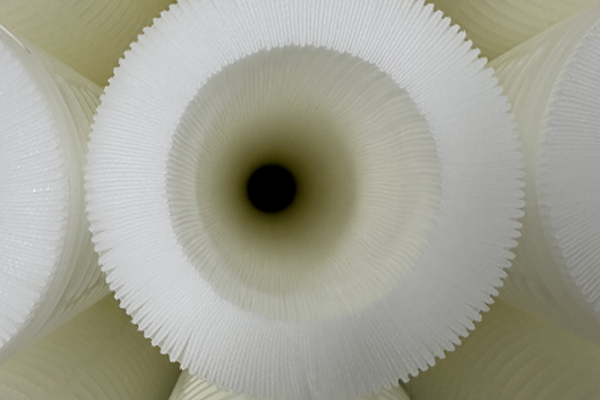
A high flow rate on a spec sheet looks great. But if the filter can’t reliably capture the contaminants it’s supposed to, that flow rate is meaningless. It’s like having a security guard who looks strong but lets intruders walk right past. The real performance isn’t on the surface; it’s deep inside the filter media. Let’s look at the science behind what makes a filter truly effective.
An in-depth exploration of the influence of the radial gradient distribution of polypropylene (PP) fibers on filtration accuracy?
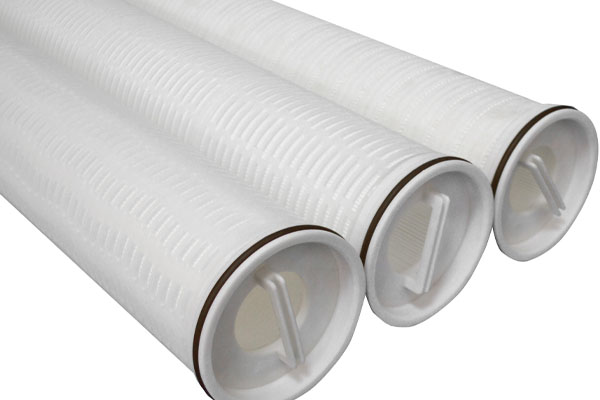
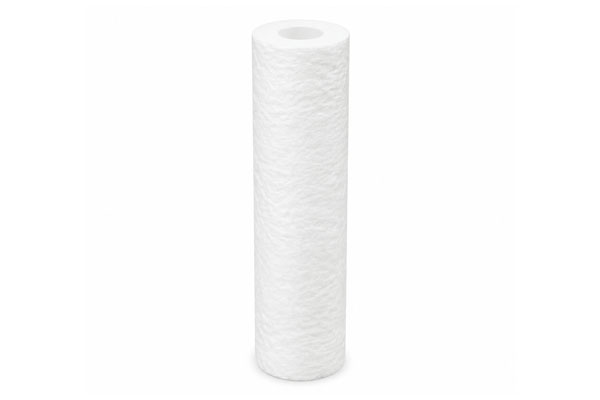
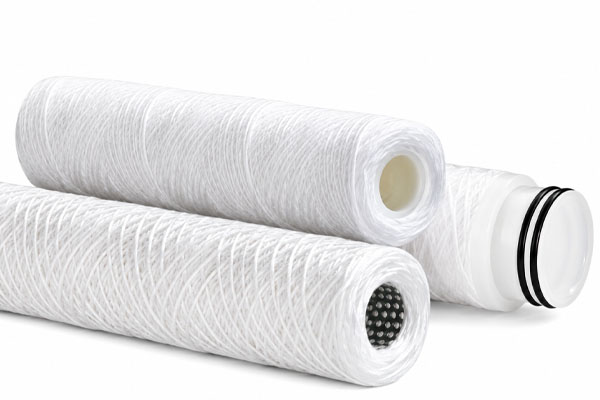
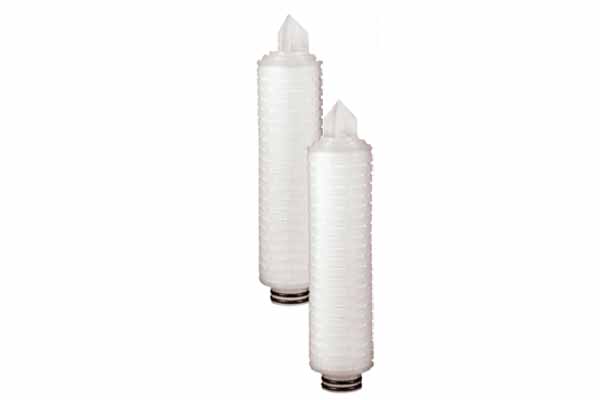
You are looking at different PP filter cartridges. They all claim similar micron ratings. How can you tell which one will actually protect your equipment?
A true gradient distribution means the filter has larger pores on the outside and gets progressively tighter toward the core. This structure captures large particles first, then finer ones. This maximizes dirt-holding capacity and ensures consistent, long-term filtration accuracy.
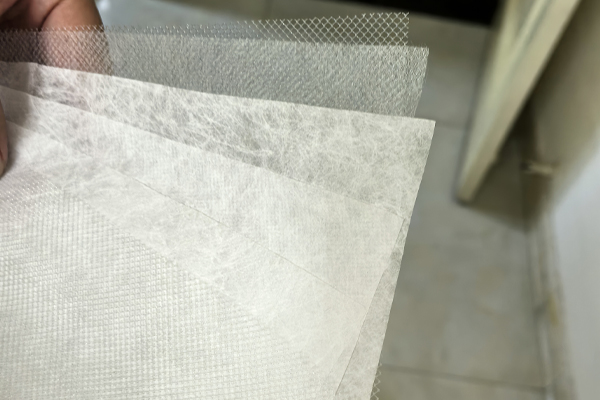
Many procurement managers I speak with focus only on the micron rating. But the real story is in the structure. A cheap filter might have a single, uniform density layer. It may stop some particles at first, but it clogs quickly. Worse, under pressure, it can allow captured particles to be pushed through. We call this the "penetration effect." At ecofiltrone, we build our filters differently. Our process creates a true depth filter with a multi-layered, gradient structure.
The Myth of Surface Filtration
A simple surface filter acts like a screen door. It stops particles larger than its openings, but everything smaller goes right through. When the surface gets clogged, the pressure drop increases dramatically, and the filter’s life is over. This design is not efficient for industrial processes that have a wide range of particle sizes.
The Power of Depth Filtration
A gradient depth filter works more like a complex maze. It has multiple layers of filtration media, starting with a more open structure on the outside and becoming denser towards the core. This design traps the largest particles in the outer layers, leaving the inner layers free to capture the finest contaminants. This approach dramatically increases the amount of dirt the filter can hold and extends its service life.
| Feature | Low-End Uniform Filter | ecofiltrone Gradient Filter |
|---|---|---|
| Structure | Single density layer | Multi-layer, large to small pores |
| Particle Capture | Surface-level only, clogs fast | Throughout the filter depth |
| Service Life | Short, requires frequent changes | Long, high dirt-holding capacity |
| RO Protection | Poor, allows particle penetration | Excellent, consistent protection |
How does the "penetration effect" in low-quality filters silently destroy your operational budget?
Your maintenance costs are rising, but you can’t find the reason. You are replacing RO membranes more often, and your system pressure is unstable. What is the hidden cause?
The "penetration effect" happens when uneven filter pores let fine particles slip through under pressure. This slow contamination fouls RO membranes, increases energy use, and leads to expensive, unscheduled shutdowns, hurting your bottom line.
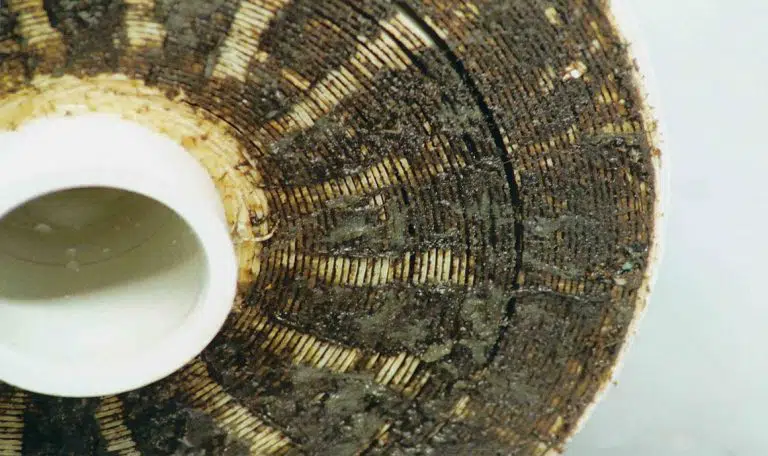
I once worked with a project manager at a large water treatment facility. He was frustrated because his team was replacing expensive RO membranes almost twice as often as projected. They were using a "cost-effective" high-flow filter from a local supplier. On the surface, the filters looked fine. But when we analyzed their discarded filters, we found they had an inconsistent internal structure. The filters were not capturing particles; they were just holding them temporarily. Under normal pressure changes, these fine particles would break free and travel straight to the RO membranes. This is the penetration effect in action, and it quietly costs companies a fortune.
The Hidden Costs of "Good Enough"
A filter that is "good enough" can be one of the most expensive parts of your operation. The initial savings on the filter purchase are quickly lost.
- Increased Energy Use: As membranes foul, you need more pump pressure to maintain output, which uses more electricity.
- More Chemical Cleaning: Fouled membranes require more frequent and aggressive chemical cleanings, adding to consumable and labor costs.
- Shorter Membrane Life: The ultimate cost is the premature replacement of very expensive RO membrane modules.
Calculating the True Cost of Filtration
When you choose a filter, you must look beyond the unit price. A high-quality filter with a stable gradient structure provides a lower Total Cost of Ownership (TCO). It protects your downstream assets and keeps your operation running smoothly.
| Cost Factor (Annual Estimate) | Low-Quality Filter | ecofiltrone Filter |
|---|---|---|
| Filter Cartridge Cost | $5,000 | $8,000 |
| RO Membrane Replacement | $40,000 (2 replacements) | $0 (no premature failure) |
| Extra Energy Consumption | $3,500 | $0 |
| Total Annual Cost | $48,500 | $8,000 |
This simple example shows how investing in quality filtration leads to massive savings.
Why is advanced welding technology more critical than adhesives for filter cartridge integrity?
Are you worried about secondary contamination from your filters? Could the parts meant to purify your water actually be adding harmful chemicals back into it?
Glues used in cheap filters can break down and leach contaminants. Advanced ultrasonic welding creates a pure, seamless structure. This method guarantees zero adhesive contamination and provides superior strength under high pressure and flow conditions.
In our 100,000-level clean production workshop, we made a clear choice: no adhesives. Many manufacturers use glues or resins to attach end caps to their filter media. This is a cheap and fast method, but it creates a weak point. Under thermal stress or chemical exposure, these adhesives can degrade. They can leach chemicals into your high-purity water system or simply fail, causing a catastrophic bypass of unfiltered water. We invested in state-of-the-art ultrasonic welding equipment for our production lines. This technology uses high-frequency vibrations to melt and fuse the polypropylene components together, creating a single, solid piece.
The Problem with Glue
Adhesives are a foreign substance in a filtration system. They are often the weakest link in the filter’s construction.
- Chemical Leaching: Adhesives can release volatile organic compounds (VOCs) or other chemicals, which is unacceptable in food and beverage or electronics applications.
- Structural Failure: Adhesives can become brittle or soft at different temperatures, leading to cracks or seal failure under pressure surges.
- Inconsistent Quality: The application of glue can be inconsistent, leading to hidden defects that cause filter failure down the line.
The Ecofiltrone Welding Advantage
Our commitment to ultrasonic welding is a core part of our quality promise. It means our filters deliver a level of purity and reliability that glued filters cannot match. This makes our products a safe and dependable alternative to top-tier brands like Pall or 3M, whose quality standards also demand such advanced manufacturing techniques.
| Feature | Adhesive Bonding | Ultrasonic Welding (ecofiltrone) |
|---|---|---|
| Chemical Purity | Risk of leaching | No added chemicals, completely pure |
| Structural Strength | Weak point, can fail | Strong, unified bond |
| Temperature Resistance | Limited range | Same as the PP material itself |
| Reliability | Inconsistent, potential for defects | Highly consistent and reliable |
Conclusion
True RO system protection is not about flow rate alone. It is about the filter’s engineered gradient structure and clean construction. Choose wisely for long-term reliability and real savings.