Inside-Out vs Outside-In Flow Design in High Flow Filter Cartridges
Flow direction may look like a small cartridge design detail, but in high flow filter systems it can directly affect contaminant retention, cartridge change-out cleanliness, housing compatibility and downstream protection.
In most cartridge filtration systems, there are two main flow designs:
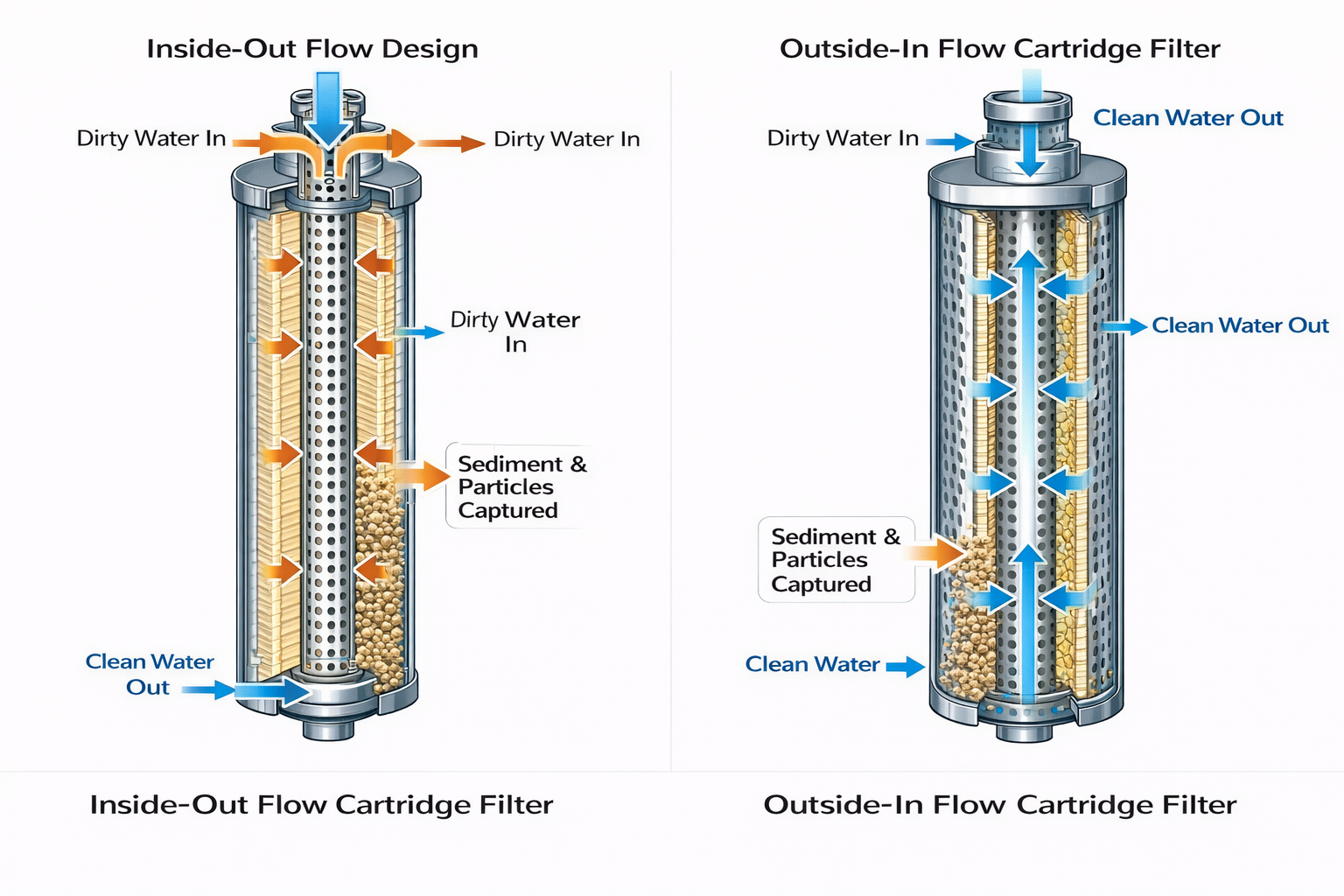
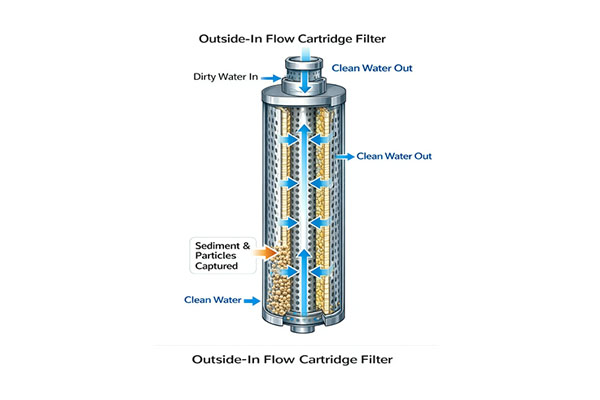
- Outside-in flow: fluid enters from the outside of the cartridge and flows inward to the center core.
- Inside-out flow: fluid enters from the center core and flows outward through the media.
The difference is not only about flow path. It also affects where contaminants are retained, how clean the housing remains during replacement, and whether the design is suitable for critical applications such as RO security filtration, high-purity water, process liquids and OEM high flow filter replacement.
Quick Answer: What Is the Difference Between Inside-Out and Outside-In Flow?
Outside-in flow is a common cartridge filter design where unfiltered fluid surrounds the outside of the cartridge, passes through the filter media, and exits from the center core.
Inside-out flow sends unfiltered fluid into the cartridge center core first, then pushes it outward through the media. Captured contaminants remain inside the cartridge, making change-out cleaner and reducing the risk of particle release into the housing.
For many high flow cartridge systems used in RO pretreatment and industrial water filtration, inside-out flow is preferred when operators want cleaner replacement, better contaminant containment and lower downstream contamination risk during maintenance.
Related High Flow Filter Solution
For Pall, 3M and Parker-style high flow cartridge replacement, flow direction is one of the key compatibility points. It affects contaminant retention, cartridge installation, housing connection and replacement cleanliness.
Recommended pages:
- HFL Series High Flow Filter Cartridge
- RO Pretreatment Filtration Solution
- Request a Compatibility Check
What Is Outside-In Flow Design?
Outside-in flow is one of the most common filtration flow paths.
In this design, unfiltered fluid enters the filter housing and surrounds the outside surface of the cartridge. The fluid then passes through the pleated media and exits through the center core as filtered fluid.
Advantages of Outside-In Flow
Outside-in flow is widely used because it is simple, familiar and suitable for many general filtration systems.
Main advantages include:
- Simple housing and cartridge design
- Wide availability in many standard cartridge formats
- Suitable for general water and industrial filtration
- Easy to apply in many existing systems
- Often cost-effective for non-critical applications
This design is common in many conventional cartridge filters, bag filter alternatives and general industrial filtration applications.
Limitations of Outside-In Flow
The main limitation appears during cartridge replacement.
Because contaminants are captured on the outside surface of the cartridge, the dirty layer is exposed when the cartridge is removed. During change-out, particles may fall back into the housing or clean outlet area if the operator is not careful.
This may create risks such as:
- Debris falling into the clean side of the housing
- Extra cleaning or flushing after cartridge removal
- Higher contamination risk during maintenance
- Messier filter handling
- Less suitable operation for critical final-stage filtration
For general prefiltration, this may be acceptable. For critical systems, it may become a problem.
What Is Inside-Out Flow Design?
Inside-out flow uses the opposite direction.
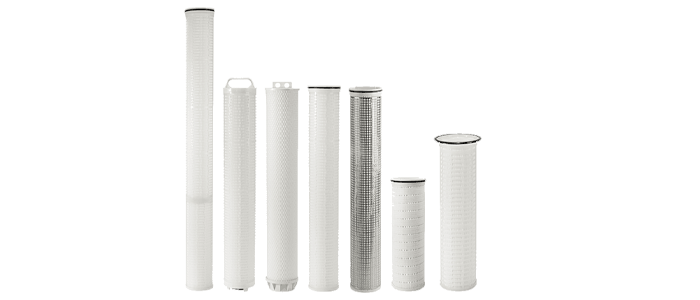
In this design, unfiltered fluid enters the cartridge through the center core. The fluid then flows outward through the filter media, and filtered fluid exits into the housing.
The key difference is contaminant location:
Captured particles remain inside the cartridge instead of being exposed on the outer surface.
Advantages of Inside-Out Flow
Inside-out flow is especially useful when clean change-out and downstream protection are important.
Main advantages include:
- Captured contaminants remain inside the cartridge
- Cleaner cartridge removal
- Lower risk of particles falling into the housing
- Reduced downstream contamination risk during maintenance
- Better suitability for RO security filtration and critical water systems
- Cleaner handling for operators
- Strong fit for many large-diameter high flow cartridge designs
For RO pretreatment systems, this design can be valuable because the security filter is located before the high-pressure pump and RO membranes. Any contamination released during maintenance may create downstream risk.
How Flow Direction Affects Cartridge Change-Out
The biggest practical difference between inside-out and outside-in flow is often seen during filter replacement.
With outside-in flow, the contaminant layer is on the outside of the cartridge. When the operator lifts the used cartridge out of the housing, dirt or sludge can fall into the housing.
With inside-out flow, contaminants are held inside the cartridge core. The outside of the cartridge is cleaner, so the removal process is cleaner and more controlled.
Change-Out Process Comparison
| Step | Outside-In Flow | Inside-Out Flow |
|---|---|---|
| Open housing | Housing contains unfiltered-side contamination. | Housing is exposed mainly to filtered-side fluid. |
| Remove cartridge | Cartridge outside may be covered with dirt. Higher risk of debris falling into the housing. | Cartridge outside is cleaner. Contaminants remain inside the core. |
| Housing cleaning | May require additional wiping, flushing or inspection. | Usually cleaner and easier to handle. |
| Downstream risk | Higher risk if debris reaches the clean outlet area. | Lower risk because contaminants are retained inside the used cartridge. |
| Best fit | General filtration where change-out cleanliness is less critical. | RO security filtration, high-purity water, process liquid and critical applications. |
Inside-Out vs Outside-In Flow: Engineering Comparison
| Item | Outside-In Flow | Inside-Out Flow |
|---|---|---|
| Flow path | Outside surface → media → center core | Center core → media → outside surface |
| Contaminant location | Mainly on the outer surface | Mainly inside the cartridge core |
| Change-out cleanliness | Dirt is exposed during removal | Dirt is contained inside the cartridge |
| Maintenance risk | Higher risk of debris falling into housing | Lower contamination risk during change-out |
| Common use | General cartridge filtration | High flow cartridges and critical final-stage filtration |
| RO security filtration suitability | Depends on housing and system design | Often preferred where clean change-out matters |
| Operator handling | Dirtier cartridge surface | Cleaner outer cartridge surface |
| Replacement consideration | Check housing flow path carefully | Confirm flow direction and sealing compatibility |
Why Flow Direction Matters in RO Security Filtration
In RO pretreatment, the security filter is the final protection stage before the high-pressure pump and RO membranes.
Its role is to capture residual particles, colloids, fibers, iron carryover and other contaminants that may pass through upstream pretreatment.
Because the security filter is close to the RO membrane system, flow direction and contaminant containment become important during replacement.
Inside-out flow can help reduce the risk of contaminant release during cartridge change-out because captured particles are retained inside the used cartridge.
This is especially relevant when the system handles:
- Fine colloids
- Iron particles
- Biological debris
- Flocculant carryover
- High suspended solids fluctuation
- Sensitive RO membranes
- High-value downstream equipment
For this reason, many high flow cartridge systems used in RO pretreatment are designed with inside-out flow.
Is Inside-Out Flow Always Better?
No.
Inside-out flow is not automatically better for every system. It is better when contaminant containment and clean change-out are important.
Outside-in flow may still be suitable for:
- General industrial water filtration
- Non-critical prefiltration
- Systems where downstream contamination risk during replacement is low
- Existing housings designed only for outside-in flow
- Applications where cost and simplicity are more important than clean change-out
Inside-out flow is more suitable when the system requires:
- Cleaner maintenance
- Better contaminant containment
- Lower downstream particle release risk
- More controlled cartridge replacement
- Critical filtration before RO membranes or sensitive equipment
- Compatibility with specific Pall, 3M, Parker or other high flow housings
The right choice depends on the housing design, cartridge structure, application and replacement requirements.
Why Housing Compatibility Must Be Checked
Flow direction cannot be changed casually.
A cartridge designed for inside-out flow must match a housing designed for that flow path. The same is true for outside-in flow.
Before replacing a Pall, 3M, Parker or other high flow cartridge, engineers should confirm:
- Current cartridge model
- Cartridge length
- Outer diameter
- End cap or adaptor type
- O-ring and sealing structure
- Flow direction
- Housing connection
- Micron rating
- Media type
- Operating temperature
- Application and fluid
If the flow direction or sealing structure is wrong, the replacement may create installation problems, bypass risk or unstable filtration performance.
This is why compatibility confirmation is important before switching suppliers.
How Ecofiltrone HFL Series Uses Inside-Out Flow
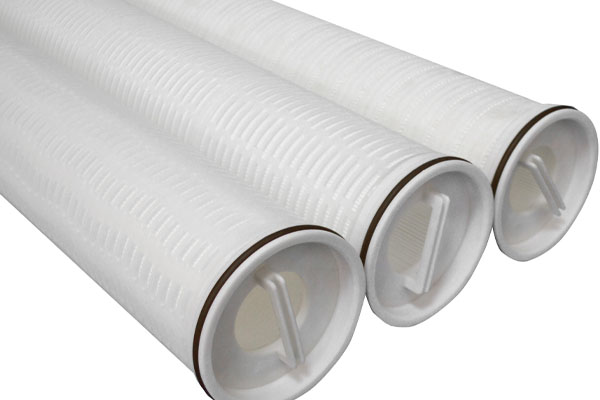
Ecofiltrone HFL Series high flow filter cartridges are designed for industrial water filtration, RO pretreatment, cooling water, process water and compatible replacement applications.
For many high flow filter systems, inside-out flow helps retain contaminants inside the cartridge during operation and replacement.
This design supports:
- Cleaner cartridge change-out
- Better contaminant containment
- Reduced particle release during maintenance
- Stable filtration performance under suitable operating conditions
- Replacement options for common high flow filter housings
- RO security filtration and industrial pretreatment applications
However, every replacement should be confirmed based on the actual cartridge model, end cap, housing and operating condition.
When Should You Choose Inside-Out Flow?
Inside-out flow is usually a better choice when:
- The filter is used as an RO security filter
- Downstream equipment is sensitive to particle release
- Clean cartridge change-out is important
- Used cartridges carry heavy contaminant load
- Operators want to reduce housing cleaning after replacement
- The system uses Pall, 3M or Parker-style high flow cartridges
- The cartridge is installed before RO membranes, high-pressure pumps or sensitive process equipment
It is also useful when the filter handles contaminants such as colloids, iron particles, biological debris or flocculant carryover.
When Is Outside-In Flow Still Acceptable?
Outside-in flow can still be practical when:
- The application is general prefiltration
- The housing is already designed for outside-in flow
- Contaminant release during change-out is not a major concern
- The system can be flushed or cleaned after replacement
- The process is not highly sensitive to short-term particle release
- Standard cartridge availability and cost are the main concerns
The key is not to say one design is always better. The key is to match the flow direction with the application and housing design.
Need to Confirm Flow Direction or Cartridge Compatibility?
If you are replacing Pall, 3M, Parker or another high flow cartridge, flow direction should be checked together with cartridge size, end cap, O-ring, sealing structure and housing design.
Send us your current cartridge model, housing photo, end cap photo or operating condition. We can help check the suitable Ecofiltrone high flow filter replacement option for your system.
Conclusion
Inside-out and outside-in flow designs both have valid applications.
Outside-in flow is simple, widely used and suitable for many general filtration systems.
Inside-out flow provides a cleaner change-out process because contaminants are retained inside the cartridge. This makes it especially useful for RO security filtration, high flow cartridge systems, high-purity water and applications where downstream contamination risk must be reduced.
For high flow cartridge replacement, flow direction should never be treated as a minor detail. It should be confirmed together with the housing structure, end cap, seal design, media selection and operating condition.
If you are replacing an existing Pall, 3M, Parker or other high flow cartridge, checking flow direction is one of the first steps before confirming compatibility.