What is the "water hammer" phenomenon? How does it damage the physical structure of the filter element?
Your system is running perfectly one moment, then you hear a loud bang from the pipes. Later, you find your high-flow filters cracked or collapsed, and you have no idea why.
This is water hammer. It is a powerful pressure wave that happens when water flow stops or changes direction suddenly. This shockwave slams into your filters with enough force to shatter their structure, causing immediate and catastrophic failure.
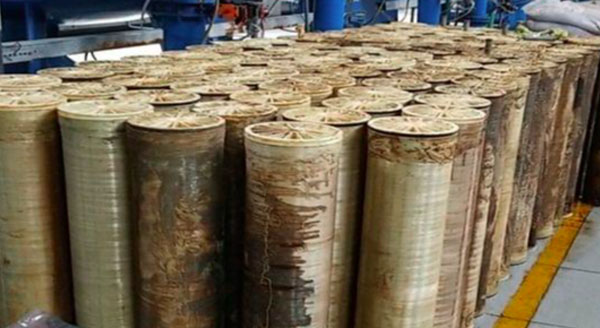
I got a call from a client running a large cooling system for a power plant. He was furious. He had just replaced a set of filters, and less than a week later, they had failed. He sent me a photo of a cartridge with the end cap completely blown off. He was sure it was a manufacturing defect. When I got to the site, I asked him to show me the system operation. I watched as an operator closed a large ball valve on the discharge line. The valve went from fully open to fully closed in about one second, and the entire pipe assembly shuddered with a loud "BANG." I knew immediately what the problem was. It wasn’t our filter that was weak; it was the force in his pipes that was too strong.
How Does a Water Hammer Happen in a Piping System?
You shut off a valve, and the whole system shudders and groans. You might think it’s just a normal operational noise, but it is actually a sign of a destructive force building inside.
Water hammer is created when you stop a moving column of water too quickly. The water’s momentum has nowhere to go, so its kinetic energy instantly converts into a massive pressure spike that travels back through the pipes.
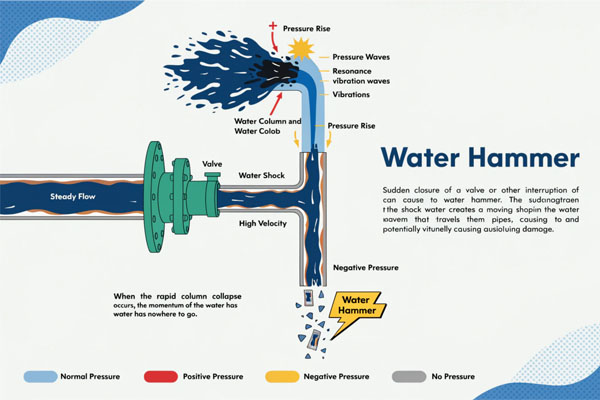
Imagine a long, heavy freight train moving at 50 miles per hour. Now imagine it hitting a solid, immovable concrete wall. The immense energy of that train has to go somewhere, resulting in a catastrophic crash. Water moving in a pipe behaves the same way. It has mass and velocity, which means it has momentum. When you slam a valve shut, you are putting a concrete wall in front of that moving water. The abrupt stop creates a shockwave of extremely high pressure that travels backward through the pipe at the speed of sound. This pressure spike can be 10, 20, or even 50 times the normal operating pressure. The main culprits are fast-closing valves, like solenoid or ball valves, and pumps that start or stop instantly without any kind of gentle ramp-up or ramp-down.
Common Water Hammer Triggers
| Action | Fast Action (Causes Water Hammer) | Safe Action (Prevents Water Hammer) |
|---|---|---|
| Valve Operation | Closing a ball or solenoid valve instantly. | Using a slow-closing, gear-operated valve. |
| Pump Operation | Starting or stopping a pump directly on-line. | Using a soft starter or VFD to ramp speed. |
| System State | Air pockets trapped in high points of the pipe. | Proper air-release valves installed on the system. |
What Kind of Damage Does This Shockwave Do to a Filter?
You pull out a failed filter and see the inner core is crushed, or the pleats are torn. You might blame the filter’s construction, but the damage pattern is a clear fingerprint of a water hammer event.
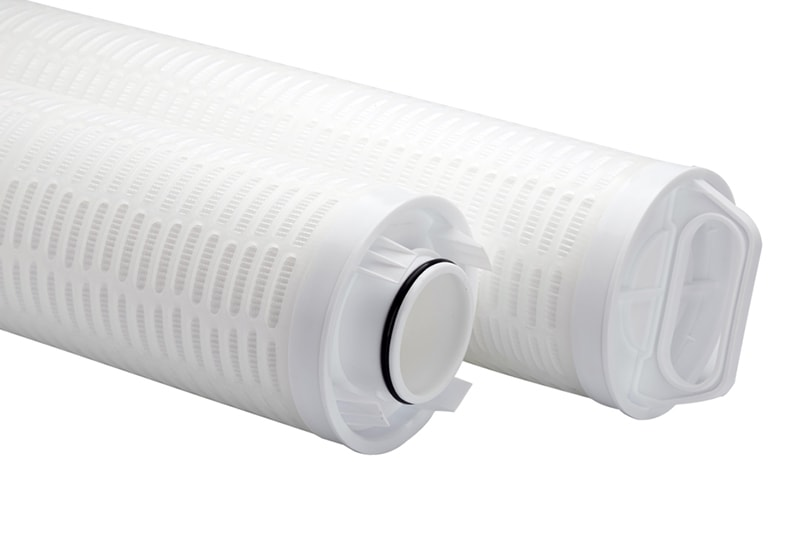
The pressure spike acts like a physical hammer blow. It can crack end caps, collapse the internal support core, tear the delicate pleated media, and dislodge seals. This damage instantly compromises the filter and can lead to total system bypass.
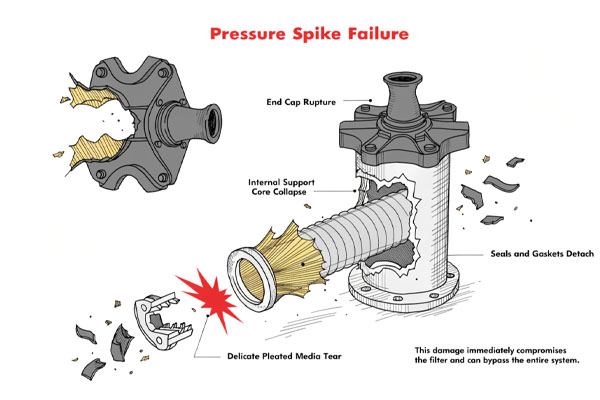
The damage from a water hammer is violent and mechanical. The shockwave hits the filter housing and the cartridge inside with brutal force. One of the most common failures I see is end cap separation. The pressure wave hits the face of the cartridge and breaks the thermal weld holding the end cap to the pleated media pack. Another classic sign is core collapse. High-flow filters like our HFL series are designed for inside-to-outside flow. A sudden external pressure spike can be so powerful that it crushes the plastic inner support core like a soda can. It can also tear the filter media itself, creating a direct path for contaminants to bypass the filter completely. For an engineer like Jacky, finding a filter with this kind of damage should immediately trigger an investigation into water hammer, not a call to the filter supplier.
Recognizing Water Hammer Damage
| Symptom | The Water Hammer Cause |
|---|---|
| Cracked or Dislodged End Cap | The pressure wave hits the end cap, breaking the weld. |
| Collapsed Inner Core | The external pressure spike crushes the internal support structure. |
| Torn Pleats or Media | The violent jolt and pressure flex tear the filter material. |
| Unseated O-Rings | The shock forces the seals out of their grooves, causing bypass. |
How Can You Prevent Water Hammer from Destroying Your Filters?
You are tired of replacing perfectly good filters that were destroyed by sudden pressure spikes. The cost of cartridges and the associated downtime is starting to add up, and you need a permanent solution.
Prevention involves slowing down any changes in flow and absorbing the pressure shock. You can achieve this by using soft starters on pumps, installing slow-closing valves, and strategically placing water hammer arrestors in your piping system.
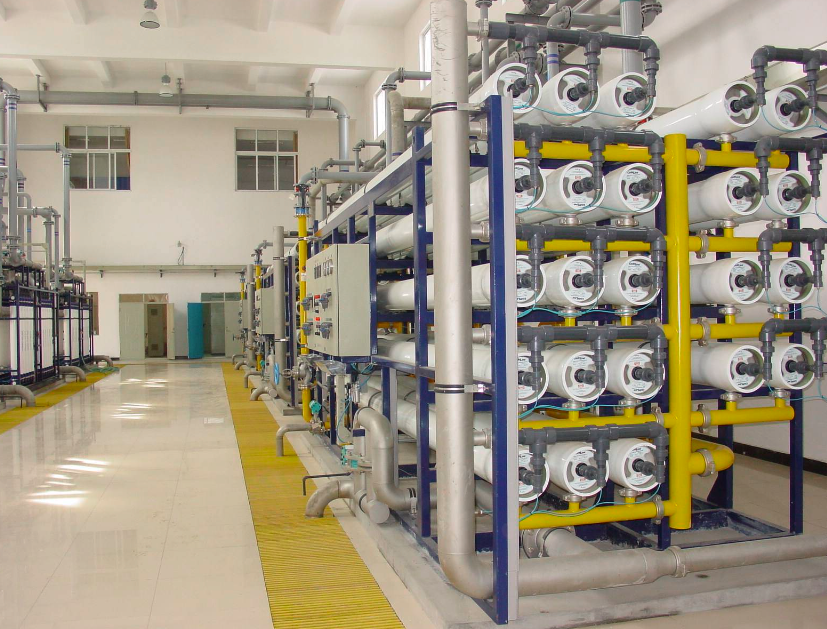
You can’t make your filters strong enough to withstand infinite pressure, but you can tame the forces in your system. The first step is to slow everything down. Replace any quick-closing quarter-turn ball valves or solenoid valves in your main lines with gear-operated butterfly or globe valves that take several seconds to close. For pumps, install a soft starter or, even better, a Variable Frequency Drive (VFD). These devices allow the pump to ramp up and down slowly, preventing the sudden jolts that create pressure waves. The most direct solution is to install a water hammer arrestor. This is a small device, like a shock absorber for your pipes, that contains a piston or a bladder. It is installed near the source of the shock (like a fast-closing valve) and works by absorbing the pressure spike before it can travel through the system and damage your filters.
Conclusion
Water hammer is a violent pressure shockwave caused by sudden changes in flow. It can physically destroy filters. Prevent it by slowing down valves and pumps and installing arrestors to protect your equipment.