What Happens When Too Much Flocculant Overloads RO Security Filters?
Flocculant is useful in water treatment, but too much of it can quickly become a serious cartridge filter problem.
In RO pretreatment systems, excess flocculant may pass downstream and reach the RO security filter. When this happens, the unreacted polymer can coat the filter media with a sticky, gel-like layer.
The result is often rapid ΔP rise, short cartridge life, surface blinding and frequent filter replacement.
This problem is often mistaken for poor cartridge quality. In many cases, the cartridge is not the root cause. It is showing that upstream chemical dosing or pretreatment stability needs to be reviewed.
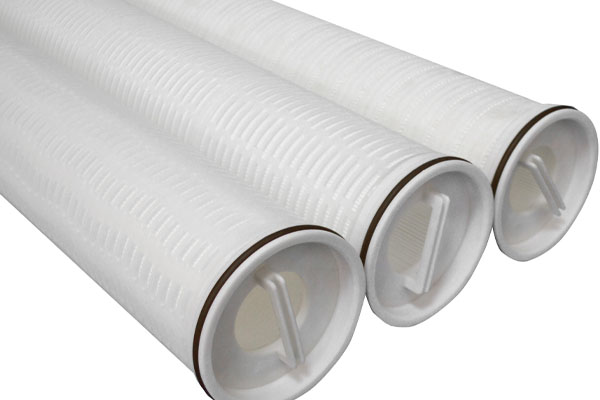
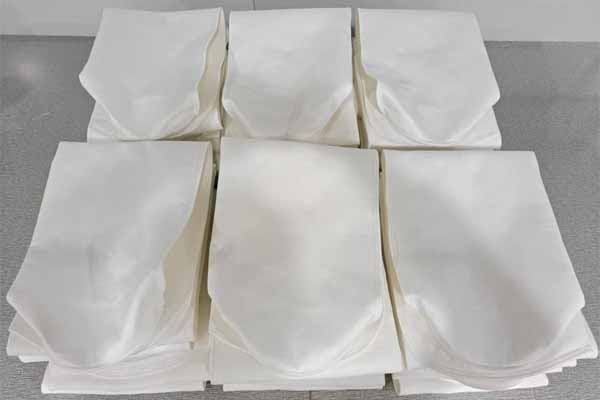
Flocculant overdose can cause sticky surface blinding on high flow filter cartridges. Instead of loading gradually through the media depth, contaminants and unreacted polymer form a dense layer on the filter surface, causing a sharp pressure rise.
Quick Answer: What Happens When You Add Too Much Flocculant?
When too much flocculant is added, excess unreacted polymer may remain in the water.
Instead of binding only with suspended particles, the sticky polymer may attach to the cartridge media surface. This creates a slimy fouling layer that blocks the filter pores before the media depth is fully used.
In RO security filters and high flow cartridges, this may cause:
- Rapid ΔP rise
- Sticky surface fouling
- Short filter life
- Poor depth loading
- Frequent cartridge replacement
- Difficult filter recovery after fouling
Related Solution
For systems with rapid ΔP rise, sticky surface fouling or short cartridge life after chemical dosing changes:
- RO Pretreatment Filtration Solution
- HFL Series High Flow Filter Cartridge
- Request a Compatibility Check
How Does a Good Chemical Turn into a Filter-Killing Slime?
You add flocculant to help small particles clump together, making them easier to remove. But when the dose is too high, the helpful chemical can become a contaminant itself.
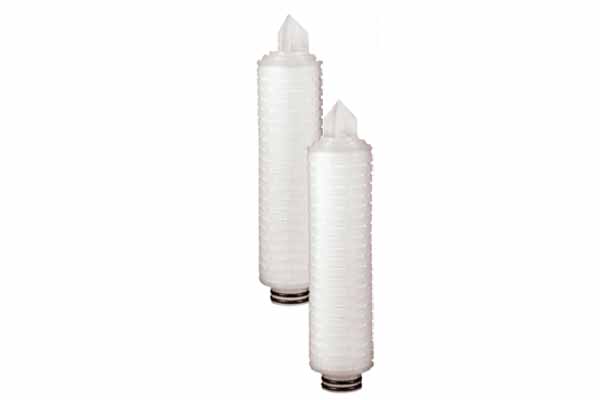
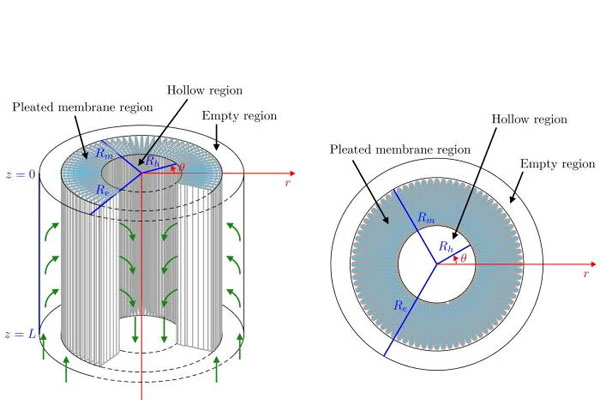
Excess flocculant is unreacted, sticky polymer. When it does not find enough particles to bind with, it may attach to the large surface area of pleated filter media and create a slimy layer that blocks the pores.
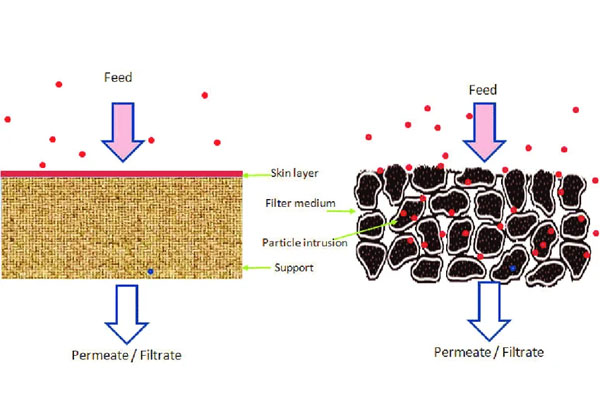
Flocculants are long-chain polymers designed to be sticky. In a correctly dosed system, these polymer chains bind with fine suspended particles and form larger flocs. These flocs can then be removed by clarification, media filtration or other upstream treatment steps.
The problem happens when there is more flocculant than particles.
The remaining polymer is still sticky. When it reaches the cartridge filter, it may attach to the filter media instead of forming removable flocs upstream.
This creates surface blinding. Water cannot pass evenly through the media, so the differential pressure rises quickly.
Correct Dosing vs. Overdosing
| Process | Correct Chemical Dose | Chemical Overdose |
|---|---|---|
| Reaction | Flocculant binds to suspended particles. | Excess flocculant has no particles to bind to. |
| Result | Larger, easier-to-remove flocs are formed. | Sticky, unreacted polymer remains in the water. |
| Effect on filter | Gradual loading as flocs are captured. | Fast surface blinding from a slimy layer. |
| Pressure change | Slow, predictable ΔP increase. | Sudden or rapid ΔP rise. |
Why Does Flocculant Overdose Cause Rapid ΔP Rise?
Normal cartridge loading usually happens gradually. Particles enter the filter media and load through the media depth over time.
Flocculant overdose behaves differently.
Excess polymer can form a sticky layer on the cartridge surface. Once this layer forms, flow paths become restricted very quickly.
This is why the ΔP may rise sharply even when the cartridge is new.
In many cases, the internal media depth is not fully used. The filter reaches terminal ΔP mainly because the surface has been blinded.
Can You Clean a Filter Cartridge Fouled by Flocculant?
In many cases, a cartridge severely fouled by flocculant overdose is difficult to recover.
Flocculant fouling is not only mechanical blockage. Sticky polymer can attach to the filter fibers and form an adhesive layer on the media surface.

Sand, silt or hard particles may sometimes be removed by rinsing or backwashing if the filter is designed for cleaning.
Flocculant fouling is different. The polymer slime can remain attached to the polypropylene or glass fiber media. Water pressure may pass over the slime without removing it fully.
Harsh cleaning chemicals may also damage the media, end caps or sealing structure.
For disposable pleated cartridges, severe polymer fouling often means replacement is the realistic option.
Is It a Filter Problem or a Dosing Problem?
When cartridges clog quickly, operators may first suspect filter quality.
But if the fouling appears soon after chemical dosing changes, the root cause may be upstream.
| Field Symptom | Possible Cause |
|---|---|
| ΔP rises quickly after dosing pump adjustment | Possible flocculant overdose |
| Cartridge surface feels sticky or slimy | Polymer or organic fouling |
| Surface is heavily blinded but inner media is cleaner | Poor depth loading caused by surface blinding |
| All cartridges clog at the same time | System-wide dosing or pretreatment upset |
| Filter life improves after dosing correction | Upstream issue rather than cartridge defect |
This is why used cartridge photos, ΔP trends and dosing records are useful for diagnosis.
How Can You Prevent Flocculant Overdose in Your System?
Prevention depends on precise dosing and regular monitoring.
The goal is not to avoid flocculant. The goal is to match the dose to the actual water quality and particle load.
Dosing System Best Practices
| Action | Why It Matters | Frequency |
|---|---|---|
| Jar testing | Finds the proper dose for current water quality. | Regularly and after major water changes. |
| Pump calibration | Confirms the actual chemical feed rate. | Periodically according to site practice. |
| Visual inspection | Checks leaks, worn tubes and injection problems. | Daily or routine operation check. |
| ΔP monitoring | Detects abnormal cartridge loading early. | Daily or shift-based. |
| Used cartridge inspection | Helps identify surface blinding or normal loading. | After replacement. |
Raw water quality changes over time. Rainfall, seasonal algae, turbidity changes or upstream treatment variation may all affect the correct chemical dose.
A dose that worked last week may be too high today.
Need to Diagnose Rapid ΔP Rise After Flocculant Dosing?
If your RO security filter or high flow cartridge shows rapid ΔP rise, sticky fouling or very short service life after dosing changes, the cartridge and upstream pretreatment condition should be reviewed together.
Send us your current cartridge model, used cartridge photo, ΔP trend or operating condition.
We can help check whether the issue may be related to:
- Surface blinding
- Flocculant carryover
- Cartridge structure
- Media selection
- Dirt holding capacity
- Pall / 3M / Parker replacement compatibility
Conclusion
Flocculant overdose can quickly overload RO security filters and high flow cartridges.
When excess polymer reaches the cartridge, it may create sticky surface blinding, rapid ΔP rise and short filter life.
In many cases, the filter is not the root cause. It is showing that upstream dosing control or pretreatment stability needs attention.
The best response is to review dosing history, jar test results, ΔP trends and used cartridge appearance before changing only the micron rating or replacing cartridges repeatedly.