What is the Dirt Holding Capacity of a Filter Cartridge?
Your filters are clogging way too fast, forcing constant change-outs that eat up time and money. You thought you chose a good filter, but its service life is a fraction of what you expected.
Dirt Holding Capacity (DHC) is the total weight of a specific contaminant a filter can capture before it clogs up and reaches a maximum, unusable pressure drop. It is the single best metric for predicting a filter’s potential service life.
I remember being a junior engineer and seeing DHC on a spec sheet for the first time. I saw one filter with a DHC of 200 grams and another with 400 grams, so I naturally told my manager we should buy the 400-gram one to make it last longer. He stopped me and explained that the DHC number is only half the story. He showed me how the test conditions used to get that number, and the filter’s basic construction, were far more important. That conversation changed how I look at filter performance forever. It is not about finding the biggest number; it is about finding the right filter structure for your specific type of dirt.
How Is Dirt Holding Capacity Actually Measured?
You see a DHC value on a datasheet and assume it will reflect performance in your system. But in the real world, the filter’s life is much shorter, making you question if the data is reliable.
DHC is measured in a highly controlled lab test. A fluid with a known concentration of a standard contaminant is pumped through the filter at a constant flow rate until the pressure drop hits a set limit. The DHC is the total weight of contaminant it held.
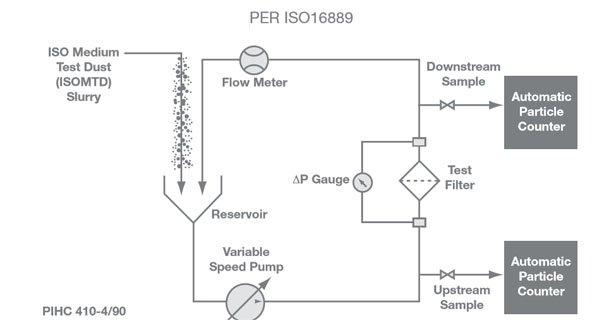
The key thing to understand is that these lab tests are designed to be perfectly repeatable, not to perfectly simulate your unique process. The standard contaminant is often something like AC Fine Test Dust, which is made of hard, solid, spherical particles. The test uses a constant flow rate and clean water. But your plant is not a laboratory. Your process water might have soft, gelatinous particles from biological activity, or spiky metal shavings from a machining process. Your flow rates might surge and fall with pump cycles. Each of these real-world factors can dramatically change how a filter performs compared to its official DHC rating. That DHC number is an excellent tool for comparing two filters under the same controlled conditions, but it is not a direct prediction of service life in the field.
Lab Test vs. Real World
| Factor | Standard Lab Test | Real-World Application |
|---|---|---|
| Contaminant | Uniform, hard particles (e.g., test dust) | Irregular shapes; can be soft, sticky, or biological |
| Flow Rate | Perfectly constant and stable | Fluctuates with system demand and pump cycles |
| Fluid Chemistry | Neutral, clean water | Can be corrosive, hot, or contain other chemicals |
| Result | A repeatable DHC value | Variable service life that depends on conditions |
Why Isn’t a Higher Dirt Holding Capacity Always Better?
You are tempted to simply buy the filter with the highest DHC number on the spec sheet, thinking it offers the best value. This common mistake can lead to unexpected process failures and higher overall costs.
A higher DHC is not always better because it often involves critical trade-offs. The filter might achieve that high capacity by having a lower removal efficiency, a higher initial pressure drop, or a structure that is wrong for your type of contaminant.
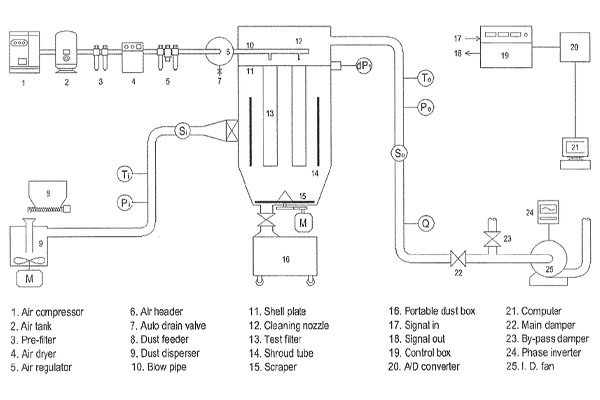
I once worked with a client in the food and beverage industry who had this exact problem. They were filtering a syrup that had some soft, organic particles. They chose a filter with a massive DHC rating, thinking it would last for months. It clogged in two days. The problem was that the filter was designed to capture hard particles throughout its depth. But their soft, gummy contaminant just smeared across the outer surface, blinding the filter instantly. The huge internal capacity of the filter was never even used. We switched them to a pleated filter with a lower DHC rating but a much larger surface area. This filter lasted for three weeks because it was the right structure for their specific "dirt". This taught me a valuable lesson: the interaction between the contaminant and the filter structure is more important than any single number on a spec sheet.
How Does Filter Structure Affect Dirt Holding Capacity?
You see different types like melt-blown, pleated, and string-wound, all claiming high performance. But you are unsure which internal structure is truly best for maximizing service life in your system.
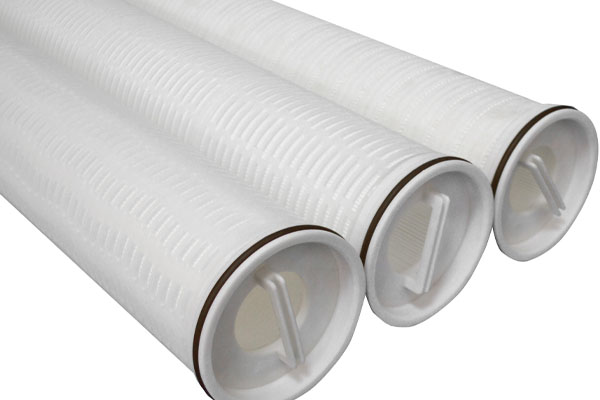
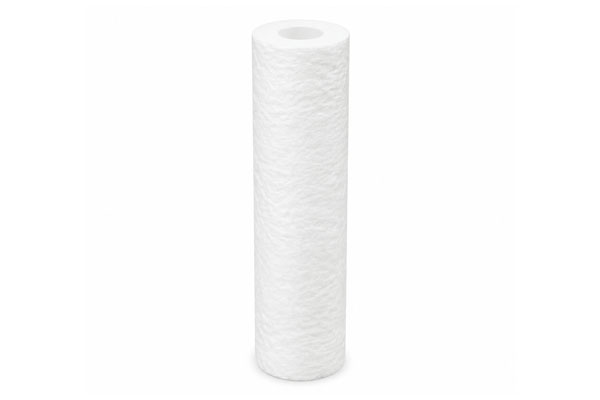
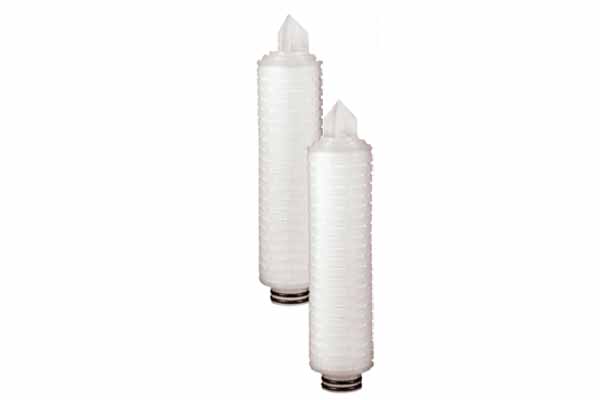
A filter’s internal structure is the most important factor in its DHC. Depth filters, like melt-blown cartridges, use their entire volume to trap particles. In contrast, pleated surface filters use a huge amount of surface area to maximize capacity.
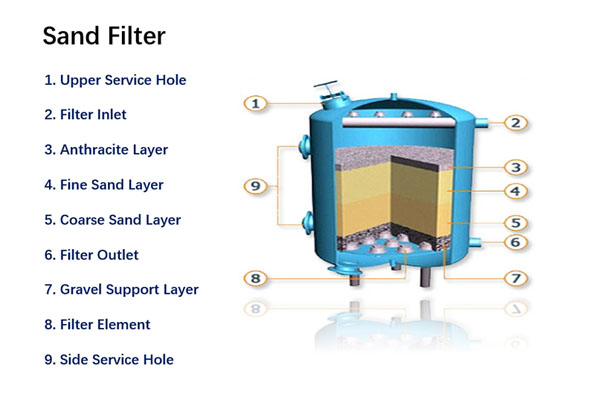
Think about the two main strategies for holding dirt. The first is depth filtration. A melt-blown filter cartridge is a great example. It is engineered with a gradient density structure, meaning the pores are larger on the outside and get progressively tighter towards the center. This smart design traps the big particles on the outer layers, leaving the inner layers free to capture the smaller particles. It uses the entire thickness of the filter to hold dirt, giving it excellent DHC for fluids with a wide range of particle sizes. The second strategy is surface filtration, which is perfected in pleated filters. By pleating the filter media, manufacturers can fit an enormous amount of surface area into a standard cartridge size. This large area means there are far more places for dirt to collect before the filter clogs, which also results in a very high DHC.
Comparing Common Filter Structures
| Filter Type | How It Works | Best For | DHC Characteristic |
|---|---|---|---|
| Melt-Blown (Depth) | Gradient density traps particles through the filter’s depth. | Fluids with a wide particle size distribution. | Excellent value, high DHC for its cost. |
| Pleated (Surface) | Massive surface area captures particles on the outside. | High flow rates and when absolute particle removal is critical. | Very high DHC, especially in large diameter formats. |
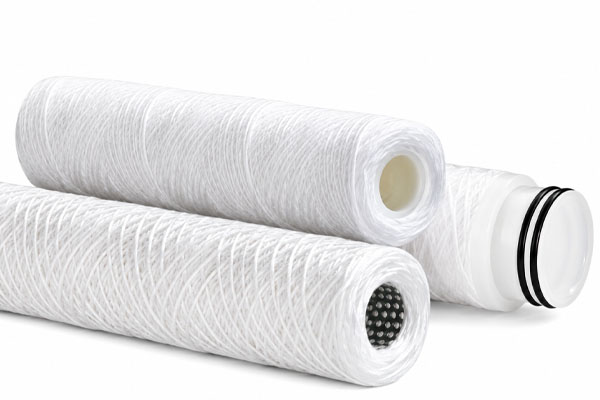
| String-Wound (Depth) | Diamond-shaped patterns in the winding trap particles. | Viscous fluids or where chemical compatibility is key. | Good, but often lower than modern melt-blown filters. |
Conclusion
Dirt Holding Capacity is a crucial metric for estimating filter life. But to choose the right filter, you must look beyond the number and consider the test method, performance trade-offs, and the filter’s internal structure.