Why Are 10-Micron Filter Cartridges Sometimes Insufficient?
You installed a 10-micron filter to protect your system, but your sensitive downstream equipment is still failing. The constant maintenance and unexpected costs are frustrating, and you are starting to question your choice.
A 10-micron filter is often insufficient because it has a nominal rating, which is an inefficient estimate, not a guarantee. It can also fail if the critical contaminants causing damage are much smaller than 10 microns, passing right through to foul your downstream process.
Early in my career, I assumed a 10-micron filter stopped all 10-micron particles. It just seemed logical. But a senior engineer showed me two filter spec sheets, both labeled "10-micron," with wildly different performance data. One had a removal efficiency of 70%, and the other was over 99.9%. That is when I learned the most important lesson in cartridge filtration: the difference between nominal and absolute ratings. Understanding this is the key to solving so many mysterious system failures.
Aren’t All 10-Micron Filters Created Equal?
You choose a 10-micron filter based on the label, expecting consistent protection. But one brand works while another fails, causing system inconsistency and leaving you confused.
No, they are not equal. The huge difference in performance comes down to their efficiency rating. A nominal 10-micron filter is a general estimate, while an absolute 10-micron filter is a guaranteed performance standard.
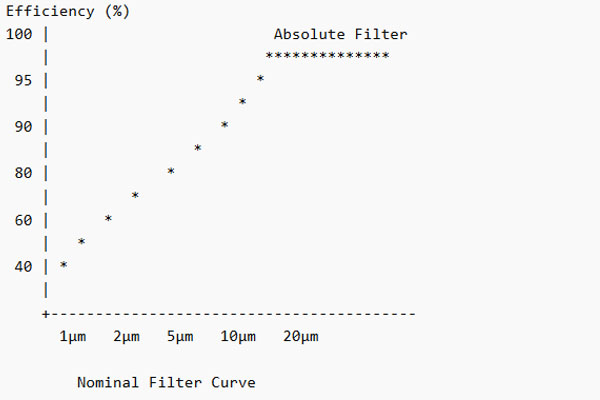
Think of it this way: a nominal rating is more of a general guide. The manufacturer is saying that the filter will probably remove some of the particles at or around 10 microns. The actual efficiency could be anywhere from 50% to 90%, and it is often not guaranteed. It is like a fishing net with roughly 10-inch holes; some 10-inch fish will get through. In contrast, an absolute rating is a performance guarantee. It means the filter has been tested to a specific industry standard (like a Beta 5000 rating) and is proven to remove at least 99.9% of particles at that specific micron size. It is a net that will reliably catch every 10-inch fish. For any critical application, relying on a nominal rating is a huge gamble.
Nominal vs. Absolute at a Glance
| Feature | Nominal Rating | Absolute Rating |
|---|---|---|
| Efficiency | Varies widely (e.g., 50-90%) | Guaranteed high efficiency (e.g., 99.9%+) |
| Meaning | An approximate size indicator | A performance guarantee at a specific size |
| Best Use | Non-critical, general purpose clarification | Protecting sensitive downstream equipment |
What If the Real Problem Is Smaller Than 10 Microns?
Your 10-micron filter is in place, and it is even an absolute-rated one. But your RO membranes are still fouling, forcing constant, costly cleanings that do not solve the root problem.
The issue is that your process fluid contains a whole range of particle sizes. A perfect 10-micron filter does absolutely nothing to stop the millions of 1, 3, or 5-micron particles that can easily damage highly sensitive equipment.
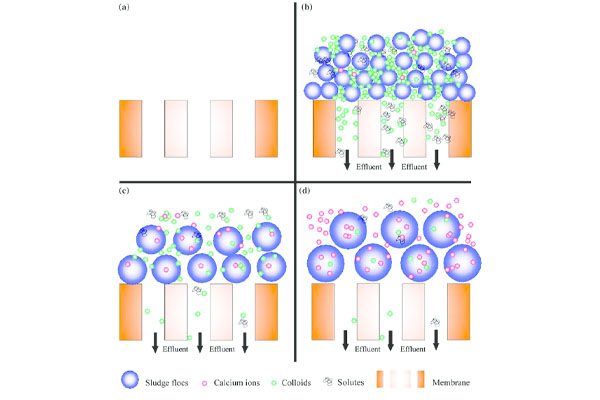
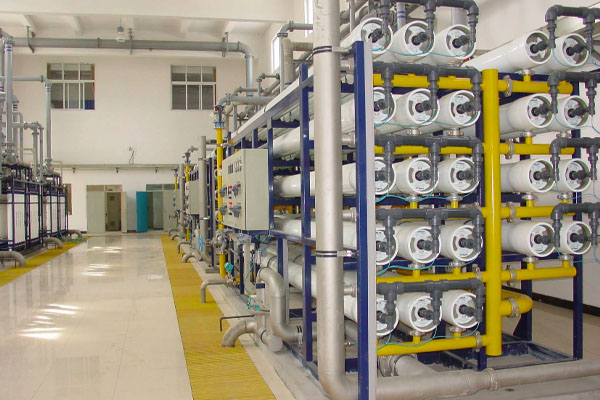
I worked with a desalination plant that was struggling with this exact issue. They had an absolute-rated 10-micron pre-filter, but their SDI values were still too high, and their RO membrane cleaning frequency was unacceptable. We analyzed their water and found the vast majority of their particulate load was in the 2 to 5-micron range. Their 10-micron filter was working perfectly, but it was the wrong tool for the job. It was like using a net designed for catching rocks to try and stop gravel. The real damage was being caused by a contaminant size they were not even trying to filter. You must match your filter’s micron rating to the specific needs of the most sensitive component in your system.
Matching Filtration to Downstream Needs
| Downstream Equipment | Common Cause of Failure | Required Pre-Filtration (Typical) |
|---|---|---|
| RO Membranes | Colloidal fouling (sub-micron to 5µm) | 1-5 µm absolute |
| Fine Spray Nozzles | Clogging from fine silt | 5-10 µm absolute |
| Bearing Lubricants | Abrasive wear from fine metal particles | 3-10 µm absolute |
So, How Do I Choose the Correct Filter Rating?
You know 10 microns might be wrong, but choosing the right size feels like a gamble. A wrong choice wastes money on over-filtration or risks equipment damage. A systematic approach is needed.
Start with the requirements of your most sensitive downstream component. Then, conduct on-site step-down filtration testing to find the most cost-effective rating that provides the necessary protection without clogging too quickly.
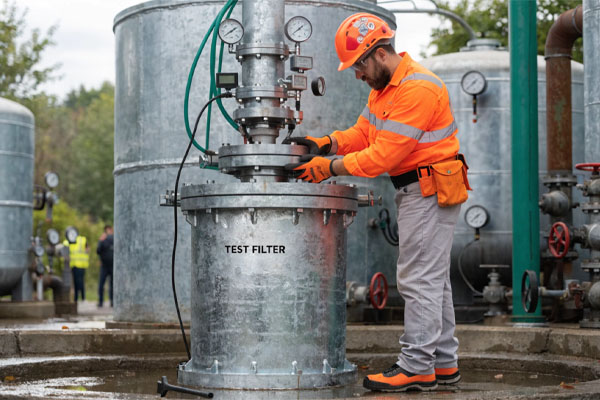
The best way to stop guessing is to test. The most practical method is called step-down testing. You start by identifying the absolute last-chance filter rating that will protect your equipment. For an RO system, that might be a 1-micron absolute filter. Then, you test to see if you can protect that final filter with something more economical, like a 5 or 10-micron pre-filter. You run your process water through these filters and measure how long each one lasts before its differential pressure gets too high. If the 5-micron filter clogs in a few days while the 10-micron lasts for a month, you have found a cost-effective pre-filter. This data-driven approach allows you to build a multi-stage filtration system that balances cost and performance perfectly.
A Simple Guide to On-Site Testing
| Step | Action | Goal |
|---|---|---|
| 1. Define Protection | Check the spec sheet for your most sensitive equipment (e.g., RO membrane requires SDI < 3). | Set the final goal. You need filtration fine enough to meet this spec. |
| 2. Test Final Filter | Install a test housing with a 1-micron absolute filter. Measure its service life. | Establish a baseline. This is what you need to protect. |
| 3. Test Pre-Filters | Install a 5-micron filter upstream of your 1-micron filter. Measure the life of both. | See if the pre-filter extends the life of the final filter cost-effectively. |
| 4. Analyze & Optimize | Compare the cost of the pre-filter cartridges to the savings from longer final filter life. | Find the "sweet spot" that gives you the lowest total cost of filtration. |
Conclusion
A 10-micron filter is insufficient when it is nominally rated or when the threat is smaller than 10 microns. The right choice depends on your specific system needs.