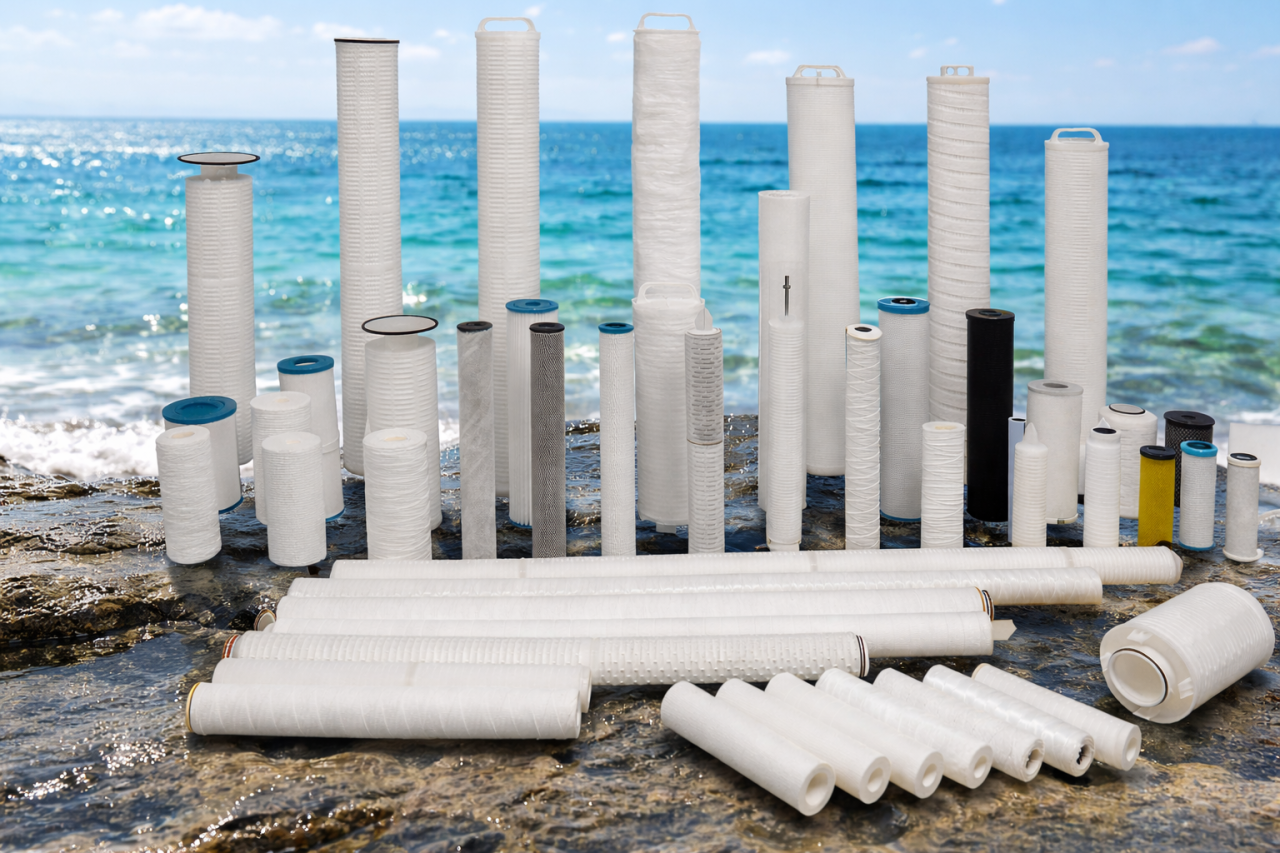
🛑 Don’t Be Fooled by "Size Compatibility"! The Life-or-Death Struggle of High-Flow Filter Cartridges
The life-or-death struggle of high-flow filter cartridges lies entirely in their structural integrity.
As a manufacturer of high-flow filters—and a veteran maintenance worker who has been called to the site in the early hours of the morning to handle filter cartridge collapse incidents—I’ve heard countless complaints from process engineers:
"I bought a replacement filter cartridge of the exact same size, so why did the pressure drop exceed the limit in less than two weeks?"
"Why, when I shut down and disassembled it, did all the impurities bypass downstream and destroy the RO membrane?"
The answer is actually quite simple: A 1:1 replica in appearance cannot conceal the disaster of internal fluid dynamics design.
Today, I’ll lay bare the core engineering of our high-flow filter design and discuss with you just how much effort truly goes into the unseen aspects of creating a qualified industrial-grade filter cartridge.
1. The Tightrope Walk of the Frame’s Pore Ratio: The Golden Balance of 40%-60%
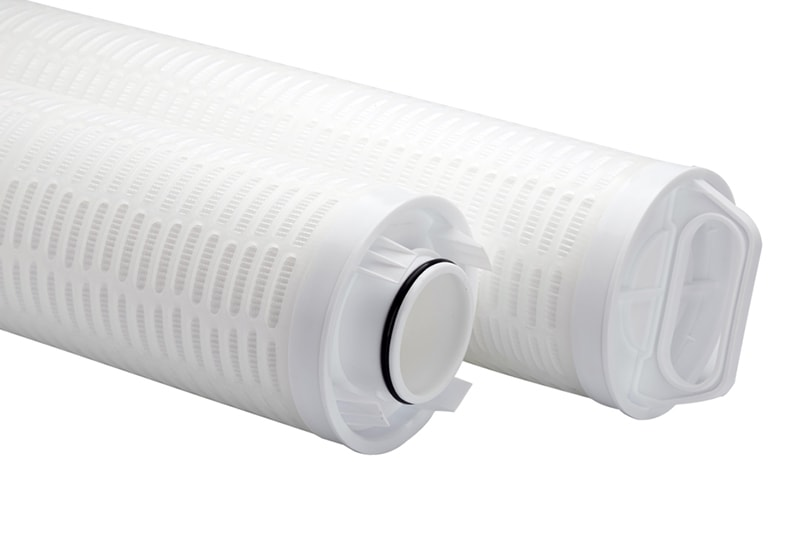
See the "High Open Area Center Core" marked in the diagram; the porosity is set between 40% and 60%.
Many inferior alternatives, to save material, make the porosity very high, resulting in a frame as thin as a cicada’s wing. While it may seem fine under static water flow conditions in the laboratory, in the field, facing the "water hammer" impact of a pump starting up or high-viscosity fluids, the fragile center core will be instantly crushed. Once the core breaks, the entire filter cartridge is rendered unusable.
Our design not only ensures ultra-high flow rate throughput but also provides sufficient rigidity for the core, allowing you to work with peace of mind even under harsh conditions.
2. The Real Destructive Power of "Gradient Multi-Layer"
Many manufacturers’ pleated filter membranes are merely a stacking of single-layer materials. What are the consequences? The surface layer instantly becomes caked (surface blinding), wasting the internal filter media.
We employ a Gradient Multi-Layer design in our "Pleated Filter Media." This means that as the fluid flows from the inside out, it undergoes a graded interception process from large pores to small pores. It engulfs short fibers, colloids, and fine particles like an abyss, holding more than three times the dirt-holding capacity of a single-layer filter membrane. This directly determines whether your team needs to replace it "every three days" or "every month."
3. The Fatal Last Millimeter: Seal
The "Seal (O-Ring/Gasket)" clearly indicates its mission: Ensures No Bypass.
Under high flow rates and high pressure differentials, even a 0.5 mm misalignment in the O-ring tolerance can cause unfiltered contaminated water to flow into your precision catalyst bed or terminal membrane. Our precisely milled end caps, combined with virgin material sealing rings, are designed to safeguard this last line of defense.
Conclusion: Protect Your Downstream Assets
💡 The ultimate question from the Operations Director: Are the replacement filter cartridges you’re currently purchasing helping you reduce your Total Cost of Ownership (TCO), or are they planting a time bomb for your downstream equipment?
Excellent processes deserve excellent filtration systems to protect them. If you feel your current supplier is "cutting corners" in the structural design, feel free to talk to me.