Intercepting Microplastics & PFAS: High Flow Filtration Strategies for 2026 Compliance
Meta Description: With upgraded environmental regulations in 2026, intercepting PFAS and microplastics in industrial wastewater is a strict compliance requirement. This article provides a field-tested analysis of how high flow filter cartridges achieve a 99.9% interception rate and optimize replacement costs through physical interception mechanisms, Beta ratio selection, and deep-pleated technology.
1. Experience: Frontline Water Treatment Pain Points in 2026
As industrial filtration technology officers, we have observed that many facilities still rely on outdated sand filters or standard bag filters to deal with microplastics. Field results show that these solutions are highly susceptible to "breakthrough" phenomena when attempting to intercept 1-5 μm microplastics.
For PFAS, while the primary removal method relies on Granular Activated Carbon (GAC) or Ion Exchange (IX) resin adsorption, the precision of the physical pre-filtration dictates the lifespan of these expensive resins. If pre-filtration is incomplete, microplastics will rapidly blind the resin pores, leading to premature system failure.
2. Expertise: The Physical Interception Logic of High Flow Cartridges
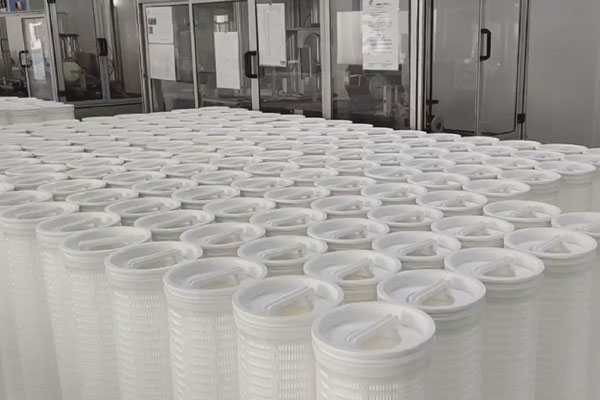
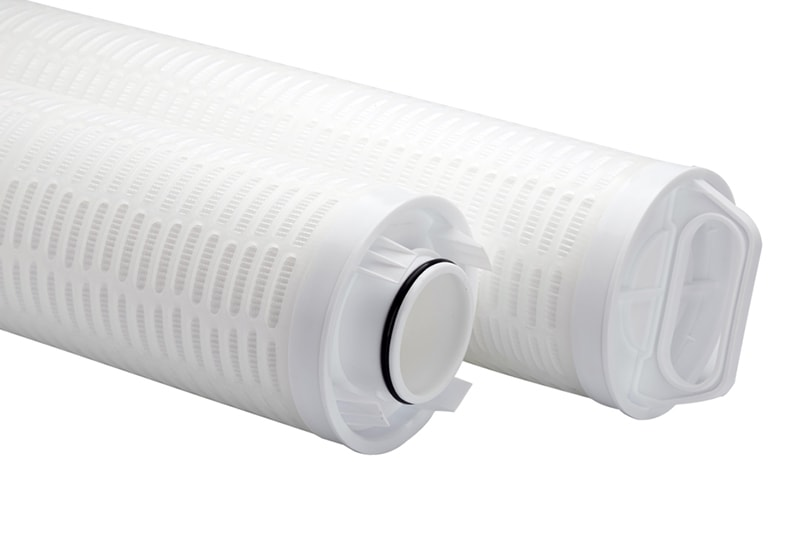
When handling microplastics (especially fibrous and fragmented types), the deep-pleated structure of high flow filter cartridges offers a natural advantage.
Core Technical Metric: The Practical Significance of the Beta Ratio (β)
Do not just look at the "nominal rating"; you must look at the "filtration efficiency." When intercepting microplastics, we require the filter cartridge to achieve a β ≥ 5000 (equivalent to a 99.98% interception rate).
efficiency=(β−1)/β×100%
For a 1 μm microplastic particle, if the β value is only 10 (a nominal rating), 10% of the particles will pass through the filter into downstream processes. However, by utilizing a high flow absolute-rated cartridge, the passage rate drops to below 0.02%.
3. Authoritativeness: Dual-Stage Filtration System Design
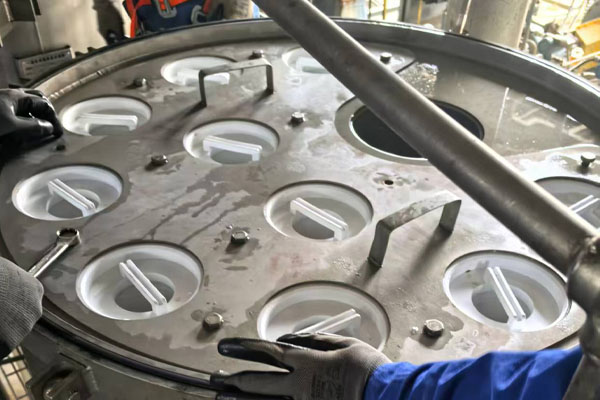
For PFAS remediation projects, we highly recommend a "High Flow + Ultra-fine Melt-blown" dual-stage defense architecture:
System Configuration Table (2026 Field-Tested Edition)
| Filtration Stage | Cartridge Type | Core Function | Key Parameters |
|---|---|---|---|
| Stage 1: Primary Protection | 20 μm PP High Flow Cartridge | Intercepts large suspended solids and coarse microplastic fragments. | Flow rate must reach 60-80 m³/h per element. |
| Stage 2: Fine Filtration | 1 μm Absolute High Flow Cartridge | Intercepts ultra-fine microplastics, protecting downstream GAC or RO membranes. | Material must be 100% PFAS-Free. |
Expert Tip: In 2026, the material safety of the filter cartridge itself is paramount. If the filter core or end caps contain recycled plastics, they may cause secondary PFAS leaching. We insist on using 100% Virgin Polypropylene (PP) with thermal welding to ensure no additional contaminants are introduced.
4. Trust: TCO and Compliance Verification
Why not choose cheaper, standard filter cartridges? Because of "Hidden Energy Consumption" and "Hazardous Waste Disposal Fees."
- Waste Reduction: The dirt-holding capacity of a single 60-inch high flow cartridge equals that of 20-30 standard melt-blown filters. When treating PFAS-contaminated wastewater, the spent filter cartridges are classified as hazardous waste, which carries exorbitant disposal costs. Reducing the number of cartridges directly slashes your hazardous waste disposal fees.
- Compliance Endorsement: Our cartridges meet NSF/ANSI 61 certifications and comply with the latest EU REACH protocol amendments regarding PFAS restrictions, ensuring your facility passes environmental audits smoothly.
[ Expert Consultation: Get Your Microplastics Interception Plan ]
If you are currently facing wastewater discharge non-compliance or rapid downstream resin exhaustion, please provide your parameters via the form below. We will calculate the optimal change-out cycle for your system:
| Technical Parameters (Key Inquiry Data) | Your Data / Current Status |
|---|---|
| Raw Water Microplastics Content (TSS/PPM) | [e.g., 50 ppm] |
| Downstream Treatment Process | [GAC / Ion Exchange / RO] |
| Daily Water Treatment Volume (m³/day) | [Please enter volume] |
| Current Filter Pressure Drop (ΔP) | [e.g., 1.5 bar] |
| Business Email | [Required: To send the technical proposal] |
[ Submit Now to Receive Your PFAS Interception System Optimization Report ]
💡 Industrial Water Treatment: Common Questions (FAQ) about PFAS and Microplastic Interception The following are practical answers from our application engineering team to common technical questions regarding industrial filtration system upgrades:
Q1: Why do ordinary melt-blown filter cartridges often fail when intercepting microplastics?
A: The key lies in the definition of filtration precision (Nominal vs. Absolute). Ordinary filter cartridges are usually labeled with a nominal precision (Nominal), with an interception rate of only 60%-80%. Microplastics (especially 1-5μm ultrafine fibers) have extremely strong penetrating power. To achieve effective interception, high-flow-rate filter cartridges with absolute precision (β 5000) must be used. These cartridges employ a multi-layer gradient radial pleated structure, ensuring a physical rejection rate of over 99.98%.
Q2: How can I ensure that the filter cartridge I purchase does not contain PFAS contaminants?
A: In the latest environmental audit in 2026, PFAS-Free certification has become an entry requirement. When purchasing, request the supplier to provide a Material Safety Declaration (FSD) confirming that the filter cartridge does not contain perfluorooctane sulfonate (PFOS) or perfluorooctanoic acid (PFOA). Our high-flow filter cartridges are made of 100% pure polypropylene (Virgin PP) and use a hot-melt welding process, without the use of any fluorinated lubricants or adhesives.
Q3: How do high-flow filter cartridges help reduce the treatment cost of PFAS wastewater?
A: Waste filter cartridges that intercept PFAS are considered hazardous waste, and treatment costs are typically calculated by weight or volume. One 60-inch high-flow filter cartridge has the equivalent sludge capacity of approximately 20 standard 2.5-inch cartridges. By using a high-flow system, you can reduce the volume of hazardous waste generated by more than 90%, thereby significantly reducing your annual hazardous waste disposal budget (OPEX).
Q4: Is it necessary to add a high-flow filter before the ion exchange (IX) system?
A: Absolutely. Ion exchange resin is the most expensive component in PFAS treatment. Microplastics and suspended solids can rapidly form a fouling film on the resin layer, leading to increased pressure drop and resin poisoning. Adding a high-flow-rate pre-filtration stage (1μm-5μm) can effectively protect the expensive downstream resin, extending its lifespan by more than 30%.
Q5: What is the recommended flow rate for a 60-inch high-flow-rate filter cartridge in industrial wastewater treatment?
A: This depends on the pore size of the filter cartridge. Generally, for optimal filtration efficiency and lifespan, we recommend a flow rate of 60-80 m³/h for a single 60-inch cartridge. If treating wastewater with high solids content, it is recommended to appropriately reduce the flow rate to minimize the initial pressure drop ΔP.