Why Standard Filters Fail in Large-Scale Solar Cleaning Systems
You built a powerful mobile water treatment system, but it keeps failing in the field. Your crew is constantly stopping to change clogged pre-filters, killing your efficiency and profits.
Standard filters have a small surface area and low dirt-holding capacity. In large-scale operations with high sediment water, they clog instantly, causing massive pressure drops and frequent shutdowns that cripple the entire system’s performance.
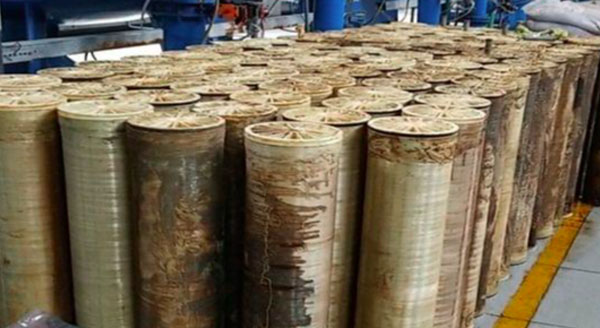
I once consulted for a company that was new to utility-scale solar cleaning. They had invested over a hundred thousand dollars in a beautiful trailer with a high-end RO system, powerful pumps, and long hose reels. But to save a few hundred dollars, they plumbed it with standard 2.5-inch filter housings for pre-filtration. On their very first job, using water from a pond, the system ran for less than 15 minutes before the pressure alarms went off. They spent the entire day swapping out dozens of small, fouled cartridges. Their expensive, high-tech rig was brought to its knees by the cheapest component in the chain. It was a classic case of a small mistake causing a massive operational failure.
Why do standard filters clog so quickly?
You keep swapping out your small pre-filters, sometimes multiple times an hour. The constant interruptions are destroying your workflow and making it impossible to finish jobs on time.
Standard filters lack the physical surface area to handle the high flow rates and sediment loads of solar farm cleaning. Their small diameter creates a bottleneck that is quickly overwhelmed by dirt, leading to rapid clogging.
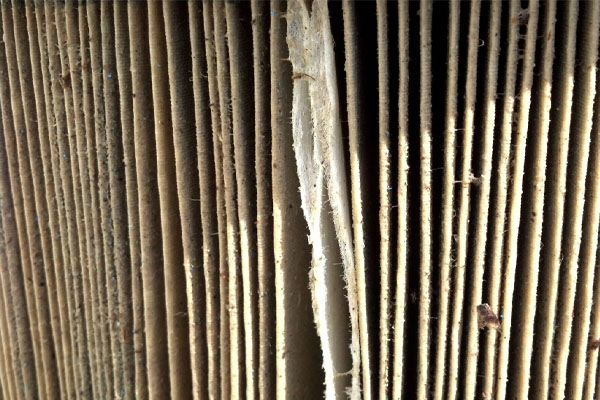
The failure of standard filters in this application comes down to basic physics and design. Think of it like trying to drain a large swimming pool through a single coffee filter. It just doesn’t have the capacity to handle the volume and the dirt.
Surface Area is Everything
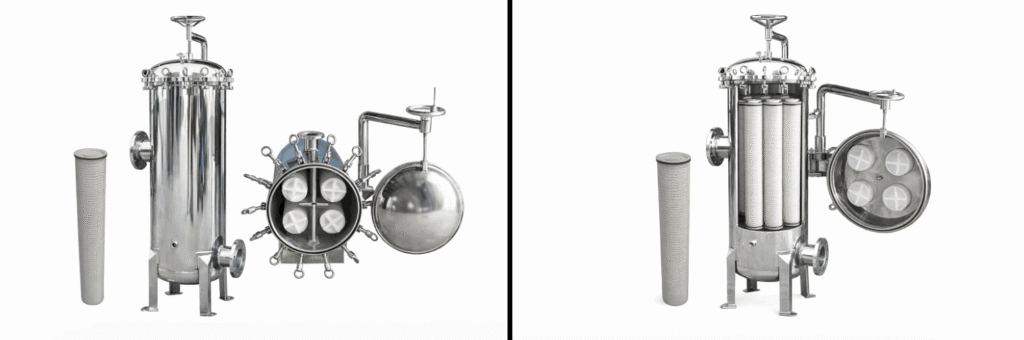
The single most important factor in a filter’s life is its effective surface area. A standard 40-inch pleated cartridge might have about 20 square feet of filter media. In contrast, a single 40-inch High-Flow cartridge can have over 150 square feet of media. That’s more than seven times the area to capture dirt. This massive surface area means the water flows through the media at a much lower velocity, distributing the dirt particles evenly and preventing the filter from blinding off in one spot.
The Wrong Tool for the Job
Many standard filters are "depth" cartridges made of spun polypropylene. These are great for some applications but are terrible for high-sediment source water. They are designed to trap particles throughout their depth, but at high flow rates, the sediment just cakes onto the outermost layer immediately. This clogs the filter from the outside-in very quickly, rendering the rest of the filter’s depth useless.
| Filter Type | Diameter | Typical Surface Area (40" length) | Best Use Case |
|---|---|---|---|
| Standard Depth | 2.5 inches | N/A (Depth-based) | Low-flow, low-sediment |
| Standard Pleated | 2.5 inches | ~20 sq. ft. | Medium-flow, clean water |
| High-Flow Pleated | 6 inches | ~150+ sq. ft. | High-flow, high-sediment |
How does pressure drop cripple your entire system?
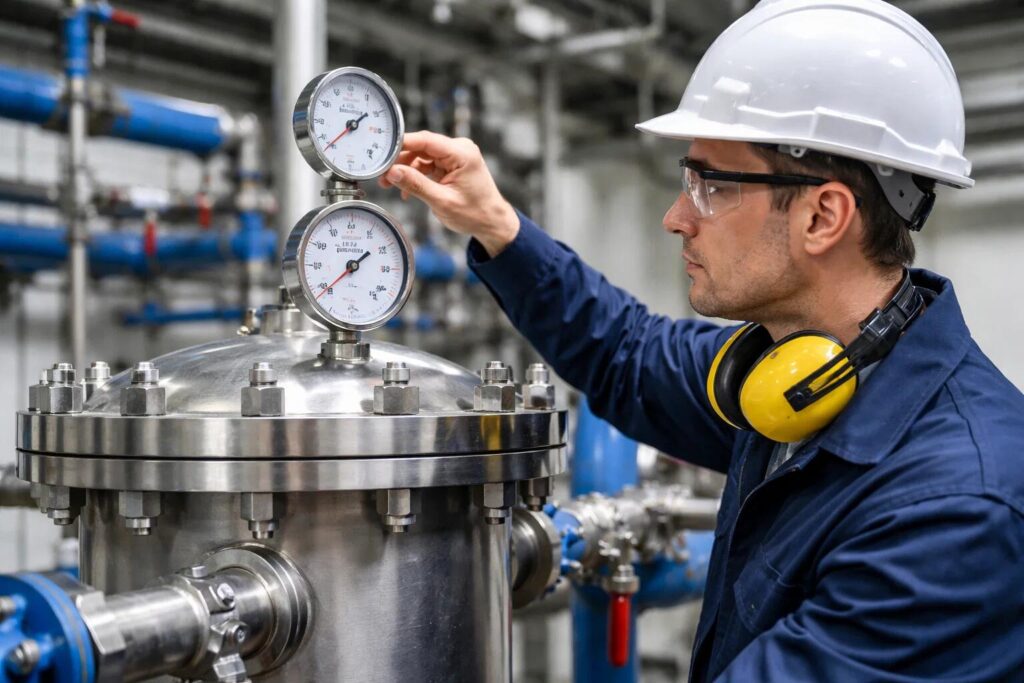
Your pure water output has slowed to a trickle, and your main pump sounds strained. You suspect a major failure, but the real problem is the clogged filter upstream.
A clogged standard filter acts like a closed valve, creating a huge pressure drop. This starves the main RO pump of water, drastically reducing its output and potentially causing permanent damage through cavitation.
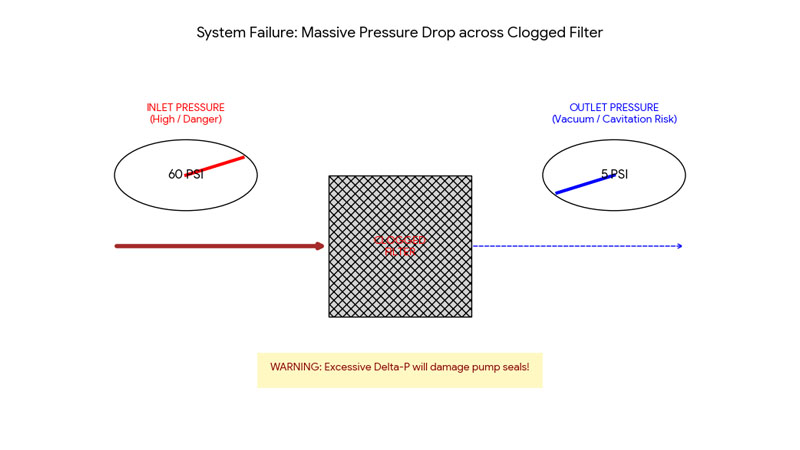
Pressure drop is the amount of energy your system loses just pushing water through the filter. When a filter is clean, the pressure drop is very low. But as a standard filter clogs with dirt, the pressure drop skyrockets. This creates a cascade of failures throughout the rest of your water treatment system.
Starving the RO Pump
The high-pressure pump that feeds your Reverse Osmosis membranes is the heart of your system. It is engineered to perform with a certain amount of positive inlet pressure from the source water. When a clogged pre-filter causes a massive pressure drop, the RO pump doesn’t get enough water. We call this "starving the pump." Its output of pure water will plummet because there is simply not enough water going into it.
The Cascade of Failure
This starvation is not just inefficient; it’s dangerous for the equipment. When the inlet pressure drops too low, it can create a vacuum. This can cause "cavitation," where tiny vapor bubbles form and then violently collapse inside the pump. This process is incredibly destructive and can quickly erode the pump’s internal components, leading to an expensive failure. A simple, clogged $20 filter can easily destroy a $5,000 pump. High-Flow filters, with their inherently low pressure drop, protect against this and ensure the entire system runs smoothly.
You chose standard filters to save money on initial hardware costs. But now, your operational expenses for labor, consumables, and downtime are far higher than you ever expected.
The true cost of using standard filters is found in frequent replacements, wasted labor during change-outs, lost revenue from system downtime, and the risk of catastrophic damage to expensive downstream pumps and membranes.
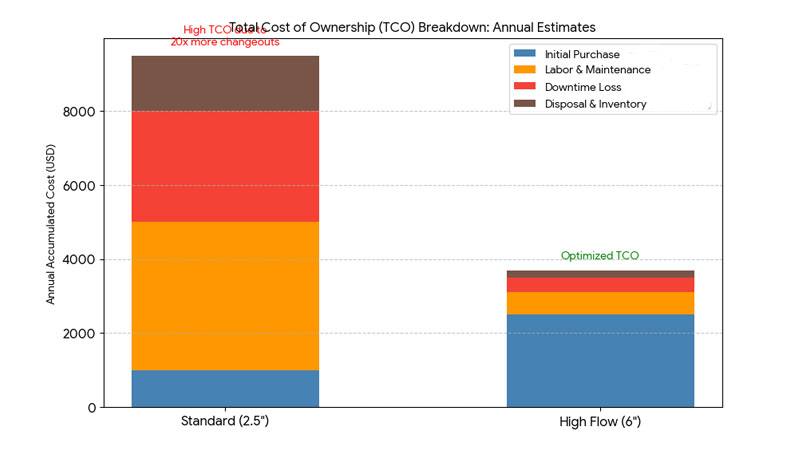
Focusing only on the upfront price of a filter is a common but very costly mistake. An experienced engineer like Jacky knows that the Total Cost of Ownership (TCO) is the only metric that matters. When you analyze the TCO, standard filters are one of the most expensive choices you can make for a large-scale system.
Consumables and Labor
Let’s say one High-Flow cartridge costs the same as ten standard cartridges. Because of its massive dirt-holding capacity, that single High-Flow cartridge might last as long as 20 or even 30 of the standard ones. You are already saving money on the filters themselves. More importantly, you save on labor. Changing a single High-Flow cartridge takes one person about 15 minutes. Changing thirty standard cartridges over the same period could take five hours of labor and cause thirty separate system shutdowns.
The Price of Downtime
Downtime is the biggest hidden cost. If your two-person cleaning crew has to stop work for 30 minutes to change a filter, you have just paid for an hour of skilled labor where nothing got done. If this happens multiple times a day, the financial losses add up incredibly fast. You fall behind schedule, risk missing deadlines, and burn money. Using a reliable High-Flow filter minimizes these interruptions, keeping your crew productive and the project profitable.
| Cost Factor | Standard Filter System | High-Flow Filter System |
|---|---|---|
| Initial Hardware | Low | Moderate |
| Filter Consumables | Very High | Low |
| Labor for Change-outs | Very High | Low |
| System Downtime | High | Minimal |
| Total Cost | Extremely High | Low |
Conclusion
Standard filters fail in large systems due to their low capacity. This leads to clogging, pressure drop, and costly downtime. High-Flow filters are the reliable, cost-effective solution.