What is membrane fouling? How can security filters delay the occurrence of membrane fouling?
Your multi-million dollar RO system is under constant attack from invisible enemies. This unseen buildup chokes performance, drives up energy costs, and can lead to catastrophic failure almost overnight.
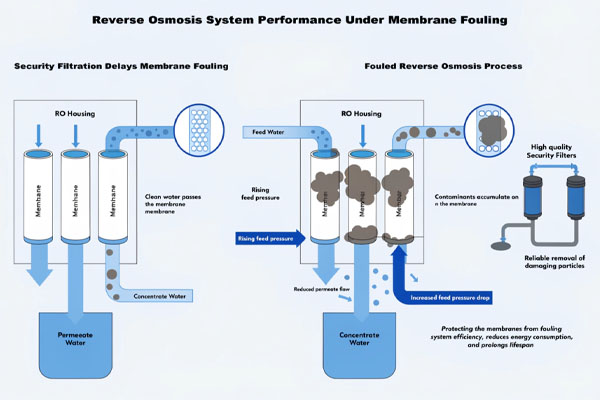
Membrane fouling is when contaminants like silt, minerals, organics, and microbes stick to and block the membrane surface. High-quality security filters delay this by reliably removing these damaging particles before they ever reach the delicate membranes.
I’ll never forget the first time I held a fouled RO membrane element in my hands. It was from a desalination plant that was having major issues. Instead of being clean and white, it was covered in a brownish, slimy film. It felt slick and disgusting. The plant manager told me that just a few weeks prior, the element was performing perfectly. That visual, and the speed of the failure, taught me a crucial lesson: successful Reverse Osmosis isn’t about the membranes themselves. It’s about protecting them. Fouling is a relentless enemy, and your best defense is a smart, robust pre-treatment system.
What Is Actually Happening When a Membrane Fouls?
You see the pressure rising and the flow dropping, but what is really going on? This invisible buildup on your membranes is slowly and silently destroying your system from the inside out.
Fouling is the physical accumulation of unwanted material on the membrane surface or within its pores. This blockage increases the energy needed for filtration, reduces water output, and can permanently damage the membrane’s structure, requiring costly replacement.
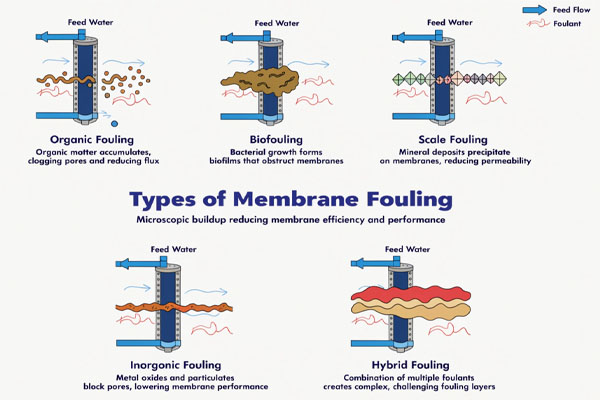
Think of a membrane as a screen with incredibly tiny holes, small enough to block salt ions. Fouling is anything that covers up those holes. It is not just one thing; it is a collection of different problems that can happen separately or all at once. For engineers like us, identifying the type of fouling is the first step to solving the problem. I once worked on a system where the client was convinced they had a silt problem because their plant was near a construction site. But after we analyzed the foulant, it turned out to be mostly biological slime. Their pre-chlorination system had failed, allowing microbes to grow. We could have replaced the cartridge filters a hundred times without fixing the root cause. This is why knowing your enemy is so important.
The Four Main Types of Fouling
| Fouling Type | What It Is | How It Looks/Feels |
|---|---|---|
| Particulate/Colloidal | Fine suspended solids like silt, clay, and fine metal oxides. | A layer of fine, gritty powder. |
| Mineral Scaling | Precipitation of hard minerals like calcium carbonate or silica. | A hard, crusty scale, like in a kettle. |
| Organic | Adsorption of natural organic matter (TOCs), oils, or greases. | A smooth, often gelatinous or sticky film. |
| Biofouling | Growth of bacteria and algae that produce a protective slime (biofilm). | A slimy, slippery layer, often with a bad odor. |
How Does a Simple Cartridge Filter Act as a "Security Guard"?
Your media filters seem robust, but fine particles are still slipping through. A single, simple cartridge filter is often the only thing standing between your expensive RO membranes and rapid destruction.
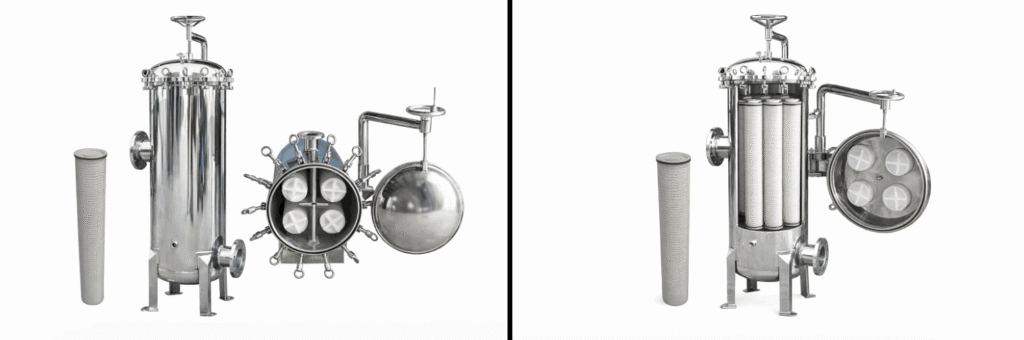
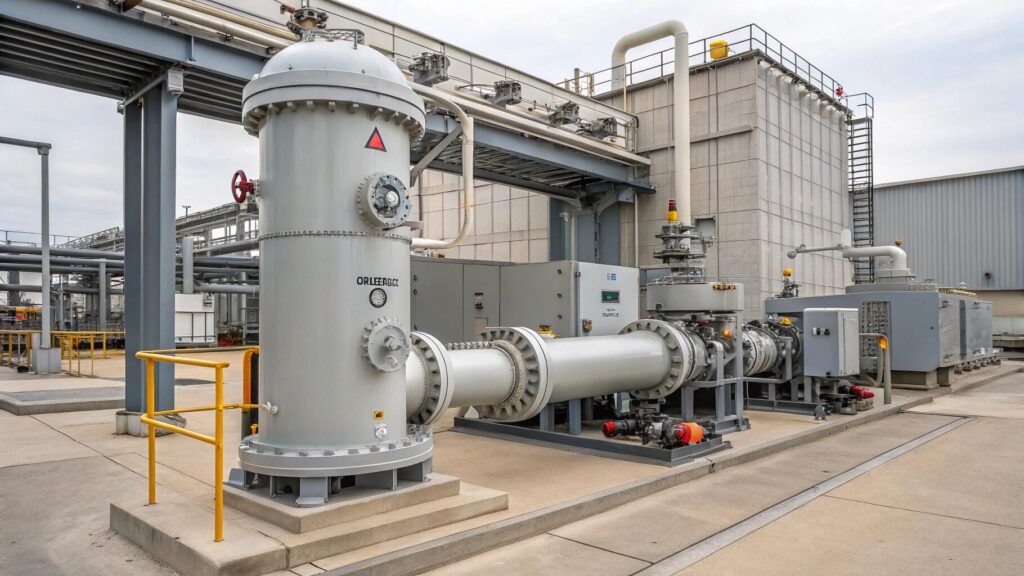
A security filter, typically a 1 to 5-micron absolute-rated cartridge, is the final gatekeeper before the high-pressure pump. It is an insurance policy that catches any fine particles that escape the main pre-treatment, ensuring clean water feeds the RO system.
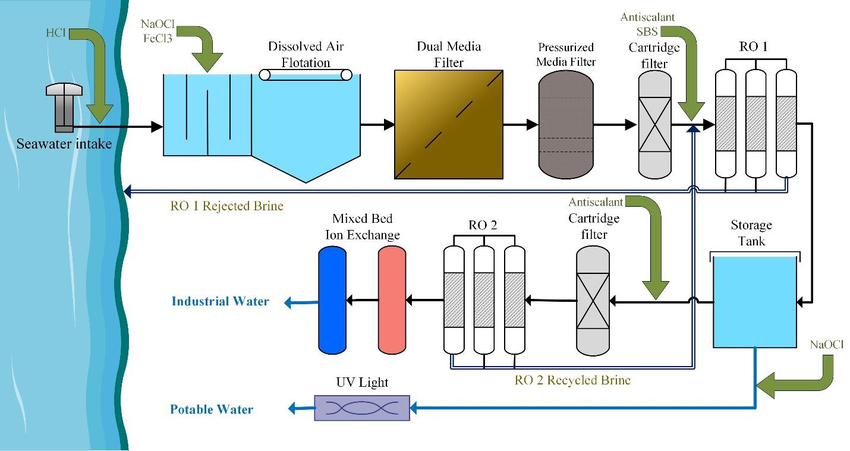
The term "security filter" is perfect because that is exactly what it does. It provides security for your most valuable asset. Your main pre-treatment, like media filters, does the heavy lifting, removing over 99% of the suspended solids. But what about the other 1%? What happens if there is a system upset, and a media filter "burps" a cloud of fine particles? That single event is enough to cause significant fouling. The security filter is there to catch these mistakes. For an engineer like Jacky, the most important specification for this filter is its rating. It must be absolute-rated. A filter with a 5-micron nominal rating might let a lot of 5-micron particles through, but a 5-micron absolute filter guarantees it will capture at least 99.9% of them. In a large system, High-Flow cartridges are ideal for this job. Their large diameter allows one cartridge to do the work of 10 standard ones, drastically reducing the system footprint and making change-outs much faster.
Why an Absolute Rating is Non-Negotiable
A filter’s micron rating tells you the size of the particles it can remove. But there is a huge difference between nominal and absolute ratings.
- Nominal Rating: This is an approximate value. A 5-micron nominal filter might capture 50% to 90% of particles that are 5 microns in size. It does not provide a guarantee.
- Absolute Rating: This is a guarantee. A 5-micron absolute filter is certified to remove at least 99.9% (or better) of particles that are 5 microns or larger in a single pass.
For protecting RO membranes, where even a small amount of particulate fouling can cause damage, a nominal rating is just a gamble. An absolute-rated security filter is a requirement for reliable operation.
Conclusion
Membrane fouling is the enemy of every RO system. A correctly specified, absolute-rated security filter is not just an accessory; it is the essential final defense that ensures long membrane life and reliable performance.